In the Shadow of Eight Quotes
by Collin Gosselin
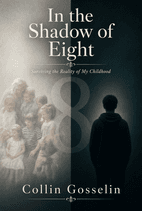
This page gathers lines from Collin Gosselin's memoir about growing up in front of cameras and behind closed doors. You will find observations about performance, family pressure, privacy, control, and the quiet ways a kid tries to survive. Some lines are short and sharp. Others sit with a painful memory and make it feel immediate.
What makes the book quotable is not polish. It is the blunt, specific way Collin describes what he noticed and what he endured. The language often sounds plain, which makes the harder moments land. These are lines readers can return to when they want a clear, human look at what happened behind the image.
Top Quotes from In the Shadow of Eight
“People felt like they knew us. But no one really did.”
The narrator explains how viewers experienced the family’s most intimate moments through the show.
It captures the central irony of reality TV: public intimacy without true knowledge of the people onscreen.
“If any of us slipped and became overwhelmed (and showed it), she'd lean in and hiss through clenched teeth: “Smile.””
The narrator recalls his mother’s demand for a happy performance whenever the children showed distress.
The hissed command reveals how vulnerability was suppressed for the camera.
“We weren’t being watched because we were special. We were being watched because we were like the food stacked up in the aisles—something to be bought and consumed.”
At a Giant checkout, Collin sees his family on a magazine cover and realizes what fame means.
The food-aisle metaphor is blunt and haunting. It reframes celebrity not as specialness but as consumption.
“I learned something that day: Telling the truth doesn’t always bring help. Sometimes it just teaches you how alone you really are.”
After the CYS interview, during which his mother watched through the door, he learns the limits of disclosure.
It names the cruel irony of speaking up without receiving safety. It is a lasting lesson about isolation.
“Teachers returned to their routines. Adults moved on. Life kept going. And I understood what that meant: No one was coming to interrupt this. Whatever happened, I was going to have to endure it alone.”
After the school report and CYS visit, he sees adults resume their lives while his confinement continues.
It conveys the abandonment of a child when institutions fail to intervene. The short sentences make the silence feel final.
“You're a burden, Collin! You're a burden to this family!”
After Collin is caught and returned to the basement, his mother screams this at him while he is bound.
It reduces a child to a burden in the exact language that makes escape feel necessary.
“I wondered how long we'd have to wait for my mom to climb into the back with me. Before that thought could even process in full, the ambulance doors slammed shut—the sound echoing like a truth I should have known. My mom wasn't coming.”
The ambulance doors close before the narrator’s mother joins him.
The slammed doors make abandonment unmistakable, turning an unanswered hope into a final truth.
Themes Behind the Quotes
The quotes center on exploitation and performance. A child grows up treated as a product, with cameras and audience attention shaping daily life, while the home becomes a place of surveillance and control. Public charm and private punishment sit side by side, so affection feels conditional and truth telling becomes risky.
Another thread is isolation and survival. Collin describes adults who fail to intervene, a family system that makes him the problem, and a growing sense that help is not coming. Running, complying, and focusing on ordinary work become ways to endure. The larger story is about a kid trying to hold onto a self while being watched, managed, and blamed.
Quotes by Chapter
1 America’s Favorite Family
“Adults with cameras and boom mics were as present in my daily life as my own siblings. We didn't know any different.”
As a child, the narrator describes how constant filming felt indistinguishable from ordinary family life.
It shows how normalization of surveillance can make an artificial childhood feel ordinary to the child living it.
“Imagine falling asleep backstage at a theater before the curtains are drawn. Then you wake up to a live audience, and the spotlight is on you.”
The narrator uses a theater metaphor to describe waking up to reality-TV filming.
The metaphor makes the loss of privacy visceral and immediate.
2 The Rebrand
“We were crushed together like we were one thing instead of eight. That was the whole point of sardines. You didn't win by being alone. You won by finding each other.”
Collin describes playing sardines with his siblings in the yard of the new house.
It turns a childhood game into a poignant metaphor for family closeness. The line resonates because it makes togetherness feel like the only real victory.
“We appeared to be a happy thriving family from the outside, but on the inside I felt deeply exploited and unloved. Sure, we had great opportunities like free toys and trips, but all we needed was a normal childhood.”
Collin summarizes the gap between the family's public image and his private experience.
It names the emotional cost hidden behind material perks and public success. The contrast between opportunity and a normal childhood is painfully direct.
“Inside our home, the world was invited in, and every corner of our lives was fair game for public consumption. Yet the minute we stepped outside those doors, privacy became a rigid, almost sacred rule.”
He describes the contradictory privacy rules that governed life inside and outside the house.
It captures the central paradox of reality-TV fame in one clean contrast. The sentence sticks because it makes an absurd situation feel ordinary.
3 Getting with the Program
“The daily pressure to perform, to be “on” for the cameras and obedient behind the scenes, was rough, and it all added up to make me feel trapped. I became the problem.”
Collin describes how the family home ran like a production even when cameras were not rolling.
It captures the psychological toll of constant performance and how blame was internalized. The shift from external pressure to “I became the problem” is especially haunting.
“The bruises didn’t last long, but the message did: You are the problem.”
Collin describes his mother’s physical punishments after moments of defiance.
It distills how abuse outlasts physical marks and becomes an internal voice. The line is brief but devastating.
“I learned that being observed, even passively, offered a kind of protection.”
Collin explains why the presence of crew or outsiders changed his mother’s behavior.
It reveals the chilling paradox that surveillance felt safer than privacy. It makes visible how trapped he was inside the family system.
“For everyone else, it was a storyline. For me, it was a message: My place in the house wasn’t fixed, and it could always get worse.”
Collin reflects on being moved to the unfinished basement during The Room Project.
It exposes the gap between staged TV narrative and private punishment. The line shows how a plot point became a permanent threat.
4 What Happened to Your Ear?
“Worse than the lock on my door and the shame of having to beg to use the bathroom was the way she turned my family into witnesses against me.”
He reflects on how his mother trained his siblings to see him as the problem.
It shows that emotional betrayal can cut deeper than physical confinement. The image of family as witnesses against him is haunting.
“But this was routine. Just another method of correction, repeated often enough that pain stopped feeling like a warning and started feeling like the cost of being noticed at all.”
He explains how frequently the ear-grabbing and spankings occurred.
It captures how repeated abuse can normalize pain and turn it into a price for being seen. The line is both clinical and heartbreaking.
5 Conditional Love
“On the farm, I was just a kid doing a job that needed doing. I could focus on animals, tools, the rhythm of work, and for a few hours, my body could unclench.”
Collin describes the unusual relief of working alone at Hank’s farm after being pulled from school.
It shows that safety was something his body could feel, not just an idea. The farm gave him a brief escape from constant surveillance and tension.
“He was the only adult in her world who never climbed aboard her ship.”
Collin explains why Hank remained separate from his mother’s world and control.
The metaphor is vivid and damning, marking Hank as a rare adult who did not join the family’s manufactured reality. It helps explain why the farm felt like genuine refuge.
“It was clear: Saying the wrong thing out loud wouldn't just get corrected—it would get erased. And when erasing words or a scene wasn’t enough, they would erase me instead.”
After Collin jokes that his locked bedroom has prepared him for an escape room, his mother removes him from filming.
It distills the chapter’s central horror: punishment meant deletion, not just discipline. The line makes emotional and literal erasure feel inseparable.
“I don’t see a kid being off the wall. I see a young kid learning, in real time, that his mother simply didn’t want to connect with him.”
Collin rewatches the Mexico episode and reflects on his mother’s reaction to his wooden bear gift.
It reframes a child’s awkward gift as evidence of maternal rejection rather than misbehavior. The line is painfully clear-eyed about what he learned in that moment.
6 The Escape
“I didn't imagine freedom or safety or some heroic escape. I imagined air. A place where the walls didn’t close in on me.”
Collin explains what he hoped for when he thought about leaving.
It strips escape of romance and reduces it to the basic need for breathable space.
“I ran until my lungs hurt, until the house disappeared behind me, until I felt free. And then I stopped running.”
After climbing out of his basement window, Collin runs down the road away from the house.
The rhythm captures both the rush of freedom and the abrupt moment it ends.
“I'd run to escape. And standing there, alone, the only thing that became clear was that I had nowhere to land.”
Standing alone on the road, he realizes his escape has left him with no safe place to go.
It exposes the cruel paradox of abuse: leaving can be as terrifying as staying.
7 The Last Look Back
“This one didn’t come with instructions, but I knew: Whatever this was, it wasn't meant to end quickly.”
The narrator is bound in the basement, waiting for a punishment whose terms are unspoken.
It captures the dread of arbitrary punishment and the child’s instinct that this ordeal has no clear endpoint.
“And even though I was scared and confused, I did what I'd learned to do best: I complied.”
After being strapped to the gurney, the narrator surrenders without resistance.
It shows how abuse trained obedience so deeply that compliance became automatic even in terror.
“I didn’t know it then, but that would be the last time I ever saw that house.”
The narrator looks back at the family home while being loaded into the ambulance.
It marks the quiet, irreversible break between a childhood home and the life that follows.
8 The System
“Here, I wasn't a celebrity, I was just some kid strapped to a gurney. Or even worse, maybe they saw me as “the Gosselin Kid on a Gurney.””
As he is wheeled into Fairmount and other kids stare, he fears being seen as a spectacle rather than a person.
It captures the loss of identity and dignity that comes with being institutionalized and publicly observed.
“I felt like I'd already failed some test I didn’t know I was taking.”
Arriving in C-Pod, he sees other kids his age and immediately worries about how they will judge him.
It names the quiet, constant anxiety of trying to survive a system whose rules are invisible.