How to Be Good at Life Interactive Mindmaps for How to Be Good at Life (Free)

How to Be Good at Life — Interactive Mindmaps

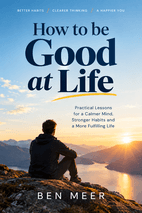
How to Be Good at Life by Ben Meer Book Cover

by Ben Meer

Ben Meer's How to Be Good at Life argues that lasting achievement comes from systems, not willpower, introducing the DRIVE framework, the Life Engine Audit, and a seven-engine model of fulfillment for readers who feel busy yet stuck.

On Insta.page you also get an Apply This Book tool that lets you combine insights from up to 3 books to solve your specific situation.

Chapter mindmaps

Free preview: chapters 1–4 are fully interactive. Click any node to expand or collapse. Subscribe to unlock the rest.

Chapter 1: The Hidden Magic of Systems

Key concepts: Chapter 1: The Hidden Magic of Systems

Chapter 1: The Hidden Magic of Systems

The Hidden Architecture of Achievement

  • Seinfeld's precision comes from a daily system, not pure gift
  • Buffett and Williams built systems for investing and training
  • What looks like superhuman ability is usually a structure

What a System Is

  • A system is components working together toward a specific goal
  • Seinfeld's comedy system has five interdependent components
  • Remove one component and effectiveness collapses

Myth 1: Good Habits Are All We Need

  • Habits cover only the repeatable 40-50% of life
  • Three layers: routines, projects, and ongoing areas
  • Habits are the bricks; systems are the building

Myth 2: Systems Take Too Much Time

  • You need systems to create time, not time to build systems
  • Building a system is like digging a well instead of carrying water
  • Friday Highlights: one weekly email saves hours at review time

Myths 3 & 4: Robotic Systems and Needing Help

  • Systems protect intentions from being captured by others
  • Saturdates protect two to three hours every Saturday
  • Checklists saved lives; high performers stay open to being beginners

Chapter 2: DRIVE: How to Build Any System That Works

Key concepts: Chapter 2: DRIVE: How to Build Any System That Works

Chapter 2: DRIVE: How to Build Any System That Works

The Need for a System-Building System

  • Systems beat willpower, but knowing that isn't enough
  • More advice doesn't close the gap; a meta-system does
  • Author's 2 a.m. McDonald's story: broke, stuck, no system
  • Studied NASA, doctors, athletes, military for the pattern

The DRIVE Framework

  • Universal rhythm: clarify aim, plan backward, execute, check, improve
  • Same structure as scientific method, Lean Startup, OODA loop
  • Five steps: Define, Reverse Engineer, Implement, Validate, Evolve
  • Built on goal-setting theory, behavioral psychology, feedback loops

The Five Steps Explained

  • Define: get crystal clear on the goal; direction beats speed
  • Reverse Engineer: work backward from destination to daily actions
  • Implement: build routines that survive travel, sick days, chaos
  • Validate: measure what matters; face the feedback you avoid

Alex's Website: DRIVE in Action

  • Three years stuck: two 'final' folders, 847 pins, no live site
  • Define: one-page portfolio of five projects live by March 15
  • Reverse engineered into four weekly blocks; finished March 12
  • Implemented 90-min Tuesday/Thursday sessions; shipped and evolved

Five Failure Modes (Each a Missing Step)

  • Enthusiastic Start (no Define): copying routines with no reason
  • Foggy Middle (no Reverse Engineer): random workouts, diets, supplements
  • Inconsistent Execution (no Implement): strong start, no travel/sick-day plan
  • Blind Spots (no Validate): real effort, no results, nobody checked

Gall's Law and the Simplest First System

  • Every complex working system evolved from a simpler working one
  • Build the simplest useful version and let it evolve
  • Five-minute meal prep example applies all five DRIVE steps
  • Downloadable template accompanies the method

AI as a Systems Coach

  • The paid method runs as a prompt: situation, outcome, resources, constraints
  • Specify one-time outcome vs. repeating system
  • AI flags assumptions, blind spots, and friction points
  • Human judgment stays in the driver's seat

Chapter 3: The Life Engine Audit

Key concepts: Chapter 3: The Life Engine Audit

Chapter 3: The Life Engine Audit

Seven Life Engines

  • Physical Health, Emotions, Mind, Relationships, Career, Money, Environment
  • Each engine has routines for stability and projects for growth
  • Human nature neglects engines that feel good, causing drift

Rule of Multiplying by Zero

  • Fulfillment = product of all seven engine scores
  • One engine at zero cancels all others, no matter how high
  • No engine needs perfection, only above zero

Gap Analysis and Two Broken Curses

  • Theo Epstein used gap analysis to end 86- and 108-year droughts
  • Define ideal, assess current, build systems to bridge the gap
  • Stalled areas are signals, not curses

Three-Step Life Engine Audit

  • Step 1: Envision a true 10 in every engine, ignore the how
  • Step 2: Rate current reality 1-10, watch for ripple effects and hidden strengths
  • Step 3: Prioritize the one engine needing peak energy this season

Why Knowing Isn't Doing

  • Clarity does not guarantee movement; old stories anchor you
  • Stress and fatigue can lead to health scares like ER visits
  • Treat the gap between scores and actions as the real problem

Chapter 4: Fix the Right Thing, Fix Almost Anything

Key concepts: Chapter 4: Fix the Right Thing, Fix Almost Anything

Chapter 4: Fix the Right Thing, Fix Almost Anything

Fixing the Root Cause

  • Lincoln Memorial: bird droppings caused by midges drawn to floodlights; delaying lights solved it.
  • Novak Djokovic traced fatigue to gluten intolerance, then won 10+ Grand Slams after 30.
  • Tiger Woods adjusted swing before LASIK revealed eyesight issue; 8 majors in 6 years.
  • DDT ban led bald eagle nesting pairs to recover from 417 to over 71,000.

The Tomorrow Tax

  • Symptom relief creates illusion of progress without discomfort of change.
  • Shifting the burden: pushing today's problems onto a future self.
  • Examples: avoiding hard conversation, skipping checkups, saying 'I'm fine'.
  • Buddhist samyojana: knots that tighten the longer they are left untied.

Where the Tax Shows Up

  • Physical Health: makeup covering acne; ibuprofen for headaches without addressing eye strain.
  • Emotions: scrolling to numb loneliness; retail therapy instead of facing deeper issues.
  • Money: credit cards covering shortfalls; late fees instead of automatic payments.
  • Relationships: apologizing after arguments instead of fixing recurring patterns.

The Iceberg Model

  • Events: what just happened? React.
  • Patterns: what keeps happening? Notice.
  • Systems: what is creating the pattern? Redesign.
  • Beliefs: what assumptions drive the system? Rewire.

Three Tools for the Layers

  • Spock Method (patterns): examine your own problems from outside; state facts, notice recurrence, propose system change.
  • Three Whys Method (systems): Toyota's Five Whys; three usually enough to drill to root.
  • Story Editing (beliefs): Byron Katie's 'The Work' questions thoughts; Olivia's coaching assumption challenged.

Retiring Old Rules

  • Elephant chained as calf stands still as adult, held by old conclusion.
  • Perfectionism: progress beats perfection.
  • Age: an advantage, whether fresh perspective or experience.
  • Asking for help: wisdom and self-awareness.

When to Seek Professional Help

  • Trauma and deeply rooted blocks need a qualified therapist rather than a framework.
  • Fix the right thing, and much else follows.
You've reached the end of the free mindmaps

Next chapter: “Chapter 5: Protect and Pursue: The Systems That Create Breakthroughs” is locked

See every chapter of How to Be Good at Life as an interactive mindmap — and unlock all 600+ book summaries with audio and AI Q&A.

$0.00 due today · 7 days free, then $89.99/year ($7.49/mo) · Cancel anytime before day 7

plus sales tax where applicable

Continue exploring How to Be Good at Life