Give and Take — Interactive Mindmaps

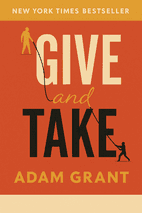
Give and Take by Adam Grant Book Cover

by Adam Grant

Adam Grant's Give and Take explores how givers, takers, and matchers achieve success, using research to show that generous professionals often build the most sustainable and rewarding careers. It is for anyone looking to improve their collaborative impact.

On Insta.page you also get an Apply This Book tool that lets you combine insights from up to 3 books to solve your specific situation.

Chapter mindmaps

Free preview: chapters 1–4 are fully interactive. Click any node to expand or collapse. Subscribe to unlock the rest.

Chapter 1: 1 — Good Returns

Key concepts: 1 — Good Returns

1 — Good Returns

The Three Reciprocity Styles

  • Takers prioritize their own interests and aim to get more than they give
  • Givers focus on others' needs and contribute generously without expecting returns
  • Matchers seek fair, tit-for-tat exchanges in relationships
  • Most people develop a dominant reciprocity style that shapes professional outcomes
  • Givers are rare in workplace settings, comprising only about 8% of professionals

The Giver Paradox

  • Givers often land at the bottom of success ladder due to self-sacrifice
  • Highest achievers in fields like engineering and sales are also givers
  • Creates a U-shaped curve of achievement with givers at both extremes
  • Givers struggle in independent tasks but excel in collaborative environments
  • Initial performance costs can lead to long-term success advantages

Giver Success Strategies

  • Building trust through generosity without immediate expectations
  • Creating networks of advocates through selfless support
  • Fostering collaborative environments where empathy pays off
  • Developing reputations that attract opportunities and referrals
  • Success spreads through ripple effects benefiting entire networks

Case Studies in Giver Success

  • David Hornik's 89% term sheet acceptance rate through giver approach
  • Sampson's political success after withdrawing to support a rival
  • Hornik's unconventional strategies: blogging insights, inviting rivals
  • Shader's eventual advocacy for Hornik after initial rejection
  • Giver success in service economy where relationships are crucial

Political Sacrifice and Principle

  • Sampson withdrew from Senate race to support Trumbull against corrupt opponent Matteson
  • Put shared cause above personal ambition despite cost of election loss
  • Lifelong pattern of integrity included refusing to defend guilty clients in legal career
  • Selfless political acts built goodwill that later helped secure national position

Long-Term Returns of Generosity

  • Former adversaries became staunchest supporters in later political campaigns
  • David Hornik's 89% success rate built through personally responding to unsolicited pitches
  • Reputation for prioritizing others' interests creates professional advantage
  • Short-term sacrifices transform into long-term gains through relationship building

Giver Advantages Across Professions

  • Medical students: givers excel in clinical rotations where collaboration matters
  • Finance: advisers like Peter Audet access opportunities takers overlook
  • Service economy (80% of jobs) naturally rewards relationship-building givers
  • Team environments amplify giver strengths through knowledge sharing

Cultural Preference for Giver Values

  • Global surveys show helpfulness and compassion rated above power or pleasure
  • Majority prioritize giver values as most important guiding principles
  • Innate preference often compartmentalized between personal and professional life
  • Only 8% identify as givers at work despite widespread value endorsement

Workplace Fear and Suppressed Generosity

  • Executives like Sherryann Plesse hide compassionate strengths to appear serious
  • Misconception of business as zero-sum game creates exploitation fears
  • Environmental cues (business suits, competitive cases) reduce relationship focus
  • Fear of being seen as a 'chump' causes suppression of noble instincts

Psychology of Competitive Environments

  • Expectation of self-interested behavior triggers defensive competitive mindset
  • Stanford research shows fear of exploitation drives rational self-protection
  • Dealing with takers (VCs demanding excessive shares) amplifies risk perception
  • Robert Frank notes fear brings out worst instincts, suppressing generosity

David Hornik's Giver Approach in Venture Capital

  • Started a blog in 2004 to openly share insights with entrepreneurs despite warnings about giving away trade secrets
  • Launched The Lobby conference in 2007 focusing on relationships rather than content and inviting rival venture capitalists
  • Faced skepticism and risks including potential damage to his firm's reputation but prioritized benefiting everyone
  • Maintained commitment to giving without expectation of return even when competitors copied his format without reciprocating

Principles of Giver Success Across Domains

  • Explores four key domains where givers excel: networking, collaborating, evaluating, and influencing
  • Reveals how top networkers build meaningful connections and why talented people work in obscurity before breakthroughs
  • Provides insights on identifying takers through subtle behavioral cues like Facebook profiles
  • Uses real-world examples to demonstrate giver success patterns across different contexts

Managing the Costs and Risks of Giving

  • Addresses common challenges givers face including burnout and vulnerability to exploitation
  • Offers practical strategies for protecting oneself while maintaining generosity
  • Shows how specific approaches can reduce burnout, as demonstrated by a teacher's experience
  • Reveals optimal volunteering hours for maximizing happiness and longevity benefits

Transforming Success Paradigms Through Giving

  • Challenges the assumption that success requires exploiting others in competitive environments
  • Demonstrates that helping others first can be a more sustainable path to achievement
  • Emphasizes that genuine giving, not strategic manipulation, drives lasting success
  • Shows how givers can achieve professional rewards including respect and meaningful relationships

Chapter 2: 2 — The Peacock and the Panda

Key concepts: 2 — The Peacock and the Panda

2 — The Peacock and the Panda

Taker Behavior Patterns

  • Kissing up, kicking down dynamic with superiors vs subordinates
  • Self-serving networking with strategic relationship building
  • Lekking behaviors: self-glorification and excessive self-promotion
  • Exploitative actions that ultimately damage networks and reputations

Kenneth Lay and Enron Case Study

  • Taker disguised as philanthropist and successful CEO
  • Used company funds for personal luxuries and family favors
  • Sold stock before collapse while encouraging others to buy
  • Orchestrated fake trading floor to deceive Wall Street analysts

Identifying Taker Warning Signs

  • Excessive use of first-person singular pronouns in language
  • Demanding disproportionately high compensation
  • Visual prominence in corporate materials (solo photos, centrality)
  • Early indicators of arrogance and unethical tendencies

Giver Success Strategy

  • Adam Rifkin's approach: help without expecting immediate returns
  • Five-minute favor philosophy for small acts of kindness
  • Leveraging weak ties and dormant ties for novel opportunities
  • Pronoia: belief that others are conspiring to help becomes self-fulfilling

Network Transparency Effects

  • Social media platforms expose self-promoting profiles
  • Enables peer sharing of reputational insights
  • Makes lekking behaviors more visible and detectable
  • Empowers individuals to recognize and avoid takers

Reciprocity Dynamics

  • Takers and matchers limit themselves with quid pro quo thinking
  • Givers avoid reciprocity pitfalls by consistently adding value
  • Matchers reward generosity and punish unfairness
  • Giving expands resource pie through mutual support and trust

The Power of Dormant Ties

  • Dormant ties provide more novel and useful advice than current contacts due to exposure to different perspectives during separation
  • Reactivating dormant ties is easier than starting new relationships because existing trust makes conversations more efficient
  • All reactivated dormant ties provide equal value - the tenth choice is as helpful as the first
  • Givers have a significant advantage in reactivating dormant ties as people are delighted to hear from them due to past generosity

Energizing Networks Through Giving

  • Givers create networks where others actively conspire to help them succeed (pronoia)
  • Matchers in givers' networks actively plot the giver's well-being as a way to reward generosity
  • Givers cultivate environments where luck becomes a predictable outcome of sustained kindness
  • Patient listening and thoughtful questions cement givers' roles as hubs of support in their networks

Energy Flows in Organizations

  • Takers act like black holes draining energy from those around them
  • Givers function as suns injecting light and vitality into networks
  • Generosity creates energizing interactions that ripple through networks
  • Rifkin's help transformed struggling entrepreneurs into successful businesses

The Five-Minute Favor Principle

  • Being willing to do anything that takes five minutes or less for anybody
  • Transforms networking from value-claiming to value-creation
  • Focuses on adding value for everyone rather than direct reciprocity
  • Creates a pay-it-forward effect where recipients help others in the network

The Contagion Effect of Giving

  • Presence of one consistent giver inspires others to give more
  • Expands total resources available to everyone in the network
  • Frequent givers achieve higher productivity and status than infrequent givers
  • Builds deep trust that attracts valuable help across networks

Reputation as a Strategic Asset

  • Generosity becomes a giver's greatest professional asset
  • Enables quick fundraising and resource mobilization through trust
  • Creates networks where help flows freely among members
  • Transforms relationships from fixed-resource competition to expanding-pie collaboration

Chapter 3: 3 — The Ripple Effect

Key concepts: 3 — The Ripple Effect

3 — The Ripple Effect

The Generosity Paradigm

  • George Meyer's career demonstrates how giving fuels extraordinary success
  • Contrast between giver mindset (collective achievement) vs taker mindset (self-interest)
  • Early acts of generosity like sharing Army Man magazine laid foundation for influence
  • Givers achieve innovation without ego through collaborative approaches

Collaboration Mechanics

  • Expedition behavior: prioritizing group mission over individual glory
  • Building trust and accumulating idiosyncrasy credits for creative freedom
  • Creating psychological safety for innovation and shared learning
  • Bridging perspective gap through empathy and careful feedback

The Giver-Taker Creativity Paradox

  • Research shows highly creative individuals often exhibit taker traits
  • Meyer challenges this pattern as a creative giver in collaborative settings
  • Givers can achieve equal creative impact without ego-driven pitfalls
  • Success in knowledge work depends on trusted relationships over solo expertise

Case Studies in Interdependence

  • George Meyer: Behind-the-scenes genius thriving through team elevation
  • Frank Lloyd Wright: Career slump from isolation vs revival through collaboration
  • Jonas Salk: Downfall after claiming sole credit and alienating team
  • Cardiac surgeons and security analysts: Success hinges on trusted networks

The Ripple Effect Legacy

  • Generosity multiplies success across entire networks
  • Empowering others creates lasting impact beyond individual achievements
  • Most impactful innovations spring from mutual support and shared credit
  • Correcting responsibility bias through focus on team contributions

How Givers and Takers Collaborate

  • Frank Lloyd Wright's insistence on sole credit led to decline while George Meyer's team-oriented approach created lasting success
  • Meyer's philosophy centered on group success elevating everyone within it
  • The contrast reveals fundamentally different approaches to collaboration with long-term consequences

The Power of Expedition Behavior

  • Prioritizing group mission above personal ambition, as demonstrated by Meyer's work on SNL and The Simpsons
  • Focusing on less glamorous tasks and thankless rewriting to improve overall quality
  • Research shows giving mindset boosts both quality and quantity of group output
  • Paradoxically leads to more raises and promotions for the giver

Earning Trust Through Giving

  • Consistently putting group first builds immense goodwill and trust
  • Disarms competitors: takers see no threat, matchers feel indebted, givers recognize as ally
  • Protects talented people from the jealousy that often plagues them
  • Meyer's code allowed demonstrating genius without making colleagues insecure

Accumulating Idiosyncrasy Credits

  • Generous acts earn 'idiosyncrasy credits' - goodwill that grants latitude to challenge norms
  • Meyer's accumulated credits meant colleagues trusted his unconventional ideas
  • Trust was so profound that writing team recruited him back when he tried to leave
  • Credits create permission to innovate while maintaining group harmony

The High Cost of Claiming Credit

  • Meyer's giving cost him external fame but strengthened internal reputation
  • Credited on only 12 of 300+ Simpsons episodes despite shaping many more
  • Stark contrast to Frank Lloyd Wright's insistence on name recognition
  • Demonstrates trade-off between personal recognition and collaborative effectiveness

Jonas Salk's Fatal Mistake

  • Failed to acknowledge six key researchers and foundational scientists in polio vaccine announcement
  • Team felt betrayed with one member describing it as a 'big shock'
  • Haunted his career: shunned by colleagues, no Nobel Prize, no National Academy election
  • Relationships fractured and his own productivity waned as a result

The Psychology of the Responsibility Bias

  • Tendency to overestimate our own contributions to shared endeavors
  • We have more vivid access to our own efforts than collaborators' contributions
  • Major cause of collaboration breakdowns across industries from science to Hollywood
  • Takers especially prone due to motivation to ensure they get more than they give

Overcoming Responsibility Bias

  • George Meyer demonstrated the giver's mindset by focusing on collective outcomes rather than personal credit
  • Research shows reflecting on others' contributions before assessing our own balances skewed perceptions
  • When group members list each person's efforts first, total perceived contribution drops from over 140% to 123%
  • Meyer naturally attributed success to the team using 'we' language rather than 'I'

Cultivating Psychological Safety

  • Meyer created an environment where writers felt secure pitching ideas without fear of ridicule
  • Givers shoulder responsibility for setbacks while celebrating others' successes
  • Meyer provided emotional support by consoling writers when jokes were cut and ensuring they felt valued
  • Psychological safety boosts learning and innovation, as shown in Amy Edmondson's research
  • Newcomers felt comfortable contributing because Meyer listened and asked for opinions

Bridging the Perspective Gap

  • Meyer overcame the perspective gap by recalling his own experiences with feedback and rejection
  • Empathy allowed him to deliver feedback gently and help colleagues accept revisions
  • Research shows people underestimate others' pain once they're no longer in discomfort themselves
  • Effective givers ask 'How will the recipient feel?' rather than 'How would I feel?'
  • This perspective-taking skill develops early, with toddlers learning to share based on others' preferences by 18 months

The Multiplicative Impact of Generosity

  • Meyer's giving nature created cascading success beyond his own achievements
  • Unlike credit-hoarders like Frank Lloyd Wright, Meyer multiplied the impact of those around him
  • His support helped writers achieve dreams like publishing in The New Yorker
  • Meyer's comedic sense and collaborative spirit elevated everyone's work, proving generosity isn't zero-sum
  • Through initiatives like Army Man, he provided platforms that launched successful careers

Chapter 4: 4 — Finding the Diamond in the Rough

Key concepts: 4 — Finding the Diamond in the Rough

4 — Finding the Diamond in the Rough

The Diamond in the Rough Philosophy

  • Seeing hidden potential in others where others see limits
  • Treating everyone as having untapped capabilities waiting to be polished
  • Transforming lives through belief and support rather than judging current ability

Real-World Transformations Through Belief

  • Reggie Love: From Duke athlete to Obama's aide via accounting foundation
  • Beth Traynham: Overcoming math struggles to top CPA exam scorer
  • Extraordinary outcomes like students sweeping top CPA exam spots

The Science of Self-Fulfilling Prophecies

  • Expectations shape reality through unconscious support and feedback
  • Rosenthal-Jacobson study: 'Bloomer' students showed IQ gains from teacher belief
  • Israel Defense Forces replication: Believed-in trainees outperformed in weapons tests

Reciprocity Styles in Potential Recognition

  • Givers: Invest in others from start, create virtuous cycles of growth
  • Takers: Withhold trust, escalate poor decisions to protect reputation
  • Matchers: Wait for proof of potential before investing support

Mentorship Approaches That Unlock Potential

  • Early mentors prioritize fun and motivation over strict correctness
  • Focus on inner drive and work ethic rather than raw talent
  • Personalized encouragement that emphasizes effort over results

Professional Decision-Making Without Ego

  • Avoiding escalation of commitment by prioritizing collective success
  • Stu Inman's approach: Valuing character over ego, admitting mistakes
  • Psychological profiling to spot overlooked talents through traits like selflessness

Building Grit and Long-Term Success

  • High expectations combined with consistent encouragement
  • Developing passion and perseverance through engaging learning methods
  • Creating lasting legacies by developing others without seeking credit

The Role of Early Mentors

  • Giver mentors prioritize fun and encouragement over strict correctness in early instruction
  • Warm, supportive teachers spark lasting interest that fuels the practice needed for expertise
  • Positive interactions with caring adults create safe environments for exploration without fear of failure
  • Bloom's research shows initial instructors for world-class performers were typically givers who made learning enjoyable

Focusing on Motivation and Grit

  • Givers identify potential by looking beyond raw talent to motivation and work ethic
  • Angela Duckworth's grit concept shows passion and perseverance often outperform natural ability
  • Coaches and teachers like Skender value drive and willingness to work hard over physical or intellectual gifts
  • Givers actively cultivate grit by setting high expectations and pushing students beyond their limits

Making Learning Engaging

  • Givers transform dry subjects into captivating experiences through creative methods
  • Skender incorporates music trivia, candy rewards, and pop culture to increase student investment
  • Engagement strategies mirror early teachers who used praise and enthusiasm to make learning pleasant
  • Former students attest that engaging methods made them work harder and achieve greater success

Stu Inman's Giver Traits

  • Inman prioritized players' well-being over organizational success, supporting their personal decisions
  • His love for teaching drove him to invest time in anyone showing motivation, regardless of talent
  • Giver nature sometimes led to poor draft choices but prevented blind commitment escalation
  • He retained enthusiastic players and admitted mistakes rather than doubling down on bad decisions

Escalation of Commitment and Ego Threat

  • People overinvest in failing projects due to ego threat - fear of looking foolish for abandoning decisions
  • NBA teams gave more playing time to early picks regardless of performance to justify sunk costs
  • Takers are particularly vulnerable to escalation as they focus on protecting their reputation
  • Banking examples show managers hesitate to write off bad loans they originally funded

Givers' Rational Decision-Making

  • Givers avoid escalation by prioritizing bigger picture over personal ego
  • Studies show people make more objective decisions when acting for others rather than themselves
  • Empathy and focus on collective success enable wiser, more adaptive choices
  • Givers willingly admit errors and cut losses rather than doubling down to save face

Receptivity to Negative Feedback

  • Givers delegate 30% more after criticism while takers only delegate 15% more, protecting their pride
  • Givers focus on long-term benefits over short-term ego when receiving negative feedback
  • Stu Inman's openness to criticism allowed him to pivot from LaRue Martin to Bill Walton successfully
  • Willingness to accept feedback was key to Inman's success in talent evaluation and adaptation

Uncovering Hidden Potential

  • Giver approach values inner attributes like work ethic and character over physical talent alone
  • Thorough evaluations include interviews with coaches, family, and teachers to assess motivation and integrity
  • Successfully identified undervalued players like Bob Gross who doubled scoring through hustle
  • Later drafted Jerome Kersey and Terry Porter for their grit and community contributions
  • Demonstrates givers excel in roles requiring selflessness and dedication

The Power of Psychological Profiling

  • Collaborated with sports psychologist to assess selflessness, perseverance, and coachability
  • Embraced external expertise despite industry skepticism about psychological assessment
  • Psychological profiling revealed Clyde Drexler's team-first attitude despite shooting weaknesses
  • Giver mindset allows integration of outside input for better talent evaluation
  • Contrasts with takers who resist external input to maintain sense of superiority

Contrasting Leadership: Inman vs. Jordan

  • Michael Jordan's taker tendencies led to escalating commitment to poor performers like Kwame Brown
  • Jordan berated players while increasing playing time to salvage his own ego
  • Inman admitted mistakes and moved on, building teams with undervalued players
  • Taker leadership resulted in historic failures like Bobcats' worst season
  • Inman's giver approach included grooming Kevin Love, prioritizing long-term growth over validation

Key Leadership Principles

  • Givers accept criticism and adapt while takers escalate poor decisions to protect pride
  • Psychological traits like grit and selflessness reveal talent physical metrics miss
  • Embracing external expertise leads to superior talent evaluation and team success
  • Quickly letting go of bad investments prevents long-term failures and builds resilience
  • Impactful leaders focus on developing others' potential without seeking personal credit

Continue exploring Give and Take