Everything Is Tuberculosis Quotes
by John Green
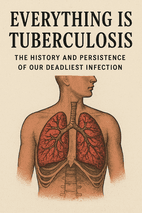
This page collects some of the most striking lines from John Green's book Everything Is Tuberculosis. You will find observations about human power and its limits, the irony of medical access, and the deep connection between disease and injustice. The quotes range from historical insights to personal moments of care.
What makes this book quotable is how it weaves together science, history, and human emotion. Green's writing turns a medical story into a reflection on our shared vulnerabilities and the systems that shape suffering. Each line invites you to think about illness not just as a biological fact but as a mirror held up to society.
Top Quotes from Everything Is Tuberculosis
“We are powerful enough to light the world at night, to artificially refrigerate food, to leave Earth's atmosphere and orbit it from outer space. But we cannot save those we love from suffering.”
The author reflects on human technological power contrasted with the inability to prevent a loved one's death from tuberculosis.
This line captures the tragic irony of human progress and the fundamental limitation of love in the face of disease, resonating deeply with anyone who has felt helpless watching a loved one suffer.
“This is the story of human history as I understand it—the story of an organism that can do so much, but cannot do what it most wants.”
The author summarizes his view of human history in relation to the persistent suffering caused by tuberculosis.
It distills the central theme of the book—humanity's immense power juxtaposed with its inability to prevent the most desired outcome—into a single, resonant sentence.
“Where are the drugs? The drugs are where the disease is not,” Dr. Mugyenyi said. “And where is the disease? The disease is where the drugs are not.”
Dr. Peter Mugyenyi's speech about the rich world's refusal to expand access to HIV/AIDS drugs.
This powerful aphorism perfectly encapsulates the global injustice of treatable diseases like TB, where treatment is geographically and economically separated from those who need it.
“I started writing about TB because I wanted to understand how an illness could quietly shape so much of human history. But along the way, I learned that TB is both a form and expression of injustice.”
The author explains his personal motivation for writing the book and what he discovered.
It reveals the journey from curiosity to moral realization, framing TB not just as a medical phenomenon but as a social injustice that demands attention.
“Nothing is so privileged as thinking history belongs to the past.”
A friend's advice to the author before visiting Lakka.
This line challenges the dangerous assumption that diseases like tuberculosis are relics of history, forcing readers to confront ongoing suffering as present-tense reality.
“We feed everyone three times a day. Big meals. But it is not enough.”
A nurse at Lakka apologetically describes the hospital's food resources.
This blunt admission exposes the systemic failure to treat nutrition as essential to TB care, highlighting how even well-intentioned efforts can be tragically insufficient.
“If you want to understand why Sierra Leone is poor, you must look at a map of our railroads.”
The Sierra Leonean physician Dr. Bailor Barrie said this to the author.
This line captures the central thesis of the chapter—that colonial infrastructure was designed for extraction, not for the benefit of local communities. It is a succinct, memorable invitation to rethink common explanations for poverty.
Themes Behind the Quotes
One central theme is the tension between human achievement and our inability to prevent suffering. Despite technological progress, we remain powerless against the pain of those we love. Another key theme is injustice, as tuberculosis disproportionately affects the poor and marginalized, revealing how history and economics shape health outcomes.
The quotes also explore how we imagine illness. Tuberculosis was once romanticized as consumption, but the book insists on seeing it as a real, devastating disease. There is a thread about the gaps between where treatments exist and where they are needed, and a reminder that history is not just what we do but what is done to us. These ideas challenge readers to confront uncomfortable truths.
Quotes by Chapter
Chapter 1: Lakka
“He was only so small because he'd grown up malnourished, and then the TB had further emaciated his body.”
Dr. Micheal explains that Henry, who appeared to be a young boy, is actually seventeen.
The revelation transforms Henry from a charming child into a symbol of chronic neglect and disease, shocking readers with the stark discrepancy between his age and his body.
“A place where hope and despair intertwined.... I found myself in a world where food was scarce, water was rationed, and clothing was inadequate for the chilly nights.”
From Henry's memoir about his time at Lakka hospital.
Henry's own words capture the cruel paradox of a treatment center that fosters hope while subjecting patients to hunger and deprivation, giving voice to an all-too-often silenced experience.
Chapter 2: Cowboys and Assassins
“West is where we all plan to go some day,” Robert Penn Warren wrote in All the King’s Men. “It is where you go when the land gives out and the old-field pines encroach. It is where you go when you get the letter saying: Flee, all is discovered.”
The author quotes Robert Penn Warren to illustrate the mythic allure of the American West as a destination for consumptives seeking escape.
This passage poetically captures the desperate hope and romanticized escape that drew tuberculosis patients westward, resonating with anyone who has felt the pull of a last chance.
“In the nineteenth and early twentieth centuries, it was commonly accepted that consumption could be effectively treated by dry air, which made a kind of sense—consumptive lungs seemed wet, and so did the humid, stagnant air in big American cities like New York and Baltimore, where consumption flourished.”
The narrator explains the historical belief in the 'travel cure' for tuberculosis and its pseudo-scientific rationale.
It shows how medical misconceptions shaped migration and urban geography, highlighting the human tendency to seek simple solutions for complex diseases.
“Princip shot both the archduke and Duchess Sophie to death, and then took his cyanide pill, which of course failed to kill him.”
Describing Gavrilo Princip's assassination of Franz Ferdinand during the farcical chain of events in Sarajevo.
The dry, ironic tone underscores the tragicomic nature of history's hinges, where a failed suicide attempt leads to world-altering consequences.
“Looking at history through any single lens creates distortions, because history is too complex for any one way of looking to suffice.”
The author reflects on the limits of attributing historical events solely to tuberculosis.
This succinct warning against oversimplification resonates as a timeless reminder of the richness and messiness of historical causality.
Chapter 3: Look at Our Railroads
“In 1950, life expectancy in Britain was sixty-nine. In Sierra Leone, after 150 years of colonial rule, life expectancy was under thirty, relatively similar to the life expectancy of premodern humans who lived five thousand or fifty thousand years ago.”
The author compares life expectancies to challenge the narrative of colonial benefits.
This devastating statistic refutes the idea that colonialism brought progress, forcing readers to confront the human cost of extraction. The comparison to premodern humans underscores how little colonialism improved fundamental well-being.
“We found their houses and streets so...cleanly kept that it was an admiration to us all, for that neither in the houses nor streets was so much dust to be found as would fill an egg shell.”
The author quotes a 1586-1587 account by merchant John Sarracoll describing a West African town before it was burned.
This description of meticulous cleanliness before destruction highlights the sophistication and order of pre-colonial societies, making the subsequent violence even more tragic. It challenges stereotypes of primitive living conditions.
“Sometimes, when people tell you that you're in their prayers, it sounds like lip service. But not when Isatu says it.”
The author reflects on a moment when Henry's mother, Isatu, promised to pray for his family.
This simple, heartfelt line contrasts shallow platitudes with genuine human connection across vast differences. It ends the chapter on a note of grace and intimacy, reminding readers of the individual humanity behind the statistics.
Chapter 4: That Wealth Never Warded Off
“But history, alas, is not merely a record of what we do, but also a record of what is done to us.”
The author reflects on human bias toward agency and control in history.
This line challenges the illusion of control, reminding readers that disease and external forces shape history as much as human choices.
“Charles Dickens called consumption the disease that “wealth never warded off,” and indeed among its victims was the richest individual of the nineteenth century, Jay Gould.”
The author lists famous victims of tuberculosis to illustrate its indiscriminate nature.
It powerfully refutes the idea that wealth can protect against disease, using a striking historical example.
“John Bunyan called consumption “the captain of all these men of death” for its ubiquity and severity.”
The author quotes Bunyan's description of tuberculosis.
The metaphor 'captain of all these men of death' captures TB's historical dominance as a relentless killer.
“Of all maladies,” Hippocrates tells us, “it was the most virulent and the most difficult, and exacted the most deaths.”
Hippocrates describes tuberculosis in ancient Greece.
This ancient testimony underscores the long-standing recognition of TB's deadliness and the futility of early medicine.
Chapter 5: Whipped Away
“I worked in the market, but everything I put my hand on, the money whipped away on sickness.”
Isatu, Henry's mother, describes her struggle to provide for her family while Henry and Favor are sick.
This line vividly captures the relentless cycle of poverty and illness, where every small gain is instantly consumed by medical costs, evoking deep sympathy.
“We pay a lot of attention to how we treat illness, and much less to the critical question of how we imagine illness.”
The author reflects on the social construction of disease, contrasting biomedical treatment with cultural perceptions.
This incisive observation challenges readers to consider the powerful role of stigma, belief, and context in shaping health outcomes, adding philosophical depth.
Chapter 7: The Flattering Malady
“Consumption, I am aware, is a flattering malady.”
Charlotte Brontë in a letter she wrote as her sister was dying of the disease.
It succinctly captures the paradox of romanticizing a deadly illness, acknowledging its allure while recognizing its fatal reality.
“Disease and decay are often beautiful—tike the pearly tear of the shellfish or the hectic glow of consumption.”
Henry David Thoreau in his journal.
It illustrates how even a transcendentalist writer saw the symptoms of tuberculosis as beautiful, revealing the deep cultural romanticization of the disease.
“The beauty of women is greatly owing to their delicacy, or weakness.”
An eighteenth-century magazine extolling the consumptive body type.
It exposes the thin line between romanticization and stigmatization, linking physical beauty to frailty and positioning ill bodies as both desirable and deficient.
“The idea of becoming sick in order to look healthy or beautiful speaks to how profoundly consumptive beauty ideals still shape the world we share.”
Author reflecting on a comment from a woman named Jil who wished for a wasting disease.
Highlights the enduring and harmful influence of TB beauty standards in modern society, showing how they persist in contemporary body image issues.
Chapter 8: The Bacillus
“Phthisis is scarce in these climates and is regarded as contagious.”
George Sand wrote this in a letter about finding lodging for consumptive Frédéric Chopin in Spain.
It highlights the irony that the disease was scarce precisely because it was regarded as contagious, leading to social ostracization.
“Tuberculosis was there, breeding suffering and misery without romance.”
René and Jean Dubos describing the shift in perception of tuberculosis from romantic to a disease of the poor.
It powerfully captures the de-romanticization of TB and its association with industrial misery.
“By the end of the nineteenth century, the replication and acceptance of Robert Koch’s research meant that the era of consumption, an inherited condition that grew the soul by shrinking the body, ceased to exist. The era of tuberculosis, an infectious disease of the poor and marginalized, had commenced.”
The author summarizing the transformation from consumption to tuberculosis.
It poetically encapsulates the paradigm shift from a romanticized inherited condition to a stigmatized infectious disease.
“If the importance of a disease for mankind is measured from the number of fatalities which are due to it, then tuberculosis must be considered much more important than those most feared infectious diseases—plague, cholera, and the like.”
Robert Koch, in his paper announcing the discovery of the tuberculosis bacterium, arguing for the significance of the disease.
It underscores the contrast between TB's overlooked deadliness and the fear of more infamous epidemics, recontextualizing its importance.