Everything Is Tuberculosis Key Takeaways
by John Green
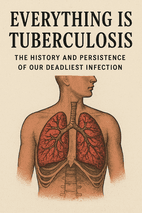
5 Main Takeaways from Everything Is Tuberculosis
Tuberculosis is a curable disease, but access defines who lives.
For nearly 70 years, effective treatments have existed, yet TB remains a leading killer because systemic inequities prevent universal access. This is illustrated by Henry's struggle in Sierra Leone, where drug resistance and lack of diagnostics delayed his cure, and by the global failure to distribute bedaquiline affordably.
Disease narratives are shaped by racism, poverty, and social bias.
From the romanticization of 'consumption' to the false theory of 'The White Man's Plague,' TB has been misunderstood due to cultural prejudices. These narratives have justified neglect in marginalized communities, as seen in colonial policies that ignored TB deaths and in the catastrophically high rates in Canada's residential schools.
Personal stories reveal the human cost of systemic health failures.
Henry's journey from diagnosis to treatment, and the dedication of his mother Isatu, make the statistical crisis of TB emotionally resonant. Such stories underscore that health outcomes are driven by social determinants like nutrition, stigma, and healthcare infrastructure, rather than just biology.
Global health priorities often follow wealth, not need.
The decades-long gap in TB drug development and the high prices of new medications like bedaquiline show how market incentives override public health. This is contrasted with the rapid response to Covid-19, highlighting disparities in funding and attention that perpetuate disease in poor communities.
Collective action can break vicious cycles of disease and poverty.
Initiatives like Partners In Health in Peru proved that drug-resistant TB is treatable in low-resource settings, leading to policy changes and cost reductions. Survivors like Phumeza Tisile become advocates, driving virtuous cycles of health and justice through activism and generic competition.
Executive Analysis
John Green's 'Everything Is Tuberculosis' argues that the history of TB is a mirror for humanity's best and worst impulses: our capacity for scientific innovation and our tragic tolerance for inequity. The five takeaways connect to show how the disease has been shaped by social constructs like racism and poverty, how personal narratives expose systemic failures, and how access to cure is a moral choice rather than a logistical challenge.
This book matters because it bridges history, public health, and memoir, offering readers a compelling framework to understand global health crises. It challenges us to see diseases not as inevitable natural phenomena but as products of human decisions, motivating practical advocacy through organizations like TB Fighters to demand equity in healthcare.
Chapter-by-Chapter Key Takeaways
Gregory and Stokes (Introduction)
Tuberculosis is a deeply personal and historically relentless killer, claiming lives from all walks of life across centuries, as illustrated by the stories of Gregory Watt and Stokes Goodrich.
A profound injustice defines the modern TB era: we have had a cure for nearly 70 years, yet the disease persists as a leading cause of death globally because that cure is not made universally accessible.
Our understanding of disease shapes societal outcomes. The evolving explanations for TB—from moral failing to bacterial infection—have determined who was blamed, how they were treated, and who lived or died.
Today, TB is a disease of poverty and inequity. Its spread is fueled by malnutrition, crowded living conditions, and co-infections like HIV, making it a direct reflection of societal failures.
The book positions the story of tuberculosis as a fundamental story of human history, revealing our capacity for both monumental innovation and tragic neglect.
Try this: Recognize that the persistent toll of curable diseases like TB reflects societal choices, not biological inevitability.
Lakka (Chapter 1)
TB is a Present and Brutal Crisis: The chapter dismantles the idea of tuberculosis as a historical disease, portraying it as a current, devastating illness marked by extreme suffering, complex treatment, and drug resistance.
Human Connection is a Powerful Lens: The author’s understanding of the TB epidemic is framed entirely through his personal encounter with Henry. This relationship makes the statistical crisis viscerally real and emotionally resonant.
Hunger is an Integral Part of the Disease: Treatment reactivates a fierce appetite in patients whose bodies are depleted, yet consistent, adequate nutrition is often unavailable, creating a horrific cycle that can undermine medical care.
Stigma Has Devastating Consequences: The shame associated with TB leads to the abandonment of patients, isolating them physically and emotionally during their most vulnerable time.
Inequity is Not Inevitable: The footnote highlights that Sierra Leone’s maternal mortality rate dropped by over 50% in the years after the visit, serving as a crucial reminder that health disparities can be changed with investment and partnership.
Try this: Confront disease stigma by centering personal stories to make statistical crises emotionally resonant.
Cowboys and Assassins (Chapter 2)
Tuberculosis has been a hidden architect of modern culture, directly influencing iconic symbols like the cowboy hat and demographic shifts that led to statehood for places like New Mexico.
The disease exploited and was shaped by social conditions, such as the belief in the "travel cure" and political prejudices, demonstrating a complex interplay between biology and society.
While TB can be cited as a contributing factor to major historical events—providing the "why" for the actions of certain individuals—history is too complex to be viewed through a single lens. Attributing events solely to disease creates distortion.
The chapter pivots from how TB shaped history to a more critical question: how human culture, bias, and systems of injustice have shaped the relentless path of the disease itself, a theme central to the stories of people like Henry and Isatu in Sierra Leone.
Try this: Analyze how diseases shape culture and history, but avoid attributing complex events solely to illness.
Look at Our Railroads (Chapter 3)
Poverty by Design: Sierra Leone’s current poverty is not natural or inevitable but is the direct result of historical systems built for resource extraction, not human development.
Infrastructure as Legacy: Colonial infrastructure, like railroads, reveals the intent of its builders: to extract wealth, not to build interconnected, sustainable communities.
The Long Shadow of History: The trauma of the slave trade and colonial violence created deep, lasting fractures in society, contributing to vulnerabilities that erupted in modern conflicts like the civil war.
Beyond Simplification: The nation cannot be essentialized as merely "poor"; it is economically, culturally, and religiously diverse, and its people's lives contain multitudes of joy, resilience, and community amidst hardship.
The Limits of Corruption Narratives: While corruption exists, a fundamental lack of financial resources—a legacy of the extraction economy—is a more basic barrier to building functional national systems like healthcare.
Try this: Understand that poverty in nations like Sierra Leone is rooted in extractive colonial histories, not inherent flaws.
That Wealth Never Warded Off (Chapter 4)
Disease is a Central Historical Force: Human history cannot be fully understood without accounting for the profound impact of pandemics and persistent illnesses like tuberculosis, which have shaped societies as much as wars or rulers.
Tuberculosis is Ancient and Democratic: With evidence millions of years old, TB is arguably humanity's oldest contagious foe and historically struck across all social and economic classes, defying simple narratives of poverty-driven disease.
Biology Drives Confusion: The strange, slow-growing nature of M. tuberculosis—its ability to lie dormant and then erupt unpredictably—made it incredibly difficult for pre-modern medicine to comprehend or treat effectively.
Modern Medicine is Very Recent: The medical landscape of 1804 lacked almost every tool we consider essential today, emphasizing how recently humanity lived in a state of profound vulnerability to infection.
Diagnosis Relied on Observation: Without technology to see inside the body, physicians had to be masterful observers and listeners, with symptoms like bloody sputum serving as critical, culturally resonant diagnostic clues.
Try this: Appreciate how recently effective medicine emerged, and how diseases have long influenced human societies.
Whipped Away (Chapter 5)
Illness is a social construct: How a disease is perceived, feared, and treated is not inherent to its biology but is shaped by culture, history, and the trustworthiness of available care systems.
Chronic crises enable acute disasters: Sierra Leone’s chronic poverty and weak health system made the Ebola epidemic far more devastating, and the short-term international response failed to address the underlying fragility.
Diagnostic delays cost lives: The lack of access to rapid, accurate testing for TB drug resistance doomed Henry to years of ineffective, toxic treatment, allowing his disease to progress unchecked.
The human cost of systemic failure: Henry’s story is not one of a single disease, but of a family enduring sequential tragedies—chronic illness, sudden death, and pandemic—all exacerbated by a system that could not protect them.
Try this: Advocate for robust health systems to prevent acute disasters, emphasizing rapid diagnostics and community trust.
The Flattering Malady (Chapter 6)
The romanticized visual tropes of tuberculosis—pallor, thinness, flushed cheeks, dilated eyes—actively shaped historical beauty practices and continue to influence harmful modern body ideals.
The disease was fiercely racialized in the 18th and 19th centuries, falsely framed as a "civilized" ailment that only afflicted white people, a theory known as "The White Man's Plague."
This racist medical ideology caused colonial authorities to willfully ignore the rampant suffering and death from TB in colonized nations, as acknowledging it would undermine the core tenets of white supremacy and colonialism.
Our understanding of disease is never purely biological; it is profoundly shaped by social forces like racism and misogyny, which in turn dictate where a disease is able to spread unchecked.
Try this: Critically examine how beauty standards and racial biases distort medical understanding and public health responses.
The Bacillus (Chapter 7)
The understanding of tuberculosis varied globally; regions that viewed it as contagious often had lower incidence rates.
The 19th-century TB epidemic was fundamentally a disease of industrialization and urban poverty, not of refined sensibility or inheritance.
Robert Koch's isolation of Mycobacterium tuberculosis was a watershed moment, but it built upon wider scientific advancements and collaboration.
His proof of an infectious cause dismantled the romantic myth of "consumption" and replaced it with the stigmatized reality of contagious "tuberculosis," a shift that changed public health strategies and social attitudes forever.
Try this: Acknowledge that scientific breakthroughs build on collaboration and can dismantle harmful myths about disease.
Not a Person (Chapter 8)
The "scientific" theory of racial susceptibility to TB was a fabricated ideology that shifted to justify racism after the disease's infectious nature was proven, obscuring the real causes rooted in systemic inequality.
Tuberculosis has been used as a tool of racialized violence, evidenced most starkly in the catastrophically high death rates within Canada’s residential school system.
Stigma is a social disease often more painful than the physical illness. It functions to blame the victim, often by inventing moral or behavioral causes, and provides a false sense of security to the healthy.
The true drivers of TB disparities are not race or personal failing, but social conditions created by racism and poverty: crowded housing, malnutrition, stress, and lack of healthcare access.
Resistance to these narratives has always existed, particularly from healthcare workers within marginalized communities, but their expertise has been historically silenced.
In the face of profound dehumanization, acts of unwavering care and love, like that of Isatu for her son Henry, assert a powerful claim on the sick person's full humanity.
Try this: Challenge narratives that blame victims for illness, and focus on systemic inequalities like housing and nutrition.
A Study in Tuberculin (Chapter 9)
Scientific discovery is often shaped by non-scientific forces, such as national pride and professional rivalry, which can cloud judgment.
Robert Koch's announcement of tuberculin as a TB cure was a catastrophic error born from a desire to match Pasteur's therapeutic successes, leading to patient deaths and his own disgrace.
Arthur Conan Doyle's rigorous, independent analysis correctly identified tuberculin as a diagnostic agent, not a cure, salvaging a useful tool from a medical failure.
The advent of germ theory caused a fundamental philosophical shift, challenging concepts of self and bodily autonomy by revealing our coexistence with—and vulnerability to—microscopic life.
The chapter illustrates how a single scientific misstep can have tragic immediate consequences, while careful observation can repurpose a failure into a lasting, if more modest, contribution.
Try this: Learn from scientific failures like tuberculin, and recognize that discoveries require careful, independent analysis.
Trepidation and Hope (Chapter 10)
Public health measures against TB, from anti-spitting laws to fly-screening, were driven by both accurate and misplaced fears about transmission.
The disease profoundly influenced social norms and fashion, often under a patriarchal medical gaze that linked morality to hygiene.
Sanatoria were massive, continent-shaping institutions built on the hope that environment and rest could cure, but life inside was marked by strict control, isolation, and boredom.
Personal stories, like that of Gale Perkins and her friend Angie, reveal the deep emotional trauma and stigmatization faced by patients, especially children.
The chapter underscores a critical tension in treating infectious diseases: the necessary effort to control outbreaks can often undermine compassionate care, a balance that remains relevant today.
Try this: Balance infection control with compassion, remembering that public health measures can inflict emotional trauma.
The Cure (Chapter 11)
The path to a TB cure was incremental, relying on advances in diagnostics like X-rays (pioneered by Dr. Alan Hart) and prevention like the BCG vaccine, before the breakthrough of antibiotics.
The development of streptomycin, isoniazid, and pyrazinamide in the 1940s-50s, followed by combination therapy, transformed tuberculosis from a often-fatal disease into a curable one.
Global access to the cure was—and remains—profoundly unequal. Systemic biases and colonial-minded policies prevented the distribution of effective drugs to the poor and marginalized communities that needed them most, creating a deadly equity gap.
Try this: Support efforts to make medical advances universally accessible, rejecting policies that prioritize profit over people.
Where the Cure Is Not (Chapter 12)
DOTS was a scalable, systematic response to TB in underfunded health systems, but its foundation is a distrust of patients, requiring direct observation to ensure "compliance."
The concept of "patient noncompliance" is critiqued as a label that often blames individuals for structural failures like drug stockouts, poverty, stigma, and unmanaged side effects.
A patient's ability to complete treatment is deeply influenced by social determinants of health, including hunger, transportation costs, mental health, and homelessness.
While life-saving for many, DOTS has significant flaws: it fails to address drug-resistant TB, misses many diagnoses due to insensitive smear microscopy, and can be stigmatizing and impractical for patients.
The chapter advocates for a patient-centered approach that sees people like Henry and Robert as complex individuals within a flawed system, rather than viewing their outcomes solely through the lens of adherence to a rigid protocol.
Try this: Design health programs that address social determinants like hunger, rather than blaming patients for noncompliance.
Marco. Polo. (Chapter 13)
Drug-resistant TB is not primarily a story of an unusually clever bacterium but of a long global failure to invest in new antibiotics, especially for diseases that mostly affect the poor.
From 1966 to 2012, no new TB drugs were developed, largely because market incentives favored more profitable medications for chronic conditions in wealthy populations.
Public funding has successfully produced new TB drugs like bedaquiline and delamanid, proving that scientific barriers are surmountable when societies choose to invest.
Safer, more effective oral regimens for drug-resistant TB exist, yet many patients still receive older injectable treatments that cause high rates of permanent deafness and kidney damage.
Bedaquiline, though largely funded by public money, was priced under monopoly control at levels that kept it out of reach for many health systems, directly shaping who lived and who suffered.
Henry’s hearing loss and Shreya’s death illustrate how pricing, policy, and delay turn treatable disease into tragedy, especially when officials invoke “cost” or “drug protection” to justify withholding care.
The metaphor of Marco Polo reframes writing and activism as a call-and-response: people like Shreya and Henry call out through their stories, and those who hear them are challenged to answer with attention, advocacy, and action.
Try this: Pressure governments and companies to fund and price life-saving drugs fairly, using public money for public good.
Dr. Girum (Chapter 14)
Dr. Girum embodies the dedication and heartbreak of TB care in under-resourced regions, where personal commitment clashes with systemic inadequacies.
Early diagnosis through tools like GeneXpert is crucial for effective treatment, but its adoption is hindered by profit-driven pricing models that make it inaccessible where it's needed most.
A narrow focus on short-term cost savings in global health ignores the profound long-term benefits—both economic and human—of investing in comprehensive TB strategies.
The human cost of tuberculosis, illustrated by patients like Henry, transcends economic calculations, reminding us that healthcare should prioritize compassion and equity over profit margins.
Try this: Invest in diagnostic tools for early detection, prioritizing long-term human benefits over short-term cost savings.
Henry (Chapter 15)
Standard treatment for Henry's severe TB has failed, forcing Dr. Girum to seek complex, expensive, and inaccessible alternative drugs.
Henry's struggle becomes as much emotional as physical; the loss of his friend Thompson destroys his optimism and solidifies his belief in his impending death.
Family support is critical but strained; Isatu's devotion contrasts with his father's faith-based skepticism of medical treatment.
The chapter portrays a devastating low point, where institutional limitations, personal loss, and the disease itself converge to overwhelm Henry's resilience.
Try this: Provide holistic care that addresses mental health and family dynamics, not just physical symptoms.
“Beat Me Later” (Chapter 16)
The Limits of Endurance: Healthcare failures exact a profound human toll, pushing families beyond despair into outright confrontation with the systems meant to heal.
Hope as a Calculated Risk: Dr. Girum’s promise—“Beat me later”—reframes hope not as a guarantee, but as a personal gamble, buying critical time and redirecting a family’s anguish into a grim pact.
The Individual as a Catalyst: The chapter argues for the immense value of fighting for a single life, positioning one patient’s survival as a potential proof-of-concept for systemic change and expanded access to care.
Try this: Fight for individual patients as proof-of-concept for systemic change, even when systems seem broken.
Superbug (Chapter 17)
The "superbug" narrative risks being a distraction; for much of the world, tuberculosis is already an untreatable plague due to access barriers, not a lack of cures.
Global health funding follows power and wealth, not just need, as demonstrated by the disparate responses to Covid-19 and tuberculosis.
Cost-effectiveness models can perpetuate outdated assumptions, as seen with rifampin dosing, leading to substandard care and increased drug resistance.
At its core, the TB crisis is a moral failure, exposing how societies assign value to human life based on geography and wealth.
Try this: Shift focus from fear of 'superbugs' to addressing access barriers, and allocate resources based on need, not wealth.
Vicious Cycles (Chapter 18)
The HIV/AIDS pandemic unleashed a devastating, fast-killing form of tuberculosis in the Global South, a crisis identified by frontline workers in the 1980s.
Millions died needlessly over two decades due to systemic neglect, fueled by racist stereotypes and false claims about the feasibility of treatment in poor countries.
Widespread access to affordable HIV medication only became a reality after international pressure and programs in the 2000s, which also strengthened broader health infrastructure.
Tuberculosis exemplifies a "disease of vicious cycles," both a cause and a consequence of poverty, malnutrition, stigma, and weak health systems.
Try this: Integrate TB and HIV care to break synergistic cycles of disease, learning from past neglect.
Hail Mary (Chapter 19)
Henry's case demonstrates that treating complex diseases in resource-poor settings is possible but requires immense logistical effort and international solidarity.
Health outcomes are largely determined by historical and social forces like poverty and systemic neglect, not just biology or individual choices.
Personal resilience, expressed through art and faith, coexists with the necessity of collective action to address health inequities.
Even with advanced treatment, delays in care can lead to irreversible physical damage, underscoring the urgency of early and equitable healthcare access.
Individual patient stories carry profound symbolic weight in challenging global health paradigms and justifying investment in dignified care for all.
Try this: Combine medical treatment with social support, recognizing that health is shaped by historical and social forces.
Like Magic (Chapter 20)
The correct medication can produce rapid, almost miraculous-seeming improvements, even in advanced cases.
Healing is not just physical; it involves mending fractured family relationships and addressing the emotional trauma of long-term isolation.
Survival from disease can lead directly into a battle with profound poverty, creating a new set of hardships.
A parent’s love can redefine victory, focusing not on a life of ease but on the sheer, precious fact of a child’s continued existence.
Try this: Celebrate recovery but prepare for post-illness challenges like poverty, supporting holistic rehabilitation.
Virtuous Cycles (Chapter 21)
Despair is persuasive but incomplete: While vicious cycles exist, human agency can create powerful virtuous cycles that generate expanding returns in health and justice.
Proof of concept changes everything: The PIH program in Peru decisively proved MDR-TB was curable in low-resource settings, dismantling the primary justification for inaction and changing global policy.
Survivors are essential agents of change: Individuals like Phumeza Tisile and Henry, having endured the system's failures, become the most compelling and effective advocates for systemic reform, as seen in patent battles and stigma reduction.
Cost is a political choice, not a natural law: The 98% reduction in treatment cost for MDR-TB was achieved not by a technological miracle but by activism, generic competition, and rejecting the idea that medicine is solely a market commodity.
Health is a shared human priority: The chapter argues for building systems that view health not primarily as a market but as a public good, where the burden of disease drives priorities and cures are made "varied and plentiful."
Try this: Engage in activism to create virtuous cycles of health, using survivor stories to drive policy and price reductions.
The Cause and the Cure (Chapter 22)
The fight against tuberculosis is illuminated by works of history, philosophy, and frontline reporting, with Tracy Kidder’s Mountains Beyond Mountains offering a particularly powerful narrative.
The author’s personal advocacy, including his work with Partners In Health, underscores the real-world application of the chapter’s themes.
The chapter ends with a direct invitation for readers to become involved in the effort to eradicate TB through the TB Fighters organization.
Try this: Get involved with organizations like TB Fighters, using narratives from books and personal stories to fuel advocacy.
Continue Exploring
- Read the full chapter-by-chapter summary →
- Best quotes from Everything Is Tuberculosis → (coming soon)
- Explore more book summaries →