Dopamine Nation Quotes
by Anna Lembke
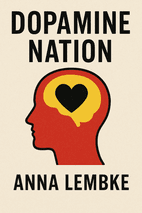
Welcome to a collection of sharp, unsettling truths from "Dopamine Nation." These lines cut through the noise of modern life, hitting on everything from our phones to our deepest desires. You will find quotes that grab you by the collar and ones that make you pause mid scroll. Some are confrontational, some are quietly wise. What makes this book so quotable is how it blends hard neuroscience with raw human stories. Every line feels earned, like it was pulled from a therapy session or a late night confession. It speaks to the addiction we all share, the one we rarely name.
Top Quotes from Dopamine Nation
“The smartphone is the modern-day hypodermic needle, delivering digital dopamine 24/7 for a wired generation.”
The author describes the pervasive influence of smartphones.
It vividly captures the addictive nature of smartphones using a medical metaphor, making the idea of digital dopamine instantly relatable.
“Persons with severe addictions are among those contemporary prophets that we ignore to our own demise, for they show us who we truly are.”
The author quotes philosopher and theologian Kent Dunnington.
It reframes addiction as a mirror to universal human tendencies, challenging readers to see addicts not as outliers but as prophets revealing uncomfortable truths about society.
“We are all, of a sort, engaged with our own masturbation machines.”
The author reflects on Jacob's extreme behavior and connects it to modern compulsive consumption.
It's a provocative metaphor that challenges readers to see their own habits as analogous to Jacob's, making the book's central point universally relatable.
“The paradox is that hedonism, the pursuit of pleasure for its own sake, leads to anhedonia, which is the inability to enjoy pleasure of any kind.”
The author describes her own compulsive consumption of romance novels, eventually burning out her pleasure center.
This line succinctly captures the core irony of overconsumption: chasing pleasure ultimately destroys the capacity for it.
“Science teaches us that every pleasure exacts a price, and the pain that follows is longer lasting and more intense than the pleasure that gave rise to it.”
The author reflects on the opponent-process theory and the long-term consequences of hedonism.
It delivers a memorable, almost proverbial warning about the hidden cost of pleasure, resonating with anyone who has experienced post-pleasure letdown.
“One hit off a meth pipe is equal to ten orgasms.”
The author compares dopamine release percentages from various rewards, concluding that methamphetamine causes a 1,000% increase.
This startling comparison makes the addictive potential of methamphetamine visceral and unforgettable.
“Fasting from dopamine allows sufficient time for the gremlins to hop off the balance and for the balance to go back to the level position.”
The author describes the purpose of dopamine fasting in terms of the pleasure-pain balance.
The vivid gremlin metaphor transforms a complex neuroscientific concept into an accessible, memorable image that sticks with readers.
Themes Behind the Quotes
A central theme is the universal human struggle with pleasure and pain. The book shows how our constant pursuit of easy rewards throws the brain's balance off, leading to more suffering in the long run. Another theme is the idea that modern life has become a giant delivery system for addictive experiences. From smartphones to substances, we are surrounded by cheap dopamine, and we have to learn to live differently. The quotes also explore the counterintuitive power of embracing discomfort, boredom, and even pain as paths to real freedom. Self awareness and intentional boundaries are presented not as weakness but as practical tools for survival. Underneath it all runs a thread of compassion, a recognition that every person is just trying to cope with a world that demands too much.
Quotes by Chapter
Introduction: The Problem
“If you haven't met your drug of choice yet, it's coming soon to a website near you.”
The author warns about the ever-expanding array of highly rewarding stimuli.
This darkly humorous line underscores the inevitability of encountering addictive behaviors in the modern world, resonating with anyone who feels targeted by digital temptations.
“In essence, the secret to finding balance is combining the science of desire with the wisdom of recovery.”
The author summarizes the book's core thesis.
It offers a succinct and hopeful formula for managing overconsumption, blending neuroscience and lived experience into a practical solution.
Chapter 1: Our Masturbation Machines
“Supply has created demand as we all fall prey to the vortex of compulsive overuse.”
Discussion of how increased access to addictive substances drives modern addiction.
This line encapsulates the book's core argument about the dopamine economy and the dangers of easy availability in a succinct, memorable way.
“The term double life is as familiar to me as ST segment elevation is to the cardiologist, stage IV is to the oncologist, and hemoglobin A1C is to the endocrinologist.”
The author explains how the concept of a double life is a common sign in addiction.
The medical analogies vividly illustrate how pervasive secrecy is in addiction, making it instantly recognizable to both clinicians and lay readers.
“I was afraid. Afraid that after inviting him to reveal himself to me, I wouldn't be able to help him.”
The author's internal reaction after Jacob describes his masturbation machine.
It humanizes the therapist by revealing vulnerability and the fear of failing a patient, which resonates deeply with anyone in a helping role.
Chapter 2: Running from Pain
“It was easier to take a pill than feel the pain.”
David explains why he relied on prescription medications instead of confronting his anxiety.
This line encapsulates the chapter's central thesis: our modern tendency to avoid pain at all costs, even when avoidance itself becomes harmful.
“The reason we're all so miserable may be because we're working so hard to avoid being miserable.”
The author concludes the chapter by reflecting on rising unhappiness despite unprecedented wealth and comfort.
This paradoxical insight is both provocative and memorable, forcing readers to reconsider the value of embracing rather than escaping discomfort.
“By protecting our children from adversity, have we made them deathly afraid of it?”
The author questions the modern parenting trend of shielding children from all challenges and negative experiences.
This rhetorical question challenges readers to examine the unintended consequences of overprotection, striking a chord with parents and educators.
“But boredom is also an opportunity for discovery and invention. It creates the space necessary for a new thought to form, without which we're endlessly reacting to stimuli around us, rather than allowing ourselves to be within our lived experience.”
The author advises patient Sophie, a Stanford undergraduate who constantly uses devices, to embrace boredom during her walk to class.
This passage reframes boredom as a creative and essential experience, offering a powerful counterpoint to our culture of constant distraction.
Chapter 3: The Pleasure-Pain Balance
“We are cacti in the rain forest.”
Dr. Tom Finucane uses this metaphor to describe humans maladapted to our modern world of abundance.
This vivid, concise image perfectly illustrates how our brains evolved for scarcity and are now overwhelmed by excess.
Chapter 4: Dopamine Fasting
“The only way to know for sure is to lay off for a month.”
The doctor explains to Delilah why a month of abstinence is needed to determine if cannabis is causing her anxiety.
This simple, declarative statement cuts to the heart of the diagnostic necessity of a dopamine fast, making it a memorable takeaway for anyone questioning their own habits.
“What feels like cannabis treating anxiety may in fact be cannabis relieving withdrawal from our last dose.”
The author explains to Delilah the paradoxical relationship between cannabis and anxiety.
It reveals a counterintuitive truth about addiction—that the substance can become the very cause of the symptom it seems to relieve—which resonates with anyone who has struggled with compulsive use.
“I began to see that I didn’t need to continually distract myself from the present moment. That I could live in it and tolerate it, and maybe even something more.”
The author reflects on her personal experience after giving up her compulsive romance-novel reading habit.
This intimate confession shows the transformative power of mindfulness, offering hope that tolerating discomfort can lead to a richer, more present life.
Chapter 5: Space, Time, and Meaning
“Self-binding is not primarily a matter of will, although personal agency plays some part. Rather, self-binding openly recognizes the limitations of will.”
The author defines self-binding as a strategy for managing compulsive overconsumption.
This line redefines willpower as limited and emphasizes the importance of pre-emptive barriers, a counterintuitive but empowering insight.
“In the throes of desire, there’s no deciding.”
The author explains why self-binding must happen before compulsion takes hold.
A stark, concise truth about addiction that resonates with anyone who has tried to resist a powerful urge.
“Sometimes the barrier itself becomes an invitation to a challenge. Solving the puzzle of how to get our drug of choice becomes part of its appeal.”
Describing patient Oscar's failed attempt to lock away alcohol.
Highlights the ironic and human tendency to turn obstacles into games, making self-binding imperfect but no less necessary.
“I only need to decide once a day not to drink. I don’t have to keep deciding all day long.”
A patient describes the benefit of taking disulfiram for alcohol addiction.
A simple, relatable illustration of how reducing decision fatigue can drastically improve self-control.
Chapter 6: A Broken Balance?
“It was like a light switch for me. It didn’t just prevent me from doing heroin. It gave my body something I needed and couldn't find anywhere else.”
Chris says this to the author when asked about getting off buprenorphine after years of stability.
It captures the paradox of a medication that both saves a life and binds a person to lifelong dependence, inviting deep questions about healing versus adaptation.
“What if instead of making us better than well, psychotropic drugs make us other than well?”
The author reflects on Dr. Peter Kramer's book 'Listening to Prozac' and the possibility that psychiatric medications alter our humanity.
This concise reversal of a famous phrase challenges the dominant narrative of antidepressants as purely positive, prompting readers to reconsider what 'wellness' truly means.
“In medicating ourselves to adapt to the world, what kind of world are we settling for?”
The author questions the broader societal implications of using psychiatric drugs to fit into an imperfect environment.
It elevates the personal dilemma of medication to a systemic critique, asking readers to examine whether we are changing ourselves or accepting an unjust status quo.
“Without attention to the basic needs of patients without race and class privilege, BMT, as medication alone, rather than being liberatory, can turn into a form of institutional neglect and even structural violence to the extent that it is considered adequate for their recovery.”
The author cites Alexandrea Hatcher and colleagues writing in 'Substance Use and Misuse' about buprenorphine maintenance treatment.
This powerful statement exposes how a life-saving medication can become a tool of oppression when social determinants are ignored, forcing readers to confront inequities in addiction treatment.
Chapter 7: Pressing on the Pain Side
“Pursuing pain instead of pleasure is also countercultural, going against all the feel-good messages that pervade so many aspects of modern life.”
The author reflects on the difficulty of pursuing pain in a pleasure-seeking culture.
It captures the paradox of seeking discomfort for well-being, challenging deeply ingrained societal norms about avoiding pain.
“As I tell my patients, just walking in your neighborhood for thirty minutes a day can make a difference. That's because the evidence is indisputable: Exercise has a more profound and sustained positive effect on mood, anxiety, cognition, energy, and sleep than any pill I can prescribe.”
The author, a psychiatrist, advises patients on the benefits of exercise.
This line powerfully asserts the superiority of a simple, accessible behavior over medication, inspiring readers to embrace physical activity.