Dopamine Nation — Interactive Mindmaps

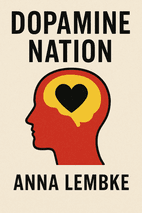
Dopamine Nation by Anna Lembke Book Cover

by Anna Lembke

Anna Lembke's Dopamine Nation explores the neuroscience of addiction in an age of abundance, explaining how pleasure-seeking leads to compulsive cycles. It offers a practical path to reset through dopamine fasting, written for anyone struggling with overconsumption of substances, technology, or behaviors.

On Insta.page you also get an Apply This Book tool that lets you combine insights from up to 3 books to solve your specific situation.

Chapter mindmaps

Free preview: chapters 1–4 are fully interactive. Click any node to expand or collapse. Subscribe to unlock the rest.

Chapter 1: Introduction: The Problem

Key concepts: Introduction: The Problem

1. Introduction: The Problem

The Modern Dilemma: Pleasure and Pain in Abundance

  • The central problem is managing pleasure and pain in a world saturated with instantly gratifying experiences
  • Addiction is not a distant pathology but a magnified mirror of everyday struggles
  • We've shifted from a world of scarcity to one where overconsumption is the default risk
  • The smartphone represents 'the modern-day hypodermic needle' delivering digital dopamine constantly

The Neurological Balance: How Pleasure Creates Pain

  • Pleasure and pain are processed in the same brain region like a balance scale
  • The moment we crave more of something enjoyable is when the balance has tipped
  • Pleasure inadvertently generates a counterweight of lack or pain
  • Dopamine serves as the universal gauge for an experience's addictive potential

Sources of Wisdom: Neuroscience Meets Recovery Stories

  • Cold neuroscience alone is insufficient to address the problem
  • Lived wisdom from people in recovery serves as powerful parables
  • Individuals with severe addictions act as contemporary prophets revealing human truths
  • Their stories reflect amplified versions of universal human struggles

The Path Forward: Integrating Science and Recovery Principles

  • The goal is not to eliminate pleasure but to find sustainable balance
  • Solution lies in marrying the 'science of desire' with the 'wisdom of recovery'
  • Offers practical strategies for compulsive behaviors in consumption-driven world
  • Understanding this dynamic is a necessity for wellbeing, not a luxury

Chapter 2: Chapter 1: Our Masturbation Machines

Key concepts: Chapter 1: Our Masturbation Machines

2. Chapter 1: Our Masturbation Machines

The Therapeutic Setting and Initial Revelation

  • Jacob arrives at therapy, a man in his early sixties radiating anxiety, to discuss his 'sex addiction'
  • The therapist's office is a curated sanctuary for secrets, yet bounded by professional isolation
  • Jacob begins with a childhood memory of guilt-free masturbation, shattered by religious fear of 'mortal sin'
  • This religious guilt initiates a lifelong 'double life' of secret indulgence and shameful confession

The Invention of the Masturbation Machine

  • As a lonely 18-year-old student, Jacob engineers a complex mechanical device for sustained arousal
  • The machine uses a record player, metal rod, and cloth-wrapped coil for micro-adjustable stimulation
  • It allows him to hover in a pre-orgasmic state for hours, creating an intensely addictive experience
  • Cycles of shame lead to repeated dismantling and reassembly of the device

The Therapist's Parallel Compulsion

  • The therapist confesses her own addiction to romance and erotic novels, escalated by Kindle technology
  • Her reading becomes compulsive, neglecting family and work, seeking only the 'fix' of climactic scenes
  • This serves as a bridge, framing such behaviors as symptoms of a widespread condition, not rare pathology
  • A moment of clarity with Fifty Shades of Grey reveals the emptiness of retreat into fantasy

Technological Escalation and Collapse

  • Jacob's controlled world falls apart with the advent of internet pornography in 1995
  • A pivotal 1999 incident: he stays up all night watching porn instead of preparing a major conference speech
  • Futile attempts at self-control lead to professional ruin and suicidal despair
  • This illustrates how technology exponentially increases the potency and availability of addictive experiences

Limbic Capitalism and Social Contagion

  • Jacob's story exemplifies 'limbic capitalism': markets exploiting reward-seeking brains through technology
  • His addiction evolves into performance: building programmable machines and entering live internet chat rooms
  • The internet acts as a vector for 'social contagion', suggesting and normalizing extreme behaviors
  • This digital life destroys his marriage as he cedes remote control to strangers online

The Global Crisis of Compulsive Consumption

  • Rising addiction rates and 'deaths of despair' are fueled by social inequality and high-potency stimuli
  • Jacob hooked to his machine becomes a metaphor for humanity's unsustainable cycle of consumption
  • Compulsive overconsumption threatens not just individual lives but the planet itself
  • The chapter frames personal tragedy within a systemic crisis amplified by technology and markets

The Era of Limbic Capitalism

  • Easy access is a primary driver of addiction, as demonstrated by the opioid epidemic and Prohibition's success in reducing alcohol harm.
  • Modern technology and market forces have exponentially increased the potency, variety, and availability of addictive substances and behaviors.
  • This includes engineered products like hyper-palatable foods, potent drugs, and digital platforms designed with addictive features like variable rewards.
  • Both substance-based and behavioral addictions (like Kindle use or online shopping) are symptoms of the same technological ecosystem.

Technological Escalation of Addiction

  • Addiction can expand beyond the core behavior to encompass the entire cycle of engineering and optimizing the means of gratification.
  • Jacob's progression from pornography to building a programmable 'masturbation machine' illustrates how the pursuit itself becomes addictive.
  • The addiction further escalates into social validation through live performances and ceding remote control to online audiences.
  • Despite cycles of shame, destruction of the machine, and promises to quit, the compulsive drive proves overwhelming, leading to rebuilding and despair.

Internet as Behavioral Contagion Vector

  • The internet doesn't just provide access but actively suggests, normalizes, and spreads extreme behaviors to vulnerable individuals.
  • Pathological scripts can be introduced to those who would otherwise never encounter them, as shown by the case of the six-year-old influenced by anime.
  • Online, behaviors become socially contagious 'memes' that reshape perceptions of normality through sheer visibility and repetition.

Societal and Planetary Costs of Addiction

  • Compulsive overconsumption is a global epidemic, with 70% of global deaths linked to modifiable risks like poor diet and inactivity.
  • Social inequality creates a 'dangerous nexus' where the poor face easy access to high-potency stimuli alongside a lack of opportunity and stability.
  • This fuels 'deaths of despair'—rising mortality from drugs, alcohol, and suicide among disadvantaged populations.
  • The cycle of reward-seeking, amplified by technology, threatens planetary sustainability through resource depletion and climate change.
  • Jacob's isolation with his machine serves as a metaphor for humanity's dangerous trajectory toward collective demise.

Chapter 3: Chapter 2: Running from Pain

Key concepts: Chapter 2: Running from Pain

3. Chapter 2: Running from Pain

David's Story: From Anxiety to Polypharmacy Addiction

  • Social anxiety in college led to quick diagnoses of ADD/GAD and prescriptions for Paxil and Adderall
  • Medications created a cycle of dependence, with Adderall becoming a crutch for procrastination
  • Medicalization of distress diverted him from his passion (engineering) to a less demanding path
  • Pills offered 'comfort' as an easier alternative to facing underlying pain and struggles

The Cultural Mandate for Happiness

  • Society promotes formulas for happiness as paramount goals
  • Philip Rieff's 'psychological man' concept: humans born to be pleased
  • Ross Douthat's critique of 'God Within' theology prioritizing self-fulfillment over moral struggle
  • Altruism reframed as self-improvement strategy rather than intrinsic good

Fragility of the Modern Self: Parenting and Childhood

  • Parents fear imposing rules will 'traumatize' children (Kevin's example)
  • Freud's trauma insight evolved into belief that children are psychologically fragile
  • Oversanitized and overpathologized childhood environments
  • Children raised in 'padded cell' equivalents, ill-equipped for real-world challenges

Medicalization of Discomfort

  • Historical view of pain as biologically useful replaced by expectation of complete elimination
  • Massive prescription rates: over 25% of US adults take psychiatric drugs
  • Global antidepressant use soaring, stimulant prescriptions doubled
  • David's progression to full cycle of uppers (Adderall) and downers (Ambien, Ativan)

Addiction to Distraction

  • Societal 'appetite for distractions' (Huxley and Postman)
  • Preference for entertainment over exchange of ideas
  • Terror of boredom and the unmediated self (Sophie's example)
  • Constant distraction severs connection to personal experience

The Unraveling: Paradox of Chemical Coping

  • David's decade-long chemical coping mechanism eventually unravels
  • Attributes fatigue/inattention to mental illness rather than drug consequences
  • Common paradox: drugs compensating for poor self-care create symptoms justifying more drugs
  • Hidden addiction surfaces with suicidal thoughts, leading to hospitalization

The Painful Price of Avoidance

  • Despite insulation efforts, society is becoming unhappier with more pain
  • US happiness scores declining, anxiety more prevalent in wealthy countries
  • Americans report physical pain more often than people in other nations
  • Misery linked to frantic avoidance efforts, reducing resilience and authentic experience

Core Insights and Implications

  • Quick pharmaceutical fixes foster dependence while ignoring root causes
  • Cultural focus on happiness and overprotection weakens psychological resilience
  • Relentless pursuit of pain-free life correlates with rising anxiety, depression, and pain
  • Discomfort has value for self-discovery, creativity, and building life tolerance

Chapter 4: Chapter 3: The Pleasure-Pain Balance

Key concepts: Chapter 3: The Pleasure-Pain Balance

4. Chapter 3: The Pleasure-Pain Balance

Dopamine: The Molecule of Wanting

  • Dopamine is a key neurotransmitter for motivation and wanting, not just pleasure or liking.
  • Addictive potential is linked to the intensity and speed of dopamine release in the brain's reward pathway.
  • Examples show a hierarchy of dopamine release: from chocolate (55%) to amphetamine (1,000%).

The Opponent-Process Mechanism

  • Pleasure and pain are processed in overlapping brain regions through a balancing system.
  • Homeostatic mechanisms automatically work to restore equilibrium after pleasure, creating an opposing pain or craving.
  • This creates a fundamental, reflexive relationship: for every pleasure, there is subsequent opposing pain.

Tolerance and the Shifting Set Point

  • Repeated exposure causes neuroadaptation: pleasure weakens while opposing pain strengthens (tolerance).
  • Prolonged overconsumption can lower the hedonic set point, weighting the balance toward pain.
  • This is illustrated by conditions like opioid-induced hyperalgesia and the dopamine deficit state in addiction.

Cues, Craving, and Lasting Change

  • Environmental cues (people, places, things) can trigger the reward cycle through classical conditioning.
  • Unpredictability of rewards (e.g., in gambling) powerfully fuels craving cycles.
  • High-dopamine experiences create lasting structural brain changes, but recovery is possible through new neural pathways.

Individual Differences and Modern Implications

  • Individual experience varies: everyone has a unique 'drug of choice' and starting balance.
  • Those with a pain-tipped balance (e.g., from depression) are more vulnerable to addiction.
  • Our ancient reward circuitry is maladapted for today's world of abundant, high-dopamine stimuli, making recovery wisdom vital for everyone.

Continue exploring Dopamine Nation