Crossroads Key Takeaways
by Dusty Baker
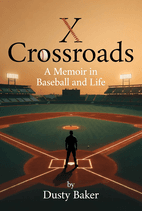
5 Main Takeaways from Crossroads
Stay True to Your Strengths—Don't Try to Be Someone Else
Baker learned early that swinging for home runs when you're a speed guy derails your game. He emphasizes the danger of abandoning your natural talents to meet others' expectations, citing Hank Aaron's simple question—'Do you have enough confidence?'—as a turning point. The lesson: knowing and trusting your core abilities is the foundation of long-term success.
Forgive and Reconcile: Healing Family Wounds Is a Lifelong Gift
Baker's reconciliation with his father over the misused bonus money was one of the most important moments of his life. He shows that admitting you're wrong and rebuilding a broken relationship requires humility and forgiveness. The payoff is profound—it freed him from bitterness and allowed him to carry that lesson into his own parenting.
Cultivate a Diverse Mentor Network for Wisdom Beyond Your Field
Baker's 'Grand Council' of mentors from different domains—including Bill Walsh's cue cards on Standard of Performance—proved vital. He shows that wisdom comes from listening to people who have walked different paths. Regularly rotating that brain trust keeps you grounded and continuously learning.
Prioritize Your Health—Regular Screening and Knowing Your Limits Save Lives
From playing hurt with a bowling sleeve to his prostate cancer scare and two pacemakers, Baker stresses aggressive health monitoring. His sleep apnea machine and defibrillator likely saved his life, and he insists African American men must be especially vigilant. Knowing when to say no to career pressure, like turning down a big-league promotion out of exhaustion, is just as critical.
Let Go of Resentment: Baseball and Life Both Require Moving On
Baker's epilogue centers on the art of letting go—'you can't carry one at-bat into the next.' Whether facing an IRS cover-up, a playoff collapse, or being fired after 192 wins, he chose forgiveness over bitterness. His daily reflection and reading keep him centered, and he argues that holding onto resentment hollows you out and blocks you from seeing the good.
Executive Analysis
These five takeaways weave together Dusty Baker's central thesis: that a life well-lived in sports and beyond is built on authenticity, disciplined relationships, proactive health, and the courage to release what cannot be changed. Each insight flows from a specific crossroads he faced—from rejecting a false identity at the plate to reconciling with his father, from building a council of mentors to surviving cancer, and finally learning to let go of defeat and injustice. The book argues that success is not a straight line but a series of conscious choices to stay true to oneself, forgive, seek diverse wisdom, protect one's health, and move forward without resentment.
Crossroads matters because it reframes the baseball memoir as a leadership and life manual for anyone navigating career, family, and personal crises. Baker’s voice is uniquely practical—he doesn't preach but shows, through vivid stories (Hank Aaron's home run, the 2002 World Series meltdown, President Obama’s calm), how these principles work under pressure. In a genre crowded with tactical how-to guides, Baker offers something rarer: a philosophy of resilience forged over five decades, making it essential reading for managers, athletes, parents, and anyone standing at their own crossroads.
Chapter-by-Chapter Key Takeaways
Please God, Not the South (Chapter 2)
Trying to be something you’re not—like swinging for home runs when you’re a speed guy—can derail your game. Stay true to your strengths.
The people who believe in you make all the difference: Spider Jorgensen’s low-key coaching, Bill Wight’s persistence, and a mother who trusted your dreams.
Hard choices often involve balancing family responsibilities, personal ambition, and the expectations of others. Hank Aaron’s simple question—“Do you have enough confidence?”—cut through the noise.
Music and culture in the 1960s shaped a generation’s worldview. The Monterey Pop Festival wasn’t just fun; it was a lens through which many young people saw the world changing.
The South I feared turned out to be the place that launched my career. Sometimes your biggest dread becomes your greatest opportunity.
Try this: Embrace your unique strengths and seek out those who believe in you, even when facing environments you dread—those challenges can become your greatest opportunities.
“Up Against the Wall, Boy” (Chapter 3)
Turning down a big-league promotion out of exhaustion taught him the importance of knowing his limits and prioritizing his health over career pressure.
The street life in Richmond—the prostitutes, pushers, and pimps who looked out for them—provided a gritty, real-world education beyond baseball.
The realization that his dad's investment of his bonus money was a gift, not a punishment, sparked a profound reconciliation and a lifelong interest in the stock market.
Admitting he was wrong and rebuilding that relationship was one of the most important moments of his life—learning that humility and forgiveness can heal even the deepest family wounds.
Try this: Honor your own limits, learn from gritty real-world experiences, and humbly admit when you're wrong to heal family relationships.
715 (Chapter 5)
Hank Aaron's 715th home run was a world event, not just a baseball feat—a Black man receiving a standing ovation in the Deep South for breaking Babe Ruth's record. The celebration included his mother shielding him from death threats.
Winter ball in Mexico, Puerto Rico, and Venezuela was crucial for my development, both for learning the curveball and for building lifelong camaraderie with Latin American teammates.
The bond among minority players was strong; they looked out for each other, especially during holidays. That experience later shaped how I managed.
Leaving the Braves after Hank's departure felt like losing a protector. The trade to the Dodgers came out of nowhere—I learned I was traded by seeing it on a motel TV during a cross-country drive.
Try this: Seek out diverse experiences and form deep bonds with those who share your journey; these connections will protect and shape you when unexpected changes come.
High Five (Chapter 6)
Trust your instincts at the plate, even when a walk feels like a slight—but never try to do too much.
The postseason is where legends are made; clutch hitting and smart baserunning win series.
Personal struggles at home inevitably affect performance—talking to a trusted coach or friend can help you survive.
A manager must sometimes go with the hot young hand over the safe veteran choice.
Maintain balance: baseball comes first, partying second. Sleep on schedule. Know your limits with substances.
Try this: Trust your instincts under pressure but never overreach; maintain balance in life, and as a leader, make tough choices that prioritize present performance over past loyalty.
World Series Champs (Chapter 7)
Playing hurt demanded creativity—using DMSO, a bowling sleeve, and hiding the injury from opponents who didn’t know his swing.
Inches decided critical plays: missed tags, trap catches, and borderline strikes all shaped the series.
Sharing scouting insights with teammates (moving up in the box to beat Guidry’s slider) proved as valuable as personal performance.
The World Series win was a collective triumph, with three co-MVPs and a team that carried him across the finish line.
Accepting that a championship can be both a personal peak and a valley is a crucial lesson in humility and perspective.
Try this: Use creativity and teamwork to overcome physical limitations, and humbly accept that victory can be both a peak and a valley, teaching perspective.
A Giant Tap on the Shoulder (Chapter 9)
Years of drug testing humiliation finally pushed me to quit, but Al Rosen intervened and stopped it.
My first managing gig came in the Arizona Fall League, where I earned respect by prioritizing player development over winning.
The Giants’ chaotic sale and the signing of Barry Bonds defined my new era as manager.
Managing a superstar means letting them run—Barry’s talent and work ethic required little interference.
Al Rosen’s early forecast was correct: five years after he said I’d be ready, I became Giants manager.
Try this: Prioritize player development over winning when building a team, let superstars be themselves, and trust that the right opportunity will come in its own time.
Manager of the Year (Chapter 10)
Manager of the Year was a meaningful honor but secondary to winning the division
Being the second Black manager to win the award added historical weight and personal reflection on Jackie Robinson’s legacy
The award didn’t guarantee job security—many winners were fired soon after
The long-term vision remained clear: a World Series title and a Hall of Fame plaque, first as a player, now as a manager
Try this: Keep your long-term vision clear—awards are secondary to lasting impact, and remember that historical milestones carry weight but do not guarantee security.
When Life Throws You Another Curve (Chapter 11)
The IRS Cover-Up: A systemic failure buried the national settlement offer I should have received. Karen Hawkins’s relentless pursuit revealed the appeals officer’s deliberate stonewalling.
Bill Walsh’s Cue Cards: His “Standard of Performance” and “Loser’s Explanations” are timeless lessons in focus, preparation, and accountability—applicable far beyond sports.
The Grand Council: Cultivate a rotating brain trust of mentors from different fields. Wisdom comes from listening to those who’ve walked different paths.
Prostate Cancer Awareness: Regular PSA monitoring saved my life. African American men face higher risks and must be aggressive about screening.
Finding Shelter in the Storm: That Kauai mountain experience taught
Try this: Develop a system of accountability and a rotating brain trust of mentors from different fields, and prioritize regular health screenings to catch hidden threats.
Eight Outs Away (Chapter 12)
Eight outs from glory: A 5–0 lead evaporated in Game 6 when Spiezio hit a three-run homer off Félix Rodríguez, followed by the Angels’ relentless comeback.
Rituals and routines: Small disruptions—like Félix’s inability to fling the ball into the dugout—can affect players’ mental readiness.
Game 7 heartbreak: Dusty chose Livan Hernandez over Kirk Rueter, but a 4–1 deficit held, marking the end of the Giants’ season.
Personal fallout: The loss hit Dusty deeply, especially seeing his son Darren’s anguish and hearing his father’s grim prediction.
Farewell to San Francisco: The fan gathering at Pac Bell was an emotional goodbye as Dusty’s contract ended, propelling him to prove his dad wrong and chase another championship.
Try this: Protect your team’s routines from small disruptions, and when heartbreaking losses occur, channel the pain into motivation to prove doubters wrong.
Chicago, Chicago (Chapter 13)
Dusty’s final season was marked by loneliness and hostility, but he found solace in longtime friends and one unlikely young fan, Matt Starcevich, whom he mentored for years.
After being fired, the Cubs were sold and rebuilt with a huge budget under Lou Piniella; Dusty held no bitterness toward Lou.
The chance meeting with Barack Obama at a 2004 barbecue became a meaningful friendship, rooted in shared discussions about race, background, and the simple miracle of being able to speak freely.
Dusty saw in Obama the same inner calm he prized in elite athletes—a quality that made him believe, for the first time, that a Black president was possible.
Try this: Even in hostile environments, find solace in genuine friendships and unexpected connections; let go of bitterness toward successors and see the bigger picture.
“I Don’t Want My Daddy to Die” (Chapter 14)
The 2012 NLDS loss to the Giants was a turning point—one missed decision (sticking with Latos against Posey) haunted me, and the team that beat us went on to win the World Series for a second time.
My health scare led me to Dr. Reggie Low, whose treatments (sleep apnea machine, defibrillator, ablations) likely saved my life and allowed me to keep managing without missing a day.
The 2013 wild-card loss and subsequent firing by Bob Castellini hurt deeply—I had one year left on my contract and felt I still had the team to win, but sometimes you can’t change a man’s mind once it’s made.
The chapter closes not with bitterness, but with gratitude: for my family, for my second chance at life, and for the moments that matter more than any pennant.
Try this: Trust your gut on critical decisions, prioritize your health with aggressive monitoring, and choose gratitude over resentment when outcomes are beyond your control.
In the Nation’s Capital (Chapter 15)
A critical missed interference call and a catcher’s interference directly contributed to a 9-8 playoff loss that ended the season.
Despite back-to-back division titles and 192 wins, ownership decided not to bring the manager back—highlighting how success doesn’t always guarantee job security.
The decision felt personal, but the manager ultimately accepted it as a business reality, not a reflection of the job he’d done.
Try this: Even when success (192 wins) doesn’t guarantee job security, accept the business reality without letting it become personal; focus on what you can control.
Champagne Showers in Houston (Chapter 16)
Baker craved a second ring even in the midst of celebrating the first, keeping his retirement plans private after Bochy's caution.
A second pacemaker in August 2023 reinforced his awareness of age and mortality, though he didn't miss a game.
Sticking with Maldonado over Diaz sparked criticism, but Baker prioritized experience for a championship run.
The ALCS loss to the Rangers convinced Baker it was time—he didn't want to be a year too late.
Darren's call-up and first big-league hit—a pinch-hit single—was the emotional payoff of a lifetime spent teaching the game to his son.
Try this: Know when it’s time to step away—don’t stay a year too long; prioritize championship experience over flashy stats, and savor family milestones like your son’s first hit.
Take the Road to the Right (Epilogue)
Letting go of resentment is essential; holding onto it hollows you out and blocks you from seeing the good.
Daily reflection and reading—whether scripture, wisdom literature, or other sources—helps maintain clarity and perspective.
Forgiveness is one of the hardest things we do, but it's the path to freedom.
Baseball teaches the art of letting go: you can't carry one at-bat into the next, and life works the same way.
Unexpected encounters with people—from a car polisher to a president's son—can leave lasting lessons in humility and purpose.
At every crossroads, choose the road to the right—do the right thing, even when it's hard.
Try this: Practice daily reflection and forgiveness to clear resentment; at every crossroads, choose the harder right over the easier wrong.
Continue Exploring
- Read the full chapter-by-chapter summary →
- Best quotes from Crossroads → (coming soon)
- Explore more book summaries →