Build Key Takeaways
by Tony Fadell
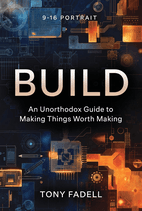
5 Main Takeaways from Build
Follow your curiosity, not the paycheck.
Tony Fadell argues that the best careers are built on learning and genuine interest, not on chasing the highest salary or prestige. He points to his own path at General Magic and Nest, where the willingness to embrace risk and failure—especially in your twenties—led to far more growth than any safe corporate job.
Think like your manager, then look up and around.
To accelerate your career, you must understand the mission beyond your own role—spend 20% of your time looking up at company goals and talking to teams outside your own. Fadell warns that focusing only on your desk blinds you to market shifts and organizational walls that you need to navigate.
Manage people, not processes or old work.
Once you become a manager, your job is 85% people: hiring, coaching, building successors, and fostering trust. Micromanagement kills morale; instead, focus on outcomes, be radically honest, and manage yourself first through therapy or mindfulness.
Build for today's pain, not a visionary future.
General Magic failed because it solved a problem the world wasn’t ready for. Fadell insists you must address a present-day, widespread pain point—a “painkiller,” not a “vitamin”—and balance disruption with airtight execution. V1 should ship in 9–18 months, using external deadlines to force real decisions.
Design thinking and storytelling are everyone's job.
Great products come from prototyping every touchpoint (from unboxing to support) and using analogies and emotion to tell a compelling “why.” Fadell shows how Nest’s screwdriver turned a frustration into a delight, proving that design and narrative aren’t just for marketers—they’re core to building and selling anything.
Executive Analysis
These five takeaways form the spine of Tony Fadell’s central argument: building extraordinary products and careers requires a relentless focus on real human problems, a willingness to learn through failure, and a shift from individual contributor to leader—where you manage people, communicate vision, and design every touchpoint. Together, they reject the myth that success comes from a genius idea or a safe path; instead, it emerges from curiosity, iterative risk-taking, and deliberate culture-building.
This book matters because it bridges the gap between Silicon Valley insider wisdom and practical, day-by-day execution. Fadell, the co-creator of the iPod and Nest, offers a rare blend of hard-won lessons from failures (General Magic) and triumphs (iPhone, Nest), making it a definitive guide for aspiring founders, product managers, and anyone trying to make a dent. Unlike generic business books, "Build" provides actionable frameworks—like the Three Generations of product evolution, the messaging activation matrix, and the “fix first, blame later” crisis playbook—that readers can apply immediately.
Chapter-by-Chapter Key Takeaways
Chapter 1.1: Adulthood (Chapter 1)
Ask "What do I want to learn?" before "How much money?" – The best careers follow curiosity, not a business school playbook.
Embrace the window of risk – Your twenties are the only time your decisions are truly your own. Use them to be bold.
Failure is a feature, not a bug – "Do, fail, learn" is the real syllabus of adulthood. You'll learn more from your first colossal failure than from your first success.
Productive struggle is how you grow – You can't skip the hard stuff. Seek environments where you're surrounded by people who've earned their scars.
Technology without human insight is useless – General Magic built something amazing, but they didn't solve a real problem for real people. That's the lesson that changed everything.
Try this: Before accepting any job offer, ask yourself what you will learn and whether the environment will push you into productive struggle, not just a bigger paycheck.
Chapter 1.2: Get a Job (Chapter 2)
Look for companies that solve a present-day pain point with novel technology, flexible leadership, and a fresh perspective on a problem.
Building ahead of its time (like General Magic) fails if the infrastructure, customers, and timing aren’t aligned. Solve a problem the world has today.
Avoid management consulting as a career; it teaches you to observe, not to build. If you do it, treat it as a brief stopover.
If you’re truly passionate about a field that’s too early, follow it anyway. Find your community and stay the course—your moment will come.
Your job is your chance to make a dent. Choose deliberately and work with purpose.
Try this: When job hunting, prioritize companies solving a present-day pain point with novel technology and a flexible leadership style—ignore perks and prestige.
Chapter 1.3: Heroes (Chapter 3)
People, not perks, define a great job. Focus on finding colleagues you truly respect, not the largest paycheck or fanciest title.
Become the most knowledgeable person you can be. Follow your curiosity relentlessly; deep, self-directed learning is a unique advantage.
Reach out to your heroes with value, not demands. Offer a smart question, a cool insight, or persistent helpfulness. Over time, connections form.
Aim for small companies (30–100 people) with rock stars. You’ll have more impact, newer experiences, and a shared sense of mission. Avoid getting lost in big-company red tape.
Hero worship fades into mutual respect. Help your heroes where they’re weak, earn their trust, and build relationships that last beyond any single job.
Try this: Reach out to a hero this week with a specific, thoughtful question or insight, not a request for a job or favor.
Chapter 1.4: Don’t (Only) Look Down (Chapter 4)
Your job isn’t just your job. The quickest way to accelerate your career is to start thinking like your manager or CEO. Understand the mission and the medium-term milestones.
Spend 20% of your time looking up and around. The other 80% is for deep work, but that 20% is what saves you from walking into a wall.
Talk to people outside your immediate team. Marketing, support, internal customers, and even skeptics have perspectives you can’t see from your desk.
The mission is worth keeping; the path is not sacred. When you see a brick wall, don’t abandon the mission—find a new route. That might mean pivoting within your company or leaving for a new one.
You’ll screw up the first time—and that’s okay. Everyone encounters these questions eventually. The sooner you start looking up and around, the sooner you’ll learn to navigate them.
Try this: Spend 20% of your work time this month talking to people outside your immediate team—especially marketing, support, and skeptics—to uncover blind spots.
Chapter 2.1: Just Managing (Chapter 5)
You don't have to be a manager to be successful. Star individual contributors are highly valued—know the IC trajectory in your organization.
Managing is a learned skill. Read, take classes, find mentors, and be honest about being new.
Focus on outcomes, not processes. Let the team decide how to work; you steer what gets done.
Micromanagement kills trust. Giving detailed feedback on results is your job; dictating step-by-step methods is not.
Honesty > style. Loud or quiet, as long as you respectfully tell the truth, you can lead.
Build your successors. Hire people who can do your job better; their success becomes your success.
Manage yourself first. Therapy, mindfulness, self‑awareness—these are management tools, not signs of weakness.
Your new job is people. 85% of your time should be spent on management tasks, not the old work you loved.
Try this: If you’re a new manager, spend 85% of your time on people tasks (coaching, hiring, 1:1s) and resist the urge to do the old technical work yourself.
Chapter 2.2: Data Versus Opinion (Chapter 6)
Recognize whether a decision is data-driven or opinion-driven; don’t try to fake the latter with endless data collection.
Data is a tool, not a decision-maker. It can diagnose problems but won’t design solutions.
A/B tests are great for micro-optimizations, useless for core product vision.
When you must make an opinion-driven call, explain your thinking, listen to dissent, then take responsibility and move forward.
If leadership demands impossible data, tell a compelling story that builds trust and aligns everyone around a shared leap of faith.
The best approach is data and intuition—never one without the other.
Try this: Before making a decision, classify it as data-driven or opinion-driven—stop collecting data for opinion calls and instead explain your reasoning clearly.
Chapter 2.3: Assholes (Chapter 7)
Not every difficult person is an asshole. Mission-driven people are passionate but trustworthy—they push for the work, not for themselves. Ask “why” to find out which kind you’re dealing with.
Real assholes come in three flavors: political (credit-stealing, risk-averse), controlling (micromanaging, credit-stealing, ego-driven), and plain assholes (incompetent, mean, and short-lived).
Deal with assholes in order: kindness, ignoring, going around them, and finally quitting. Never skip to the nuclear option without trying peace first.
Build your own coalition—focused on customer value, not on fighting. A unified team with data and a clear narrative can neutralize a political mafia.
Most people aren’t assholes. Assume the best, because even the nicest people can have a bad day. Start with empathy, but be ready to protect yourself and your team when trust is broken.
Try this: When dealing with a difficult colleague, first ask 'why' to distinguish passion from politics, then escalate through kindness, ignoring, going around, and only then quitting.
Chapter 2.4: I Quit (Chapter 8)
Take the long-shot bet when your alternative is dying faster—it might just be the pivot that changes everything.
Ten months from a Styrofoam model to a shipped product is possible when you focus on the core vision and build your team around it.
Repeated success doesn’t feel like success when you’re in it; it’s still just work, day by day.
Real growth comes from learning to lead under pressure—figuring out how to organize people and decisions when the stakes are high and the pace is relentless.
Try this: When you feel stuck, consider taking a long-shot bet—like pivoting your project or role—especially if your current path is dying faster.
Chapter 3.1: Make the Intangible Tangible (Chapter 9)
Your product is only a tiny slice of the customer journey. The rest—discovery, purchase, setup, support, disposal—shapes brand perception just as much.
Prototype the intangible. Make marketing, installation, and support as real and testable as the hardware or software. Use boxes, wireframes, mood boards, personas, and mock-ups.
Hardware is a last resort. Only build atoms when the experience truly demands it. And even then, don’t let the shiny object blind you to the rest of the chain.
Every touchpoint is a chance to delight or frustrate. The Nest screwdriver turned a pain point into a love point—and saved support costs while driving word-of-mouth. Think beyond the obvious.
Try this: Map out the entire customer journey from discovery to disposal, and prototype every touchpoint—not just the product—to find hidden delights.
Chapter 3.2: Why Storytelling (Chapter 10)
Start with “why”—the reason your product needs to exist—before focusing on “how” or “what.”
Use the virus of doubt: remind customers of their frustrations before presenting your solution.
A product's story includes design, features, images, customer quotes, and every touchpoint—not just words.
Analogies make complex ideas simple and shareable; they give customers a way to sell your product for you.
Blend facts and feelings: data anchors your argument, emotion makes it compelling.
Craft stories that are so clear and memorable that customers will repeat them to others.
Try this: Start your next presentation with your customer’s frustration (the virus of doubt) before introducing your solution—use an analogy they can repeat.
Chapter 3.3: Evolution Versus Disruption Versus Execution (Chapter 11)
V1 should be disruptive—bold enough to make people take notice—but execution must be airtight. Disruption without execution is a demo, not a product.
Evolution comes in V2 and beyond. Refine based on customer data, but protect the quintessential features that define your product's identity.
Disruption creates enemies. Expect denial, then anger, then litigation. If you're not making someone laugh or sue, you're probably not disrupting enough.
Avoid overshooting. Don't change too many things at once, and don't let a disruptive vision wither because the technology is hard. Find the balance.
You must disrupt yourself before competitors do. The moment you hit peak market share is the moment you're most vulnerable to stagnation.
Disruption can extend beyond the product. Be prepared to rethink channels, business models, and entire market categories to make your innovation work.
Try this: For a new product, make V1 disruptive but execution-perfect; use V2+ for evolutionary refinements based on customer data, but protect the core identity.
Chapter 3.4: Your First Adventure—and Your Second (Chapter 12)
For V1, prioritize vision over data; for V2, prioritize data over vision.
The team dynamic mirrors the product: V1 teams need to build trust; V2 teams can move faster because they already have it.
Steve Jobs was right on the iPhone (vision won) and wrong on the iPod (data won)—know which phase you’re in.
Write your press release at the start. When you can truthfully send it, you’re ready to ship.
If V1 fails, do an honest postmortem. Learn, then try again.
Try this: Write your press release before building V1; when you can honestly send it, you’re ready to ship.
Chapter 3.5: Heartbeats and Handcuffs (Chapter 13)
External deadlines (conferences, holidays, competitors) are the most powerful constraints—they force real decisions.
Before V1, create strong internal heartbeats: team rhythms and project syncs. Keep them steady and simple (weeks/months, not half-days).
Handcuff yourself to short, hard deadlines—reset fast when a concept fails. Don’t let one attempt drag on.
Keep your early team tiny (under ten people) and your budget lean to avoid bloat and indecision.
V1 should ship in 9–18 months. Longer than 24 months usually means something is wrong.
Once launched, set 2–4 external announcements per year. Too many confuses customers; too few makes you forgettable.
Predictability is a gift: it aligns teams, trains new arrivals, and builds trust with the market. Own your heartbeat when you can.
Try this: Set a hard external deadline for V1 (like a conference or holiday) and keep your early team under ten people to force rapid, focused decisions.
Chapter 3.6: Three Generations (Chapter 14)
Creation is organic – A great idea starts as a single cell; nurture it, and it will divide and grow into something whole and complex.
Experience doesn’t erase fear – Even after building iconic products, starting from scratch brings joy, fear, and amazement—and that’s normal.
Stress is part of the process – “Almost passing out from stress” isn’t hyperbole; it’s a real part of building something meaningful.
Growth never stops – The hardest lesson is learning to adapt when your “baby” matures into something that no longer needs you in the same way.
Try this: Embrace the fear and stress of starting something new—even experienced builders feel it; it’s a sign you care, not that you’re wrong.
Chapter 4.1: How to Spot a Great Idea (Chapter 15)
A great idea must solve for “why,” address a widespread daily problem, and haunt you until you act.
Practice delayed intuition: the more exciting the idea, the longer you should research and prototype before committing.
Target painkiller problems (essential fixes), not vitamin niceties (optional perks).
Let the idea chase you through the seven-phase process; if it doesn’t, it’s a distraction.
Be transparent about risks when pitching—they can become your team’s competitive advantage.
V1 will always be terrifying. That fear is part of the signal that the idea matters.
Try this: When a new idea haunts you, test it by running it through a seven-phase process; if it doesn’t survive, it’s a distraction.
Chapter 4.2: Are You Ready? (Chapter 16)
The best preparation is experience: work at a startup first, then a big company, to learn how both operate.
Find a cofounder to share the crushing load, but keep the founding team to two or three people max.
Your first hires are crucial; aim for seed crystals who will attract more top talent.
A mentor is non-negotiable—someone who has done it before and will give you unvarnished truth.
Launching inside a big company only works if you have unique resources and executive air cover; otherwise, strike out on your own.
Readiness comes from doing the work, trusting your gut, and being honest about what you don’t know.
Try this: Before founding a company, work at both a startup and a big company, find a cofounder (max 3), and secure an experienced mentor who will give unvarnished truth.
Chapter 4.3: Marrying for Money (Chapter 17)
Funding is a marriage, not a transaction. Choose your investor as carefully as you would a life partner—because you’re stuck with them.
Know yourself first. Don’t raise money until you truly need it, and know exactly what you’ll use it for.
Vet your investor’s behavior during the courtship. If they play games, pressure you, or make promises they can’t keep, walk away.
Warm introductions and a compelling story are your best tools for rising above the noise.
Plan for a 3–5 month process and start when you don’t need the money to maintain leverage.
Angels offer freedom and risk – the emotional cost of losing a loved one’s money can be heavier than losing a VC’s. Weigh that carefully.
Try this: Treat fundraising like a marriage—vet investors during courtship, start when you don’t need the money, and plan for a 3–5 month process.
Chapter 4.4: You Can Only Have One Customer (Chapter 18)
A company must choose one primary customer (consumer or business) and orient everything around them.
Trying to serve two different customer types simultaneously leads to a confused product and culture.
Apple’s enterprise success came only because it never abandoned its consumer-first DNA.
In B2B2C models, the end consumer must remain the ultimate master, even if businesses pay the bills.
Selling user data to businesses can corrupt a company’s focus and harm the original consumer relationship.
Try this: Define your primary customer (consumer or business) and orient every decision around them—never try to serve two masters equally.
Chapter 4.5: Killing Yourself for Work (Chapter 19)
There are two kinds of work/life balance: the mythical one (impossible during crunch) and the real one (creating space for your brain and body while working most of the time).
To stay sane, you need a system: write everything down by hand, reprioritize weekly, share the list with your team, and hold people (and yourself) accountable.
Vacations aren’t optional—they build your team’s capabilities and give your mind time to rummage instead of ruminate.
Design your calendar explicitly: block time for thinking, exercise, eating well, and sleeping. Ban phones from the bedroom.
If you’re overwhelmed with scheduling, hire an assistant. They’re a partner, not a servant.
When you’re past your limit, recognize it and walk away. A bad decision made in exhaustion is worse than a day off.
Try this: Design your calendar to block time for thinking, exercise, and sleep; write tasks by hand and share weekly priorities with your team to stay sane.
Chapter 4.6: Crisis (Chapter 20)
Fix first, blame later. Focus on solving the problem, not assigning responsibility.
Command and control temporarily. Get into the weeds, then back off once the team is moving.
Overcommunicate constantly. Talk and listen to every stakeholder.
Accept responsibility publicly. No excuses, no cover-ups—own the mistake and apologize.
Don't go it alone. Seek advice from mentors and those who've been through similar crises.
Take care of people. Set limits on work hours, watch for burnout, and ensure the team sleeps and eats.
Turn crisis into legend. Afterward, celebrate and tell the story—it will fortify your culture for the next storm.
Try this: In a crisis, fix the problem first, then blame later; overcommunicate with all stakeholders, take public responsibility, and set limits on work hours to protect your team.
Chapter 5.1: Hiring (Chapter 21)
Invest in young talent and interns – they grow into your future leaders and keep your culture alive across generations.
Use a structured hiring process like the Three Crowns to involve the right people (internal customers) without burning out the whole company.
Interview for curiosity, story, and fit – simulate real work on a whiteboard, and enforce a strict “no assholes” policy.
Onboard new hires with positive micromanagement and cultural immersion (e.g., brown-bag lunches with leadership).
Fire with compassion and transparency – never surprise someone, and help them find a better opportunity.
Make people the first topic of every leadership meeting – retain, celebrate, and support your team before talking about product.
Try this: Invest in young talent early, use a structured hiring process like the Three Crowns, and fire with compassion and transparency when it’s not working.
Chapter 5.2: Breakpoints (Chapter 22)
Codify culture deliberately. The small traditions that bind people together need active investment to survive growth. Write down your values, share them, and weave them into hiring and onboarding.
Document processes explicitly. How your teams work shouldn't live only in people's heads. Make it repeatable so new hires can learn and old knowledge doesn't walk out the door.
Prepare for breakpoints before they hit. Ignoring them leads to role overlap, slowed work, cultural decay, and mass exits—often requiring months to recover.
Accept you'll lose some good people. Even perfect management can't keep everyone. That's okay. The losses won't be catastrophic if you've done the groundwork.
Your own role changes, too. As your team grows, you'll feel isolated and farther from the product. Prepare personally: find mentors, redefine your job ahead of each transition, and embrace the growth as an opportunity to become something new.
Try this: Codify your culture in writing before your team grows past 30 people—document values, processes, and traditions so they survive breakpoints.
Chapter 5.3: Design for Everyone (Chapter 23)
Design is a mindset, not a job title. Anyone can learn to think through problems systematically and find elegant solutions.
Use design thinking: understand your customer’s real pain before jumping to solutions.
Combat habituation by actively looking for frictions you’ve learned to ignore.
Don’t outsource a core problem before trying to solve it yourself. Doing builds your team’s design muscle.
The best innovations often come from noticing what everyone else accepts as normal—stay a beginner and keep asking “why?”
Try this: Actively look for frictions you’ve learned to ignore; treat design as a mindset everyone can use, not a job title, and ask ‘why’ obsessively.
Chapter 5.4: A Method to the Marketing (Chapter 24)
Marketing must be involved from the very beginning of product development, not tacked on at the end.
Use a messaging architecture to map every customer pain to a feature, and every emotional want to a rational need.
The messaging activation matrix ensures the right story reaches customers at the right touchpoint—don’t say everything everywhere.
Honest marketing beats flashy lies, and lawyers are your allies in staying honest.
Prototype your product story in parallel with the product itself; if a change breaks the story, speak up.
Expect to fail, learn, and iterate—marketing improves with every mistake you make and document.
Try this: Involve marketing from day one of product development, use a messaging architecture to map pain to features, and prototype your story alongside the product.
Chapter 5.5: The Point of PMs (Chapter 25)
Product management is not marketing, project management, or engineering—it's the centralized voice of the customer, responsible for both what gets built and how it's explained.
Splitting product management and product marketing kills coherence—the spec and messaging must be one unified story from day one.
Empathy is the PM's superpower—not just understanding customers, but becoming them, shedding expertise to see the product fresh.
A great PM empowers, not dictates—they set context, negotiate, influence without authority, and let the team make decisions together.
Hiring product managers is the hardest hiring there is—because the role is a unique combination of skills that can't be taught in a four-year degree.
Try this: If you’re a product manager, act as the centralized voice of the customer—combine product management and product marketing into one role to keep story and spec aligned.
Chapter 5.6: Death of a Sales Culture (Chapter 26)
Traditional commissions create two separate cultures (company vs. sales) and incentivize short-term thinking, hypercompetition, and dishonesty.
Vested commissions—paid out gradually and lost if the customer churns—align sales with long-term customer success.
Start new sales orgs with salary + stock, not cash commissions. For transitions, vest commissions in tranches.
Every sale should be a team effort, with customer success or support signing off on deals.
The right salespeople want this model; the wrong ones will self-select out. Let them.
Try this: Replace traditional sales commissions with vested commissions paid out over time—align sales with long-term customer success, not short-term closes.
Chapter 5.7: Lawyer Up (Chapter 27)
Big decisions often lack real planning. The Alphabet-to-Google-to-Alphabet flip-flop showed how opinion-driven leadership can override data and strategy, causing chaos for teams.
“Thoughtful” can be a mask for thoughtlessness. Watch for jargon that covers up a lack of real consideration or a plan being made up on the fly.
Protect your people from executive whims. Fadell refused to lay off half his team—he stood by the mission and the humans building it, even when the pressure was immense.
Not everything is strategic. Sometimes major corporate moves happen because of in-the-moment impulses, not long-term vision. You can’t control it, but you can choose how you respond.
Try this: Protect your team from executive whims by standing behind the mission and your people, even when pressured to make cuts or chase fads.
Chapter 6.1: Becoming CEO (Chapter 28)
The CEO sets the tone: what you care about becomes the company’s priority.
Three CEO types: babysitter (preserve), parent (push for greatness), incompetent (harmful). Aim to be a parent.
Care about everything—from support articles to internal tools. Mediocrity anywhere spreads.
Push past 90%. Going from 90 to 95% is halfway to perfect. Make excellence the norm.
Respect > being liked. Make hard decisions even if people resent you; delaying them erodes respect.
Good ideas can come from anywhere—avoid “not invented here” syndrome.
The job is lonely and you’ll never know if you’re succeeding in real time, but the freedom to execute your vision makes it worth it.
Try this: As CEO, set the tone by caring about everything from support articles to internal tools—push from 90% to 95% excellence and make hard decisions early.
Chapter 6.2: The Board (Chapter 29)
Board meetings should contain no surprises except good ones; prep each member one-on-one beforehand.
Three types of bad boards: indifferent, dictatorial, and inexperienced—each undermines the CEO in different ways.
A board is essential even for the best CEO; it provides accountability and a pressure-release valve.
Choose board members who are mentors, not just résumé builders: seed crystals, operators, skilled investors, and domain experts.
Always keep your team in the loop after board meetings to reduce stress and kill rumors.
Try this: Prepare board members one-on-one before each meeting to avoid surprises, and choose mentors over résumé-fillers when selecting directors.
Chapter 6.3: Buying and Being Bought (Chapter 30)
Culture compatibility matters more than deal terms—50 to 85% of mergers fail from cultural mismatches alone.
How you communicate internally is as important as your external messaging—one public statement can poison internal relationships for years.
Don’t trust bankers to care about long-term success—they are incentivized to close, not to nurture.
The dating phase of an acquisition is crucial—look for the dirty dishes and toenail clippings before signing anything.
Words mean different things in different companies—what sounds like a promise in one culture can be a vague intention in another.
Be wary of people who casually wander into your team after an acquisition—fight for the ones who are truly committed.
No matter how well you plan, things will change—stay cautiously optimistic, trust but verify, then leap.
Try this: When considering an acquisition, prioritize culture compatibility over deal terms, communicate openly with your team, and never trust bankers to care about long-term success.
Chapter 6.4: Fuck Massages (Chapter 31)
Benefits matter; perks are dangerous when overused. Invest in healthcare, retirement, and family support. Treat perks as rare surprises, not entitlements.
Free stuff creates entitlement. When something is always free, people stop valuing it and feel robbed when it disappears. Subsidize or make perks occasional to preserve their specialness.
Don't copy big tech perks without big tech margins. Google's culture is funded by massive advertising revenue. Most businesses can't sustain that model—and shouldn't try.
Perks can mask a broken core. If you need free massages to retain talent, your mission probably isn't compelling enough.
Keep the focus on the work. A company's culture should be built around its mission, not around the amenities in the break room. Perks are sugar, not sustenance.
Try this: Invest in substantive benefits like healthcare and retirement before adding perks like free food—perks should be rare surprises, not entitlements that mask a broken mission.
Chapter 6.5: Unbecoming CEO (Chapter 32)
Recognize the five signs it’s time to step down—market shifts, babysitter mode, board pressure, strong succession, or pure unhappiness.
Ego is the biggest barrier. Don’t let being CEO become your entire identity.
Leave during an upswing, with a clear plan, so the company thrives after you.
If you stay on as a founder, stay out of the way. Otherwise, you undermine the new CEO and create confusion.
Mourn the loss properly. Give yourself eighteen months to process, recover, and find new inspiration—without rushing into the next role.
Try this: Recognize the five signs it’s time to step down as CEO (market shifts, babysitter mode, board pressure, strong succession, unhappiness) and leave during an upswing with a clear plan.
Beyond Yourself (Conclusion)
The two lasting things in any career are the products you build and the people you build them with—relationships outlast companies and products.
Failure doesn’t erase the value of creation; you carry forward what you learned, the potential you unlocked, and the connections you made.
Mentoring and investing in people can be just as impactful as building any physical product—helping others discover their own potential is a legacy in itself.
Humans, like products, are never finished; the most valuable thing a leader can do is push people past their self-imposed limits, even when it’s uncomfortable.
Try this: After leaving a role, give yourself 18 months to process and find new inspiration—your legacy is the products you built and the people you grew, not your title.
Continue Exploring
- Read the full chapter-by-chapter summary →
- Best quotes from Build → (coming soon)
- Explore more book summaries →