Big Time Key Takeaways
by Laura Vanderkam
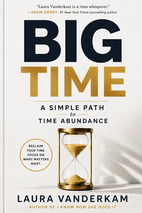
5 Main Takeaways from Big Time
See time as abundant, not scarce or adversarial.
Shift your mindset from feeling constantly short of time to recognizing that each hour is an improbable gift. This unlocks the ability to find hidden pockets of discretionary time—often 13-15% more than you think—and turns routine hours into something to savor.
Plan small, consistent actions instead of waiting for big blocks.
Fit habits into 20-30 minute daily pockets and calendar specific steps rather than waiting for large open slots. This makes big goals achievable, and the progress itself paradoxically makes time feel more abundant.
Stop wishing time away by injecting small joys and connection.
Replace unconscious scrolling with intentional 10-minute breaks that truly recharge you. Spend even 15 minutes a week strengthening work friendships—these small moves give you a sense of agency and make the whole day feel lighter, reducing the urge to long for the day to end.
Designate protected hours for long-term projects and patient progress.
Reserve one hour per week for a meaningful project and use 'confetti time' for quick tasks. Progress may be slow, but each day is another chance—this patient approach ensures you build something lasting without burnout.
Insist on pleasure in every evening through small, consistent intentions.
Set a bedtime, spend time outside, plan tiny weekly adventures, and choose effortful fun over passive scrolling. Even obligatory tasks can be reframed with small tweaks (good snacks, audiobooks) so that you look forward to each evening rather than wishing it away.
Executive Analysis
These five takeaways form a coherent argument: time is not a fixed enemy but a flexible resource you can love by combining a mindset shift with concrete micro-habits. Vanderkam dismantles the scarcity narrative, showing that tracking your week reveals hidden slack, while planning small actions, injecting joy into routine hours, protecting space for long-term projects, and insisting on daily pleasure all work together to turn your schedule from a burden into a source of satisfaction.
This book matters because it offers a practical, data-backed alternative to the overwhelm culture of the time-management genre. Rather than telling you to do more or optimize every minute, it invites you to experience time as abundant and to savor your hours—a counterintuitive approach that resonates with anyone tired of feeling constantly rushed. Its focus on tiny, repeatable behaviors (15-minute check-ins, 10-minute breaks, one protected hour) makes it actionable for busy professionals, parents, and creatives alike.
Chapter-by-Chapter Key Takeaways
How to Fall in Love with Your Schedule (Introduction)
Shift from seeing time as scarce and adversarial to viewing it as an abundant, improbable gift.
Acknowledge life's unpredictability while exercising agency over your daily choices.
The Permian-Triassic extinction is a reminder that your existence—and each hour—is a bonus.
Most common time complaints (overwork, scarcity) don't hold up when you look at actual data and mindset.
You can learn to love your schedule by adopting intentional strategies that turn routine hours into something to savor.
Rewrite Your Story (Chapter 1)
Time tracking reveals hidden pockets of discretionary time, often leading to a 13–15% boost in time satisfaction.
The scarcity story of “no time” can be rewritten by seeing the 30,000-foot view of your week.
Viktorija Grant’s success with MBA, career, and family shows that with careful analysis and flexibility, multiple big goals can fit into the same hours.
Key strategies include “shifting everything left” (working ahead), sharing care, and cutting extraneous activities.
Dream Big, Plan Small (Chapter 3)
Fit habits into small, consistent pockets (20–30 minutes daily) rather than waiting for big blocks.
Create a calendar that assigns specific steps to each day; test-drive it before committing.
Keep steps small and resist the urge to do more on easy days—sustainability beats speed.
Community and small rewards keep motivation alive through the mushy middle.
Accomplishing a big project paradoxically makes time feel more abundant, not less.
Stop Wishing Time Away (Chapter 4)
Friendships require maintenance: Make small efforts to connect with colleagues—check schedules, attend in-person events, schedule casual virtual chats. Even 15 minutes a week can rebuild warmth.
Replace unconscious scrolling with intentional breaks: Choose two 10-minute activities that genuinely rejuvenate you (walk, puzzle, call a friend, read). Anticipating these breaks makes the whole day feel lighter.
Agency is the real reward: You can’t control everything about your job, but you can control how you spend breaks and how you connect with people. That sense of control boosts satisfaction, reduces exhaustion, and often improves productivity.
Consistency compounds: Implementing all three strategies (meaningful work, work friendships, intentional breaks) with moderate fidelity yields the biggest improvements. Even partial use helps, but the more you commit, the better your results.
The goal isn’t perfect happiness—it’s less wishing away time: You may never love every minute of work, but you can stop longing for the day to end. Small pockets of joy and purpose make the whole experience more vibrant.
Next chapter: “Embrace Your Golden Hours” is locked
Keep learning from Big Time — and unlock all 600+ book summaries with audio, mindmaps and AI Q&A.
$0.00 due today · 7 days free, then $89.99/year ($7.49/mo) · Cancel anytime before day 7
plus sales tax where applicable