You with the Sad Eyes Quotes
by Christina Applegate
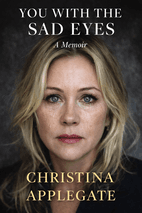
This collection pulls together the rawest lines from Christina Applegate's memoir, a book built on unflinching honesty. You will find confessions that sting, jokes that cut, and moments of pure vulnerability. What makes these quotes so shareable is that they refuse to polish the truth. Applegate writes with a voice that is both wounded and defiant, letting you see the cracks without trying to hide them.
Some lines will make you laugh out loud. Others will leave you quiet for a while. Each one comes from a place of hard earned wisdom, whether she is talking about her body, her childhood, or the people who failed her. These are words you will want to pass along because they feel like a secret you finally get to tell.
Top Quotes from You with the Sad Eyes
“But now? I embrace my sad eyes—I've earned them.”
After describing her childhood and how she used to hide behind a persona, she now accepts her sadness.
It's a defiant reclamation of pain as a source of strength and identity.
“I'm finally free to reveal the true me, and in doing so, I hope in some small way you might be able to come to terms with some of your past, too.”
She explains her intention for writing the book and sharing her journals.
This connects her vulnerability to the reader's potential healing and creates a shared sense of purpose.
“He died of lung cancer, and boy, I hope it hurt. And I've never felt like that about anyone.”
The narrator speaks about her abusive stepfather, Joe Lala, after learning of his death.
The raw, unapologetic hatred in these words shocks the reader and underscores the depth of the abuse she endured, making the pain visceral and real.
“I’m not going to tickle your winky for a job.”
The author describes her attitude toward avoiding sexual harassment in Hollywood.
This bold, irreverent statement encapsulates her defiant refusal to trade sexual favors for work, making it a memorable stand against exploitation.
“I will blow them away with my portrayal of a nympho on Jump Street though. So ha, ha, motherfuckers.”
Christina writes in her diary after expressing insecurity about her appearance.
It reveals the defiant, competitive spirit beneath her inner turmoil, showing how she used her work to prove herself despite deep self-doubt.
“No one is ever going to love you the way I love you.”
Her boyfriend says this to her as a form of manipulation.
This line epitomizes the toxic, possessive love that isolates victims; it's chillingly familiar to many.
“I rubbed my face on the stones until I bled. I did so because I was so desperate to be seen, for someone—especially someone I worked with—to notice, so I didn’t have to tell anyone with words.”
She describes self-harm during an altercation as a cry for help.
This raw, desperate act illustrates the depths of her pain and the desire for rescue, evoking strong empathy.
Themes Behind the Quotes
A central theme is survival through visibility. Applegate insists on being seen, not as a star but as a person who has weathered abuse, illness, and betrayal. Her sad eyes become a badge of honor, proof that she has lived through the worst and kept going. Another theme is the cost of silence. She traces how abuse echoes through generations, how hiding pain only makes it grow, and how speaking up is the only way to break the cycle.
Body image and control also run through her story. She wrestles with how others see her versus how she feels inside, and she rejects the pressure to shrink or perform. At its heart, this is a book about reclaiming power. Applegate shows that even when your body fails you and your past haunts you, you can still choose to tell the truth and own every piece of your life.
Quotes by Chapter
Prologue
“I have a degenerative disease that has probably ended my performing career, and without that, what is there to hide?”
She discusses her MS diagnosis and how it stripped away her need for pretense.
This raw honesty underscores her transformation into an unfiltered narrator and highlights the liberating power of truth.
“Take that out,” I said. “And don’t you ever call me by those two names together.”
She tells a friend to remove the name "Christina Applegate" from her phone contact.
It shows her rejection of the public persona and her desire for authentic identity, marking a pivotal break from her past.
ONE: Star, Fucker!
“A child’s mind can conceive of the beauty of forever. Especially when the present presses hard, like a burden.”
The narrator recalls placing her hands in Jack Nicholson's handprints at Grauman's Chinese Theatre as a five-year-old.
This line captures the poignant contrast between childhood wonder and the weight of difficult circumstances, resonating with anyone who has used imagination to escape hardship.
“My mother called me Christina—nothing is an accident—after a girl who couldn't walk. Now, five decades later, some days I can’t walk either. But no wheelchair for me. Instead, here I am, crawling around through my weeds.”
The narrator reflects on being named after the subject of Andrew Wyeth's painting 'Christina's World' and her own diagnosis with multiple sclerosis.
This passage powerfully connects a seemingly arbitrary name to a lifelong struggle, showing how identity and fate intertwine with resilience and defiance.
“I share with my mother an idealism, a positivism, that is so often followed by terrible weather.”
The narrator describes the pattern in her life where good fortune is stalked by tragedy, echoing her mother's own experiences.
This concise, metaphorical line beautifully expresses the inherited cycle of hope and disappointment, making it deeply relatable to anyone who has felt optimism shadowed by adversity.
“If that was to happen—if one day a crowd would gather and watch a star with my name on it be revealed from under a banner—then I'd be on this spinning planet forever.”
The narrator explains that from age five her goal was to earn a star on the Hollywood Walk of Fame.
This quote captures a child's dream of immortality through legacy, blending innocence with a fierce desire to be remembered—a sentiment that resonates with universal human yearning.
TWO: Lala Land
“Seeing the photo sent me spinning back to those days after my father left. Many of the keys to my life are encapsulated in those months and years; they headline the story I'm telling, reverberate still, make a music I wish I had never heard.”
The narrator describes her reaction to discovering an old family photograph.
This line vividly captures how childhood trauma echoes through a lifetime, and the metaphor of unwanted music hauntingly conveys the inescapable weight of memory.
“The palpable selfishness, and the disregard for someone else's safety and health, shows me just what a terrible partner Joe Lala was to my mother. He'd found a weak, battered heart, and he had preyed upon it.”
The narrator reflects on how Lala manipulated her mother into heroin addiction.
This passage lays bare the predatory nature of abuse and the devastating exploitation of vulnerability, offering a clear-eyed condemnation of a manipulator.
“I knew every part of it was wrong. I felt sick and scared and sad. I owe that abused five-year-old this witness.”
The narrator recounts being sexually assaulted at age five by a teenage babysitter.
The stark simplicity of these sentences, paired with the commitment to bear witness, gives voice to countless silenced childhood traumas and honors the survivor’s truth.
THREE: The Bathroom Floor
“Abuse doesn't happen just once. And it doesn’t just affect one person.”
The narrator reflects on the pattern of hurt created by her mother's abusive relationship with Lala.
This line encapsulates the enduring, ripple-effect nature of trauma in a simple, powerful statement that resonates with anyone who has experienced or witnessed abuse.
“I was growing up the daughter of a mother trapped in a traumatic, abuse-ridden house, and I was to have that model as my very own for much of the rest of my life, too.”
The narrator describes inheriting the blueprint of trauma from her mother's experience.
It vividly conveys how children absorb and repeat the destructive patterns they witness, making the generational impact of abuse painfully tangible.
“I'll never stop thinking about her life back then: imagine the strength it took to quit heroin cold turkey on a bathroom floor.”
The narrator reflects on her mother's heroic detox alone on the bathroom floor.
This line forces the reader to viscerally imagine the mother's impossible struggle, turning her survival into an unforgettable emblem of resilience and love.
“That’s what dance gives me: a place where joy and love win all the battles against darkness and fear.”
The narrator explains how dance has been her lifelong salvation, even as she copes with MS.
It beautifully captures how art can transform pain into liberation, offering a universal message of hope and the power of creative expression.
FOUR: Quit
“I never said no, but I can tell from those pages that I wasn’t ready, that I'd been pushed into a world I was too young for.”
The author reflects on a diary entry about giving a blow job at age thirteen, realizing she was coerced.
This line powerfully captures the lack of consent and agency in a situation where a child felt pressured into a sexual act, resonating with survivors of coercion.
“I never saw the skinny girl everyone else did. I only ever saw something else, and I still do.”
The author discusses her lifelong struggle with body dysmorphia.
This line distills the painful disconnect between reality and self-perception that defines body dysmorphia, offering a raw and relatable insight into the condition.
“Here's to the tears of friendship. May they crystallize as they fall and be worn as gems in the memory of those we love.”
An older actor wrote this on a piece of yellow paper after the author learned of her friend Samantha Smith's death.
This poetic tribute transforms grief into something precious, providing a beautiful way to honor lost loved ones and their impact.
FIVE: Married… with Children
“She said simply but not unkindly, “You have legs.””
A stage manager tells Christina when she asks for orange juice while sick on the set of Married... with Children.
This line perfectly captures the no-excuses professionalism that defined Christina's formative years on the show, teaching her self-reliance and resilience.
“I’m going to continue on with my modeling and hopefully go on with my actressing.”
Miss Gazzarri Dancer Cindy Birmisa says this in the documentary The Decline of Western Civilization Part II: The Metal Years.
This line inspired Christina to transform Kelly Bundy into a rock-slut icon, and the malapropism 'actressing' became a humorous touchstone for the character.
“I feel like a cow again. I gained two pounds. I still don’t like the direction. I've got to stop eating.”
Christina records her obsessive thoughts about weight in her diary.
It lays bare the brutal reality of her eating disorder and the constant battle with body image, making her struggle painfully relatable.
SIX: Nostradamus
“Ladies, if a man starts to control your every move, get the fuck out. I didn't.”
The author directly addresses women after describing her boyfriend's controlling behavior.
It's a blunt, memorable warning from personal experience that many readers will find resonant and empowering.
“My sad eyes were crying, but no one could see.”
The author reflects on her hidden pain despite her public facade.
It captures the loneliness of suffering in silence while appearing successful, a poignant contrast.
SEVEN: The Orange Curtains
“I want the world to stop. I want the sleet to become snow and bury us all.”
The narrator is in a cab with her abusive boyfriend, feeling trapped and hopeless after he berates her in front of the driver.
This poetic cry for oblivion captures the profound despair of someone who sees no escape from her situation, making the reader feel the weight of her emotional suffocation.
“I feel the irony of my fame growing as this man is dragging me down, making me feel like a worthless nobody.”
She reflects on being recognized by the cab driver while her boyfriend yells at her.
The juxtaposition of public success and private degradation highlights the hidden pain behind a famous persona, resonating with anyone who has felt invisible despite outward achievements.