Why We Die Key Takeaways
by Venki Ramakrishnan
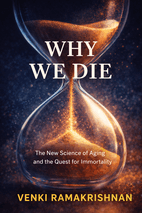
5 Main Takeaways from Why We Die
Aging is driven by measurable biological hallmarks science is learning to target.
The book details how DNA damage, telomere shortening, epigenetic drift, and cellular senescence are fundamental processes that cause aging. Interventions like senolytic drugs to remove senescent cells and epigenetic reprogramming to reset biological clocks represent promising, though early, scientific approaches to slow or reverse these hallmarks.
Evolution prioritizes gene propagation, making aging a trade-off, not a flaw.
The disposable body theory explains that genes are selected for reproductive success, not indefinite maintenance, leading to mechanisms like telomere shortening that suppress cancer but promote aging. Menopause, whether adaptive or a byproduct of extended lifespans, exemplifies how natural selection shapes life history traits, including decline.
Lifestyle choices boost healthspan, but genetics set a hard limit on lifespan.
Diet, exercise, and social connections significantly increase the odds of reaching average life expectancy by enhancing processes like autophagy and mitochondrial health. However, data on centenarians shows that surpassing 105 years relies heavily on genetics, suggesting a biological ceiling that lifestyle alone cannot breach.
The anti-aging field is a boom of promising science and risky hype.
While cellular reprogramming and TOR inhibitors like rapamycin offer validated pathways for research, Silicon Valley's 'rapid-hack' mindset has led to premature commercialization of unproven therapies like parabiosis. This environment demands careful scrutiny to separate durable breakthroughs from marketing claims that exploit public desire for longevity.
Radical life extension would create profound societal and ethical upheaval.
Significantly extending human lifespan would exacerbate social inequality, strain economic systems, and force a reimagining of life stages and purpose. The book argues that mortality may provide a necessary framework for human meaning, and that the primary goal should be compressing years of illness, not pursuing immortality.
Executive Analysis
The five key takeaways form a coherent thesis: aging is a complex but decipherable biological phenomenon rooted in evolution, and while science is making strides in manipulating its mechanisms, the pursuit of radical life extension is fraught with scientific uncertainty and profound societal risks. The book moves from explaining the cellular 'hallmarks of aging' to critiquing the commercial and ethical landscape, arguing that a focus on healthspan—compressing morbidity—is more prudent and desirable than seeking indefinite lifespan.
This book matters because it offers a desperately needed, evidence-based grounding in a field saturated with speculation and sensationalism. For the reader, it empowers critical thinking about personal health choices and public policy, while for the scientific community, it serves as a call for rigorous research and ethical foresight in the quest to understand and modulate human aging.
Chapter-by-Chapter Key Takeaways
Introduction (Introduction)
The human awareness of mortality has spawned universal cultural and religious strategies to deny death’s finality, historically encapsulated in the four “plans” for immortality.
The Enlightenment and modern science have gradually shifted primary focus onto Plan A: directly extending healthy life through scientific means, moving beyond mere disease prevention to target the aging process itself.
Aging research is experiencing a revolutionary boom, driven by advances in molecular biology and the demographic pressure of aging populations, attracting massive scientific and commercial investment.
This boom requires careful scrutiny due to widespread hype, questionable marketing, and deep ethical dilemmas about equity, societal impact, and the very goal of radical life extension.
The author aims to provide an objective tour of the core science of aging, separating durable principles from fleeting trends, and forcing a necessary conversation about the future we are building.
Try this: Critically separate evidence-based aging science from hyperbolic claims and engage in discussions about the ethical future of life extension.
1. The Immortal Gene and the Disposable Body (Chapter 1)
Menopause may have evolved through adaptive strategies like the "good mother" or "grandmother" hypotheses, or to minimize intergenerational conflict in social groups, as seen in killer whales.
An alternative view suggests menopause is not adaptive but a result of humans' recent lifespan increase without corresponding evolutionary adjustments in reproduction.
The disposable body theory connects aging to gene propagation, with sexual reproduction playing a key role in resetting aging across generations, though aging occurs even in asexual organisms.
Evolutionary principles underlie all life, and comparing lifespans across species provides valuable insights into human aging and the potential for extending longevity.
Try this: Appreciate aging as an evolutionary trade-off to inform a balanced perspective on natural decline versus medical intervention.
2. Live Fast and Die Young (Chapter 2)
The verified maximum human lifespan is currently 122 years (Jeanne Calment), a record that has stood for over 25 years despite medical advances.
Scientists are fiercely divided on whether a hard biological limit exists, with debates centering on statistical trends versus biological constraints.
Centenarians often achieve extreme age by compressing disability into a very short period at the end of life, with genetics playing a crucial role for those over 105.
Lifestyle factors (diet, exercise, social connection) significantly influence the chance of reaching average life expectancy, but their power may wane at the extremes of age.
The future of human longevity may depend less on curing individual diseases and more on fundamental biomedical breakthroughs that target the underlying hallmarks of aging.
Try this: Prioritize lifestyle factors like diet and exercise to maximize your healthspan, while accepting that genetics ultimately constrain maximum lifespan.
3. Destroying the Master Controller (Chapter 3)
Cells employ multiple, evolutionarily conserved mechanisms to repair DNA damage from sources like UV light, spontaneous decay, and replication errors.
Tomas Lindahl revealed that spontaneous damage, such as cytosine to uracil changes, occurs constantly, with each human cell facing about 100,000 lesions daily.
Severe damage like double-strand breaks can lead to cancer if repaired incorrectly, highlighting the importance of accurate repair pathways.
The DNA damage response, orchestrated by p53, balances repair, senescence, and cell death to prevent cancer but can contribute to aging.
Enhanced DNA repair correlates with longevity in species like elephants and naked mole rats, suggesting a key role in aging resistance.
Cancer therapies that inhibit DNA repair exploit vulnerabilities in cancer cells, though long-term effects may increase aging risks.
DNA repair is fundamental to genomic stability, influencing aging, disease, and the dynamic regulation of our genetic information.
Try this: Minimize exposure to DNA-damaging agents like UV light and support cellular repair through a nutrient-rich diet.
4. The Problem with Ends (Chapter 4)
Cellular senescence is governed by the Hayflick limit, a finite number of divisions programmed into normal cells.
The limit exists due to the end replication problem, which causes chromosomes to shorten each time they are copied.
Telomeres are protective, repetitive DNA sequences at chromosome ends that prevent fusion and degradation.
The enzyme telomerase rebuilds telomeres. Its activity is high in immortal cells (like cancer and germ cells) but low in most adult somatic cells.
Telomere biology represents a critical trade-off between aging and cancer. Shortening suppresses uncontrolled growth but promotes aging, while maintaining length increases cancer risk.
The story underscores how scientific progress corrects errors, relies on meticulous experimentation, and often reveals that nature's solutions involve complex, balanced compromises.
Try this: Manage chronic stress to slow telomere shortening, but understand that artificially lengthening telomeres increases cancer risk.
5. Resetting the Biological Clock (Chapter 5)
Epigenetic modifications, like DNA methylation and histone acetylation, provide a stable layer of gene control that defines cell identity and accumulates with age.
Environmental factors, such as famine, can impose lasting epigenetic changes, affecting health and aging across generations.
Methylation patterns act as a biological clock, offering insights into biological age and disease risk beyond chronological years.
Nature resets the aging clock during reproduction through germ-line selection and epigenetic erasure in the zygote.
Cellular reprogramming, via cloning or iPS cells, shows potential for rejuvenating tissues but requires careful balancing to avoid cancer risks.
Future anti-aging strategies may involve targeted epigenetic interventions to safely reverse age-related decline.
Try this: Adopt habits like a balanced diet and stress management to maintain healthy epigenetic patterns and slow your biological clock.
6. Recycling the Garbage (Chapter 6)
The discovery of prions revealed a new paradigm of infectious disease: a misfolded protein that can transmit its aberrant shape to normal versions of itself.
Neurodegenerative diseases like Alzheimer's operate on a similar principle, with misfolded proteins (amyloid-beta and tau) forming structured aggregates that spread through the brain, though they are not infectious between individuals.
The fundamental cause of these diseases is the age-related breakdown of the cell’s protein quality control and recycling systems, leading to toxic accumulation.
Treatment remains a monumental challenge, but recent, modestly effective therapies and a deeper understanding of protein aggregation mechanics provide new hope for future prevention and intervention strategies.
Try this: Support your brain's protein quality control systems through regular physical and mental exercise to combat neurodegenerative decline.
7. Less Is More (Chapter 7)
TOR is a master regulatory kinase that integrates nutrient and energy signals to control cell growth, protein synthesis, and autophagy.
Caloric restriction works, in part, by reducing TOR activity, thereby promoting autophagy and cellular maintenance.
Rapamycin, by inhibiting TOR, can replicate many benefits of caloric restriction in various organisms, improving healthspan and lifespan.
The effects of rapamycin on the immune system are dual-natured: it suppresses transplant-related immunity but may enhance vaccine response and stem cell function.
Significant caution is warranted due to infection risks and the lack of long-term human studies; ongoing research in dogs aims to provide more realistic safety and efficacy data.
The discovery of TOR highlights the role of serendipity in science, emerging from an unexpected journey that connected soil bacteria to fundamental cellular aging pathways.
Try this: Consider time-restricted eating to naturally mimic caloric restriction and inhibit the growth-promoting TOR pathway.
9. The Stowaway Within Us (Chapter 8)
Mitochondria produce ATP, the universal energy currency that powers all complex cellular activities, enabling the existence of large, multicellular life.
Aging is closely tied to mitochondrial decline, but the classic free-radical theory is incomplete; reactive oxygen species also play necessary signaling roles.
Accumulating mutations in mitochondrial DNA are a proven, significant driver of aging and age-related disease.
Cells use mitophagy (recycling) and biogenesis (making new ones) to maintain mitochondrial health, processes boosted by caloric restriction and exercise.
Defective mitochondria contribute to aging by fueling chronic inflammation, exhausting stem cells, and impairing neuron function.
Each new generation starts with healthy mitochondria due to superior repair in eggs and strong natural selection against defects.
Aging mitochondria contribute to age-related fertility loss and broader aging processes.
Aging results from interconnected dysfunctions at DNA, protein, organelle, and cellular levels.
Mitochondrial defects act as a central accelerator in aging due to their critical metabolic role.
The symptoms of aging arise from cumulative cellular damage that impairs tissue and organ function.
Try this: Engage in regular aerobic and strength training to boost mitochondrial biogenesis and maintain cellular energy production.
10. Aches, Pains, and Vampire Blood (Chapter 9)
Blood plasma contains specific, identifiable factors that influence aging, and current research is focused on isolating the most beneficial combination for potential therapies.
Anecdotal, high-profile experiments like Bryan Johnson's plasma exchanges highlight the powerful allure of radical anti-aging approaches, even in the absence of proven benefits.
Aging is not a single process but a complex interaction between genetic, protein, cellular, and systemic levels of biology, all influencing each other.
The modern quest to combat aging is fueled by decades of scientific discovery and now encompasses a vast range of efforts, from mainstream science to commercial ventures.
Try this: Remain skeptical of systemic 'fountain of youth' therapies and focus on proven cardiovascular health practices instead.
11. Crackpots or Prophets? (Chapter 10)
The anti-aging field is fueled by immense private investment, often from tech billionaires with a software-inspired, "rapid-hack" mindset that may not suit biological complexity.
Scientific understanding has advanced significantly, with cellular reprogramming and senolytic drugs representing leading-edge approaches.
Major obstacles include the lack of validated, short-term biomarkers to measure aging interventions and the regulatory barrier of aging not being classified as a disease.
A core debate exists between compressing morbidity (healthy life until a sudden end) and extending maximum lifespan, with current data not yet supporting successful compression.
The field encompasses a wide range of ambitions, from curing specific diseases to defeating death itself, with societal implications that will become clear within the next few decades.
Try this: Advocate for research into validated biomarkers of aging to ensure future therapies truly extend healthspan, not just lifespan.
12. Should We Live Forever? (Chapter 11)
Age is a poor indicator of individual ability; productivity in later life is nuanced and often remains high in experience-driven roles.
Older people are a vital resource for mentorship and civic life, and societies should design communities to foster their integration, not isolation.
Radical life extension poses deep philosophical and practical problems, and may not lead to greater happiness or societal progress.
Public opinion is wisely cautious about anti-aging technologies, recognizing potential social inequities and unintended consequences.
Progress in extending healthspan will likely be incremental, similar to the long-term fight against cancer, and must be pursued with ethical foresight. The most effective current interventions are lifestyle-based: diet, exercise, and sleep.
Dietary restriction's benefits for longevity are complex, species-dependent, and may be significantly enhanced by aligning eating patterns with circadian rhythms.
The drug rapamycin extends lifespan in animals by inhibiting the central TOR pathway, a master regulator of cell growth that responds to nutrients, but its immune-suppressing effects highlight the trade-offs in manipulating fundamental biology.
Pioneering genetic research in worms revealed that the insulin/IGF-1 signaling pathway is a major controller of aging, where reduced activity switches an organism's focus from growth to maintenance and longevity.
Discoveries in simple organisms like worms and yeast, such as the sirtuin pathway, have revealed deeply conserved cellular mechanisms that link metabolic state to gene regulation and lifespan, providing validated targets for anti-aging research.
The mitochondrial theory of aging evolved from a simple story of oxidative damage to a complex understanding of quality control, signaling, and the beneficial hormetic effects of mild stress.
Exercise is a potent, natural enhancer of mitochondrial health, stimulating biogenesis and repair through evolved metabolic pathways.
Senescent cells are a major driver of inflammatory aging, and their targeted removal (senolysis) is a promising therapeutic strategy.
Partial cellular reprogramming offers the revolutionary possibility of reversing epigenetic aging and restoring function in aged tissues.
The "young blood" phenomenon, while intellectually fascinating, remains scientifically contentious and has been prematurely and dangerously commercialized.
The pursuit of radical life extension is led by a mix of credentialed scientists and controversial figures, whose bold claims often attract significant funding but also mainstream scientific skepticism.
Silicon Valley has become a major financial driver of anti-aging research, blending the goal of improved health with the more speculative aim of dramatically extended lifespans.
Success in significantly extending life would not be a purely medical triumph; it would drastically worsen social inequality, destabilize global economic systems, and force a reimagining of life stages, purpose, and societal structure.
There is a fundamental tension between the desire to conquer aging and the possibility that mortality itself provides a necessary framework for human meaning, ambition, and psychological well-being.
Aging is driven by measurable biological processes—DNA damage, cellular senescence, mitochondrial dysfunction, and protein misfolding—that are increasingly understood and potentially targetable.
The frontier of life extension includes both incremental drug therapies (metformin, rapamycin) and radical experiments (parabiosis, epigenetic reprogramming, cryonics).
Successfully extending human lifespan would trigger massive societal upheaval, forcing a reckoning with economic models, resource allocation, and deep-seated inequalities.
The ultimate goal for many gerontologists is not just longer life, but a longer healthspan, compressing the period of illness and disability into a very short time at the end of an extended, vital life.
The pursuit of radical life extension forces a confrontation with fundamental questions about purpose, legacy, and what makes a finite life meaningful.
Try this: Reflect on your personal values regarding longevity and support equitable access to therapies that compress morbidity, not create immortal elites.
Continue Exploring
- Read the full chapter-by-chapter summary →
- Best quotes from Why We Die → (coming soon)
- Explore more book summaries →