When Breath Becomes Air Quotes
by Paul Kalanithi
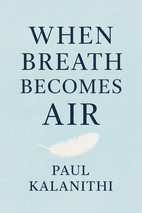
These quotes are drawn from Paul Kalanithi's memoir about facing a terminal cancer diagnosis as a young neurosurgeon. You will find lines that are stark and clinical, then suddenly tender and reflective. Some capture the shock of a doctor becoming a patient, others hold the quiet wisdom of a man who learned to balance joy and grief.
What makes this book so quotable is its raw honesty. Kalanithi doesn't sugarcoat death, but he also refuses to let it erase the beauty of living. Each line feels earned, written by someone who truly knows what matters. Whether he is describing a scan or a moment of gratitude, his words stay with you.
Top Quotes from When Breath Becomes Air
“I FLIPPED THROUGH THE CT scan images, the diagnosis obvious: the lungs were matted with innumerable tumors, the spine deformed, a full lobe of the liver obliterated. Cancer, widely disseminated.”
Paul Kalanithi, the author, examines his own CT scan revealing terminal cancer.
This stark, clinical description of his own body's devastation immediately establishes the gravity of his situation and the irony of a doctor becoming a patient.
“I wasn't in the radiology suite, wearing my scrubs and white coat. I was dressed in a patient’s gown, tethered to an IV pole, using the computer the nurse had left in my hospital room, with my wife, Lucy, an internist, at my side.”
He contrasts his usual role as a doctor with his current reality as a patient.
This juxtaposition highlights the profound shift in identity and powerlessness that comes with a life-threatening diagnosis.
“Instead of a book on death separating me from the life around me, it was my own body, dying.”
The narrator reflects on his realization that he is dying while on a trip with friends.
This line starkly contrasts intellectual engagement with mortality and the visceral reality of facing one's own death, making it deeply poignant and relatable.
“Although these last few years have been wrenching and difficult—sometimes almost impossible—they have also been the most beautiful and profound of my life, requiring the daily act of holding life and death, joy and pain in balance and exploring new depths of gratitude and love.”
Lucy Kalanithi reflects on the time after Paul's diagnosis.
This line captures the paradox of finding profound beauty and love amidst unbearable grief, offering a universal truth about embracing life's full spectrum.
“It’s the only way I know how to breathe.”
Paul responds to Lucy when she asks if he can breathe with her head on his chest.
This intimate, tender moment embodies their deep connection and Paul's acceptance of dependency, making love itself a lifeline.
“Even while terminally ill, Paul was fully alive; despite physical collapse, he remained vigorous, open, full of hope not for an unlikely cure but for days that were full of purpose and meaning.”
Lucy summarizes Paul's attitude during his illness.
It articulates a powerful redefinition of hope—not as denial of death, but as a commitment to purposeful living until the very end.
Themes Behind the Quotes
A central theme is the shift in identity that comes with a life threatening illness. Kalanithi moves from being a healer to someone who needs healing, and that transition forces him to reconsider what his life has meant and what it will mean going forward. The quotes reflect a deep confrontation with mortality, not as an abstract idea but as a daily, physical reality.
Another strong theme is the coexistence of opposites. The author writes about holding life and death, pain and beauty, hope and acceptance in the same breath. He does not pretend that suffering is easy, but he insists that it can be meaningful. The quotes also emphasize purpose over cure, showing that a full life is not measured by length but by the depth of love and intention poured into each day.
Quotes by Chapter
Prologue
“At age thirty-six, I had reached the mountaintop; I could see the Promised Land, from Gilead to Jericho to the Mediterranean Sea.”
He reflects on his achievements and future aspirations just before his diagnosis.
The biblical metaphor of the Promised Land captures the cruel irony of reaching the pinnacle of his career only to face death.
Epilogue by Lucy Kalanithi
“His strength was defined by ambition and effort, but also by softness, the opposite of bitterness.”
Lucy describes Paul's character during his final year.
It redefines strength as vulnerability and tenderness, challenging conventional notions of toughness in the face of death.