Uncommon Sense Key Takeaways

by Mel Blackwell
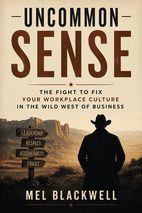
Uncommon Sense by Mel Blackwell Book Cover

5 Main Takeaways from Uncommon Sense

Culture must come before strategy every time

A sick culture will destroy even the best business plan. Mel Blackwell insists you fix the ecosystem first—remove culture bandits, align on one vision and language, and get the right people in the right seats. Without a healthy culture, no amount of strategy can save you.

Build structure around roles, not people

Design your organization chart (Accountability Chart) and meeting rhythms before plugging in personalities. Define roles by the 20% of effort that drives 80% of results, keep spans of control to 8–10 direct reports, and make tough people decisions only after the structure is set. This prevents misalignment and ensures clear communication.

Leaders must 'pony up' and make the hard calls

Real leadership is revealed in the willingness to take personal risk and make the lonely decisions—whether firing a toxic high-performer, removing a culture bandit, or standing up to a threat. Use the 'Pale Rider' and 'Shepherd' modes as needed, and delegate your weaknesses so you stop being a bottleneck.

Replace problem-worship with a problem-solving culture

Stop analyzing problems to death. Require proposed solutions with every issue, use weekly IDS (Identify, Discuss, Solve) meetings, and empower people to solve problems at the lowest level. This shortens meetings, speeds decisions, and builds a team that actually thinks instead of complains.

Commit daily to the Best Pledge—starting with yourself

Excellence is a daily choice, not a one-time initiative. Model integrity behind closed doors, build systems for the 80% and handle exceptions human-to-human, and make it safe for people to challenge upward. Culture spreads from self to selves to teams, so master your own 'you horse' before trying to lead others.

Executive Analysis

These five takeaways form a coherent, no-nonsense blueprint for rescuing and sustaining any business. Blackwell’s central argument is that most leaders overcomplicate success, ignoring the ‘uncommon sense’ basics: fix your culture first, build structure before hiring, lead with courage, solve problems instead of ruminating, and commit personally to excellence. Each principle reinforces the others—culture supports structure, structure enables problem-solving, and leadership models the behavior that makes it all stick. The book refuses theoretical fluff; it’s a survival manual for leaders drowning in chaos.

This matters because Blackwell writes from gritty frontline experience, not an ivory tower. He distills 35+ years of real battles (including as an EOS Integrator) into actionable steps that any manager—not just CEOs—can apply today. The book sits squarely in the practical leadership genre alongside titles like 'Traction' and 'The Advantage,' but its edge is the raw, candid voice and the relentless focus on personal accountability. It doesn’t just tell you what to do; it confronts you with the uncomfortable truths you’ve been avoiding, making it a rare resource that both inspires and demands action.

Chapter-by-Chapter Key Takeaways

Foreword (Foreword)

  • Deep listening and a calm, grounded presence are foundational to Mel's leadership style, creating an environment of trust and safety.

  • The Integrator role in EOS is uniquely demanding, requiring someone to absorb pressure from both the visionary and the operational team—Mel excelled here by staying consistent and courageous.

  • Hard-earned experience, including making tough calls and delivering honest feedback, gives Mel's guidance practical weight and credibility.

  • Kenneth C. DeWitt's personal endorsement underscores that Mel's teachings are transformative, leaving audiences more clear, confident, and empowered.

Try this: Practice deep listening and stay consistent under pressure to build trust as you integrate visionary and operational demands.

Introduction (Introduction)

  • External threats (markets, regulation, competition, customers, culture, technology) are constant and unavoidable. Build internal strength rather than chasing shadows.

  • The “uncommon sense” approach is simple, practical, and often ignored—it’s common sense that leaders are too distracted to use.

  • Every business needs a subvision: the journey that gets people excited to execute the main vision. Without it, progress stalls.

  • This book is for anyone with responsibility—not just CEOs—and offers actionable wisdom from 35+ years of real business battles, not theory.

Try this: Identify your business's subvision—the journey that excites your team—and commit to building internal strength rather than chasing external threats.

The Rules of Survival (Chapter 1)

  • Survival mode is not crisis—it's a business that functions but is unsustainable and broken beneath the surface.

  • Common signs include failed initiatives, personal burnout, problems flowing upward, fractured culture, misaligned leadership, and lowered standards.

  • Culture is the ecosystem; get it right first, or strategy won't matter.

  • Build structure around roles, not people, to ensure clear communication and decision-making.

  • Empower people to solve problems at the lowest level possible; require proposed solutions with every issue.

  • These three rules are non-negotiable basics—they won't fix everything overnight, but they'll stop you from riding blind in the dark.

Try this: Audit your business for signs of survival mode (burnout, problems flowing upward, fractured culture) and apply three rules immediately: fix culture, build structure around roles, and empower lowest-level problem-solving.

Getting the Culture Right (Chapter 3)

  • Culture must come before strategy – A sick culture will kill even the best plan.

  • One vision, one language – Unity creates unstoppable momentum; division creates Babel.

  • Remove culture bandits fast – Tolerance is a liability; the most dangerous ones are at the top.

  • Right people, right seats – Misalignment poisons culture just as surely as bad actors.

  • Stop worshipping problems – Build a culture that solves, not one that analyzes problems to death.

  • Success looks like balance and energy – Happy, effective people who go home better than they arrived.

Try this: Stop any strategy work until you remove culture bandits, align your team around one vision and language, and ensure every person is in the right seat.

Are You Cut Out for the Job? (Chapter 4)

  • Real leadership shows up in the hard moments—when you have to fire a toxic high-performer or stand up to a threat. Don’t negotiate with rattlesnakes who put a gun to the business.

  • The essential qualities of a leader are learnable, but they require self-awareness and honest self-assessment. Nobody is perfect; the key is knowing where you’re strong and where you need help.

  • Use the delegate and elevate framework: lean into your strengths, hand off your weaknesses to capable team members, and avoid hovering. A conductor doesn’t play every instrument—they set the tempo.

  • Leadership is a dual role: sometimes you’re the Pale Rider (protector, enforcer of boundaries) and other times the Shepherd (nurturer, listener, healer). Both are necessary, and neither is comfortable.

  • The burden of leadership is real, but you don’t have to carry it alone. Build a team that fills your gaps, and you’ll stop being a bottleneck and start being a true leader.

Try this: Honestly assess your own leadership in tough moments; use the delegate-and-elevate framework to lean into strengths and hand off weaknesses, and embrace both the Pale Rider and Shepherd roles as needed.

The Square-Wheeled Wagon (Chapter 5)

  • Revenue inconsistency is rarely a sales effort problem—trace it back to bad customer experience, broken processes, or unreliable delivery

  • Cost discipline means ownership and accountability, not penny-pinching that makes everyone miserable

  • Compensation drives behavior; if your people aren't doing what you want, you're probably paying them to do something else

  • Align executive pay with profitability and customer satisfaction, not just revenue growth

  • The comfortably miserable state is a leadership failure—change must start at the top

  • Every pushback to fixing compensation is a gift: it shows you exactly where the system is broken

Try this: Trace revenue inconsistency back to broken customer experience or delivery processes, not sales effort, and align compensation with profitability and customer satisfaction—not just revenue.

Are You Worshiping the Problem? (Chapter 6)

  • A problem-solving culture beats problem-worship every time—shorter meetings, faster decisions, and a team that actually thinks

  • Culture change needs structural support to last; good intentions alone won't keep monkeys off your shoulders

  • Build your company structure before worrying about who fills the roles—personalities come second to solid design

Try this: Replace every problem-worship meeting with a requirement that attendees bring proposed solutions, and redesign your company structure before worrying about who fills each seat.

Structure First, People Second (Chapter 7)

  • Build the fort first: define roles, responsibilities, and meeting rhythms before plugging in people.

  • Use the Accountability Chart to capture the 20% of effort that drives 80% of results for each role.

  • Keep your organization as flat as possible with a healthy span of control (8–10 direct reports max).

  • Make tough people decisions after the structure is set—don’t invent roles to keep someone you like.

  • Implement weekly problem-solving meetings where two-thirds of time is spent solving issues, not just reporting.

  • Review and adjust your structure annually—or sooner if problems surface.

Try this: Draw your Accountability Chart today—define roles by the 20% of effort that drives 80% of results—and implement a weekly 90-minute problem-solving meeting with two-thirds of time dedicated to solving issues.

Drive-By Meeting Culture (Chapter 8)

  • Drive-by meetings are unscheduled interruptions that feel productive but actually destroy focus, accountability, and trust.

  • Only two types of interruptions are permissible without an appointment: emergencies and celebrations. Everything else goes on the calendar.

  • Replace drive-bys with a three-sentence request structure: state the issue, indicate urgency, and provide a timeframe for follow-up.

  • Build a reliable weekly meeting pulse (90 minutes, same time/place) where issues are worked through with the IDS framework and assigned clear ownership.

  • Always circle back. Communicate what will be done—and what won’t—so people don’t feel ignored. That’s how trust replaces chaos.

Try this: Eliminate all unscheduled interruptions except emergencies and celebrations; use a three-sentence request structure (issue, urgency, timeframe) and always circle back with what will and won't be done.

Be a Gunslinger (Chapter 9)

  • Push decision-making authority down so frontline teams can act quickly.

  • Use weekly and quarterly true-ups to catch and correct course fast.

  • Diagnose and fix dysfunction early—don’t let it fester.

  • Remove culture bandits ruthlessly; unite the team around one language, vision, and rhythm.

  • A gunslinger culture creates fear on the outside, confidence on the inside, and speed that wins business.

Try this: Push decision-making authority down to frontline teams, institute weekly and quarterly true-ups to catch course corrections fast, and remove culture bandits ruthlessly to build speed and confidence.

The Leader Ponies Up First (Chapter 10)

  • Leadership is revealed in the willingness to make the hard, lonely call that no one else will make.

  • “Ponying up” means accepting personal risk and visibility, not just exercising authority.

  • The leader’s seat is defined by accountability, not hierarchy—whoever is sitting in it owns the outcome.

  • Modeling this behavior creates a ripple effect, encouraging others to step forward too.

Try this: Identify one hard, lonely decision you've been avoiding and make it today—modeling accountability will ripple through your team and encourage others to step forward.

Asking a Cat to Bark (Chapter 11)

  • Misalignment isn't about a person's worth—it's about wiring. Admitting it is the first act of leadership.

  • Avoidance costs more than honesty. Tolerating misalignment teaches your team that results are negotiable.

  • Use the three options: move them (if they fit culture but not role), part ways (if they lack Get It/Want It/Capacity), or rebuild the seat (if the role itself is broken).

  • Hold the line through transitions. Your stability helps the system realign.

  • Balance mercy and math: care for people without letting performance slide. Both are essential.

Try this: When you see misalignment between a person and their role, choose one of three options: move them (if they fit the culture), part ways (if they lack Get It/Want It/Capacity), or rebuild the seat (if the role itself is broken).

Dealing with Culture Bandits (Chapter 12)

  • Culture bandits aren't just wrong-fit employees—they actively decide the mission doesn't apply to them and build resistance within the company

  • Move up the Feel-Hear-See ladder: acknowledge feelings, verify by what you hear, but make decisions based on what you see with your own eyes

  • Trust is based on evidence—people continue to do what you've seen them do in the past

  • When you identify a culture bandit, act decisively and don't hesitate to pay them to leave if necessary

  • Compassion without boundaries becomes cruelty—you can't protect good people by letting harmful ones stay

Try this: When you spot a culture bandit, use the Feel-Hear-See ladder to verify evidence with your own eyes, then act decisively—even if it means paying them to leave—because compassion without boundaries harms everyone.

The Best PledgeTM (Chapter 13)

  • The Best Pledge is a daily choice, not a one-time initiative. It requires personal commitment to being your best, not perfect, but refusing to settle for good enough.

  • Leadership must model integrity first. Your team watches what you do behind closed doors, not just what you say in meetings.

  • Build systems for the 80% and handle exceptions human-to-human. Don't strangle trust with policies written for rare outliers.

  • Introduce the Best Pledge during hiring. Let candidates know what they're walking into and give them space to be honest about their season.

  • Master yourself before trying to lead others—learn to ride your "you horse" well. Your strengths will always have shadows; lead both with honesty and grace.

  • Culture spreads from one to many: self, selves, team, teams. You can't jump straight to company-wide alignment without individuals first being their best.

  • Make it safe for people to speak up and challenge each other upward. That's how excellence becomes instinct instead of instruction.

Try this: Make the Best Pledge a daily personal commitment, model integrity when no one is watching, and introduce this expectation during hiring so candidates can self-select based on their current season.

If You’re Not Wrecking, You’re Not Riding (Chapter 14)

  • Playing it safe is the real risk; clean bikes don't win races.

  • Be willing to wreck, but be calculating, not careless.

  • Build a fast-fail, fast-fix culture where mistakes become learning data.

  • Delegate with trust: freedom + responsibility = trust.

  • Course correct daily instead of waiting for big disasters.

  • Give away the handlebars—working yourself out of a job is good leadership.

  • Choose excellence over perfection to keep speed and confidence.

  • Give credit away; it returns multiplied in loyalty and effort.

  • Predictable wrecks signal growth—learn to fall better, not to avoid falling.

Try this: Take a calculated risk today—wreck deliberately to learn—and give away the handlebars by delegating with trust, course-correcting daily rather than waiting for disaster.

A Letter for Those Starting Out in Business (Chapter 16)

  • When you’re new, hard work is your currency—use it to build competence and confidence.

  • Be coachable, follow proven systems, and stay out of office politics.

  • Communicate openly with your boss, ask for help freely, and take ownership of problems.

  • Approach your career with enthusiasm and a daily commitment to becoming your best self.

  • Stick to the Dirty Dozen as your guide, and when you look back, you’ll be glad you did.

Try this: If you're new in your career, use hard work as currency, stay coachable and out of office politics, and take ownership of every problem as an opportunity to build competence and confidence.

Conclusion (Conclusion)

  • The Best Pledge—individuals committing to be their best selves so teams can do their best work—is the secret to traction and leverage.

  • Leaders must be good shepherds who stir the souls of their people; that requires courage, not a title.

  • Fixing culture means doing the practical, uncomfortable work: building structure, killing chaos, protecting the team, and insisting on excellence starting with yourself.

  • Start small with one concept, model it, then repeat and enforce it. Cultures transform one decision at a time.

  • The principles in this book have been tested in real businesses—they work. Now it's your turn to apply them.

Try this: Start with one concept from this book, model it yourself, then repeat and enforce it until it becomes habit—cultures transform one decision at a time, not all at once.

Continue Exploring