Tuesdays with Morrie Quotes
by Mitch Albom
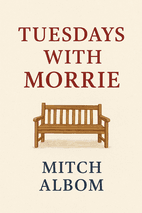
These quotes come from a dying professor's final lessons, delivered from his study as he watched a small plant shed its leaves. They are not academic but deeply personal conversations about what truly matters. You will find reflections on love, work, community, aging, forgiveness, and the courage to face death.
Morrie's words are so quotable because they are raw and honest. He does not sugarcoat his suffering or his joy. He speaks directly to the human condition with humor and grace. Each line invites you to pause, reflect, and reconsider your own priorities. That is why these quotes have resonated with so many readers.
Top Quotes from Tuesdays with Morrie
“The last class of my old professor's life took place once a week in his house, by a window in the study where he could watch a small hibiscus plant shed its pink leaves.”
Opening lines of the chapter describing the unique setting of Morrie's final lessons.
This image immediately establishes the intimacy and poignant beauty of the dying professor's classroom, making the reader feel the quiet, fleeting nature of life.
“No books were required, yet many topics were covered, including love, work, community, family, aging, forgiveness, and, finally, death.”
Describing the curriculum of Morrie's last class.
It distills the entire human experience into a simple list, highlighting that the most important lessons come from living, not from textbooks.
“ALS is like a lit candle: it melts your nerves and leaves your body a pile of wax.”
The narrator describes the nature of ALS.
The vivid metaphor captures the cruel, slow deterioration of the body while the mind remains aware, evoking empathy.
“Dying,” Morrie suddenly said, “is only one thing to be sad over, Mitch. Living unhappily is something else.”
Morrie responds to Mitch's embarrassment about the silence during their meal.
Shifts focus from fear of death to the tragedy of a life lived without fulfillment, a powerful reorientation of priorities.
“Which side wins?” He smiles at me, the crinkled eyes, the crooked teeth. “Love wins. Love always wins.”
In a flashback, Morrie answers Mitch's question about the 'tension of opposites' in life.
Delivers a simple, unforgettable affirmation that love is the ultimate resolution to life's conflicts.
“The culture we have does not make people feel good about themselves. And you have to be strong enough to say if the culture doesn’t work, don’t buy it.”
Morrie explains to Mitch why so many visitors are unhappy, criticizing societal values.
Empowers readers to reject toxic cultural norms and create their own meaningful life, a central theme of the book.
“Sometimes you cannot believe what you see, you have to believe what you feel. And if you are ever going to have other people trust you, you must feel that you can trust them, too—even when you're in the dark. Even when you're falling.”
Morrie explains the lesson from a trust exercise in his college class.
This metaphor for trust and vulnerability is universally applicable, urging readers to rely on emotional conviction over visual certainty.
Themes Behind the Quotes
A central theme is the transformative power of love. Morrie insists that love is the only force that ultimately matters, even in the face of death. The quotes emphasize that relationships, community, and genuine connection are what give life its richness, far more than professional success or material wealth.
Another key theme is the necessity of embracing vulnerability and mortality. Morrie does not pretend death is not frightening, but he argues that accepting our limits can free us to live more authentically. He challenges the cultural obsession with control and achievement, urging us instead to cultivate compassion for ourselves and others, especially during suffering.
Quotes by Chapter
The Curriculum
“The last lecture was brief, only a few words. A funeral was held in lieu of graduation.”
The narrator explains how Morrie's final teachings ended.
This stark parallel between a graduation and a funeral powerfully conveys that death is the ultimate teacher and that the real 'graduation' is facing our mortality.
“When he smiles it’s as if you'd just told him the first joke on earth.”
Describing Morrie's appearance and demeanor during the 1979 graduation scene.
This vivid metaphor captures Morrie's childlike joy and infectious warmth, making him immediately endearing and memorable.
The Syllabus
“My friends, I assume you are all here for the Social Psychology class. I have been teaching this course for twenty years, and this is the first time I can say there is a risk in taking it, because I have a fatal illness. I may not live to finish the semester.”
Morrie announces to his class that he has a fatal illness at the start of his final semester.
This shows Morrie's courage and transparency in the face of death, making his teaching even more profound.
“He would not wither. He would not be ashamed of dying. Instead, he would make death his final project, the center point of his days.”
Morrie decides how to face his terminal diagnosis.
This demonstrates Morrie's determination to find meaning and purpose in dying, inspiring readers to confront mortality.
“Shouldn't the world stop? Don't they know what has happened to me? But the world did not stop, it took no notice at all, and as Morrie pulled weakly on the car door, he felt as if he were dropping into a hole.”
Morrie's reaction upon leaving the doctor's office after receiving his ALS diagnosis.
It poignantly captures the isolation and surrealness of receiving a death sentence while life goes on around you.
The Student
“I felt as if time were suddenly precious, water going down an open drain, and I could not move quickly enough.”
The narrator reflects on the impact of his uncle's death from pancreatic cancer.
This metaphor vividly captures the universal fear of mortality and the urgent desire to make the most of limited time, resonating with anyone who has experienced loss.
“I buried myself in accomplishments, because with accomplishments, I believed I could control things, I could squeeze in every last piece of happiness before I got sick and died, like my uncle before me, which I figured was my natural fate.”
The narrator describes his frantic workaholic lifestyle after his uncle's death.
This line powerfully illustrates how grief and fear can drive a relentless pursuit of achievement, a mindset many readers recognize in themselves or society.
“I was cranked to a fifth gear, and everything I did, I did on a deadline.”
The narrator explains his high-speed, accomplishment-driven life as a journalist.
This quote succinctly captures the exhausting, breakneck pace of modern ambition and the pressure to constantly achieve, making it deeply relatable.
The Audiovisual
“I decided I'm going to live—or at least try to live—the way I want, with dignity, with courage, with humor, with composure.”
Morrie speaking to Ted Koppel during their interview about facing death.
It encapsulates Morrie's defiant choice to live fully despite his fatal illness, inspiring readers to embrace life with dignity and courage.
“Well, Ted, one day soon, someone's gonna have to wipe my ass.”
Morrie's response to Koppel's question about what he dreaded most about his slow decay.
This raw, unfiltered honesty about the indignities of dying strips away pretense and forces a confrontation with mortality, making it powerfully relatable.
“Don't assume that it's too late to get involved.”
One of Morrie's aphorisms written while reflecting on living with death's shadow.
It offers a simple yet profound reminder that it's never too late to engage with life, encouraging action even in the face of an impending end.
The Orientation
“I did what I had become best at doing: I tended to my work, even while my dying professor waited on his front lawn.”
Narrator Mitch describes his reaction upon seeing Morrie waiting while he finishes a phone call.
This line highlights the protagonist's misplaced priorities and the guilt of choosing work over a dying friend, a conflict that resonates with modern life.
“My old friend,” he whispered, “you've come back at last.”
Morrie says this to Mitch as they embrace after sixteen years.
The simple, affectionate greeting underscores Morrie's unconditional love and the enduring bond between teacher and student.
“Mitch,” he said softly, “you know that I'm dying.”
Morrie directly informs Mitch of his impending death during their meal.
Morrie's blunt honesty about his condition sets the stage for the profound life lessons to come and challenges the reader's own avoidance of death.
“You can play all the lovely parts of life that I'm too old for now.”
Morrie says this to Mitch in a flashback when Mitch calls him 'Coach.'
The metaphor of playing 'the lovely parts of life' encapsulates Morrie's philosophy of living fully, and resonates with the idea of learning from those who have aged.
Taking Attendance
“You know, Mitch, now that I'm dying, I've become much more interesting to people.”
Morrie says this to Mitch during their visit, reflecting on his increased social attention after his 'Nightline' appearance.
Highlights the ironic way mortality can enhance one's perceived value, prompting readers to consider what truly makes a person interesting.
The First Tuesday: We Talk About the World
“Because it’s the ultimate sign of dependency. Someone wiping your bottom. But I'm working on it. I'm trying to enjoy the process.”
Morrie says this after returning from the bathroom, acknowledging his growing need for help.
It captures Morrie's remarkable ability to reframe even the most humiliating aspects of his illness into an opportunity for growth and acceptance.
“Now that I'm suffering, I feel closer to people who suffer than I ever did before.”
Morrie explains to Mitch why he still cares about news of suffering around the world despite being near death.
This line powerfully illustrates how personal pain can deepen empathy and connect us to the suffering of others, a universal human truth.
“I can sit here with my dwindling days and look at what I think is important in life. I have both the time—and the reason—to do that.”
Morrie tells Mitch about his unique perspective on life now that he is dying.
It highlights the paradox that facing death can grant the clarity and urgency to focus on what truly matters, inspiring readers to reflect on their own priorities.
“Maybe death is the great equalizer, the one big thing that can finally make strangers shed a tear for one another.”
Mitch reflects after watching Morrie cry for strangers he saw on the news.
This thought-provoking observation suggests that mortality can bridge the divides between people, creating unexpected compassion and shared humanity.
The Second Tuesday: We Talk About Feeling Sorry For Yourself
“Sometimes, in the mornings,” he said. “That's when I mourn. I feel around my body, I move my fingers and my hands—whatever I can still move—and I mourn what I’ve lost. I mourn the slow, insidious way in which I'm dying. But then I stop mourning.”
Morrie responds to Mitch asking if he feels sorry for himself.
It captures Morrie's honest acknowledgment of grief paired with his disciplined refusal to dwell in self-pity, offering a powerful model for emotional balance.
“I don’t allow myself any more self-pity than that. A little each morning, a few tears, and that's all.”
Morrie explains his daily limit on self-pity after describing his morning mourning ritual.
This practical rule resonates as a simple but profound strategy for managing hardship without being consumed by it.
The Third Tuesday: We Talk About Regrets
“I want to tell you about my life. I want to tell you before I can’t tell you anymore.”
Morrie explains to Mitch why he agrees to use the tape recorder.
This line captures Morrie's urgent desire to share his wisdom before death takes his ability to speak, resonating with readers' own fears of leaving things unsaid.