Think Faster, Talk Smarter — Interactive Mindmaps

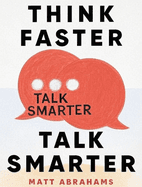
Think Faster, Talk Smarter by Matt Abrahams Book Cover

by Matt Abrahams

Matt Abrahams's Think Faster, Talk Smarter offers actionable strategies for mastering spontaneous speaking, from structuring impromptu responses to managing anxiety. It's designed for professionals, students, and anyone needing to communicate clearly and confidently under pressure.

On Insta.page you also get an Apply This Book tool that lets you combine insights from up to 3 books to solve your specific situation.

Chapter mindmaps

Free preview: chapters 1–4 are fully interactive. Click any node to expand or collapse. Subscribe to unlock the rest.

Chapter 1: Introduction

Key concepts: Introduction

1. Introduction

The Anxiety of Spontaneous Speaking

  • Unexpected speaking requests trigger physical and mental anxiety (e.g., sweaty palms, freezing up).
  • High-pressure scenarios (Zoom meetings, elevator pitches) amplify performance pressure.
  • Even professionals (e.g., Michael Bay) can unravel without preparation.

The Lingering Impact of Past Failures

  • Negative experiences (e.g., Irma’s humiliation, Chris’s job loss) create lifelong avoidance.
  • Fear of judgment fuels a self-fulfilling cycle of anxiety and poor performance.
  • Avoidance stifles personal and professional growth.

Think Faster, Talk Smarter Framework

  • Six-step method: Calm, Unlock, Redefine, Listen, Structure, Focus.
  • Embraces imperfection and collaboration over perfectionism.
  • Compares spontaneity to jazz improvisation—rooted in practice, not innate talent.

Debunking Perfect Communication

  • Rehearsed talks (TED, Steve Jobs) set unrealistic standards for spontaneity.
  • Authenticity and adaptability matter more than polish.
  • Imperfection fosters genuine audience connection.

From Personal Experience to Proven Method

  • Author’s early exposure to impromptu speaking (alphabetical call-outs) built confidence.
  • Stanford workshop success led to corporate training and online resources.
  • Mastery requires deliberate practice and mindset shifts, not innate talent.

Key Takeaways

  • Reframe anxiety as an opportunity for authentic connection.
  • Break cycles of fear by embracing imperfection.
  • Six-step method prioritizes preparation, listening, and storytelling.
  • Adaptability beats rehearsed perfection.
  • Confidence is learnable through practice.

Practical Application in Real-Life Scenarios

  • Designed as a companion for high-stakes moments like presentations, toasts, or interviews
  • Focus on adaptable skills over memorized scripts for graceful pivots under pressure
  • Daily integration of techniques builds reflexes for poise and authenticity
  • Prepares users to stay articulate even in unexpected situations

Human Vulnerability in Meaningful Moments

  • Highlights paradox: important exchanges are often spontaneous, yet stress disrupts our instincts
  • Stress can mute personalities or lead to disorganized responses—a universal human trait
  • Challenges the myth that quick thinking is innate; frames it as a trainable skill
  • Emphasizes reshaping natural reactions through deliberate practice

Building a Foundation for Authentic Communication

  • Six actionable steps serve as flexible frameworks, not rigid rules
  • Focus on rapid thought organization and clear expression while preserving authenticity
  • Skills like on-the-fly structuring and reading room energy convert anxiety into confidence
  • Mastery framed as progress, not perfection

Key Takeaways

  • Communication skills improve through repetition and practice, not one-time fixes
  • Embrace spontaneity's messiness—training narrows the gap between intent and execution
  • Six-step roadmap to faster thinking, clearer speaking, and authentic presence

Chapter 2: Chapter 1: Calm: Tame the Anxiety Beast

Key concepts: Chapter 1: Calm: Tame the Anxiety Beast

2. Chapter 1: Calm: Tame the Anxiety Beast

Understanding the ABCs of Anxiety

  • Affective: Emotional responses like stress or feeling overwhelmed
  • Behavioral: Physical symptoms like sweating or shaky speech
  • Cognitive: Mental challenges like negative self-talk or blanking out

Mindfulness and Reframing Emotions

  • Observe emotions without judgment (mindfulness)
  • Reframe anxiety as excitement to shift mindset
  • Acknowledge nervousness as normal ('I’m nervous because this matters')

Breathing and Body Control

  • Deep breathing (inhale 3 counts, exhale 6) to calm the nervous system
  • Slow movements to reduce speech speed and shakiness
  • Cooling down (e.g., holding a cold object) to lower body temperature
  • Saliva activation (chew gum or sip water) to prevent dry mouth

Quieting the Inner Critic

  • Use positive mantras ('I have value to add') to replace self-doubt
  • Challenge catastrophic thinking with rationalization
  • Leverage the spotlight effect (others aren’t scrutinizing you as much)
  • Use strategic pauses to regroup during mental blanks

Eliminating Filler Words

  • Sync speech with breath to minimize 'ums' and 'uhs'
  • End sentences with an exhale to force natural pauses
  • Practice breath-sentence alignment with simple scripts

Building Your Anxiety Management Plan (AMP)

  • Combine 3–5 techniques (e.g., breathing + cooling + mantras)
  • Use acronyms (e.g., BOOM: Breathe, Observe, Oxygenate, Mantra) for recall
  • Include physical aids (water, lozenges, affirmation cards) for support

Stephanie’s Journey: Applying the AMP Framework

  • Heart: Focus on purpose over perfection to reduce self-consciousness
  • Speech: Slow gestures and insert pauses to improve clarity
  • Mind: Reframe fear by challenging worst-case scenarios

Key Takeaways

  • Anxiety management is about presence, not perfection
  • Prioritize audience needs to shift focus from self to service
  • Experiment with small, deliberate actions (e.g., pauses, breathwork)
  • Leverage spontaneity to turn panic into authenticity

From Theory to Real-World Experimentation

  • Personal story of using AMP during a high-stakes CEO interview
  • Deployed breath-focused mantra ('I have value to offer') to recover from panic
  • Improvised a vulnerable, story-driven answer that secured the job

Spontaneity as a Gateway to Authenticity

  • Managing anxiety unlocks creativity and connection
  • Staying present turns unexpected questions into opportunities
  • Showcased empathy and leadership values through improvisation

Key Takeaways

  • AMP is a living tool requiring continuous experimentation and refinement
  • Focus on audience needs ('Heart') to sideline self-doubt
  • Reality-check worries ('Mind') to combat fear of failure
  • Small actions (speech pacing, pauses, breathwork) create immediate calm
  • Daily drills (breathing, reflection) build long-term resilience

Chapter 3: Chapter 2: Unlock: Maximize Mediocrity

Key concepts: Chapter 2: Unlock: Maximize Mediocrity

3. Chapter 2: Unlock: Maximize Mediocrity

The Paradox of Correctness

  • Mental shortcuts (heuristics) streamline decisions but stifle spontaneity
  • Perfectionism drains cognitive resources needed for creativity
  • Authentic connection thrives in messy, unscripted moments

The Struggle to Shout Wrong Names

  • Improv games reveal discomfort with intentional imperfection
  • Brain prioritizes predictable patterns (e.g., Stroop Test effect)
  • Self-criticism emerges even when 'failing correctly' is the goal

When Efficiency Backfires

  • Heuristics lead to autopilot responses (e.g., price-based decisions)
  • Stock phrases and templates replace genuine engagement
  • Langer's photocopier experiment shows power of meaningless 'because'

Breaking Heuristic Habits

  • Stanford $5 Challenge: Winning team auctioned presentation time
  • Classroom spaghetti outburst resolved with humor (Parmesan toss)
  • Innovation requires abandoning rulebooks and default strategies

Rewiring for Spontaneity

  • Stress awareness to identify autopilot triggers
  • Environmental shifts disrupt ingrained patterns
  • Cross-domain inspiration (e.g., ERs modeled after Formula 1 pit crews)

The Tyranny of Self-Evaluation

  • Perfectionism paralyzes (e.g., 'Was I wrong enough?')
  • Cultural conditioning frames mistakes as failures
  • Self-monitoring exhausts cognitive capacity for presence

Embracing Imperfect Communication

  • Nobel laureate reimagines speeches as dialogues
  • Stutterer finds voice through incremental risks
  • Simpler language and bullet points outperform scripts

Mediocrity as Liberation

  • 'Dull' moments free from self-monitoring foster authenticity
  • Value lies in lived experiences, not titles or perfection
  • Missed-takes (not mistakes) become stepping stones

Embrace Mistakes as Missed-Takes

  • Reframe mistakes as 'missed-takes'—opportunities for growth and learning.
  • Failure signals operating at the edge of one's abilities, pushing adaptation (S. Christian Wheeler).
  • Example: 'Failure Fridays' normalize mistakes as tools for improvement.
  • Imperfection fuels progress, as seen in iterative refinement (e.g., martial arts techniques).

Reframing Communication as Conversations

  • Treat interactions as casual conversations, not performances, to reduce pressure.
  • Use simpler, inclusive language (e.g., 'We must...' instead of 'It is imperative...').
  • Shift from monologues to dialogues by asking questions to create engagement.
  • Avoid memorization; use bullet points for flexibility and presence.
  • Example: A Nobel laureate improved speeches by framing them as research discussions.

Reconnecting with Your Spontaneous Self

  • Incremental risk-taking (e.g., Anthony Veneziale's 'low-risk exposure therapy') builds spontaneity.
  • Marginalized groups/imposter syndrome sufferers can lean into lived experiences as strengths.
  • Authenticity > perfection—communication should mirror natural daily spontaneity.
  • Example: Overcoming speech struggles through gradual practice and self-acceptance.

Key Takeaways

  • Mistakes are mentors ('missed-takes') guiding improvement.
  • Prioritize conversation over performance with casual language and questions.
  • Build confidence through incremental, low-stakes spontaneity practice.
  • Unique experiences are communication superpowers (Vivek Venugopal).

Chapter 4: Chapter 3: Redefine: Mind Your Mindset

Key concepts: Chapter 3: Redefine: Mind Your Mindset

4. Chapter 3: Redefine: Mind Your Mindset

Embracing Opportunity Through Mindset Shifts

  • Reframe spontaneous communication as an opportunity, not a threat
  • Three key mindset shifts: Growth, Audience-Centric, and 'Yes, And...'
  • Transforms anxiety into creativity, connection, and growth

From Fixed to Growth: Unlocking Potential

  • Carol Dweck’s research: View skills as malleable to foster resilience
  • Praise effort over outcomes (e.g., preparation vs. flawless delivery)
  • Use 'not yet' to acknowledge progress and set incremental goals

From Self-Conscious to Audience-Centric

  • Shift focus from self to audience to reduce anxiety and build rapport
  • Study the room: Note energy levels, interactions, and environmental cues
  • Treat listeners as allies, not critics—most want you to succeed

From 'No' to 'Yes, And...'

  • Improvisation’s golden rule: Accept and build on ideas collaboratively
  • Disarms conflict and fosters creativity (e.g., handling hecklers)
  • Practice with low-stakes games (e.g., 'imaginary gift' exercise)

Key Techniques for Sustained Shifts

  • Pause judgment—replace criticism with curiosity
  • Seek alignment in tense conversations by acknowledging common ground
  • Normalize spontaneity through improvisation practice

Embracing the 'Next Play' Philosophy

  • Recovery matters more than the error itself (e.g., Patricia Ryan Madson’s mishap)
  • Coach K’s mantra: Focus on the now, not past failures or successes
  • Zen parable of the farmer ('Maybe'): Outcomes are rarely final

Core Chapter Themes

  • Spontaneity thrives in purposeful action, not perfection
  • Marry resilience with curiosity and audience alignment with collaborative openness
  • Missteps can lead to unexpected, meaningful destinations

Practicing the 'Next Play' Mindset

  • Use exercises like 'New Choice' to train adaptability and emotional detachment from past actions.
  • Acknowledge mistakes briefly, then refocus on the present goal (e.g., Tie Kim's approach to public speaking).
  • Vulnerability in recovery (e.g., author's speech freeze) can enhance authenticity more than perfection.
  • Audiences value resilience and recovery over flawless performance.

Real-World Application: Turning Layoffs into Opportunities

  • Apply all four mindset shifts (growth, audience focus, 'Yes, and...', 'next play') to reframe crises as growth opportunities.
  • Collaborative brainstorming and empathy can transform painful conversations into catalysts for reinvention.
  • Example: Sandy leveraged a layoff to launch a deferred dream (mentoring program).
  • Minimize despair by focusing on forward momentum and unlocking unexpected doors.

Key Takeaways

  • Recover, don’t regret: Bouncing back defines impact more than avoiding mistakes.
  • Stay present to avoid being blinded by past wins or losses.
  • Reframe challenges with curiosity and empathy to uncover growth pivots.
  • Practice adaptability (e.g., 'New Choice') for high-pressure agility.
  • Lead with purpose (e.g., helping others) to foster resilience and authenticity.

Continue exploring Think Faster, Talk Smarter