The Wrath Gods Reap Themes
by Abigail Owen
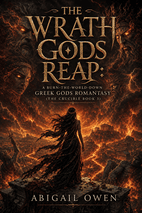
Underneath its plot, the novel is really wrestling with how unstable identity gets when glamours, false beliefs, and concealed motives run the show. It's also about love as the strongest bond and the easiest thing to betray, power that becomes dangerous when wrath and hellfire slip control, and the heavy price of prophecy, rule, grief, and sacrifice.
Here you'll find each major theme tied to concrete moments: glamours and framing, Hades and Lyra's trust under pressure, Lyra's hellfire flaring, the Hadean Prophecy shifting from Hades to Lyra, Charon's funeral and Rhea's dying words, and rulers hiding pain. You'll also see recurring symbols: hellfire, the bond's marks, Ereshkigal's pot, and the Ring of Gyges.
Major Themes in The Wrath Gods Reap
Deception, glamour, and hidden identity
The book repeatedly ties conflict to glamours, false beliefs, and concealed motives, making identity itself unstable. Characters are framed, spelled, or disguised so that even love and memory become evidence that cannot be trusted. The Deceiver plot and the trial tricks turn truth into something that must be proved rather than assumed.
- The Deceiver reveals they stole Ereshkigal's pot and framed Lyra using glamours so Ereshkigal would think Lyra did it.
- Loki and Hecate implant new truths in contenders' minds, and Hades accuses Lyra of being the Deceiver and making him mortal.
- Aphrodite is revealed as the Deceiver and later appears in battle-worn armor with the Greek gods glamoured under her control.
- Lyra is revealed as the goddess of glamours, and at her ceremony Mnemosyne announces her as goddess of glamours and a new goddess of irony.
Love, trust, and betrayal
Love is the story's strongest bond and also its most vulnerable point, repeatedly tested by spells, secrets, and public performance. Hades and Lyra must love each other while distrusting each other, and side characters face similar tests of loyalty. Betrayal is most painful because it comes through intimacy and chosen family.
- Hades believes Lyra may be the Deceiver under Loki's spell but privately admits he still loves her.
- Hades says fear held him in a stranglehold and made him see Lyra through a dirty window, causing him to believe Loki's lie.
- Boone says he would have protected Persephone even if she were the Deceiver, and Loki's spell over him breaks when they kiss.
- Lyra and Hades tell Addie she is loved; Addie believes them, takes Lyra's power and brokenness into herself, and disappears after saving Charon.
Power, wrath, and loss of control
Power in the book is dangerous when it is emotional, borrowed, or failing. Lyra's hellfire and Underworld powers flare unpredictably, turning wrath and fear into physical destruction. Learning control is tied to identity, duty, and the ability to protect rather than punish.
- Lyra realizes she punished a damned soul in wrath, not justice, while her shaking and heat worsen and Anubis watches.
- Lyra's hellfire burns a wall-bound soul to ash and leaves her hands on fire, and later she accidentally sets the Erebos water gardens on fire.
- Hades finds Lyra surrounded by hellfire in the Erebos water gardens and waits because he cannot reach her.
- After being infected by the Pandemonium, Lyra explodes in hellfire and later says the feral state is a glamour she clawed out of herself and Koios.
Fate, prophecy, and sacrifice
The Hadean Prophecy drives the plot, but the book shifts the prophecy's meaning from Hades to Lyra and makes sacrifice the price of stopping destruction. Characters repeatedly give up power, safety, or life for others. The ending turns sacrifice into both redemption and transformation.
- Phoebe warns Lyra that the Hadean Prophecy may not be fulfilled and the Deceiver may still target Hades.
- Lyra concludes she fulfills the prophecy and must never become a god, meaning she and Hades cannot be together.
- Ereshkigal places Nergal's heart and then her own heart into Lyra, turns to ash, and says she wishes to be with Nergal.
- Addie absorbs the hellfire from the time shards, saves Charon, and disappears into a time shard after choosing to believe Lyra's love.
Burden of rule and duty over personal happiness
Rulership in the book is exhausting, public, and constrained by rules and contracts. Lyra and Hades often hide their pain or sacrifice private happiness because the dead and the realm depend on them. The trials sharpen this conflict by making leadership something that must be proved before the gods.
- Lyra hides her shaking hands during a soul's confession and doubts that Hades' power was ever supposed to be hers.
- Hades says he wants his true position as god of the dead to be unimpeachable and wants everyone to see what Lyra already sees.
- Lyra recognizes that Hades will not let his own happiness put the souls in his care at risk, not even the possibility of risk.
- Anubis enforces trial rules and contracts, denying Athena's attempt to name herself and warning Lyra that if she is not present she forfeits naming a contender.
Grief, mortality, and death ritual
Death is not only a cosmic mechanism but a source of intimate grief and ritual. Charon's death and funeral, Rhea's dying words, and the losses of gods and Titans force characters to mourn while still fighting. The book contrasts immortal power with the vulnerability of mortal bodies and final partings.
- Charon arrives as a translucent soul on his pirate ship, hugs Lyra, tells her not to carry guilt, and asks her to take care of Hades.
- Lyra cuts her hair as a funerary rite; Persephone leads Charon through the gates into Elysium, and Cerberus howls.
- Rhea, dying from her wounds, tells Lyra that Aphrodite glamoured herself as Lyra and used poisoned axes, names Mnemosyne her heir, and asks Lyra to tell her children she loved them.
- During Lyra's ceremony she thinks Cronos, Rhea, Crius, Tethys, and Anubis should be there and fights tears over those lost.
Symbols and Motifs
Hellfire
Hellfire represents uncontrolled power, wrath, and emotional overflow, but also later becomes a force of sacrifice and transformation. It flares when Lyra is overwhelmed and is dangerous to those she loves, making it a visible sign of her internal struggle.
- Lyra's hellfire flares and she shoves Hades away; he explains hellfire's danger and that he once struggled with it too.
- Lyra's hellfire burns a wall-bound soul to ash and leaves her hands on fire.
- Hades finds Lyra in the Erebos water gardens surrounded by hellfire he cannot cross and waits for her to regain control.
- Addie absorbs the hellfire from the time shards after taking Lyra's power and brokenness into herself.
The bond and its marks
The bond represents the love and soul-connection between Lyra and Hades that others cannot see or believe. Its marks appear when words fail, and its repair becomes a literal rejoining of Hades' divided soul.
- Hades is described as Lyra's lover and center, with a bond only she can see.
- Lyra traces the bond on both their arms; Hades cannot see it but feels warmth and love, and Lyra promises to make one he can see.
- Lyra's hellfire fuses the bond ribbons into a three-headed bond that joins both parts of Hades' soul.
- A golden star mark appears over Lyra's heart after Hades becomes one whole soul.
Ereshkigal's pot
The pot symbolizes love, grief, and manipulated truth: it holds Nergal's heart and drives Ereshkigal's accusation against Lyra. False versions of the pot are used to frame and test characters, while the real pot becomes a vessel for sacrificial power.
- Ereshkigal holds Hades prisoner in Ganzir and believes Lyra stole her precious pot.
- The Deceiver reveals they stole Ereshkigal's pot and framed Lyra to delay Hades.
- Ereshkigal reveals the pot contains Nergal's heart and places Nergal's heart into Lyra before pulling out her own heart.
- Lyra swaps Ereshkigal's pot for a fake, returns the real pot to Ereshkigal, and persuades her to help by showing her the theft.
The Ring of Gyges
The Ring of Gyges symbolizes secrecy, hidden action, and the ability to observe without being seen. It enables covert plots and revelations, but also shows how invisibility can isolate characters even as it gives them power.
- Hades wakes in Ganzir, secretly slips on the Ring of Gyges to become invisible, and overhears Ereshkigal and Neti discussing the stolen pot.
- Lyra and Boone travel invisibly to Tartarus with the Ring of Gyges and exchange changing code words with Iapetus.
- Lyra watches the trial invisibly with the Ring of Gyges and sees Aphrodite deliberately bump Hades toward Phlegethon.
- Hades slips Lyra the Ring of Gyges when she trades him her bident during the choice of relics.