The Witch Book Club Questions
by Freida McFadden
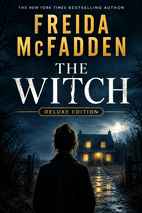
These questions assume everyone has finished the book and contain spoilers, including the ending.
The Witch by Freida McFadden gives book clubs plenty to untangle: a 1692 witchcraft trial, a modern haunted house, unreliable histories, and questions about who gets believed and why. The dual timelines invite readers to compare fear, power, and blame across centuries.
Use these questions to spark open discussion rather than a quiz. Pick a few that interest your group, or work through them in order. There are no right answers here, just strong reactions, suspicions, and debates about characters, motives, and evidence.
Accusation, Blame, and Violence
- 1.Caroline is condemned for witchcraft while Archie, the man who murders Temperance, Molly, and other women, is the real Night Reaper. How does that reversal change the way you read the 1692 trial and Caroline's persecution?
- 2.Molly accuses Caroline of feeding the devil in the form of Gideon the cat, produces Caroline's handkerchief as evidence, and later marries Archie. Is Molly simply a villain, or does her pregnancy and death at Archie's hands complicate how you judge her?
- 3.Archie confesses to Caroline that he could not help killing and strangles her after murdering Molly in their bed. How does the novel use Archie's respectable merchant status to comment on violence against women?
- 4.Hitty Atkins is arrested, found guilty, and hanged after Caroline protests her innocence, and Caroline later realizes Jonas was innocent of the Night Reaper murders. How does the novel use wrongful accusation and scapegoating across both timelines?
Identity, Deception, and Family
- 5.Julia first sees Ethel as a hostile gatekeeper, but Ethel's unmailed letters reveal Howard's death and her uncertainty about raising or giving up their baby. How did those letters affect your view of Ethel before the reveal that Celia had murdered the real Ethel and stolen her identity?
- 6.Caroline agrees to bury Archie and Molly, assume Molly's identity, and marry Jonas after Jonas shoots Archie. Did you agree with Caroline's choice to accept Jonas's plan and start a new life with him?
- 7.Julia's DNA test shows no match between her and the woman she believed was Ethel, and the epilogue reveals the real Ethel was her biological grandmother. How did that identity twist reshape your understanding of Gram/Letitia's role in the family?
- 8.Caroline returns to Pemberton in 1717 disguised as Molly while Jonas poses as Archie, and they hang the completed portrait of themselves as Archie and Molly. Did you read that ending as a happy second chance, a continuation of deception, or both?
Belief, Healing, and the Supernatural
- 9.Celia and Mick staged the hauntings with crying recordings, cold air through vents, muddy footprints, a noose, wall writing, a stopped grandfather clock, and magnets to fool Alistair Dixon's meters. Did learning the hauntings were faked make the earlier supernatural scenes more or less effective for you?
- 10.Gram strikes Celia with a shovel and says Ethel woke her and told her to get the shovel. Do you read that as a genuine supernatural moment, as Gram's confusion, or as something else?
- 11.Dr. Shaylor bloodlets Judith Hatch, proposes cutting her neck, and calls her illness the work of the devil, while Caroline's cooling rags and Hitty Atkins's herbal knowledge help Judith recover. What does the novel suggest by contrasting these forms of healing?
- 12.Henry dismisses ghosts and calls Alistair Dixon a con artist, yet he helps Julia with the pelvic bone, the carbon-14 dating, and the museum purchase. Did Henry's skepticism make him a good partner for Julia, or did it make him too dismissive of her experiences at Pemberton?
Closure and Endings
- 13.Police find three skeletons in the backyard: the real Ethel and two about three hundred years old, one male and one female, and the man's identity and killer remain unknown. How did that final detail affect your sense of closure?
- 14.Julia forgives Henry for calling Adult Protective Services without talking to her first, and she and Henry move in together while Pemberton becomes part of the museum. Did you find that ending satisfying for Julia and for Gram/Letitia?