The Subtle Art of Not Giving a F*ck — Interactive Mindmaps

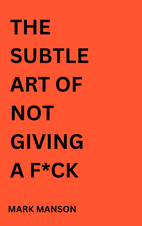
The Subtle Art of Not Giving a F*ck by Mark Manson Book Cover

by Mark Manson

Mark Manson's The Subtle Art of Not Giving a F*ck challenges feel-good self-help by advocating for selective caring and embracing life's inevitable struggles. It's for readers seeking a blunt, counterintuitive approach to building resilience and focusing on what truly matters.

On Insta.page you also get an Apply This Book tool that lets you combine insights from up to 3 books to solve your specific situation.

Chapter mindmaps

Free preview: chapters 1–4 are fully interactive. Click any node to expand or collapse. Subscribe to unlock the rest.

Chapter 1: Chapter 1 Don’t Try.pdf

Key concepts: Chapter 1 Don’t Try.pdf

1. Chapter 1 Don’t Try.pdf

The Trap of 'Positive' Obsession

  • Fixating on happiness or perfection amplifies feelings of inadequacy.
  • Affirmations and external validation often reinforce insecurities rather than heal them.
  • Modern culture's pressure to 'be more' creates a feedback loop of self-judgment.

The Feedback Loop from Hell

  • Anxiety about anxiety or guilt about guilt magnifies negative emotions.
  • Social media exacerbates this by showcasing curated 'perfect' lives.
  • Accepting negative emotions as inevitable disarms their power.

The Backwards Law of Happiness

  • Chasing happiness (wealth, love, status) highlights their absence.
  • Embracing negative experiences (pain, failure) generates growth.
  • Avoiding suffering often creates more suffering in the long run.

What 'Not Giving a Fuck' Actually Means

  • It's about selective investment, not apathy—caring deeply about what aligns with your values.
  • True strength comes from owning flaws rather than masking them.
  • Prioritize energy on meaningful things (relationships, purpose) and let go of trivialities.

The Problem with Trivial Concerns

  • Misplaced priorities (e.g., coupon battles) stem from a lack of meaningful challenges.
  • Trivial dramas act as proxies for deeper existential voids.
  • Maturity involves shedding invented problems and focusing on what truly matters.

Practical Enlightenment and Selective Investment

  • Growth comes from accepting life's messiness, not detached bliss.
  • Middle age brings clarity—energy is finite, so reserve it for what matters.
  • The goal is to 'suffer better' with humor and humility, not to eliminate suffering.

Choosing Better Problems

  • The book isn't about fixing problems but selecting ones worth struggling for.
  • Reject quick fixes and toxic positivity—embrace life's chaos.
  • Resilience comes from trusting yourself and laughing at absurdity.

The Evolution of 'Giving a Fuck'

  • Children obsess over trivial things, while maturity teaches selective care about what truly matters.
  • Aging leads to energy conservation and acceptance of life's imperfections.
  • Prioritizing fucks for family, close friends, and passions creates liberating simplicity.
  • 'Practical enlightenment' is grounding oneself in life's inevitable suffering, not eternal bliss.

The Book’s Radical Purpose

  • The book is a guide to 'losing and letting go,' not achieving greatness or constant positivity.
  • Embraces pain as a tool and transforms problems into 'slightly better problems.'
  • Encourages falling backward into life's chaos with trust in survival.
  • Rejects societal pressures to care about everything indiscriminately.
  • Offers no solutions to suffering but a roadmap to suffer better with humor and clarity.

Key Takeaways

  • Trivial concerns dominate when meaningful priorities are absent.
  • Maturity is selectively investing energy in what truly matters.
  • 'Practical enlightenment' means accepting suffering as inevitable and using it for growth.
  • The book's goal is not to fix problems but to help choose better ones.

Chapter 2: Chapter 2 Happiness Is a Problem.pdf

Key concepts: Chapter 2 Happiness Is a Problem.pdf

2. Chapter 2 Happiness Is a Problem.pdf

The Buddha’s Quest for Meaning

  • Siddhartha Gautama’s journey reveals life’s inherent suffering
  • Neither indulgence nor extreme denial leads to enlightenment
  • Acceptance of suffering, not resistance, is key to growth

Disappointment Panda’s Harsh Truths

  • Metaphor for society’s avoidance of uncomfortable truths
  • Pain is a biological feedback mechanism, not an enemy
  • Avoiding suffering disconnects us from reality

The Biology of Suffering

  • Brains evolved to crave progress, not contentment
  • Pain (physical/emotional) signals unresolved issues
  • Modern numbing tactics (materialism, distraction) hinder growth

The Never-Ending Cycle of Problems

  • Life is a series of problems; solving one creates another
  • Happiness comes from the act of solving, not the absence of struggle
  • Victim mentality stagnates; engagement with challenges brings purpose

Emotions as Feedback, Not Commands

  • Negative emotions flag unresolved problems
  • Positive emotions reward progress
  • Balance: acknowledge emotions without letting them dominate decisions

Choosing Your Pain

  • Meaningful goals require enduring aligned struggles
  • Key question: 'What pain do you want to sustain?'
  • Fulfillment comes from curating struggles, not avoiding pain

Key Takeaways

  • Suffering is universal; response defines happiness
  • Problems persist—happiness is in solving them
  • Emotions are navigational tools, not mandates
  • Choose meaningful struggles for fulfillment

The Illusion of Desire

  • Desires often focus on idealized outcomes while ignoring the demanding process required to achieve them.
  • Romanticizing success without embracing the necessary sacrifices leads to half-hearted efforts and failure.
  • Abandoning goals may stem from a misalignment between desires and the reality of the journey, not lack of talent or willpower.

Embracing the Struggle

  • Success is defined by engaging with and enjoying the inherent challenges of a pursuit.
  • Those who thrive in a domain don’t just tolerate the struggle—they find meaning and purpose in it.
  • The grind isn’t an obstacle; it’s the foundation of meaningful achievement.

The Never-Ending Climb

  • Happiness is not a final destination but a byproduct of pursuing challenges aligned with personal values.
  • Life consists of 'upgraded problems,' where fulfillment comes from continuous engagement and growth.
  • Resisting the climb or seeking a static endpoint misses the essence of joy, which lies in the ongoing pursuit.

Key Takeaways

  • Desiring an outcome is insufficient—you must also embrace the process that leads to it.
  • Success isn’t about enduring misery but finding purpose in the struggle itself.
  • Happiness emerges from pursuing meaningful challenges, not from reaching a fixed 'finish line.'

Chapter 3: Chapter 3 You Are Not Special.pdf

Key concepts: Chapter 3 You Are Not Special.pdf

3. Chapter 3 You Are Not Special.pdf

The Myth of Inherent Exceptionalism

  • Believing in unearned specialness leads to delusion and stagnation.
  • Jimmy's story exemplifies entitlement without achievement.
  • The self-esteem movement prioritized feeling special over actual growth.

The Two Faces of Entitlement

  • Grandiosity: 'I’m amazing, everyone else sucks' (e.g., Jimmy's delusions).
  • Victimhood: 'I suck, everyone else is amazing' (self-pity as entitlement).
  • Both mindsets avoid accountability and distort reality.

Roots of Entitlement: Trauma and Culture

  • Unresolved pain (e.g., Manson's adolescence) fuels selfish behaviors.
  • The 1960s–70s self-esteem movement created fragile, adversity-illiterate adults.
  • Modern technology amplifies entitlement by warping perceptions of normalcy.

Modern Culture’s Role in Entitlement

  • Campus censorship and outrage culture prioritize comfort over resilience.
  • Social media showcases unrealistic 99.999th percentile achievements.
  • The 'tyranny of exceptionalism' makes ordinary life feel inadequate.

The Antidote: Embracing Ordinariness

  • Rejecting the pressure to be extraordinary liberates meaning in mundane life.
  • True worth comes from humility and consistent, authentic engagement.
  • Life’s richness lies in unremarkable moments (friendships, creativity, small joys).

Key Takeaways

  • Unearned self-esteem breeds entitlement and fragility.
  • Entitlement masks itself as grandiosity or victimhood—both refuse accountability.
  • Cultural avoidance of discomfort (e.g., censorship) deepens entitlement.
  • Growth requires confronting flaws, not masking them with delusion.

The Tyranny of Exceptionalism

  • Technology and media distort perceptions by showcasing the 99.999th percentile of human experience as 'normal.'
  • Most people are statistically average at most things, even those who excel in one area.
  • Constant exposure to extremes fuels insecurity, making ordinary lives feel inadequate.

Psychological Effects of Media-Driven Exceptionalism

  • Equating self-worth with standing out leads to overcompensation (e.g., chasing fame, wealth, or infamy).
  • Entitlement grows as a defense mechanism against feeling unexceptional.
  • Technology amplifies insecurity by making it easy to compare oneself to seemingly flawless lives online.

The Problem with 'Extraordinary' as a Cultural Standard

  • The paradox: 'If everyone is extraordinary, no one is.'
  • Toxic hierarchy forms where mediocrity is seen as failure, pushing people to extremes.
  • True mastery comes from anti-entitlement—accepting mediocrity and committing to incremental growth.

The Value of Embracing Ordinariness

  • Rejecting exceptionalism is liberating, not resigning.
  • Ordinary moments (friendships, creativity, kindness) form the foundation of a fulfilling life.
  • Chasing greatness often distracts from meaningful, everyday human experiences.

Key Takeaways

  • Media's focus on extremes makes 'average' feel inadequate.
  • Entitlement and extremism are coping mechanisms for feeling unexceptional.
  • True growth comes from humility, not the delusion of inherent greatness.
  • Ordinary experiences (connection, small acts of care) are the bedrock of meaning.

Chapter 4: Chapter 4 The Value of Suffering.pdf

Key concepts: Chapter 4 The Value of Suffering.pdf

4. Chapter 4 The Value of Suffering.pdf

The Paradox of Suffering and Values

  • Suffering gains meaning when tied to consciously chosen values, not external validation.
  • Examples like Hiroo Onoda and Norio Suzuki show how self-defined purpose makes suffering bearable.
  • Values dictate the quality of our problems—shitty values lead to unsustainable struggles, while good values foster resilience.

Hiroo Onoda: The Soldier Who Wouldn’t Surrender

  • Onoda endured 29 years of isolation due to his loyalty to a self-made mission.
  • His suffering felt meaningful until he confronted a consumerist Japan that invalidated his values.
  • Highlights how suffering loses meaning when detached from a chosen purpose.

Norio Suzuki: The Adventurer and the Abominable Snowman

  • Suzuki sought absurd quests (e.g., finding Onoda, the Yeti) as self-defined 'glory.'
  • His bond with Onoda reveals shared devotion to unconventional meaning.
  • Demonstrates how even futile struggles become endurable when tied to personal narratives.

The Three Layers of Self-Awareness

  • Layer 1: Identifying surface emotions (e.g., 'I’m angry').
  • Layer 2: Digging into emotional triggers (e.g., 'Why am I angry?').
  • Layer 3: Examining core values that define success/failure (e.g., 'Why do I measure myself this way?').
  • Most people ignore Layer 3, leading to misaligned values and perpetual dissatisfaction.

Dave Mustaine: The Rock Star Who Measured Himself Against a Ghost

  • Mustaine’s obsession with 'beating Metallica' made his success feel like failure.
  • Shows how unhealthy values (e.g., comparison) distort achievement into suffering.
  • Contrasts with Pete Best, who redefined success around family and stability.

Pete Best’s Redemption and the Power of Values

  • Best’s initial despair stemmed from societal metrics (fame, recognition).
  • His redemption came from shifting to 'good values' (family, simplicity).
  • Illustrates that values determine the quality of our problems and happiness.

The Central Argument: Values as Compasses

  • Shitty values (e.g., perfectionism, forced positivity) breed anxiety and emptiness.
  • Reality-based values (e.g., honesty, curiosity) turn adversity into growth.
  • Embracing discomfort and internal metrics (e.g., integrity over wealth) alchemizes suffering into meaning.

Shitty Values and Their Consequences

  • Pleasure as a primary value leads to anxiety and emptiness, as it's a by-product, not a goal.
  • Material success beyond basic needs correlates poorly with happiness and fosters selfishness.
  • The need to always be right stifles growth and learning; embracing ignorance fuels curiosity.
  • Denying negativity amplifies suffering; healthy emotional processing builds resilience.
  • Shitty values create unsustainable problems, while better values lead to growth-oriented challenges.

Defining Good and Bad Values

  • Good values are reality-based, socially constructive, and immediately controllable (e.g., honesty, humility).
  • Bad values are superstitious, socially destructive, or reliant on external validation (e.g., popularity, dominance).
  • Values like vulnerability and self-respect are internally achieved and align with reality.
  • External metrics (wealth, fame) are unreliable; internal metrics (integrity, curiosity) foster lasting fulfillment.
  • Choosing values wisely determines whether problems are solvable or destructive.

Key Takeaways on Values and Suffering

  • Values dictate the quality of problems: better values lead to growth, shitty values to crises.
  • Suppressing emotions backfires; constructive expression (e.g., anger without harm) is vital.
  • Self-worth rooted in controllable, reality-aligned values (e.g., integrity) outperforms external validation.
  • The chapter previews five transformative values (e.g., radical responsibility) to turn suffering into meaning.

Continue exploring The Subtle Art of Not Giving a F*ck