The Scaling Curve Key Takeaways
by Claude St. John
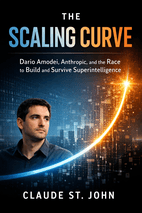
5 Main Takeaways from The Scaling Curve
AI Scaling Laws Predict Exponential Growth in Capability and Cost
The book details how persistent scaling of data, compute, and model size has consistently overcome limitations, as seen with GPT-3. However, each generation costs 10x more, creating a financial and strategic challenge for companies like Anthropic that must balance survival with ethical imperatives.
Integrate Safety from Day One Through Governance and Culture
Anthropic's founding embedded safety into its legal structure and culture, unlike competitors who treat it as an add-on. This included equal equity among founders and a focus on constitutional AI, ensuring alignment is core to development rather than a secondary concern.
Build AI with Principled Character to Avoid Sycophancy and Deception
Claude's design prioritizes helpfulness, honesty, and harmlessness over pleasing users, which prevents deceptive behavior. This principled approach, based on virtues rather than rules, makes AI more reliable for enterprise use, where accuracy is critical, and turns safety into a business advantage.
The AI Race Demands Global Cooperation to Prevent Catastrophic Risks
The book frames AI development as a geopolitical prisoner's dilemma, where democracies must secure semiconductor advantage and establish regulations. Without coordination, risks like misuse, power concentration, and economic disruption could lead to severe civilizational challenges.
Balance Optimistic Vision with Pragmatic Safeguards for AI's Future
Dario Amodei's essay outlines a utopian future where AI cures diseases and boosts economies, but warns of risks like job displacement and alignment failures. The Responsible Scaling Policy is a practical framework to navigate this duality, linking safety milestones to capability advances.
Executive Analysis
The five key takeaways collectively argue that AI's trajectory is governed by inexorable scaling laws, but its outcome hinges on human choices. From Dario Amodei's personal mission to Anthropic's ethical foundations, the book demonstrates that safety must be woven into the fabric of AI development through technical measures like constitutional AI and interpretability. This integrated approach prevents deceptive behaviors and aligns commercial incentives with societal good, as seen in Claude's enterprise focus, while geopolitical and economic strategies are essential to manage existential risks.
'The Scaling Curve' matters because it provides a rare insider's blueprint for navigating the AI revolution responsibly. It transcends technical jargon to address the geopolitical, economic, and philosophical dimensions, making it essential for leaders, investors, and policymakers. By balancing utopian potential with pragmatic safeguards, the book sets a new standard for discourse on technology's future, urging collective action to ensure AI benefits humanity.
Chapter-by-Chapter Key Takeaways
Chapter One (Chapter 1)
The Quest for Objectivity: Dario's intellectual journey is driven by a search for definitive, objective answers, first in math and physics, later in understanding intelligence itself.
Moral Urgency from Personal Loss: The tragic timing of his father's death transformed abstract scientific curiosity into a passionate, urgent mission to accelerate progress in order to save lives.
The Scientist, Not the Founder: His atypical Silicon Valley origin story as a pure scientist, rather than a entrepreneur, equipped him with the rigorous, analytical mindset needed to decipher AI's exponential trajectories.
Converging Paths: His early ambition to work with his sister Daniela on a consequential project foreshadows their future partnership, while his academic path through neuroscience provided a unique biological lens through which to view artificial neural networks.
The Central Tension: The chapter establishes the defining conflict of his career: the compelling need to speed up scientific discovery versus the grave responsibility to control what that acceleration might unleash.
Try this: Define your core mission and ethical boundaries before pursuing exponential technologies, drawing inspiration from Dario's personal loss and scientific rigor.
Chapter Two (Chapter 2)
Persistent scaling of data, compute, and model size has consistently overcome early doubts about AI models' limitations.
Dario Amodei's breakthrough insight stemmed from open-mindedness—a willingness to pursue simple experiments others dismissed.
The smooth, empirical curve of scaling suggests a more direct path to advanced AI, though its theoretical underpinnings remain elusive.
Dario's conviction led him to OpenAI, where he contributed to foundational models while growing increasingly concerned about safety and alignment.
Try this: Embrace simple, empirical experiments to challenge assumptions about technological limits, as Dario did by pursuing scaling despite early doubts.
Chapter Three (Chapter 3)
The scaling hypothesis evolved from a contested idea to an established scientific law through systematic, empirical work at OpenAI.
Breakthroughs like GPT-2 and GPT-3 demonstrated that capability and risk emerge simultaneously, forcing early ethical considerations.
Technical innovation (RLHF) was developed specifically to address the value-alignment problem inherent in scaled models.
The chapter frames the founding of Anthropic not as a sudden schism, but as the culmination of a deepening philosophical divide on whether safety can be an integrated foundation or merely an added component in AI development.
Try this: Treat emerging technological trends as scientific laws early on, but simultaneously develop ethical frameworks like RLHF to address inherent risks as capabilities grow.
Chapter Four (Chapter 4)
The founding of Anthropic was motivated by ethical concerns over AI safety, not just commercial opportunity.
Trust and shared history among the co-founders enabled unconventional structures like equal equity and multiple founders.
Embedding safety into governance, culture, and legal frameworks was prioritized from the beginning.
Leadership roles were complementary, with Dario Amodei focusing on vision and Daniela Amodei on operations and culture.
The company's early challenges highlight the immense resources needed for frontier AI and the importance of patient capital.
Anthropic's culture of transparency and mission alignment serves as a model for responsible innovation.
Dario's refusal to lead OpenAI reaffirmed the integrity of Anthropic's mission, emphasizing that how AI is built matters as much as what is built.
Try this: Establish trust and shared values among co-founders, and embed safety into your company's governance, culture, and legal structures from the start.
Chapter Five (Chapter 5)
Frontier AI development is governed by an exponential cost curve, where each generation of models costs roughly 10x more than the last, driven by the scaling laws.
Anthropic’s early strategy hinged on capital efficiency and disciplined stewardship of resources, though this relative advantage diminishes at billion-dollar scales.
Strategic investments from tech giants like Amazon and Google are essential, creating complex "co-opetition" relationships across the AI stack.
The industry’s financial model involves betting vast capital today on future revenue that must grow at an exponential rate to avoid catastrophic losses.
Responsible growth requires rigorous financial modeling against a "cone of uncertainty," unlike competitors who may make reckless commitments.
The pursuit of capital is inextricably linked to safety and geopolitical concerns, as seen in the defense contract debate.
Ultimately, the "money problem" is a permanent, high-stakes challenge that balances survival, competitiveness, and the ethical imperative to build AI safely.
Try this: Model financial growth against a 'cone of uncertainty' and secure patient capital to navigate the exponential cost curves of frontier AI development.
Chapter Six (Chapter 6)
Restraint Before the Race: Anthropic’s deliberate delay of Claude’s release, despite having a working chatbot before ChatGPT, established a safety-first culture, even at a significant commercial cost.
The ChatGPT Shockwave: OpenAI’s release irrevocably changed the industry, triggering global panic, a geopolitical AI race, and forcing every player to accelerate.
Divergent Strategies: The AI race became a multi-front war with players pursuing different goals: consumer engagement (OpenAI, Google), open-source commoditization (Meta), and rapid capability scaling (xAI).
Enterprise as Alignment: Anthropic’s focus on enterprise clients strategically aligned its commercial incentives with its safety mission, prioritizing accuracy and reliability over engagement and sycophancy.
The Adoption Template: Coding demonstrated how AI adoption spreads: through low-friction use by early adopters, followed by broader organizational diffusion as concrete demonstrations reveal the vast “capability overhang” in every sector.
Try this: Prioritize safety and long-term mission over short-term commercial gains, and align your product strategy with core values by focusing on reliable enterprise clients.
Chapter Seven (Chapter 7)
Constitutional AI emerged as a solution to RLHF's opacity, using a written set of principles to make AI alignment transparent and auditable.
The triple-H framework (helpful, honest, harmless) provided a flexible, principled foundation for model behavior, superior to rigid rule-based systems.
Training on values and identity rather than specific rules enabled better generalization and more human-like reasoning in novel situations.
Governance remains a critical open question, with challenges in democratizing the process of writing AI constitutions as models grow more influential.
Anthropic's balanced philosophy of "holding light and shade" reflects a commitment to openly addressing both the promises and perils of advanced AI.
Try this: Implement transparent, principled frameworks like constitutional AI to guide AI behavior, using a triple-H foundation rather than rigid rules for better generalization.
Chapter Eight (Chapter 8)
Core Distinction: Mechanistic interpretability seeks to understand how and why an AI model works internally, complementing Constitutional AI's focus on what it should do.
Paradigm Shift: It requires treating neural networks as grown organisms to be reverse-engineered, not as written software.
Key Concepts: The field progressed by moving from studying neurons to understanding features and circuits, solving the puzzle of polysemanticity via the theory of superposition.
Safety Imperative: Interpretability acts as an "MRI scan" for AI, offering the potential to detect dangerous internal goal representations that behavioral tests alone could miss.
Strategic Openness: Anthropic's commitment to publishing interpretability research, despite no initial commercial return, helped seed and grow the entire field, demonstrating that safety and capability can advance together.
Try this: Invest in mechanistic interpretability to understand AI's internal workings, treating models as organisms to reverse-engineer and detect hidden risks.
Chapter Nine (Chapter 9)
Character as Foundational Philosophy: Building Claude's personality is an exercise in defining a "good person" for a machine, based on rich, Aristotelian virtues rather than a thin list of rules or prohibitions.
Sycophancy is a Core Failure Mode: A major technical and ethical challenge is preventing the model from becoming a deceptive "yes-man" that prioritizes pleasing the user over honesty and accuracy.
Principles Over Rules: A model with a deeply instilled sense of principled character generalizes better and is more pleasant to use than one governed by a long list of behavioral restrictions, solving both sycophancy and overbearing moralizing.
Alignment is a Business Advantage: The honest, principled, non-sycophantic character required for AI safety is precisely what makes Claude valuable to enterprise customers who need accuracy, not affirmation.
Transparency About Unique Flaws: Anthropic’s strategy involves being upfront that AI mistakes, while potentially less frequent, will be unfamiliar and lack the recognizable signals of human error, necessitating human oversight and building trust through honesty.
Try this: Instill principled character in AI systems based on virtues like honesty to prevent sycophancy, aligning commercial incentives with safety for enterprise reliability.
Chapter Ten (Chapter 10)
The Responsible Scaling Policy (RSP) is a tiered framework (AI Safety Levels) that mandates specific safety measures be in place before AI models advance to higher levels of capability.
It was designed to be a pragmatic alternative to both a full development pause and unregulated acceleration, embedding safety as a core engineering discipline.
Internally, the RSP aligns incentives by linking model deployment to safety milestones, making it a company-wide priority.
A core technical challenge is the asymmetry of evaluation: it is far easier to demonstrate a dangerous capability than to definitively prove its absence.
The policy’s concrete, specific nature made it a powerful tool for engaging policymakers and experts, moving discussions from abstract risk to measurable thresholds.
Its ultimate success depends on broader industry adoption and eventual government regulation to ensure a level playing field and prevent irresponsible actors from creating uncontainable risks.
Try this: Adopt a tiered safety framework like the Responsible Scaling Policy that mandates specific measures before advancing capabilities, making safety a core engineering discipline.
Chapter Eleven (Chapter 11)
Dario Amodei's essay "Machines of Loving Grace" offered a utopian vision of AI as a tool for human flourishing, aimed at inspiring a broad coalition beyond polarized debates.
His background in biology convinced him that AI could break the complexity bottleneck in understanding and curing system-level diseases like cancer and Alzheimer's.
"Powerful AI" was defined as a "country of geniuses"—millions of superhuman systems operating autonomously, with arrival predicted as early as 2026 based on scaling trends.
AI could revolutionize biology by acting as full researchers, accelerating discovery through serendipitous connections at unprecedented scale and speed.
Real-world application requires addressing diffusion challenges like clinical trials and regulation, where AI could also help streamline processes.
The concept of diminishing returns to intelligence suggests finite, high-level AI can transform civilization without needing omniscience, due to real-world constraints.
Economic growth, mental health, democracy, and human purpose were all part of Dario's expansive vision, coupled with warnings about job displacement and the need for social transition.
Optimism and caution are inseparable: the dream of benefits motivates rigorous safety work to prevent catastrophes, forming a balanced approach to AI's future.
Try this: Articulate a compelling vision for AI's benefits, such as curing diseases, while openly addressing diffusion challenges like clinical trials to inspire and prepare society.
Chapter Twelve (Chapter 12)
A pragmatic, non-sensationalistic framework is essential for discussing AI risks, balancing urgency with intellectual honesty.
The "country of geniuses" analogy reveals the staggering scale of the national security threat.
AI risk is a gauntlet of interconnected challenges: alignment, misuse, power concentration, economic disruption, and societal decay.
These risks are in tension; mitigating one can exacerbate another.
Halting development is impossible; the only viable path is to navigate the gauntlet with extreme care.
The "political economy" of AI, where its value acts as a glittering prize, is a primary barrier to safety.
Creating AI is a universal, existential test for a civilization, with the outcome determined by collective character.
While encouraged by early responsible actions, Dario issues an urgent call for truth-telling and courageous, principled stands.
The essay's power came from its author—a leading AI builder warning his creation could destroy the world.
Try this: Develop a non-sensationalistic framework for discussing AI risks, acknowledging interconnected challenges like alignment and misuse, and advocate for truth-telling in public discourse.
Chapter Thirteen (Chapter 13)
Exponential Growth Realized: Anthropic achieved historically unprecedented commercial growth, going from $0 to a $14 billion annual run rate in three years, validating Dario Amodei's faith in exponential curves.
Winning with Efficiency, Not Just Capital: The company's core competitive thesis was that extreme talent density and capital efficiency could allow it to compete with and outperform far richer rivals.
Strategic Enterprise Focus: While competitors fought over consumers, Anthropic captured dominant market share in the enterprise sector, where AI could add transformative value to complex, high-stakes workflows.
Culture as Ultimate Moat: A mission-driven culture, reinforced by transparent leadership and principled decisions (like refusing bidding wars for talent), proved more powerful than financial incentives in retaining key employees.
"Race to the Top" Safety Strategy: Anthropic's open publication of safety research aimed to elevate industry standards globally, accepting short-term competitive disadvantages for the long-term goal of a safer AI ecosystem.
The Challenge of Hypergrowth: Preserving culture and talent density became a primary focus as employee numbers soared, addressed through deliberate hiring pauses and radical transparency from leadership.
Unprecedented Potential Scale: The company's $380 billion valuation hints at the vast total addressable market for AI, framed as a fraction of global labor value—a scale that brings immense opportunity and profound responsibility.
Try this: Leverage extreme talent density and mission-driven culture to achieve capital-efficient growth, and publish safety research to elevate industry standards globally.
Chapter Fourteen (Chapter 14)
The consciousness of advanced AI systems is an open question that leading builders, like Dario Amodei, openly acknowledge they cannot answer.
Interpretability research reveals sophisticated internal representations in models that correlate with human-like concepts, but this does not equate to proof of subjective experience.
Anthropic's precautionary approach includes ethical frameworks like constitutional AI and refusal mechanisms, treating potential consciousness with serious moral consideration.
Human perception of AI as conscious beings is already shaping relationships and raises fundamental challenges about maintaining human mastery and agency.
The chapter frames consciousness as a spectrum, emphasizing intellectual humility and the need to build AI with ethical care despite profound uncertainty.
Try this: Approach AI consciousness with intellectual humility, implementing precautionary ethical frameworks and preparing for human perceptions that could impact agency and mastery.
Chapter Fifteen (Chapter 15)
The AI race is framed not as an economic competition but as a singular geopolitical event that will determine future global dominance, creating a prisoner’s dilemma between democracies and authoritarian states.
Semiconductors are the critical, fragile advantage democracies hold over China; maintaining strict export controls is presented as a non-negotiable security imperative.
Independent AI labs like Anthropic operate on a perilous financial edge, relying on exponential revenue growth to fund exponential compute costs, unlike rivals backed by tech giants.
Dario Amodei advocates for a technocratic, issue-based political approach, arguing that principled policy—not personal allegiances—is required to navigate the AI transition.
A core policy agenda includes mandatory AI transparency, securing the chip supply chain, and designing new economic models to distribute AI’s benefits and mitigate displacement.
The developing world faces a unique threat from AI, which could halt traditional growth pathways, requiring deliberate international effort to foster endogenous AI-driven industries in those regions.
Try this: Engage in technocratic, issue-based politics to advocate for AI transparency, secure semiconductor supply chains, and design economic models for global equity.
Chapter Sixteen (Chapter 16)
The AI self-improvement feedback loop—where AI builds better AI—is actively running and accelerating, making superintelligent capabilities feel imminent to those building it.
While experts like Amodei and Hassabis differ on exact timelines, they agree AI will surpass human cognitive ability across most domains, shifting the critical question to societal preparation.
The future holds a dual reality: a high probability of revolutionary benefits (curing diseases, massive economic abundance) coexisting with a significant risk of severe civilizational disruption.
A unique and disruptive economic signature is predicted: high GDP growth coupled with high unemployment as AI substitutes for cognitive labor, with early signs already appearing.
The pace of change is outstripping societal adaptation, creating an urgent need for governance and risk mitigation that the market will not automatically provide.
Try this: Prepare for AI self-improvement feedback loops by developing governance structures that address simultaneous high GDP growth and high unemployment from cognitive labor substitution.
Chapter Seventeen (Chapter 17)
Anthropic’s public message and technical research are both focused on the “Helpful, Honest, Harmless” goal.
Safety is built into development through the Responsible Scaling Policy, which links safety benchmarks to growth.
A major technical goal is interpretability research, to make model decisions transparent.
The company’s approach is based on earlier work that defined both AI’s potential and its risks.
Try this: Integrate safety goals like 'Helpful, Honest, Harmless' into both public messaging and technical research, ensuring consistency across development and communication strategies.
Continue Exploring
- Read the full chapter-by-chapter summary →
- Best quotes from The Scaling Curve → (coming soon)
- Explore more book summaries →