The Power of Beliefs Quotes
by Shawn Achor
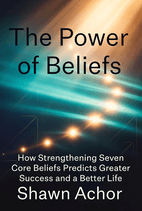
This collection pulls the most striking lines from Shawn Achor's The Power of Beliefs, a book that shows how the stories we tell ourselves shape everything. You will find short, punchy statements that feel like small revelations, along with a few longer observations backed by surprising research. What makes the book so quotable is how it mixes hard data with wisdom you can actually use. These are not vague encouragements. They are precise ideas about perception, gratitude, and action that stick with you long after you finish reading. Each line here was chosen because it makes you stop and think differently about your own beliefs.
Top Quotes from The Power of Beliefs
“Beliefs change the math about what is possible and what is probable.”
The author states this early in the chapter while introducing the core idea that beliefs shape our future.
It crystallizes a complex concept into a simple, memorable metaphor that empowers readers to see belief as a tangible force altering outcomes.
“Beliefs are real, even when they are not true.”
The author explains that subjective beliefs shape reality regardless of objective facts, using examples like student perception and market swings.
It captures a profound psychological truth in a concise, paradoxical statement that forces readers to reconsider the power of their own perceptions.
“Hope isn’t a passive wish; it is a mental strategy.”
The author discusses the active role of hope in bending reality.
It redefines hope as an actionable cognitive tool rather than empty optimism, empowering readers to treat hope as a deliberate practice.
“Optimism is not the belief there are no problems. Optimism is a belief that we can fix the problems.”
The author corrects a media misinterpretation of a study on pessimism and optimism.
It provides a clear, actionable definition of optimism that empowers readers to see it as a driver of action rather than denial.
“Joy doesn't come from the view, but from the lens through which you see it.”
The author contrasts the bankers in a penthouse with the exterminators in the desert.
This line encapsulates the chapter's core message that gratitude is a matter of perception, not circumstance, making it both universal and memorable.
“Loneliness is not the absence of people, it is the absence of believing you have a meaningful effect upon others and they upon you.”
In the discussion of dependence as a component of mattering, the author redefines loneliness.
This reframe shifts loneliness from a social metric to a crisis of significance, making it relatable to anyone who has felt unseen rather than alone.
“Sixty-three percent of the students who believed they had enough time stopped and offered to help the victim. But only 10 percent of those who believed they did not have enough time stopped to offer assistance. Same world, different beliefs, vastly different outcome.”
This describes the results of the Good Samaritan study at Princeton University, where seminary students on their way to give a talk on the parable encountered a person in need.
The dramatic contrast between the two percentages vividly demonstrates how a belief about time scarcity can override even deeply held values, making the lesson unforgettable.
Themes Behind the Quotes
A central theme is that beliefs are not just feelings but active forces that alter what we consider possible. The book argues that shifting your perspective can literally change outcomes, from helping a stranger to finding hidden opportunities. Another major idea is that optimism and hope are not passive states but intentional strategies requiring effort and action. The quotes also emphasize connection, showing that loneliness stems from a lack of meaningful impact on others and that true leadership comes from genuine interest. Finally, the theme of gratitude appears as a way to transform how you see the world, not by changing circumstances but by changing your lens.
Quotes by Chapter
Chapter 1: The Power of Beliefs Is Ascending
“It's not just that belief is powerful. It’s that, for some reason, belief may be becoming more powerful and impactful in our modern world.”
The author concludes the discussion of rising placebo effects across decades of research.
This line challenges the common assumption that technology and science diminish the role of belief, offering a hopeful and surprising counterpoint that resonates in an age of uncertainty.
“The lens through which you view the world predicts not only your experience of the present but also the trajectory of your future.”
The author articulates the central thesis of the book early on.
This quote offers a compelling and actionable insight—that changing your perspective can directly alter your life's direction, making it both memorable and motivating.
Chapter 2: Exploring How Beliefs Scientifically Change the Outcome
“By changing my beliefs, I changed the outcome.”
The author concludes his childhood story about overcoming nightmares by realizing his stuffed animals were not the cause.
This line perfectly encapsulates the chapter's central message in a simple, actionable declaration that empowers readers to see the direct link between their beliefs and their reality.
“If the lens through which you view your world is optimistic, it increases the likelihood of not only finding an opportunity that others miss but also being able to act upon it.”
The author discusses how beliefs shape attention and the perception of opportunities, referencing research on optimists and pessimists.
It vividly describes how an optimistic mindset actively changes what we see and do, offering a concrete reason to cultivate positive beliefs.
“The story you believe about money may be one of the most predictive forces steering your financial reality.”
The author summarizes findings from a study on money beliefs and financial behaviors by Klontz and Britt.
This statement challenges readers to examine their personal narratives about money, highlighting the profound practical impact of deeply held beliefs on wealth and well-being.
“Each time we cast off the illusions that confine us, we open ourselves to truths that elevate our lives and expand what is possible.”
The closing paragraph of the chapter, reflecting on the power of rejecting false beliefs and adopting Signature Beliefs.
Its poetic and hopeful tone inspires readers to let go of limiting beliefs and embrace growth, leaving a memorable and uplifting final note.
Chapter 3: Bending Reality: How Beliefs Change the Path
“Beliefs don’t just change how we feel about what's possible—they change the math of what's possible.”
The author explains the scientific basis of how beliefs alter outcomes.
This line captures the core thesis of the chapter in a memorable, elegant way, emphasizing that beliefs shift actual probabilities, not just perceptions.
“Beliefs are not facts, especially when it comes to ourselves.”
The author warns against forming negative general beliefs about one's own abilities.
This reminder liberates readers from self-limiting narratives by distinguishing subjective beliefs from objective truth.
“To believe well is not to deny data, but to dwell in the space where evidence meets hope and action.”
The author concludes with a philosophical reflection on crafting wise beliefs.
It beautifully balances rational data with hope and agency, offering a practical, grounded framework for belief that avoids both blind optimism and cynicism.
Chapter 4: The Nature of Belief Change
“When you change your lens, suddenly the lenses of the people around you start to change even though you share no physical connection with them!”
The author explains how belief change can spread contagiously to others.
It captures the surprising and uplifting idea that personal transformation can ripple outward, influencing others without direct interaction.
“Our brains are biologically wired to seek coherence, a sense of harmony between what we've believed and what we now experience.”
The author describes the neural basis of cognitive dissonance and belief change.
This line makes neuroscience relatable, framing discomfort during change as a natural and purposeful feature of the brain.
“Change is not only possible, it is impossibly fast.”
The author cites research showing that belief changes can occur in milliseconds via neural impulses.
It overturns the assumption that change requires time and effort, emphasizing the brain's remarkable capacity for rapid transformation.
“In all stories from Great Expectations to Dune to Star Wars to Harry Potter to Fourth Wing, the characters are offered an opportunity to transform pain into purpose, or to let the painful experiences limit their beliefs and growth.”
The author summarizes the hero's journey archetype in literature.
This line connects classic and modern stories to a universal choice, making the concept of post-traumatic growth relatable and hopeful.
Chapter 6: Core Power Belief #1: “My Behavior Matters.”
“The opposite of happiness is not unhappiness; it is apathy.”
The author distinguishes between unhappiness and apathy while discussing depression and the belief that behavior matters.
This line redefines a common misconception about happiness, highlighting apathy as the true enemy because it stems from the loss of belief that our actions can create change.
“Unfairness shapes the starting line, but belief that our behavior matters changes the finish line.”
The author concludes a discussion on how belief in one's behavior matters despite systemic injustice.
This metaphor powerfully encapsulates the idea that while circumstances may be unequal, personal agency can still alter outcomes.
“Believing your behavior matters is not succumbing to apathy and allowing the status quo to continue unchecked.”
The author argues that believing one's behavior matters is a proactive stance against injustice.
It reframes the belief as a form of resistance and empowerment, motivating readers to act rather than resign.
Chapter 7: Core Power Belief #2: “I Am Grateful.”
“When you are not in a state of gratitude, you are truly missing out.”
After discussing FOMO as the opposite of gratitude.
It reframes the fear of missing out as a self-fulfilling prophecy when gratitude is absent, offering a simple yet profound truth.
“Gratitude doesn't change your surroundings—it changes your seeing.”
The author concludes the contrast between the bankers and exterminators.
This line is a clear, poetic summary of the chapter's thesis, easy to remember and apply.
“Every moment of FOMO is a mental blindness to the good things in our life.”
The author reflects on his own college experience with FOMO.
It vividly describes the cognitive trap of FOMO in a way that resonates with anyone who has felt envious, making it an effective wake-up call.
Chapter 8: Core Power Belief #3: “I Matter.”
“True leadership and charisma are not about being interesting, but about being interested.”
During the section on attention, the author contrasts self-focused charisma with genuine interest in others.
This concise inversion challenges common assumptions about charisma and offers a practical, actionable insight for building deeper connections.
“Instead of trumpeting “I alone am enough” to connote self-worth, we should be affirming: “I matter to myself and others.””
In the appreciation section, the author critiques the popular self-help phrase and proposes a more socially grounded alternative.
It corrects the hyper-individualistic narrative of self-sufficiency, reminding readers that meaning is woven through relationships.
“The belief “I matter” also awakens in us a quiet duty—to become messengers of worth in a world that too often forgets its own.”
This is the closing line of the chapter, summarizing the call to action.
The poetic phrasing inspires readers to not only cultivate their own sense of mattering but to actively uplift others, turning insight into purpose.
Chapter 9: Core Power Belief #4: “I Have Something to Give.”
“Our value does not reside solely in material abundance or perfect readiness, but in our willingness to reimagine what it means to show up.”
The author explains that shifting from a mindset of lack to one of capacity can unlock deeper connections and expand potential.
This line reframes self-worth away from external measures and toward the simple act of being present, making it both humbling and empowering.