The Millionaire Fastlane Quotes
by MJ DeMarco
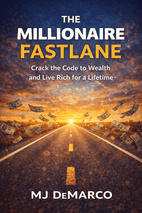
Looking for the best quotes from The Millionaire Fastlane by MJ DeMarco? Below are the lines that stand out most across the book.
The quotes are organized by chapter, each with a short note on where it appears and why it stands out.
Top Quotes from The Millionaire Fastlane
“Normal is not something to aspire to, it’s something to get away from.”
Opening quote of the chapter by Jodie Foster.
It immediately reframes the reader's perspective on societal norms, suggesting that conformity is not a goal but a trap to escape.
“The Slowlane prognosticators—people who make a fortune on investment management fees, seven-figure book deals, podcast sponsorships, training programs, and ancillary subscriptions— know something they aren't telling you: What they teach doesn’t create wealth fast, but selling it does.”
Author's critique of financial experts who promote 'Get Rich Slow'.
It exposes the hypocrisy of financial gurus who profit from selling advice that doesn't work, making readers question the motives behind conventional wisdom.
“You're not free of money; you're owned by it.”
Author's description of the FIRE strategy's flaw.
This concise line powerfully redefines financial freedom, suggesting that extreme frugality is still a form of bondage to money.
“The object of life is not to be on the side of the masses, but to escape finding oneself in the ranks of the insane.”
The chapter opens with this quote by Marcus Aurelius, setting the theme of rejecting conventional slow wealth strategies.
It immediately reframes the pursuit of wealth as a rebellion against mediocrity, inspiring readers to question societal norms.
“I wasn't athletic, I couldn't sing, and I couldn't act, but I could get rich as an entrepreneur.”
The author reflects on his teenage belief that wealth required talent, then realizes entrepreneurship is an alternative path.
This line resonates because it dismantles the common excuse that only the gifted can achieve wealth, empowering ordinary people.
“The Lamborghini encounter lasted 90 seconds but transcended a lifetime of new beliefs, new studies, and altered choices.”
After seeing a young man own his dream car, the author describes how a brief moment changed his entire mindset.
It captures how a single powerful experience can rewrite one's future, making the concept of transformation feel tangible and urgent.
Quotes by Chapter
2. How I Screwed “Get Rich Slow”
“I didn't have a job; I had a passion for making a difference.”
The author contrasts his relentless work on his website with traditional employment, emphasizing purpose over paycheck.
This redefines success by focusing on impact rather than duty, a motivating ideal for anyone seeking meaningful work.
3. The Road Trip to Wealth
“Process makes millionaires, and the events you see and hear are the results of that process.”
The author explains the relationship between process and wealth events.
It distills the core message of the chapter into a single, memorable line, emphasizing that wealth is built through sustained effort, not luck.
“Yes, the elevator to success is out-of-order—you will need to climb the stairs.”
The author summarizes the necessity of hard work and process.
This pithy, metaphorical statement is highly quotable and instantly communicates that there are no shortcuts to wealth.
“There is no wisdom or personal growth gained in a journey that someone else does for you.”
The author argues against outsourcing the wealth-building process.
It strikes a chord with readers who seek shortcuts, reminding them that personal development is inseparable from the journey itself.
4. The Roadmaps to Wealth
“Self-made millionaires don’t become millionaires by stumbling into money.”
Author contrasting stumbling into wealth with intentional planning.
It challenges the myth of luck-based wealth and reinforces that purposeful action is required.
“Radical life disruption comes from a radical disruption in your roadmap. Change that, and you change everything.”
Discussing how beliefs shape choices and outcomes.
It powerfully asserts that changing your mindset can transform your entire life, offering hope and a call to action.
“Fictitious beliefs are lying roadmaps; they escort you down dead-end roads where “Wealth: Next Exit” never happens.”
Warning against false beliefs and financial advice.
The vivid metaphor of 'lying roadmaps' effectively communicates the danger of following misguided financial philosophies.
5. The Road Most Traveled: The Sidewalk
“It takes no courage to be normal. No courage to take the road most traveled. No courage to sit comfortably within the walls of your culture. Courage comes questioning, and then challenging the expected.”
Opening words by MJ DeMarco at the start of the chapter.
This line challenges the comfort of conformity and inspires readers to question societal norms as a prerequisite for real change.
“A Sidewalker exists in a state of one-something-from-broke: One album failure from broke. One business deal from broke. One gig from broke. One layoff from broke.”
Definition of the Sidewalker's precarious financial state.
It vividly captures the fragility of living without a financial cushion, making the abstract concept of financial instability concrete and memorable.
“More money doesn’t buy financial discipline.”
From the section 'Money Doesn’t Solve Money Problems'.
This short, powerful statement refutes the common myth that higher income alone resolves financial issues, emphasizing the necessity of mindset over earnings.
6. Has Your Definition of Wealth Been Poisoned?
“Within you right now is the power to do things you never dreamed possible. This power becomes available to you just as soon as you can change your beliefs.”
Opening quote from Maxwell Martz at the start of the chapter.
It sets an empowering tone, emphasizing that wealth begins with a shift in mindset rather than external circumstances.
“Wealth is not authored by material possessions, money, or “stuff,” but by what I call the three fundamental “F's”: family (relationships), fitness (health), and freedom (choice, both fiscally and personally).”
The author introduces the wealth trinity as a counter to cultural definitions of wealth.
This redefines wealth in a holistic, relatable way, challenging readers to prioritize what truly matters.
“The more you try to look rich, the tighter the grip of poorness becomes.”
The author explains how faux wealth traps people in a cycle of debt and illusion.
The Chinese finger-cuff metaphor is vivid and memorable, illustrating the self-defeating nature of pursuing appearances.
“I'm not living a dream, but my dream is living me.”
Henry Sukarano's realization after buying a dream home that led to a draining lifestyle.
This line poignantly captures how the pursuit of luxury can enslave rather than free, making it deeply relatable.
7. Lifestyle Servitude: The Thief of Happiness
“Money can't buy happiness, but it can make you awfully comfortable while you're being miserable.”
Opening quote attributed to Clare Boothe Luce, setting the tone for the chapter.
It immediately subverts the common cliché about money and happiness, acknowledging comfort while hinting at deeper existential misery.
“The irony is that when most people earn “more money,” it doesn't expand freedom; it contracts.”
Author's observation on how increased earnings often lead to Lifestyle Servitude.
This line flips the conventional wisdom that more money equals more freedom, striking a chord with anyone who feels trapped by their own financial rise.
“If we are too busy chasing the next greatest gadget to strike down the competitive opulence of the Joneses, we finance our misery.”
Author discusses consumerism as an obstacle to happiness.
It vividly captures the exhausting, self-defeating cycle of keeping up with others, making readers question their own spending habits.
“Instant gratification is the bait, and Lifestyle Servitude is the hook.”
Author summarizes the trap laid by advertising and consumer culture.
The fishing metaphor is memorable and instantly understandable, framing the hidden cost of every impulsive purchase.
8. Lucky Bastards Play The Game
“Process creates events that others see as luck.”
Author discusses Mark Cuban's view that hard work and process are mistaken for luck.
It captures the core redefinition of luck as a byproduct of action, empowering readers to take control.
“Losers focus on luck, and winners focus on probability.”
In the section comparing poker players to self-made millionaires.
This sharp contrast sticks in memory and reframes success as a result of strategic thinking rather than chance.
“If you want luck, dive into process, because process raises events from the ashes.”
Encouraging readers to abandon passive waiting and engage in consistent action.
The vivid metaphor of 'ashes' evokes rebirth and motivates readers to build their own luck through effort.
“Luck is introduced when you play. If you don't play, you can't win.”
Summarizing the chapter's message that luck requires active participation.
It's a simple, universal truth that applies to business, investing, and life, urging readers to stop sitting on the sidelines.
9. Wealth Demands Accountability
“You can't be a victim if you don't relinquish power to someone capable of making you a victim.”
The author introduces the 'Law of Victims'.
It reframes victimhood as a choice, empowering readers to reclaim control over their lives and financial decisions.
“Americans once loyally proclaimed, “Give me liberty or give me death.” Now we just say, “Give me.””
The author contrasts historical American self-reliance with modern entitlement.
The stark juxtaposition of iconic words with a two-word punchline makes the critique of passive entitlement both memorable and biting.