The Lumber Baron's Wife Ending Explained
by Lynn Austin
As an Amazon Associate, we earn from qualifying purchases.
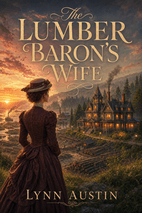
If you finished The Lumber Baron's Wife and felt the ending left you with questions, you're not alone. This page walks through what literally happens at the end, why the story lands there, and where each character ends up. We'll keep spoilers behind a warning, so you can decide before reading on.
The Ending, Explained
ListenWhat Happens at the End of The Lumber Baron's Wife
In the present-day closing chapters, Ashley opens the secret compartment in her own buffet and finds Kate Abernathy's leather diary. She and David read it, and Dr. John Wagner's obituary shows that John and Hannah survived, adopted two children, and had nine grandchildren. At the back Ashley finds Kate's letter to Hannah, beginning “Dear Hannah,” which reveals that Kate sent the diary so Hannah would know what became of her. Ashley realizes Hannah hid the diary and let people believe Kate died on the Athena rather than expose her to scandal. Ashley shows the diary to Freida; together they read Kate's account of her brothel childhood, near-rape, killing in self-defense, unhappy marriage, and asylum life. They decide it is too personal to publish and put it back in the secret hiding place, with Ashley murmuring “Rest in peace, Kate Abernathy.” Professor Olson then praises Ashley and David's doctor's house and asks to include it in his article.
In the epilogue, three years later, Ashley is director of the Abernathy Heritage Museum and leads the first official tour at the ribbon-cutting. Freida has died of cancer six months earlier, and a plaque honors her. Ashley presents Kate's life, the charity hospital, the fire, the diphtheria epidemic, the secret compartment and gun, and the Athena theory. A city councilor asks whether she has other theories about Kate's disappearance; Ashley says no, and David smiles. Ashley thanks the volunteers and calls them her family.
The Ending, Explained
The ending deliberately solves the mystery for Ashley and the reader while keeping it unsolved for the museum public. Kate's letter proves she was not on the Athena; Henry committed her under his mother's name, and she chose a new life as Mary Griffin, finding purpose and faith in caring for asylum patients. Hannah's hiding of the diary is an act of friendship and protection: she lets Kate stay dead to the town rather than subject her to the scandal of insanity, abuse, and her past. Ashley and Freida make the same ethical choice when they hide the diary again; as a historian Ashley knows it is important, but as Kate's sympathetic inheritor she refuses exposure. The final “No” to the councilor is therefore not a failure of research but a deliberate preservation of Kate's privacy, and David's smile shows he shares the secret. The dual plot resolves through restoration as caretaking: the mansion becomes a museum, Ashley becomes a mother and director, Freida's vision is honored after her death, and the volunteers become chosen family. The doctor's-house obituary supplies a happy counterpoint to Kate's tragedy, showing Hannah's later life and adopted family. The ending means history can be honored without being fully exposed, and healing comes through service, faith, friendship, and community rather than public revelation.
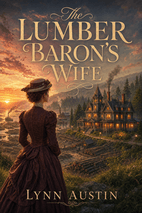
The ending hits harder if you see how you got there.
The ending of The Lumber Baron's Wife makes more sense with the full plot.
Read the full plot, chapter by chapterWhere Every Character Ends Up
Questions the Book Leaves Open
- What happened to Belle after Kate's Chicago visit, and whether the Pinkerton investigation into Clarence Williams's murder ever touched her.
- What Kate's life was like after discharge as Mary Griffin, and whether Hannah ever contacted her again.
- Whether Ashley ever makes Kate's diary public or writes about the discovery.
- What ultimately happened to Henry Abernathy, and whether Kate's suspicions about his first wife Hattie's death were ever investigated.
- What became of Marcus Drayton after he was fired and spoke of moving to Chicago.
- Whether any records survive from the asylum or from the Chicago murder investigation, since Ashley notes the Chicago records were likely destroyed before the Great Chicago Fire.
These are answered in the chapter summary. See the full plot →