The Lost Kingdom of Daughters Ending Explained
by Weina Dai Randel
As an Amazon Associate, we earn from qualifying purchases.
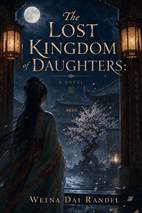
If you finished The Lost Kingdom of Daughters and still have questions, you are not alone. This page walks through what literally happens at the end, why the story ends that way, and where each character lands. No spoilers here, just a clear path through the final chapters once you are ready.
The Ending, Explained
ListenWhat Happens at the End of The Lost Kingdom of Daughters
The closing sequence begins with Lazo pregnant and afraid: she fears that because she brought disaster to her tribe, any daughter will be cursed and lonely. She gives birth to a girl with Noah and Zhuma assisting. Noah is overjoyed and says he can be called Uncle as long as he can watch the child grow, but Lazo cannot leave Ercher and Zhuma, so she chooses to remain in the mountains. When Noah prepares to leave with a northbound caravan, Lazo gives him her twenty-two-day-old daughter to raise. She says the child would otherwise live under her shadow as an outcast, and she also wants Noah not to be lonely. Noah accepts the baby as his daughter. In the sixth month of 1956 he leaves with the two-month-old strapped to his chest; Lazo feels hollow after watching the caravan disappear.
Five months later Noah writes that he and the baby are safe and on their way to America. Ercher, already broken by her missing infant daughter after the Yi raid, falls and is paralyzed from the waist down; she later drowns in the hot spring after asking Lazo to leave her alone to bathe. Lazo's letter to Noah about Ercher's death receives no reply. Zhuma uses Noah's stethoscope and mountain herbs to treat villagers, becomes pregnant at the Goddess Gemu festival, and dies in childbirth with her child. Government reformers then force the Moso to abandon their matriarchal customs, monitor and publicly shame people, and require men and women to register as husband and wife. Lazo withdraws and moves to a log house high in the mountains. A year before Sophie's visit, the government gives Lazo a stack of Noah's letters; Noah had believed Lazo died and had asked to visit her grave. Lazo has thought of Sophie and Noah throughout the separation.
In Spring 1996, Sophie is with Lazo when gray-haired Noah arrives. Sophie hugs him and notices that he seems calmer now. Noah and Lazo embrace, laugh, and flirt; Lazo offers him the guest room as a long-term rental, and they plan a boat ride on Mother Lake. They discuss how the region has changed for tourists and how the hot springs now require men and women to soak separately. Sophie declines to join the boat ride and stays by Adam's nameless grave. When Noah begins to ask her something, she tells him, 'It doesn't matter, Father,' and encourages him to go with Lazo. She then asks Lazo the Moso word for Mother, and Lazo answers 'Ama.' Sophie wonders whether there is a Moso word for Father, but decides she does not need to know.
The Ending, Explained
The ending grows out of Lazo's lifelong conflict between romantic love and her Moso duty to her sisters. She has wanted a daughter all along, but by the time she gives birth she believes her own disgrace will pass to the child. Giving the baby to Noah is therefore both a rescue and a gift: it spares the girl from becoming 'a cursed woman' in the village, and it gives Noah the daughter and companionship he has wanted. Noah's promise to raise her as his own pays off his earlier insistence on commitment and family, and it also completes his transformation from a judgmental outsider into a forgiving father. The lost letters explain the forty-year lie that shaped Sophie's life: Noah believed Lazo had died, and Lazo believed Noah had stopped writing, so neither could correct the separation.
The final reunion is not a conventional romantic resolution. Lazo and Noah still love each other, but Lazo will not leave her sisters and her mountains, and Noah has built a life in America. Their ending is companionship, flirtation, a guest room, and a boat ride rather than marriage. Noah never marries; he leaves medicine and becomes an academic who studies and preserves tribal cultures, which the text presents as a way of honoring both Lazo's world and Adam's memory. Adam's nameless grave remains a site of guilt and mourning, but Sophie's refusal to press Noah's unfinished question signals acceptance rather than a demand for a final confession. The book ends on chosen family: Sophie is grateful for the life Lazo gave her and calls Noah the best father she could have hoped for.
Sophie's own arc closes in her acceptance of imperfect love. She has come seeking a mother she believed dead, and she learns that her mother gave her away out of love and fear, while the man she calls Father raised her with devotion. Asking for the Moso word for Mother is a small reconciliation; deciding she does not need the word for Father suggests that parental love is not exhausted by biology or language. The ending means that love can be real without being possessable or conventional, and that forgiveness—between Lazo and Noah, Noah and Adam's memory, and Sophie and her parents—is the final form of devotion.
The ending hits harder if you see how you got there.
The ending of The Lost Kingdom of Daughters makes more sense with the full plot.
Read the full plot, chapter by chapterWhere Every Character Ends Up
Questions the Book Leaves Open
- The exact question Noah begins to ask Sophie at Adam's grave—and the 'question only I can answer' that Lazo mentioned—is left deliberately unfinished when Sophie says, 'It doesn't matter, Father.'
- The book does not explicitly resolve whether Sophie is Noah's biological child or Adam's; it emphasizes instead that Noah is the father who raises her and whom she calls Father.
- The fate of Ercher's infant daughter, who goes missing during the Yi raid, is never resolved.
- Whether Lazo and Noah will build a lasting life together after 1996 is left open; the ending gives them a reunion, a guest room, and a boat ride rather than a formal union.
- Azi's fate after she guides Lazo toward Noah is not shown, even though she says she has been sentenced to suicide for tarnishing her husband's honor.
These are answered in the chapter summary. See the full plot →