The Laws of Thought Key Takeaways
by Tom Griffiths
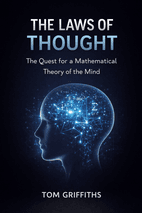
5 Main Takeaways from The Laws of Thought
The mind operates as a formal system of symbols and rules.
From Leibniz's attempts to mathematize Aristotle to Boole's algebra and Chomsky's generative grammar, cognitive science has modeled thought as a digital, rule-based process. This foundational view enabled AI like physical symbol systems but also revealed limitations in capturing human nuance and social intelligence.
Human cognition transcends pure logic, requiring probabilistic reasoning and learning.
Goodman's 'grue' paradox and Kahneman's biases show that induction relies on prior beliefs and empirical success, not just logical rules. Bayesian probability provides a unifying framework for learning from data, explaining everything from language acquisition to categorization through rational analysis.
Intelligence emerges from synthesizing structured rules with statistical learning.
The history of AI is marked by tension between symbolic systems (like Boolean logic) and connectionist networks (like perceptrons). Modern breakthroughs, such as transformers and Bayesian networks, integrate both approaches, using neural networks for pattern recognition and symbolic concepts for reasoning.
Understanding cognition demands asking 'why' at the computational level of analysis.
David Marr's framework emphasizes that explaining intelligent systems requires identifying their goals and functions, not just algorithms or implementations. This leads to rational analysis, where cognitive processes are seen as optimal solutions to problems like induction and categorization.
Breakthroughs in AI hinge on combining theory, data, hardware, and interdisciplinary insight.
AlexNet's success required backpropagation algorithms, large datasets like ImageNet, and GPU acceleration, showcasing the interplay of innovation. Similarly, cognitive science progresses by integrating psychology, linguistics, and computer science, highlighting that future advances depend on blending rigor with adaptability.
Executive Analysis
The book's central argument is that the quest to formalize the 'laws of thought' has evolved from early logic-based systems to a sophisticated synthesis of symbolic, connectionist, and probabilistic paradigms. The five takeaways trace this journey, showing how cognitive science and AI have moved from viewing the mind as a formal rule-engine to understanding it as a Bayesian learning system that optimally balances structure and statistics.
This book matters because it provides a historical and conceptual roadmap for understanding modern AI and cognitive science, making complex interdisciplinary debates accessible. For readers, it underscores that practical advances in technology and psychology require embracing multiple perspectives, positioning the work as an essential narrative that connects philosophical roots to cutting-edge applications like deep learning and language models.
Chapter-by-Chapter Key Takeaways
1. Turning Aristotle into Arithmetic (Chapter 1)
Gottfried Leibniz's failed attempts to mathematize Aristotle's syllogisms represent a critical early struggle to formalize human reasoning.
His work was part of a broader 17th-century pursuit of a perfect, universal language that would eliminate ambiguity by directly mapping symbols to concepts and their relationships.
Although Leibniz did not succeed, he helped pioneer the view of the mind as a formal system—a digital, rule-based, token-manipulation process that is independent of its physical medium, much like a game of chess. This formalist perspective became a cornerstone of later cognitive theory.
The Hinton family legacy illustrates a direct historical through-line from Victorian mathematical thought to modern physics.
George Boole’s seminal achievement was creating a formal, algebraic system for logic, making reasoning computable.
While revolutionary, Boolean logic would not be applied as a theory of human cognition until a century later, bridging mathematics to psychology and linguistics.
Try this: Trace the historical roots of computational thinking by reducing complex reasoning to systematic rules, as Boole did with algebra.
2. Computing a Cognitive Revolution (Chapter 2)
The 1956 Symposium on Information Theory was a catalytic event where computer science (Newell & Simon's AI), theoretical linguistics (Chomsky's formal models), and experimental psychology (Miller's memory work) converged, revealing a shared scientific strategy for studying the mind.
The dominant theme emerging from this period was the characterization of thought as a formal system—a set of rules for manipulating symbols, fundamentally based on logic.
Logic offered a unified framework: a language for precise expression, a method for deduction (inference rules), and even a potential bridge to neural mechanics via the McCulloch-Pitts neuron model.
This "rules and symbols" paradigm established itself as the first rigorous candidate for the "Laws of Thought," setting the agenda for the nascent field of cognitive science.
Try this: Apply interdisciplinary formal systems from computer science to model psychological processes, emulating the 1956 symposium's convergence.
3. Solving Problems (Chapter 3)
Physical symbol systems, which physically instantiate rules and symbols, form a foundational theory for both human and artificial intelligence.
Rule-based approaches have enabled significant advances in modeling cognition and creating AI, such as chatbots that mimic conversation.
Complexity in behavior often arises from simple rules interacting with complex environments, reducing the need for intricate internal mechanisms.
Projects like encoding common sense knowledge highlight the ambition of rule-based AI but also reveal practical challenges in capturing human nuance.
Human intelligence is deeply social, with collaboration and environmental shaping playing crucial roles in problem-solving and creativity.
Try this: Design problem-solving systems with simple rules that interact with complex environments, and incorporate social collaboration for creativity.
4. Language as a Formal System (Chapter 4)
Chomsky's model combined a phrase structure grammar for generating kernel sentences with transformational rules to produce complex surface structures.
The Chomsky hierarchy formally classifies languages by generative power (finite-state ⊂ context-free ⊂ context-sensitive), with evidence placing human languages in the mildly context-sensitive range.
Generative grammar demonstrated the power of formal systems to explain the productivity, hierarchy, and compositionality intrinsic to human language and behavior.
The poverty of the stimulus argument posits that children's rapid and uniform language acquisition requires significant innate, biologically endowed knowledge.
The logical problem of language acquisition highlights a theoretical learning challenge when the true language is a subset of a hypothesized one, though its practical significance is reevaluated in light of modern AI.
Try this: Analyze structured behaviors like language using formal grammars, but account for innate biases that enable learning from limited data.
5. The Limits of Logic (Chapter 5)
Goodman’s “grue” paradox proves that identifying a pattern is only half the battle of induction; the core problem is determining which hypotheses are "projectible" into the future.
Goodman argued that projectibility comes from entrenchment—a hypothesis’s successful history in past inductive practice—not from innate ideas or absolute simplicity.
This stance caused a definitive break with Noam Chomsky, who advocated for innate cognitive structures to explain learning.
Goodman’s solution for a science of induction is to formalize it as deductive logic was: derive rules from accepted human practice, a process of achieving reflective equilibrium.
The merger of this philosophical approach with experimental psychology became a central path for cognitive science, aiming to build a new mathematics of mind that handles uncertainty and learning.
Try this: Prioritize entrenched hypotheses with a history of successful prediction in inductive reasoning, rather than seeking absolute simplicity.
6. Categories, Spaces, and Features (Chapter 6)
Amos Tversky's axiomatic approach demonstrated that human similarity judgments violate the core rules of geometric distance, challenging Shepard's spatial models.
Tversky proposed a feature contrast model, where similarity is computed from shared and distinctive features, which could explain asymmetries and connect to Rosch's work on typicality.
The spatial and feature-based approaches were ultimately seen as complementary, not contradictory, with each best suited to different kinds of objects and mental tasks.
Together, these ideas formed the foundation for the prototype theory of categorization, which explained graded membership and fuzzy boundaries by measuring an object's similarity to an ideal category example.
This theoretical progress showed how mathematical models could provide clear, testable foundations for understanding how the mind organizes the world.
Try this: Use feature-based models and prototype theory to understand categorization, recognizing that similarity judgments are often asymmetric.
7. Computing with Spaces (Chapter 7)
Frank Rosenblatt's work was neuroscience-driven, making him an outsider to the engineering-focused AI mainstream.
Marvin Minsky and Seymour Papert provided the first rigorous mathematical analysis of perceptrons, proving their fundamental limitation to solving only linearly separable problems.
Functions like XOR and abstract geometric properties like "connectedness" are impossible for simple perceptrons, revealing a critical scaling problem.
Their 1969 book, Perceptrons, was highly influential but criticized for analyzing an oversimplified model.
The core dilemma that stalled neural network research was that single-layer networks were limited but trainable, while multi-layer networks were powerful but lacked a training algorithm.
Try this: Recognize the limitations of simple neural models like perceptrons for linearly separable problems, and explore multi-layer solutions.
9. The Plot Deepens (Chapter 8)
Rumelhart derived the modern backpropagation algorithm by applying gradient descent to multilayer networks, providing a principled way to attribute error to hidden units.
Initial skepticism about its efficiency and tendency to find local minima led to the algorithm being shelved for several years before its potential was fully recognized.
The 1986 PDP framework established connectionism as a major theoretical paradigm in cognitive science, emphasizing parallel processing, distributed representations, and learning from statistical patterns.
Neural network research continued through "AI winter" periods, leading to key innovations like convolutional neural networks and setting the stage for a resurgence fueled by the combination of big data (e.g., ImageNet) and powerful parallel hardware (GPUs).
GPU Specialization and Software Innovation
GPUs, originally designed for rendering graphics, proved exceptionally well-suited for the matrix multiplications and additions at the heart of neural network calculations. This hardware alignment opened new possibilities. In 2009, Vlad Mnih, a graduate student in Geoffrey Hinton’s lab, created software that simplified running neural networks on GPUs. This tool was quickly adopted by other students, leading to significant advancements in speech recognition—culminating in a dramatically improved system for Android phones by 2012 through collaboration with Google.
Overcoming Computational Hurdles
Scaling this success presented steep challenges. Coordinating multiple GPUs was difficult, and efficiently running convolutional neural networks (CNNs) required intricate programming solutions. In 2012, Alex Krizhevsky, another student in Hinton’s lab, tackled these issues head-on. From a custom-built computer with two high-end gaming GPUs in his bedroom, he trained a deep CNN—later named AlexNet—on a massive dataset: 1.2 million images from ImageNet across a thousand categories. The training process alone took six days, but the results were staggering.
AlexNet: A Watershed Moment
AlexNet achieved a top-5 error rate of 17%, a dramatic leap from the previous best of over 25%. With minor tweaks, this dropped to 15.3%. Such performance was so unprecedented that many computer vision researchers met it with skepticism, requiring personal replication to be convinced. At its NeurIPS conference presentation, it drew a crowd equally split between enthusiasts and doubters. Technically, AlexNet succeeded by using backpropagation enhanced with innovations like the rectified linear unit (ReLU) activation function, which prevented error signals from diminishing during training. This demonstrated convincingly that deep neural networks could be effectively trained, reinvigorating the entire field.
The Ripple Effect in AI Research
AlexNet catalyzed a paradigm shift. Interest in neural networks surged, as reflected in academic discourse. Researchers developed powerful new software tools that automated derivative calculations for backpropagation, allowing rapid experimentation with network architectures. The corporate world took notice: Hinton, Krizhevsky, and colleague Ilya Sutskever were hired by Google; DeepMind used CNNs in its breakthrough Atari-playing AI; and figures like Mark Zuckerberg and Elon Musk began actively recruiting neural network talent at conferences. This era solidified the understanding that solving complex AI problems hinged on substantial investments in data and computational power.
Bridging to Cognitive Science
Beyond engineering triumphs, these advances enriched cognitive science. For instance, researchers Josh Peterson and Josh Abbott showed that the internal representations formed within CNNs could model human perceptual similarity judgments. This allowed cognitive models to operate directly on rich image data, moving beyond the simplified stimuli used in classic studies and offering new ways to link artificial and human intelligence.
GPU acceleration and specialized software were pivotal in making deep neural networks computationally feasible, leading to breakthroughs like improved speech recognition.
AlexNet's dramatic success on ImageNet, enabled by innovations like ReLU, proved deep CNNs could be trained effectively, shattering previous performance benchmarks and overcoming widespread skepticism.
This breakthrough triggered a paradigm shift, attracting major tech investment, accelerating tool development, and underscoring the critical role of data and compute in AI progress.
The internal representations learned by deep neural networks began to inform cognitive science, providing new models for human perception and bridging AI with psychology.
Try this: Leverage hardware-software co-design, such as GPU acceleration, to train deep neural networks and drive empirical breakthroughs.
10. Language as a Prediction Problem (Chapter 9)
Mastering language prediction can yield a form of general intelligence, but it does not inherently solve core cognitive tasks like planning and search.
The success of modern large language models comes at an extraordinary cost in scale and data, yet they still struggle with reliable generalization and rule application, revisiting decades-old criticisms of neural networks.
The tension between statistical (neural network) and symbolic (rule-based) approaches to intelligence remains fundamentally unresolved, pointing to the need for new theoretical frameworks.
Try this: Approach language understanding as a prediction problem but integrate structured reasoning to overcome generalization limits of scale.
11. The Missing Question (Chapter 10)
David Marr's framework divides the analysis of intelligent systems into three complementary levels: Computational (goal/why), Algorithmic (process/how), and Implementation (physical structure/what).
Neuroscience and psychology have historically focused on the implementation and algorithmic levels, often overlooking the foundational computational-level question of "why."
Understanding the function or purpose of a cognitive system is not just another detail—it is the essential "aerodynamics" that makes sense of the mechanisms we observe.
A complete theory of the mind will require integrated explanations at all three levels.
The search for a computational-level theory for inductive reasoning—how we learn from data—leads directly to the mathematics of probability.
Try this: Always ask the 'why' question at the computational level to clarify the purpose and function of intelligent systems.
12. Probability Is the New Logic (Chapter 11)
Bayes' rule provides a unifying framework for inductive problems, from language to vision, by balancing prior beliefs with evidence from data.
The strength of an inductive inference depends crucially on prior probabilities; high priors allow learning from few examples, while low priors require substantial evidence.
Neural networks' data hunger stems from their hypothesis-rich flexibility, illustrating a trade-off between learning capacity and data efficiency.
Kahneman and Tversky's research highlighted pervasive biases in human probabilistic reasoning, challenging the notion that people naturally follow Bayesian principles and prompting deeper inquiry into the mechanisms of thought.
Try this: Apply Bayesian reasoning to balance prior knowledge with new evidence, while being mindful of cognitive biases in decision-making.
13. Universal Laws of Cognition (Chapter 12)
Judea Pearl's development of Bayesian networks provided a tractable method for defining complex probability distributions and performing inference by modeling generative processes.
This innovation resolved core issues in AI and provided cognitive science with a crucial tool for building models of human reasoning under uncertainty.
The generative process viewpoint acts as a unifying bridge, combining the structured representations of rules/symbols with the statistical learning of neural networks through the machinery of Bayesian inference.
Categorization can be comprehensively understood through this lens, where different generative assumptions (independent features, causal rules, growth procedures) explain the full spectrum of human conceptual knowledge.
Try this: Model complex reasoning with Bayesian networks that capture generative processes, combining symbolic structure with statistical learning.
14. Language as a Probability Distribution (Chapter 13)
Probabilistic models overcome Chomsky's challenge. By incorporating hidden structure (like syntactic classes), models like Hidden Markov Models can correctly identify grammaticality, bridging symbolic rules and statistics.
Bayesian learning solves the logical problem. Treating language as a probability distribution allows learners to grow increasingly confident in the correct hypothesis from random examples, making language learnable without requiring absolute logical certainty.
Efficient learning requires strong inductive biases. Human children learn from little data because evolution provides a helpful prior. This bias can be replicated in AI through meta-learning, creating neural networks that learn rapidly from few examples.
Neural networks are implicit probabilistic models. Their success in language stems from learning to model probability distributions. Understanding them this way also exposes their limitations, such as being misled by irrelevant statistical priors from their training data.
Try this: Use probabilistic models with hidden structure for language acquisition, and design AI with strong inductive biases for efficient learning.
15. Putting It All Together (Chapter 14)
The Cognitive Revolution emerged from the convergence of psychology, computer science, and linguistics, united by a computational theory of mind.
Key figures like George Miller, Herbert Simon, Allen Newell, and Noam Chomsky moved beyond behaviorism by modeling the mind as an information-processing system.
Core innovations included understanding cognitive limits, simulating problem-solving with production systems, and analyzing language as a formal generative grammar.
This revolution established the interdisciplinary study of cognition, focusing on the internal representations and processes that generate intelligent behavior.
Chomsky’s nativist argument for an innate "universal grammar" framed language acquisition as a logical problem that simple induction could not solve.
The philosophical problem of induction, articulated by Hume and refined by Goodman, reveals that learning from examples requires built-in constraints to choose among infinite possible generalizations.
Psychologists like Rosch, Shepard, and Tversky revealed that human categorization and similarity judgment are not purely logical but are based on prototypes, psychological spaces, and feature comparisons.
The perceptron provided a pioneering computational model for learning from feedback, but its limitation to linearly separable problems highlighted crucial gaps between simple neural models and the flexibility of human intelligence.
Minsky and Papert's critique correctly identified fundamental limitations of single-layer perceptrons, which were only overcome by multi-layer networks with effective training algorithms.
The development of the backpropagation algorithm by Rumelhart, Hinton, and colleagues was the key technical breakthrough that enabled the training of deep neural networks, catalyzing both cognitive science and machine learning.
This led to a two-pronged revolution: the rise of connectionist models of the mind and the dawn of practical deep learning, driven by better algorithms, neural inspirations, hardware, and data.
These advances naturally extended to language, framing it as a prediction problem and sparking debates about the nature of linguistic rules versus statistical learning.
Bayesian probability offers a powerful "rational analysis" framework for explaining cognitive processes like generalization, categorization, and inference as optimal solutions to computational problems.
Language acquisition can be modeled as Bayesian inference, where a learner's innate bias towards simpler grammatical hypotheses allows them to learn effectively from the limited data children actually receive.
A central challenge in cognitive science is reconciling the efficient, structured nature of human thought with the data-driven, statistical approach of modern AI, with Bayesian models serving as a common theoretical ground for comparison.
The chapter is built upon a deep and interdisciplinary scholarly foundation, integrating psychology, linguistics, computer science, and neuroscience.
The field's history is characterized by clear lineages of thought, from early computational theories to connectionist models and modern statistical learning.
Progress has been driven by both collaborative synthesis and intense theoretical debates, as reflected in the cited works from opposing sides of major controversies.
This bibliography explicitly ties the historical quest to understand human cognition to the technical architectures and training paradigms of contemporary artificial intelligence.
Interdisciplinary Roots: Modern cognitive science and AI are the direct results of integrating psychology, logic, neuroscience, linguistics, and computer science.
Theory to Implementation: The path from Boole’s laws of thought to von Neumann’s computer architecture to Marr’s levels of analysis was essential for creating testable, computational models of mind.
Bridging Paradigms: The most exciting contemporary work, like transformers and hybrid reasoning models, actively seeks to combine the structured representational power of symbolic systems with the adaptive learning capabilities of neural networks.
The history of cognitive science and AI has been shaped by a dialogue between symbolic, rule-based models of the mind and connectionist, neural network models, with each highlighting the other's strengths and weaknesses.
Modern progress stems from a synthesis, not a choice: neural networks provide the substrate for learning and pattern recognition, while probabilistic and structural concepts from the symbolic tradition guide reasoning and systematic generalization.
Breakthroughs in technical architecture (e.g., transformers, ReLU), learning algorithms (e.g., backpropagation), and the availability of large-scale data were practical catalysts that allowed theoretical integration to succeed.
The field has evolved from asking "which model is correct?" to understanding "how do these complementary principles interact to produce intelligent behavior?" This unified perspective is the foundation of contemporary artificial intelligence.
Try this: Integrate insights from psychology, linguistics, and computer science to build holistic cognitive models, actively synthesizing symbolic and neural approaches.
Continue Exploring
- Read the full chapter-by-chapter summary →
- Best quotes from The Laws of Thought → (coming soon)
- Explore more book summaries →