The Heist Before Christmas Themes
by Lucy Score
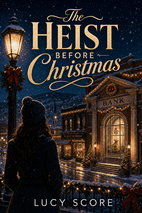
Underneath the heist plot, the novel is really wrestling with holiday pressure and commercial chaos, family friction and chosen togetherness, and the weight of Riley’s psychic legacy. It also digs into avoidance versus honesty and partnership, especially around family expectations, the PI license, and Riley’s fears, while disguise and false identity keep blurring appearance and reality. Christmas greed versus generosity sits right beside all of it.
That’s what this page unpacks: each major theme with concrete moments, from year-end work and mall crowds to Nick’s family-forcing plans, Riley’s unclear wedding vision, cover stories and fake Santas, and Sheila robbing a foster-care gift drive dressed as Mrs. Claus. You’ll also find the recurring symbols: Santa and Mrs. Claus costumes, Riley’s engagement ring, the labradorite pendant, and psychic mail and letters.
Major Themes in The Heist Before Christmas
Holiday pressure and commercial chaos
The book treats the holiday season as both an emotional obligation and a logistical disaster: year-end work, shopping lists, family dinners, mall crowds, thefts, fires, and public meltdowns keep interrupting Christmas cheer. Even characters trying to create a perfect holiday are repeatedly overwhelmed by consumer chaos and crisis.
- Riley has five days until Christmas, a stack of unpaid invoices, and a Christmas shopping list before she can turn on holiday happiness.
- The mall food court is full of panicked shoppers, and the theft list includes the sold-out toy of the season, jiggle slime.
- Nick breaks up a fight over a Bippity Boppity Boo Boo doll while the mall also has lost children and attempted thefts.
- The mall evacuation is caused by a smoke bomb, and Nick says his Christmas cheer is only a little dented.
Family friction and chosen togetherness
Family is portrayed as unavoidable, combative, and sometimes worth choosing anyway. Nick tries to force both families to tolerate each other through a perfect Christmas Eve dinner, while Riley doubts their relatives can share space; by the end, the household and gathered families are declared family regardless of conflict.
- Nick wants a perfect holiday celebration to force all their relatives to tolerate each other, while Riley says their families should never share the same space again.
- Nick demands that his parents come to Christmas Eve dinner and behave, and Marie hangs up on him.
- Marie and Blossom sit hostilely on the sofa at the bridal shop, and Blossom later calls Marie a turd.
- Riley tells the gathered families they are all there because, like it or not, they are family and it is Christmas Eve.
- Fat Tony hosts a Christmas Eve party for teens in the foster system.
Psychic legacy, duty, and uncertainty
Riley’s psychic gift is framed as a family legacy and a duty, but also as a burden that creates fear and self-doubt. She cannot see her wedding clearly, panics over tarot warnings, and feels responsible for delivering painful truths, before learning that her gifts can give others closure and that decisions of the heart should not be ruled by fortune-telling.
- Elanora tells Riley her duty is to her gifts and that paperwork and wedding drama are distractions, and she hints that Riley’s wedding will not happen.
- Riley draws the Hermit, Judgment, and Two of Swords and confesses she cannot see her wedding to Nick.
- Saffron tells Riley their gifts are meant to give others closure, hope, and peace.
- Blossom and Wander explain that Basil women cannot see their romantic futures clearly and that decisions of the heart should be made with the heart.
Avoidance versus honesty and partnership
Characters repeatedly dodge problems through lies, hiding, and deflection, especially around family expectations, the PI license, and Riley’s fears about the wedding. The story pushes them toward confession and teamwork: Riley admits her insecurities to Nick and Jasmine, and the group takes on the final rescue together.
- Nick downplays the license notice and leaves for his undercover gig, saying the license problem can wait.
- Gabe hides in the closet under the stairs to avoid Elanora, and Riley lies that he is readying an exercise and testing her powers.
- Riley admits she lied to Grandma about doing tarot readings.
- Riley confesses to Nick that she cannot see their wedding and feels like she is letting everyone down.
- Nick reassures Riley that they do not need to see the future to trust their relationship and that she does not have to do everything alone.
- Riley assigns everyone roles to rescue Thomas and the foster teens’ presents on Christmas Eve.
Disguise, false identity, and appearance versus reality
Undercover work, costumes, cover stories, and mistaken identities keep destabilizing who people appear to be. The book uses mall disguises, fake Santas, and clean background checks to show that respectable surfaces can hide theft, murder, or simple human desperation.
- Nick’s team poses as mall employees while investigating thefts, and Mrs. Penny invents the cover identity Rhonda El Baio.
- Ashley wears a Movado watch matching the stolen models and claims it was a gift from his girlfriend.
- Thomas Maclay has a clean background check and works as a mall Santa, but Brian identifies him as the suspect.
- Santa Paws takes the stage as Santa, pulls out a semiautomatic rifle, and announces the robbery.
- The team dresses as Santas, and Beep Boop leads mannequin-driven scooters as a diversion.
Greed versus generosity and Christmas spirit
The central crime is set against holiday charity: Sheila robs a foster-care gift drive while dressed as Mrs. Claus and claims she deserves nice things, while Thomas, Elizabeth, Fat Tony, and the team give gifts, work, and rescue to others. Small generosity is shown to have lasting moral weight.
- Sheila, dressed as Mrs. Claus at a foster-care gift drive, says she runs the robbery ring and takes Riley’s engagement ring because it is her turn to have nice things.
- Thomas says Sheila spared him because he once gave her a card and one hundred dollars in the hospital.
- Elizabeth explains that Tis the Season provides seasonal work for foster teens and that donated gifts go to the annual Christmas Eve party.
- Riley, Nick, and Thomas distribute wrapped Christmas gifts to teens, social workers, and foundation staff at Fat Tony’s home.
Symbols and Motifs
Santa and Mrs. Claus costumes
Santa imagery represents the contest between genuine holiday generosity and predatory greed. The same costume can mark a selfless Good Santa, a criminal Bad Santa, or an undercover hero.
- Thomas is a mall Santa and is later found tied and blindfolded in his Santa suit.
- Sheila runs the robbery ring as Mrs. Claus at the casino gala.
- Santa Paws pulls a semiautomatic rifle from his Santa role and robs the crowd.
- The team dresses as Santas for the warehouse rescue and gift distribution.
Riley’s engagement ring
The ring stands for Riley and Nick’s commitment and for Riley’s choice to trust her heart despite psychic uncertainty. Its theft and recovery tie the wedding anxiety to the criminal plot.
- Nick jokes with Santa before holding up Riley’s engagement ring at the mall.
- Sheila takes Riley’s engagement ring while holding her hostage at the gala.
- Riley says she wrestled the ring off a murderer’s finger to get it back.
- Riley proposes to Nick in the living room and marries him there.
The labradorite pendant
The pendant represents Riley’s psychic inheritance from Elanora and her conflicted relationship with her gifts. It also becomes a practical and symbolic aid when she accepts her abilities and uses them for others.
- Elanora gives Riley a jewelry box containing an antique labradorite pendant.
- Riley feels a chime and the labradorite shimmer after Saffron tells her she made herself proud.
- Riley and Gabe use the pendant and spirit guides to mark a five-mile search radius and sketch high windows.
Psychic mail and letters
The letters represent the burden and responsibility of Riley’s gift, as well as the chance to give strangers closure and hope. They turn psychic ability into a moral obligation toward other people.
- Riley follows an impulse and finds a duffel bag of psychic mail in Lily and Mrs. Penny’s closet.
- Winifred writes to Riley asking for help finding her biological father, Malcolm.
- Saffron tells Riley their gifts are meant to give others closure, hope, and peace.