The Delivery Quotes
by Gregg Hurwitz
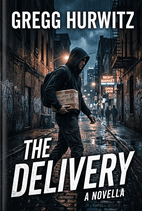
These lines come from inside a family in crisis, where ordinary moments tip into something stranger. You will find narration that stays close to the characters, dialogue that sounds like real people hurting and joking, and inner monologue full of fear and love. What makes the novel quotable is how it mixes raw emotion with sharp observation. One sentence can move from a parent’s guilt to a detail as small as a laundry basket hitting the floor.
The quotes below also notice things we often ignore: how a room holds memory, how silence gets heavy, how people brace themselves. They speak to anyone who has loved, grieved, or tried to believe everything will be okay. That mix of intimacy and unease makes them stick.
Top Quotes from The Delivery
“They are in their early forties, but it feels already that they know the shape of everything to come.”
Rebecca considers what it would mean to refuse the delivery and go back to their ordinary, grief-heavy routine.
It condenses the novel’s dread into one quiet sentence: the future has already hardened into a shape. The phrase “the shape of everything to come” evokes an existential claustrophobia readers can feel immediately.
“How pure emotions are in seven-year-olds. They feel what they are feeling all the time in real time.”
Maddy, in her tutu, stares at the huge wooden crate as her parents prepare to accept the mysterious delivery.
The observation draws a sharp contrast between childhood honesty and adult emotional numbness. It also quietly foreshadows the family’s complex relationship with feeling and performance.
“It is still painted a beautiful blue, though the crib is gone, as well as the optimistic teddy bear, also blue, and the changing table. It's been eleven months since the miscarriage, but it feels like minutes.”
Mark names the nursery as the delivery’s destination, revealing the room has been emptied of baby furniture since the miscarriage.
The blue room and the “optimistic teddy bear” make the loss physical and devastating. The collapse of eleven months into “minutes” captures grief’s refusal to move in linear time.
“Once you realize that you live in a world where a baby can die inside your body, everything feels unsafe.”
Rebecca, at the Polo Lounge after their miscarriage, wants to check on Maddy even though she knows it's not necessary.
It captures the raw, permanent shift in how grief makes the world feel dangerous, especially for a parent.
“No one ever taught her this, how torpor can be more oppressive than grief, a lead apron that pins you down, makes you want to quit struggling and just give up.”
Rebecca feels exhausted and stuck while listening to Derek and Alexa describe their mysterious offer.
It names the quieter, heavier despair of burnout as distinct from acute grief, and it resonates with anyone who has felt pinned down by exhaustion.
“I can't imagine sleeping next to her. So, no, I can’t imagine sleeping with her. She doesn’t have your heart, Beccs. No one does.”
— Mark
After Rebecca asks whether he finds Alexa attractive and then says a clipped good night, Mark reassures her in the dark.
It is a tender, unexpected reversal that melts Rebecca’s jealousy and insecurity. The final phrase lands like an unconditional promise, echoing beyond the moment.
“How easy it is to forget that we are all just mammals.”
Rebecca feels her body swinging on hormonal waves and wants to cry without burdening Mark.
It is a quiet, leveling reminder of human animality beneath adult restraint. It lends grace to her overwhelming feelings instead of judging them.
Themes Behind the Quotes
Grief is the loudest presence in many of these lines. It shows up as guilt, as numbness, as a room that still feels haunted. The characters are not getting over their loss; they are learning to live beside it. Their sorrow is tangled with the strange routine of daily life, which keeps moving whether they are ready or not.
The quotes also circle around vulnerability. Once the worst thing has happened, safety feels fragile. Love becomes protective, anxious, full of worry. And when relief appears, it brings temptation, along with the fear of wanting it too much. Parenthood here is both tender and terrifying, a constant fight between holding on and letting go.
Quotes by Chapter
Chapter 1
“Nudged to life, the dolly gives a mechanical whir and progresses toward the laid-open front doors of their home. They have to step aside to make way.”
The automatic dolly starts moving the coffin-like crate into the house after the delivery location is chosen.
The machine’s advance turns the entrance of the object into an inevitability. “They have to step aside to make way” is a cold, beautiful image of power leaving the characters’ hands.
Chapter 2
“We're grieving, Beccs. This is what this date looks like.”
— Mark
Rebecca apologizes for crying on their first night out, and Mark gently reframes the evening.
It is a tender, realistic answer to the pressure of performing normalcy while mourning.
“What if I did something to cause this too?”
— Rebecca
Rebecca whispers to Mark after spiraling about toxins, food, and the beach as possible causes of the miscarriage.
It lays bare the crushing, irrational guilt that grief often forces onto a grieving parent.
Chapter 3
“She wants to weep. She wants to scream. She wants to be herself again, her stable, adult self.”
Rebecca lies awake beside Mark, overwhelmed by hormones and the tempting, unsettling NORM LLC offer.
The short, rhythmic sentences capture the raw incoherence of emotional distress. Anyone who has felt exiled from their own composure will recognize this plea.
“A feeling beckons, dark and yet delicious, that he deserves more than this. That they deserve more than this. Which is precisely what NORM LLC claims to offer.”
Rebecca starts to sense that wanting more for herself and Mark is exactly what NORM LLC is selling.
The line braids temptation and guilt together, making the offer feel both dangerous and seductive. It shows how her vulnerability primes her for the story’s central lure.
Chapter 4
“Something like this cannot be fully anticipated any more than a child. Or a miscarriage. It just has to get here, and then they will try to make sense of what they paid so much for.”
Rebecca and Mark stand in the nursery before the delivery device, acknowledging they cannot predict what it will bring.
The comparison to childbirth and miscarriage captures the vulnerability of outsourcing life's most uncertain and intimate experiences.
“And why do we only take note when it's scared out of us?”
— Rebecca
After Mark startles her, she mumbles into his chest about having the bejesus scared out of her.
It wittily questions how we notice absence only in moments of fear, hinting at the unease beneath their excitement.
“Folks rarely note that they're walking around contently filled with bejesus.”
— Mark
Mark responds to her joke about bejesus, agreeing matter-of-factly.
His deadpan humor lightens the suspense but subtly reinforces the theme of unnoticed comfort before disruption.
“Past his shoulder she sees the rectangular prism glowing, right in the spot where the crib used to be.”
At the chapter's end, Rebecca looks over Mark's shoulder at the device occupying the crib's former place.
The image quietly replaces a symbol of human birth with a glowing machine, crystallizing what they've invited in.
Chapter 5
“The daily grind keeps grinding, her cell phone dinging constantly with notifications and updates, a slot machine singing its dark siren song.”
The narration describes Rebecca’s relentless overload of notifications and responsibilities.
It makes modern busyness feel seductive and draining at once, like a machine that keeps calling for attention.
“She could've mocked his inflated terms—waste product, big-time lawyer. She could've slapped him down with poised indignation. She could've ordered him to get off her property. But she'd been intimidated.”
— Rebecca
After Jackson threatens to kill her pine tree and storms off, Rebecca mentally replays the confrontation.
It captures the familiar regret of freezing in the moment and losing your sharpest self.
“Maybe that’s where Maddy got it, this excessive sensitivity, the surfeit of feeling, an inability to think clearly in the face of cruelty.”
— Rebecca
Rebecca reflects on her own paralysis after the confrontation and fears it has passed to her daughter.
It turns self-reproach into a tender, painful insight about inherited sensitivity.
“They stare at her, a nagging rebuke for all the parts of herself she’s been unable to keep up with.”
Rebecca sees her abandoned canvases and easel in the back of her closet.
It gives voice to the quiet grief of losing the parts of yourself that don’t fit into caretaking.
Chapter 6
“It takes three cycles of Maddy’s nigh-night routine before she stays down.”
Opening the chapter, one month after delivery, Rebecca and Mark are putting Maddy to bed.
It captures the exhausting, ritualized reality of new parenthood in one precise observation.
“But the silence stretches five minutes and then ten, and then by implicit agreement, they rise silently and creep down the hall to the nursery.”
Rebecca and Mark wait outside Maddy's closed door, hoping she is finally asleep.
It evokes the cautious, wordless teamwork of parents stealing away from a sleeping child.
“It is as if they are watching something dream. As if they are peeking in on a sleeping baby.”
They observe the nursery prism's code scrolling across its screen.
It blends technology and tenderness, turning a machine into something eerily alive and vulnerable.
“They note the sensor light on the prism. It remains red.”
After watching the prism's code, they check its indicator light before withdrawing.
The stark red light leaves an ominous, unresolved note that unsettles the quiet scene.
Chapter 7
“The kit has arrived. Now it is real. Rebecca still can't believe that they did it.”
The NORM LLC kit has just arrived by special delivery, making the couple's decision concrete.
The clipped sentences turn a mundane delivery into a threshold moment, while 'still can't believe' exposes the doubt beneath their commitment.
“They are sludging through darkness, the promise of NORM LLC the light at the end of the tunnel.”
Mark and Rebecca are struggling with his demanding boss, their daughter's behavior, and a failed stock bet.
The ugly verb 'sludging' makes the family's exhaustion visceral, and investing a corporate acronym with hope already feels fragile and ominous.
“Mark keeps on with the vaudeville bit as he does the other cheek, Maddy giggling uncontrollably. He is a wonderful father.”
Mark turns the DNA cheek swab into a goofy performance to keep Maddy happy.
The matter-of-fact sentence 'He is a wonderful father' lands with quiet certainty, showing love as playful care during an unsettling moment.
“Vapor plumes up as if from a cauldron, and Mark does Evil Plotting Fingers for Maddy before squeaking the Styrofoam top back onto the block.”
Mark pours dry ice over the sealed DNA collection tubes, playfully making villain gestures for Maddy.
The gothic cauldron image turns the shipping of their DNA into a dark ritual, while Mark's silly fingers keep the scene tender and childlike.
Chapter 8
“At least that’s what she is telling herself rather than admitting that she is scared of him and wants to avoid conflict.”
Rebecca rationalizes not confronting Jackson about the gas-powered landscaping tools despite the city ban.
This line exposes the gap between self-justification and real fear, making her avoidance painfully relatable.
“The laundry basket hits the floor. The teakettle pierces the air, vibrates the house.”
Rebecca drops the laundry after registering something at the nursery door while the forgotten teakettle screams.
The short, sharp sentences create a jolt of alarm and sensory overload in a moment of crisis.