The Crying Killer Quotes
by Jess Lourey
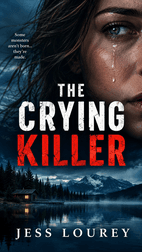
This page gathers lines from The Crying Killer by Jess Lourey. You'll run into tense dialogue, sharp narration, and inner thoughts that circle around grief, fear, loyalty, and survival. Some lines land because they sound like something you might say. Others stick because they put a name to feelings that are hard to explain.
The book is quotable because its language stays close to the characters, even when the situation turns dark. The voices feel human, messy, and real, so a single sentence can carry a whole relationship or a private fear. If you like thriller lines that are more about people than puzzles, start here.
Top Quotes from The Crying Killer
“We're all saints the hour before dawn. That's double true on New Year's Day, with the fresh year spreading out like an altar cloth, set with hope and better choices, kindness and grace. Maybe this is the year I'll start remembering birthdays, or turning down seconds on dessert. So much potential. So many ways to screw it up.”
— Tuesday
Tuesday narrates the first morning of 1995, reflecting on New Year's resolutions and her own capacity to fail.
It sets a hopeful yet self-aware tone, balancing grace with the dread of inevitable mistakes.
“A woman's first weapon wasn’t her fists, it was how she moved. How she carried herself like she belonged even when she wasn’t sure she did.”
— Tuesday
Tuesday heads to the gym, thinking about the survival instincts she has carried since girlhood.
It frames confidence as a defensive performance necessary for women, and doubles as Tuesday's armor.
“You'd be a fool to leave women's justice to the laws of men.”
— Tuesday
While staking out dive bars for predatory men, Tuesday justifies her nightly vigilance.
The line is an aphoristic indictment of institutional justice and a mission statement for her vigilante nights.
“It was upsetting to see. Not her reaction, which I understood too well. It was the inevitability of it, a woman assaulted feeling like not only was it her fault, but also that she had to spare others the burden of sharing her pain.”
— Tuesday
Tuesday visits Hannah Wheaton in the hospital and notices her shame after the assault.
It captures how assault survivors can internalize blame and try to protect others from their pain. The line turns private observation into a broader indictment of the burden placed on victims.
“A panic attack had trapped me in a coffin with no lid.”
— Tuesday
Tuesday wakes paralyzed by a panic attack until Nic comes to her side.
The metaphor makes the suffocating helplessness of panic instantly visceral.
“Except I'd never heard whispers. Never seen moving shadows. Those were her demons, not mine. I just borrowed them sometimes, when I needed to keep my real ghosts hidden.”
— Tuesday
After lying to Dr. Simpson to secure her medication, Tuesday reflects on the symptoms she invented.
It reveals how deliberately she hides her real trauma behind borrowed madness.
“It's survival. Imagine it. A place where no one expects me to be the weird one, or the funny one, or the not-man-enough one. A place where the cops aren't always busting me, trying to pin everyone else's shit on me just because I'm different. A place where I just... am.”
— Nick
Under the willow by the Crow River, Nick fantasizes about disappearing and starting over.
It captures a raw longing to escape stigma and be accepted for who he is.
Themes Behind the Quotes
The quotes center on grief and guilt after violent loss. They show how a person can carry the belief that they should have saved someone, even when danger was beyond their control. Family bonds run through everything, especially the fierce loyalty between sisters and the urge to protect those who remain. Justice also matters here, especially what happens when the law fails women and leaves them to seek their own answers.
Another thread is mental health and inherited trauma. The lines explore panic, paranoia, and the fear of becoming someone you do not want to become, along with the ways people hide pain to survive. Identity is tangled up in all of it. Characters wonder who they are when love turns obsessive, when violence becomes personal, and when staying safe means pretending to be someone else. Survival is not just about escaping danger. It is about holding onto a self the world keeps trying to take.
Quotes by Chapter
Prologue and Chapters 1-5
“Julia's wail cut through the night, so pure it hurt. And then, the gunshot. It was quick. Loud. Final.”
In the prologue's closing moment, baby Julia cries just before a gunshot ends the confrontation in the trailer.
Its clipped cadence makes the murder feel sudden and irreversible, turning a newborn's cry into an elegy.
“The word lodged in my gut, honey laced with glass.”
— Tuesday
After Julia calls her Mom, Tuesday reflects privately on the title while keeping her true relationship secret.
It captures the bittersweet love of raising Julia as her own, with truth and pain entangled.
Chapters 6-11
“The police said the killer was dead, but they didn’t know what it felt like to be helpless as your sister was gunned down, knowing that you should have been the one to take the bullet.”
— Tuesday
After leaving Corn's office, Tuesday reflects on why the police's claim that the killer is dead cannot erase her trauma.
It articulates survivor's guilt with painful clarity, showing that legal closure is not emotional closure.
“I couldn’t bring her back, but I could tip the scales for other women.”
— Tuesday
In Chapter 10, Tuesday explains why she hunts predators at night despite being unable to save her sister.
It turns grief into purpose, balancing helplessness with a fierce commitment to other women.
“She reminded me of a sleeping dandelion.”
— Tuesday
After checking on Julia at night, Tuesday watches her sleeping daughter.
The comparison is tender and strange, capturing both Julia's innocence and the fragility of the moment.
Chapters 12-16
“She was a dead ringer for my sister. The same strong jaw, the same sharp cheekbones, even the same dirty-blond hair, arrayed around her like a halo.”
— Tuesday
Tuesday examines the murdered woman outside the Gopher Hole and recognizes a haunting resemblance to her sister.
The physical detail turns a crime scene into a personal omen, making the victim feel like a reflection of Tuesday and Trixie.
“It was too early for them to be here even if the bartender had gone straight to the phone, which meant someone had called it in before it'd happened. This had been a setup.”
— Tuesday
As police arrive at the Gopher Hole crime scene, Tuesday realizes the timing proves she was lured into a trap.
It marks the moment her paranoia hardens into certainty, tightening the chapter's sense of conspiracy.
“Tuesday played the tether, steady and sure, always reeling her back from the edge. Back then, they had no idea that even the strongest rope eventually frays.”
— Tuesday
Tuesday imagines how she would have written the story of saving Trixie after a fall from an oak tree.
The metaphor captures her lifelong role as her sister's protector while foreshadowing the limits of that devotion.
“Coretta’s tongue might be thorns and vinegar, but underneath was a heart that could warm the whole damn street if she cared to.”
— Tuesday
Tuesday reflects on Coretta's prickly manner after Coretta reassures her that Julia is safe.
It reveals the affection beneath their tough dynamic and makes Coretta instantly vivid.
Chapters 17-23
“They never asked their dad what it all was, and he never explained. The lock on that door was enough of an answer.”
After Nick asks what is in their father's locked hall closet, the sisters remember what they found inside.
The understatement is chilling, turning silence and a lock into a confession of violence. It shows how children learn to read danger without naming it.
“I was holding on to something fragile, something the world would love to break if it got the chance.”
— Tuesday
Tuesday squeezes Julia's hand after picking her up from school and hearing about her math star.
It distills a mother's love into fear and fierce protectiveness. The sentence makes tenderness feel endangered rather than safe.
“I'm... I've been thinking about my sister. About what happened . .. the night she was murdered. I've never said this out loud, but... it was my fault. She died because of me.”
— Tuesday
At an AA meeting, Tuesday confesses her guilt about her sister Trixie's murder.
The broken syntax makes the confession feel raw and involuntary. It is the emotional core of Tuesday's long-carried shame.
“She was the reason he came to the trailer that night. She'd summoned the devil.”
Trixie's phone call to Arsen Bauer reveals Julia's existence and draws him to the trailer.
The line is brutally concise, framing a moment of pride as an act of self-destruction. It gives the tragedy a mythic, irreversible weight.
Chapters 24-30
“Once I love someone—really love them—I never let them go. Even God can’t come between us.”
— Arsen
Arsen tells Trixie he will be back while Tuesday and Nick watch in the trailer.
The line chillingly frames possessive control as eternal love. It lingers as a warning about the danger hiding inside Arsen’s devotion.
“Sometimes the ones who swear they'll never leave are the ones you should run from.”
— Nick
After Arsen leaves, Nick responds to Trixie's insistence that Arsen loves her.
It is a compact, haunting warning about controlling partners disguised as devotion. The line echoes long after the scene ends.
“I needed to get to my girl, to hold her close and breathe in the sweet green-apple scent of her hair, to remind myself that some things were worth saving. And then I had to kill Arsen before he reached her.”
— Tuesday
After leaving Detective Smith at Regions Hospital, Tuesday focuses on protecting Julia from Arsen.
It fuses maternal love with lethal determination, raising the emotional stakes to a breaking point. The tenderness and violence sit side by side without apology.
Chapters 31-35
“How could I explain schizophrenia to a kid? How could I describe the screaming episodes, the paranoia, the threats Mom would make, the way she'd stare through me and my sister like we were strangers, interspersed with periods of calm and love and light that had us certain we were the luckiest girls in the world?”
— Tuesday
Julia asks why Grandma has to stay in care, and Tuesday struggles to explain her mother's schizophrenia.
It captures the impossible burden of explaining mental illness to a child while revealing the terror and tenderness of Tuesday's childhood.
“Like mother, like daughter? The idea made my hands shake worse. No, I’m just under a lot of pressure. This has happened before, and it's gone away. I just have to ride it out.”
— Tuesday
After calling the doctor about her mother's symptoms, Tuesday fears she may be seeing the same illness in herself.
The line lays bare her dread of inherited madness and the fragile self-talk she uses to keep going.
“Then he’d end it once and for all, and take Julia for his. But not now. Not yet, he thought, watching Her turn off Her computer.”
The killer watches Tuesday from outside and fantasizes about ending things and taking Julia.
It crystallizes his possessive menace and raises the stakes around Julia with chilling simplicity.
Chapters 36-41
“Whatever nightmares the world held, they wouldn't reach her. Not while I was still standing.”
— Tuesday
Tuesday watches Julia sleep after guiding a sleepwalking Coretta back to bed.
It expresses a fierce maternal vow that makes her feel both heroic and fragile.
“I was becoming two people in the same skin, the woman who had helped a baby and the sister who had failed to save her family when it mattered most.”
— Tuesday
Tuesday recalls the traumatic police call that led to her breakdown and departure from the force.
The image of being split in two captures the core of her fractured identity.
“Why did your brother become a serial killer? Have you heard of the woman he murdered in Saint Cloud after he was supposedly dead? Do you know that he’s still alive? Who was he working with that night he came to my trailer? How do I send him back to hell?”
— Tuesday
Tuesday sits outside Liz Bauer's house, preparing to ask about Arsen and the killings.
The rush of questions conveys her desperation and the impossibility of escaping the past.
Chapters 42-47
“So don't look at me, don’t talk to me, don't even think thoughts about me. You're here for your reasons, I'm here for mine. Stay the hell out of my way.”
— Tuesday
At an AA meeting, Tuesday lashes out when a man tries to sit beside her.
It reveals how isolated and defensive she has become, pushing away even neutral kindness.