The Claude AI Money Bible Quotes
by Giovanni Kavalakis
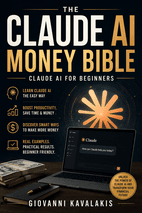
Inside this collection you will find the lines that people actually remember from The Claude AI Money Bible. Some are warnings about trusting an AI that sounds confident even when it is guessing. Others are reminders that the tools only work when you put in the work to describe what you actually need. There are one liners worth saving and longer setups that end with a punch.
What makes this book quotable is that it treats Claude like a capable but imperfect colleague. It does not promise magic. Instead, it offers practical rules, honest caveats, and a few hard truths about how people write and read. The best lines stick because they name a common frustration and hand you a fix in the same breath.
Top Quotes from The Claude AI Money Bible
“Claude sometimes states things that aren't true, in the same calm tone it uses for facts.”
This appears in the section on the three things Claude can't do.
It captures the core risk of AI: confident mistakes. Readers remember to verify anything important.
“The difference is this one costs 20 dollars a month and works at 3am.”
This follows the comparison between Claude and a new employee.
It is a memorable punchline about Claude's practical value. The 3am detail makes the cost feel like a bargain.
“That's like phoning a mechanic and imitating the engine noise. Don't describe. Upload.”
The author criticizes describing a document from memory instead of uploading it to Claude.
The mechanic-engine metaphor makes the advice immediate and memorable, and the blunt 'Upload' turns passive memory into active action.
“Claude doesn't replace the lawyer, it makes twenty minutes with the lawyer worth ninety.”
The author explains the value of using Claude before hiring a professional.
It reframes AI as a time-saver that amplifies expensive professional time, which feels empowering and financially practical.
“When your request is vague, Claude doesn't give you a wrong answer. It gives you the average answer, the average of everything ever written on that topic. Average sounds like everyone and impresses no one.”
Section 7.1 explains why vague requests produce mediocre AI responses.
It reframes bland AI output as 'the average answer,' making the need for specificity feel urgent. The final line stings because nobody wants to sound like everyone else.
“The emergency fix, worth memorizing: when something still comes out stiff, reply "rewrite this like you're texting a friend." Nine times out of ten it lands. The reverse works too: “make this professional but still warm.””
From the voice-installation instructions at the start of the chapter.
It gives readers a simple, instantly usable prompt that fixes stiff AI writing. The 'nine times out of ten' makes it feel like a reliable insider trick.
“Without them you get a fantasy plan. With them you get yours.”
From The Planner module, explaining why real limits matter in planning.
The contrast between fantasy and reality makes a sharp argument for honesty about constraints.
Themes Behind the Quotes
Across these quotes, one idea keeps showing up: the quality of what Claude produces depends on the quality of what you give it. Vague prompts create forgettable average answers. Specific instructions, examples, and projects turn the same tool into something you would actually publish. Another recurring theme is that Claude is powerful but fallible. It can sound confident while wrong, especially without web search, so checking important facts matters.
The book also cares about workflow and voice. Using both mobile and desktop, capturing ideas when they appear, and building reusable projects keep you from starting over every day. And the quotes about rewriting and banning common AI words show a deep concern for sounding human. Tools should not replace judgment. They should make your own skills faster, your time with experts more valuable, and your plans more grounded in reality.
Quotes by Chapter
Chapter 1: Choose Your Plan and Model Without Wasting Money
“A new employee also gets things wrong, doesn't know your business on day one, and needs instructions.”
This appears while comparing Claude's limitations to those of a new hire.
It normalizes Claude's flaws and makes them feel manageable. Readers see the AI as a useful employee rather than a magic machine.
“The rule: pick the strongest model your plan offers for anything that matters.”
This appears in the model-selection section.
It gives readers one simple, decisive rule instead of overwhelming options. It directly counters the common beginner mistake of hoarding the best model.
Chapter 2: Install Claude on Your Phone and Your Computer
“When asking Claude something is faster than opening Google, you start asking it everything, which is exactly what you want.”
This line appears in the pro tip about setting a keyboard shortcut for the desktop app.
It captures the moment Claude becomes a reflex instead of a deliberate choice. The line promises that this habit is exactly what the reader should want.
“People who only use the phone end up using about a third of what Claude can do. People who only use the computer miss the moments when good ideas actually arrive, which is rarely at a desk. Use both, on purpose.”
This is from the section on deciding which device to use for which job.
It states the downside of each single-device approach in one sweeping contrast. The final command makes using both a deliberate strategy, not an optional extra.
“Sounds trivial. It's the difference between using it daily and forgetting it exists.”
This line appears in the pro tip about placing the phone app on your home screen.
It turns a small placement choice into a decision about whether the tool becomes part of daily life. Readers recognize that convenience drives adoption.
“Waiting until you're at your desk to capture an idea, it'll be gone.”
This appears in the list of mistakes to avoid when choosing a device.
It is a blunt warning that good ideas expire. The phrasing makes the cost of waiting feel concrete.
Chapter 3: Set Up Projects So You Never Repeat Yourself Again
“Rambling out loud is easier than thinking neatly, and the machine does the tidying.”
The author explains why voice input works better than typing on a phone.
It flips the weakness of messy speech into an advantage. It makes the AI feel like a collaborator, not a keyboard.
“Without a Project, every chat starts from zero. You explain your business, get an answer, close the chat, and tomorrow you explain your business again.”
The author describes the problem Projects solve in Chapter 3.
It names the exact loop that makes people abandon AI tools. Readers feel seen and understand why Projects matter.
“Line 4 is the most powerful line in the whole book. Banning three specific things kills most of the robot tone instantly, and you can always add more bans as you spot them.”
The author explains the 'Never' line in the five project-instruction sentences.
It gives a concrete, counterintuitive rule: restrictions create personality. That sticks because it is actionable and immediately fixes generic output.
“Future you, scrolling a list of twelve Projects, will thank present you.”
The author's pro tip for naming Projects by what they produce.
The image of meeting your future self is memorable and turns organization into a small act of self-care. It is a line readers want to repeat.
Chapter 4: Get Answers From Your Bills, Contracts and Photos
“Ten minutes before beats a year of regret, and it costs nothing to check while you still have the power to say no.”
The author gives a pro tip to run the three questions before signing anything.
It condenses a whole negotiation principle into a rhythmic warning, making the urgency of acting early feel obvious.
“Being the person who spots the problem while still in the conversation is worth real money.”
The author advises photographing any document you're handed before leaving the room.
It flips the usual bystander experience into an empowered position, and 'worth real money' ties insight directly to value.
Chapter 5: Turn On Web Search, File Downloads and Preferences
“Without web search, questions about current prices, recent news or today's rules get answered from memory, confidently, and sometimes wrongly.”
From Section 5.1, explaining why turning on web search matters.
It captures how AI can sound certain while being wrong, which is exactly the danger people need to understand.
“That one word has saved me from repeating invented statistics more than once.”
From the pro tip in Section 5.1, about replying with just "source?" when an answer lacks sources.
It is a memorable, concrete proof that a tiny prompt can expose unreliable AI answers.
“That loop, ask, watch, refine, is how everything in Books 3 to 6 gets made.”
From Section 5.2, after describing how to create and update an artifact live.
It sums up the entire hands-on workflow of the book in one sticky phrase.
“Clients and colleagues don't want text in a chat, they want an attachment.”
From Section 5.2, about turning artifacts into downloadable files.
It states a practical, universal truth about professional expectations and why the file feature matters.
Chapter 6: Stop Your Writing Sounding Like AI
“Everyone's radar for Al text is now excellent. Readers spot it, skip it, and trust it less. If you're writing for money, that's fatal.”
The author opens the chapter by explaining why AI-sounding writing is a financial liability.
It raises the stakes: if readers can smell AI, they won't pay for it. Anyone writing for money needs to take the fix seriously.
“Banning words but keeping the habits, the rhythm gives it away as much as the vocabulary.”
This appears in the 'Mistakes to avoid' section, warning that banning banned words isn't enough.
It warns that changing vocabulary alone isn't enough. The cadence of your words is just as loud a signal.
“The second one sounds like a person, and out loud is the test that never lies.”
The author suggests reading a paragraph out loud before and after adding the ban list.
It offers a practical and foolproof test for natural writing. The phrase 'never lies' gives it memorable authority.
“Your list is part of your voice, and it's the cheapest quality upgrade you'll ever make.”
In the pro tip, the author recommends keeping a personal list of banned words.
It reframes the ban list as a creative tool, not a restriction. It promises a huge return on minimal effort.
Chapter 7: The 4-Line Formula for Perfect Answers Every Time
“Type "write an Instagram post about our gym" and you get "Crush your goals! New year, new you!" Type the four lines and you get something you'd publish with a one-word edit. Same tool, same three seconds. The difference was never the Al.”
In section 7.1, after contrasting a vague Instagram prompt with the four-line formula.
It proves the same AI can produce cliché or publish-ready output in the same three seconds. The closing line makes the chapter's thesis unforgettable.
“It makes you look like a professional with range, it moves the conversation from "do I like this?" to "which do I prefer?", and that shift is worth money.”
In section 7.3's pro tip about showing clients two or three options.
It articulates how offering choices changes a client conversation and directly links that shift to income. The final phrase is a memorable business lesson.
Chapter 8: The 10 Ready-Made Requests That Cover Almost Any Task
“It stings for a second and saves you for a year.”
From The Harsh Critic module, about inviting the AI to find flaws before customers do.
The rhyme makes it unforgettable while capturing exactly why brutal feedback is worth seeking.