The Automatic Millionaire, 20th Anniversary Edition Quotes
by David Bach
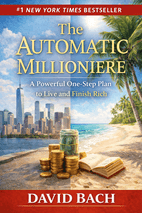
This page collects the most memorable lines from David Bach’s classic guide to building wealth on autopilot. You'll find short, punchy statements that cut straight to the point, from the famous latte factor to the power of paying yourself first. The book has become quotable because it takes complicated financial ideas and boils them down to simple, unforgettable rules that anyone can actually follow.
These quotes are the kind you want to share with a friend or write on a sticky note. They remind you that becoming a millionaire isn't about earning more or being a genius. It's about setting up a system that works while you sleep. No jargon, no fluff just the core lessons that have helped thousands of people change their money habits for good.
Top Quotes from The Automatic Millionaire, 20th Anniversary Edition
“What if I told you that in just a few hours I could share with you a system that would slowly but surely transform you into a millionaire?”
The author David Bach opens the introduction with a series of rhetorical questions to grab the reader's attention.
This line immediately hooks readers by offering a simple, time-efficient path to wealth, challenging their skepticism and sparking curiosity.
“If your financial plan is not automatic, you will fail!”
The author states a central thesis of the book after explaining why manual budgeting and saving rarely work.
It delivers a blunt, memorable warning that resonates with anyone who has struggled with discipline, making the case for automation feel urgent and necessary.
“The rich get rich (and stay that way) because they pay themselves first.”
This line appears in a list summarizing the philosophy behind The Automatic Millionaire.
It distills a timeless financial principle into a simple, powerful sound bite that motivates readers to prioritize savings over spending.
“David,” she said finally, “are you trying to tell me that MY LATTES ARE COSTING ME NEARLY TWO MILLION DOLLARS!”
Kim's exclamation after realizing the cost of her daily latte habit.
This dramatic moment encapsulates the entire Latte Factor concept in a memorable, humorous, and shocking way that readers can relate to.
“The miracle of compound interest is the Automatic Millionaire's power tool for wealth.”
The author's summary after showing the power of compound interest.
It succinctly identifies compound interest as the essential mechanism for building wealth automatically.
“If you want to be rich, all you have to do is make a decision to do something that most people don’t do.”
David Bach introduces the core idea of paying yourself first after dismissing budgeting.
It simplifies wealth-building to a single, empowering choice and challenges readers to take action rather than overcomplicate.
“The only plans that work are the ones that are automatic.”
The author reflects on his years as a financial advisor.
It challenges the common belief that discipline alone is enough, offering a proven alternative that removes human error.
Themes Behind the Quotes
A central idea running through these quotes is that willpower alone is not enough. Humans are naturally bad at sticking to budgets or saving money on purpose, so the only way to succeed is to make the process automatic. By removing the need for daily decisions, you remove the chance to fail. This theme shows up again and again in the advice to pay yourself first and set up systems that handle your finances without your constant attention.
Another major theme is that small, consistent actions create massive results over time. The latte factor illustrates how tiny everyday expenses can add up to huge lost wealth, while compound interest shows how steady saving can turn modest amounts into a fortune. The book also emphasizes that real wealth comes from controlling spending, not from earning a high income. Finally, several quotes point to the importance of keeping things simple and resisting debt, especially credit cards, which undermine automatic wealth building.
Quotes by Chapter
Introduction
“It's the tortoise’s approach to wealth, not the hare’s.”
The author contrasts realistic, steady wealth-building with get-rich-quick schemes.
The familiar Aesop fable makes the concept of slow, consistent progress relatable and reassuring, countering the allure of instant gratification.
Chapter One: Meeting the Automatic Millionaire
“The only thing we inherited was knowledge. Our parents taught us a few commonsense rules about handling money. We just did what they said, and sure enough, it worked.”
Jim McIntyre responds when the author asks if he inherited his wealth.
This line shatters the myth that wealth requires a windfall, showing that ordinary people can build fortune through simple, learned principles.
“Every time you earn a dollar, you should make sure to pay yourself first.”
Sue McIntyre recounts the core advice her parents gave her and Jim after their honeymoon.
It encapsulates the foundational money habit of prioritizing savings over spending, a mantra that resonates for its directness and universal applicability.
“By deciding to be rich at a young age, and then by creating an automatic system for wealth, we made it impossible to fail.”
Sue McIntyre explains how they achieved wealth without willpower by automating their finances.
This quote empowers readers by revealing that success doesn't depend on constant discipline, but on a one-time decision to set up a foolproof automatic system.
“It made me realize the one crucial step to creating a lasting, positive change in the way you handle your money. MAKE IT AUTOMATIC!”
The author reflects on his session with the MclIntyres.
This line distills the book's central message into a simple, powerful imperative that eliminates reliance on discipline.
Chapter Two: The Latte Factor: Becoming an Automatic Millionaire on Just a Few Dollars a Day
“The problem is not how much we earn... it’s how much we spend!”
The opening line of the chapter.
It immediately reframes the wealth-building challenge from income to spending, setting the stage for the Latte Factor concept.
“How much you earn has almost no bearing on whether or not you can and will build wealth.”
Jim McIntyre's principle shared by the author.
It powerfully challenges the common belief that earning more is the key to wealth, emphasizing that spending habits matter more.
Chapter Three: Learn to Pay Yourself First
“Any system that is designed to control your normal human impulses is ultimately bound to fail.”
Bach explains why budgets and financial diets don't work long-term.
This line resonates because it validates the struggle many feel with self-control and offers a realistic, human-centered alternative.
“It figured out years ago that people couldn't budget, so it set up a system to make sure it got “paid first.””
Bach describes how the U.S. government automated tax withholding to guarantee its cut.
This insight reframes automation as a proven strategy—if the government uses it to get paid, readers can use it to pay themselves.
“Paying Yourself First just 10 percent of your income can help you achieve enormous wealth.”
Bach summarizes the power of the Pay Yourself First strategy with a specific percentage.
It makes the goal feel achievable by citing a modest, concrete number, countering the myth that you need a high income to get rich.
Chapter Four: Now Make It Automatic
“You can't spend what you don’t have in your pocket.”
The author explains why making savings automatic is so effective.
This line encapsulates the core logic of automatic saving: if the money never reaches your pocket, you can't be tempted to spend it.
“Within the first three months, you totally forget about it.”
The author shares his personal experience after starting to Pay Himself First.
This reassures readers that the initial sacrifice is temporary and that adaptation happens quickly, making the change painless.
“Over time, money compounds. Over a lot of time, money compounds dramatically!”
The author explains the miracle of compound interest.
It is a memorable and inspiring reminder of the exponential power of consistent, long-term saving.
Chapter Six: Automatic Debt-Free Homeownership
“Cash is king. Cash is security. Cash is protection. Cash is your “take this job and shove it” option.”
Author David Bach explains the value of having an emergency cash cushion.
This line is memorable and empowering, framing cash not just as a safety net but as a source of personal freedom and leverage in life decisions.
“You know what a real emergency is. A real emergency is something that threatens your survival, not just your desire to be comfortable.”
David Bach defines the boundary between genuine emergencies and ordinary wants.
It forces readers to be honest with themselves about when to tap their emergency fund, preventing frivolous spending that undermines financial security.
“Not earning interest on your emergency money is almost as bad as burying it in your backyard.”
David Bach criticizes people who leave emergency cash in zero-interest accounts.
The vivid comparison to burying money shocks readers into realizing the opportunity cost of lazy savings, motivating them to seek better returns.
“If the only actions you take as a result of reading this book are to decide to Pay Yourself First for your future and Make It Automatic, you'd still be better off than the vast majority of people.”
David Bach emphasizes the core simplicity of his system at the start of the chapter.
This line distills the book's entire philosophy into a single, achievable promise, giving readers confidence that even minimal automation yields extraordinary results.
Chapter Seven: The Automatic Debt-Free Lifestyle
“The only time borrowing makes sense is when you do it to buy something that can go up in value (like a home).”
Jim and Sue McIntyre were raised by Depression-era parents who taught this principle.
This line distills a timeless financial rule: use debt only for assets that appreciate, not for consumption.
“You cannot become an Automatic Millionaire if you run up credit card balances and pay only the minimum due.”
The author's conclusion after showing that minimum payments on $8,400 debt take 30 years and cost over $20,000.
It bluntly connects the core premise of the book to the danger of credit card debt, motivating readers to change their habits.
“A person who wants to get out of credit card debt but carries credit cards in his wallet is like an alcoholic who wants to stop drinking but carries a bottle of vodka around with him.”
David Bach shares his own experience of overcoming credit card debt in college.
The vivid, relatable analogy makes the necessity of removing temptation unforgettable.
“No. No, I don't want a credit card. No, I don’t want a 10 percent discount. No, I don’t want six months’ free interest. No. NO. NO!”
The author's advice when a store salesperson offers a discount for opening a charge card.
The escalating repetition turns a simple refusal into an empowering mantra against impulse debt traps.
Chapter Eight: Make a Difference with Automatic Tithing
“We make a living by what we earn—we make a life by what we give.”
Opening epigraph attributed to Winston Churchill.
This succinctly captures the central message of the chapter: that true fulfillment comes not from accumulating money but from generosity. It sets a timeless, inspirational tone that resonates with readers seeking meaning beyond wealth.
“But money will not give your life meaning. It really won't.”
David Bach, the author, explaining that money alone cannot provide purpose.
This blunt, honest statement challenges the common assumption that financial success equals happiness. It forces readers to reflect on what truly matters, making it a memorable wake-up call.