The 1 Page Marketing Plan Key Takeaways
by Allan Dib
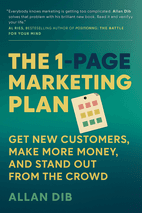
5 Main Takeaways from The 1 Page Marketing Plan
Focus on a Tightly Defined Niche to Maximize Impact and Profitability.
The book argues that mass marketing wastes resources and that specializing in a niche allows you to charge premium prices. By using the PVP Index and creating customer avatars, you can deeply understand your target market and craft messages that resonate, dominating one niche before expanding.
Build a Marketing System Around Capturing and Nurturing Leads Over Time.
Shift from hunting for immediate sales to farming relationships by capturing leads with an 'ethical bribe' and nurturing them in a database. This approach dramatically increases advertising effectiveness, builds long-term trust, and forms the foundation for consistent growth through a robust CRM infrastructure.
Use Paid Media Strategically and Measure ROI for Sustainable Growth.
Paid media, including physical mail, is reliable and forces accountability. Diversify lead sources, invest unlimited budgets in campaigns with positive ROI, and consistently measure results to protect your business from sudden changes and drive sustainable growth.
Simplify Sales with Strategic Pricing, Risk Removal, and Frictionless Processes.
Price strategically with limited options to reduce customer overwhelm, and remove risk through strong guarantees or 'unlimited' offers. Empower staff to act on sales opportunities and eliminate obstacles in the buying process to boost conversions without discounting.
Systematize Your Business for Scalability, Consistency, and Exit Readiness.
Document all business processes into checklists and systems to ensure consistency, free the owner from being a bottleneck, and create a sellable asset. Plan for your exit from the start by thinking about your ultimate customer, maximizing business value and preparing for transition.
Executive Analysis
The 1-Page Marketing Plan by Allan Dib presents a cohesive framework where these five takeaways form a sequential journey from targeting to referrals. The central thesis is that small business success hinges on moving from scattered efforts to a disciplined, system-driven approach: first, pinpoint a niche; second, capture and nurture leads; third, use paid media with accountability; fourth, optimize sales through psychology; and fifth, build systems for scalability. This progression ensures that every marketing dollar is invested, not spent, leading to predictable growth.
This book matters because it condenses complex marketing principles into an actionable, one-page plan that entrepreneurs can implement immediately. It stands out in the business genre by emphasizing practicality over theory, offering a clear roadmap to escape the trap of daily operations and focus on strategic growth. The impact is tangible: readers learn to transform their business from a job into a valuable, sellable asset by mastering marketing as a system.
Chapter-by-Chapter Key Takeaways
Selecting Your Target Market (Chapter 1)
Trying to appeal to everyone is ineffective; focus on a tightly defined niche for maximum impact.
Mass marketing wastes resources and rarely delivers results for small businesses.
Specializing in a niche makes you more valuable and allows you to charge premium prices.
Use the PVP Index to objectively identify your ideal target market based on fulfillment, value, and profitability.
Deeply understanding your customer’s fears, desires, and daily life is essential for crafting a compelling message.
Creating detailed customer avatars helps you see the world through your customer’s eyes and tailor your marketing accordingly.
Dominate one niche before expanding to others, ensuring your message remains focused and powerful.
Try this: Chapter 1: Define your ideal customer using the PVP Index and create a detailed avatar to focus all marketing efforts on a specific niche.
Crafting Your Message (Chapter 2)
Addressing risks openly in your messaging builds trust and filters out poor-fit prospects.
Using a “common enemy” in your copy connects you emotionally with your audience and makes your offer more compelling.
Choose clear, descriptive names for your business or product to avoid confusion and wasted marketing effort.
Seek feedback from your target market, not just supportive friends or family, to ensure your message resonates.
Above all, prioritize clarity over cleverness in every aspect of your communication.
Try this: Chapter 2: Craft clear, risk-addressing messages that resonate with your target market by seeking their feedback and prioritizing clarity over cleverness.
Reaching Prospects with Advertising Media (Chapter 3)
Physical mail offers emotional impact and longevity that digital channels often lack, and its reduced clutter makes it a powerful tool for marketers.
Marketing budgets should be unlimited for campaigns that deliver a positive return on investment; only limit spending during the testing phase.
Relying on a single source for leads, customers, or suppliers is risky—diversify to protect your business from sudden changes.
Paid media is both reliable and forces accountability, making it a cornerstone of a resilient marketing strategy.
Consistently measuring and optimizing your media investments is essential for sustainable growth and business security.
Try this: Chapter 3: Diversify your advertising across paid media, allocate budget based on measurable ROI, and leverage physical mail for emotional impact.
Capturing Leads (Chapter 4)
Capturing leads in a database is essential because most prospects aren’t ready to buy immediately.
Shift your mindset from hunting for sales to farming relationships by nurturing leads over time.
Never try to sell directly from your ads; instead, use them to identify interested prospects with an “ethical bribe.”
Focus your marketing resources on high-probability prospects rather than treating all leads equally.
By capturing and nurturing leads, you can increase your advertising effectiveness dramatically and build long-term trust and authority.
A robust marketing infrastructure, centered around a well-managed database or CRM, is the foundation for consistent business growth.
Try this: Chapter 4: Capture leads with an ethical bribe into a CRM system, shifting from hunting sales to farming relationships for long-term trust.
Next chapter: “Nurturing Leads” is locked
Keep learning from The 1 Page Marketing Plan — and unlock all 600+ book summaries with audio, mindmaps and AI Q&A.
$0.00 due today · 7 days free, then $89.99/year ($7.49/mo) · Cancel anytime before day 7
plus sales tax where applicable
Continue Exploring
- Read the full chapter-by-chapter summary →
- View the interactive mindmap of The 1 Page Marketing Plan →
- Best quotes from The 1 Page Marketing Plan → (coming soon)
- Explore more book summaries →