Talk Like TED Key Takeaways

by Carmine Gallo
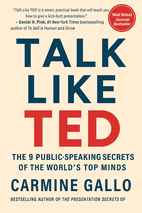
Talk Like TED by Carmine Gallo Book Cover

5 Main Takeaways from Talk Like TED

Passion is Contagious and More Persuasive Than Credentials

Genuine passion, detectable through emotional stories and nonverbal cues, can outweigh formal credentials in influencing others. For instance, Dr. Jill Bolte Taylor's personal narrative of her stroke made her talk one of the most shared in TED history, demonstrating how passion fosters connection and charisma.

Storytelling Synchronizes Brains and Makes Ideas Relatable

Using universal story archetypes and personal anecdotes transforms abstract data into emotional journeys that audiences remember. Neuroscience shows that effective storytelling creates neural alignment between speaker and listener, as seen in talks by Bryan Stevenson, making messages more persuasive and actionable.

Novelty Triggers the Brain's Reward System and Enhances Memory

Our brains are hardwired to seek new information, so presentations that teach something unexpected or use jaw-dropping moments, like Bill Gates releasing mosquitoes, captivate audiences. This novelty recognition releases dopamine, improving retention and making ideas worth sharing.

Simplicity Through the 18-Minute Rule Forces Clarity and Impact

Limiting talks to 18 minutes respects attention spans and requires distillation of your core message. Using tools like message maps and the rule of three—as seen in effective TED Talks—ensures your content is digestible, memorable, and avoids overwhelming listeners.

Authenticity and Vulnerability Build Trust and Deepen Connections

Sharing personal challenges and staying true to your unique path, rather than imitating others, makes your message relatable and trustworthy. Examples from the book show that vulnerability, as in David Christian's Big History talk, fosters empathy and inspires audience action.

Executive Analysis

The five key takeaways collectively argue that in the 21st century, where ideas are the primary currency, their impact hinges on delivery that blends emotional resonance, novel insights, and memorable structure. By harnessing passion, storytelling, and authenticity, speakers can transform information into inspiration, leveraging neuroscience-backed techniques to connect deeply and motivate action.

This book matters because it translates the success of TED Talks into actionable, evidence-based strategies for anyone seeking to improve their communication skills. Sitting at the intersection of public speaking, psychology, and leadership development, it provides a practical blueprint for making presentations more engaging, persuasive, and shareable in an attention-scarce world.

Chapter-by-Chapter Key Takeaways

Ideas Are the Currency of the Twenty-first Century (Introduction)

  • Ideas are the currency of the 21st century, and mastering their delivery can significantly boost your influence and success.

  • TED's global appeal stems from presentations that blend emotion, novelty, and memorability, all backed by scientific research.

  • Effective communicators, like Bryan Stevenson and David Christian, use universal techniques—such as storytelling and visual aids—to connect deeply with audiences.

  • Modern tools, including brain imaging, provide evidence for why these methods work, making them accessible and actionable for anyone.

  • By adopting the nine secrets outlined, you can transform your presentations into inspiring experiences that motivate action and leave a lasting impact.

Try this: Recognize that your ideas are valuable assets and invest in mastering their delivery to boost your influence and success.

Part I: Emotional (Chapter 1)

  • Vulnerability is a strength: Embracing openness and authenticity in communication fosters deeper human connections.

  • Emotions drive engagement: Talks that highlight feelings, dreams, and imagination are more relatable and impactful.

  • Humanity over perfection: The best presentations prioritize genuine interaction over flawless delivery, creating a sense of shared experience.

Try this: Embrace vulnerability and prioritize genuine human connection over flawless delivery in your presentations.

1. Unleash the Master Within (Chapter 2)

  • Genuine passion is detectable and highly influential, often outweighing credentials in persuasive scenarios like investor pitches.

  • Personal stories rooted in deep emotional experiences, like Dr. Jill Bolte Taylor's, can make presentations unforgettable and widely shared.

  • Neuroplasticity allows the brain to develop stronger communication skills through repeated, passionate practice.

  • Charisma and positive emotions are contagious, enabling speakers to uplift and persuade audiences through nonverbal cues.

  • Success in speaking and leadership hinges on embracing and sharing your passion, while also fostering it in others through active listening and collaboration.

Try this: Identify and communicate your genuine passion through personal stories to make your message unforgettable and persuasive.

2. Master the Art of Storytelling (Chapter 3)

  • Embrace Archetypal Shapes: Stories like “Man in a Hole” or the Cinderella arc resonate deeply because they tap into universal emotional journeys.

  • Amplify Value with Narrative: Even mundane objects can gain significant worth through storytelling, proving its power to create emotional investment.

  • Personalize Your Message: Sharing authentic, personal stories—rather than relying solely on data—can transform presentations and inspire action.

  • Craft Dynamic Characters: Incorporate heroes and villains to structure narratives, ensuring your idea or product emerges as the solution to a compelling challenge.

  • Channel Passion and Risk: Like great novelists, effective speakers use stories to showcase passion, connect with audiences, and exchange ideas meaningfully.

Try this: Craft narratives using universal emotional arcs and personal anecdotes to transform data into compelling, action-inspiring messages.

3. Have a Conversation (Chapter 4)

  • Use power posing to boost confidence by adopting expansive postures for two minutes before speaking.

  • Develop a pre-presentation ritual involving movement to elevate energy and mental focus.

  • Cultivate inner strength and authenticity, as passion and practice are essential for impactful delivery.

  • Embrace nerves as natural; manage them through physical and mental strategies rather than trying to eliminate them.

Try this: Use power posing and a pre-presentation ritual to boost confidence and energy, accepting nerves as part of an engaging delivery.

Part II: Novel (Chapter 5)

  • Novelty recognition is an evolutionary survival tool, hard-wired into all humans to enhance adaptability and safety.

  • Our brains are naturally attuned to seek out and prioritize stimuli that are brilliant, new, and standout, triggering reward responses.

  • This instinct influences contemporary behaviors, from innovation to consumption, highlighting its enduring relevance in human psychology.

Try this: Design your presentations to offer fresh, novel perspectives that tap into the audience's hardwired curiosity.

4. Teach Me Something New (Chapter 6)

  • Embrace novelty: Bombard your brain with new experiences to fuel creative presentations that offer fresh perspectives.

  • Avoid clichés: Repackage familiar ideas in unexpected ways to make them remarkable and worth sharing.

  • Distill your message: Use a Twitter-friendly headline to clarify your core idea and enhance audience recall.

  • Solve problems innovatively: Draw on unique stories or approaches, like Edi Rama's colorful urban renewal, to captivate and inspire.

  • Tap into curiosity: Address unexplored topics to satisfy the audience's innate desire for new knowledge and mental stimulation.

  • Leverage the exploration instinct: Connect with listeners' drive to engage and endeavor, making your presentation a journey of discovery.

Try this: Distill your core idea into a Twitter-friendly headline and use new experiences to fuel creative, cliché-free presentations.

5. Deliver Jaw-Dropping Moments (Chapter 7)

  • Incorporate props to make abstract ideas tangible and memorable, as seen with the nuclear scientists' tape or the agribusiness tracking box.

  • Frame statistics in relatable contexts to transform data into emotional, jaw-dropping insights, avoiding dry numbers.

  • Use dynamic visuals and demos to create shared experiences that engage both the heart and mind.

  • Craft repeatable sound bites that distill your message into shareable quotes, amplifying your reach through social media.

  • Leverage personal stories to build emotional connections and humanize complex topics.

  • Always design a showstopper for your conclusion—whether a story, demo, or surprise—to leave a lasting impact and ensure your message is remembered.

Try this: Incorporate tangible props and frame statistics in relatable contexts to create jaw-dropping, shareable moments.

6. Lighten Up (Chapter 8)

  • Use visual metaphors, like photographs, to simplify complex ideas and evoke laughter without relying on technical explanations.

  • Authentic humor from real stories or anecdotes can reinforce key messages and make content more memorable.

  • Laughter triggers endorphins, reducing audience defenses and fostering openness to new perspectives.

  • Balance humor with serious elements to address difficult topics without overwhelming or disengaging listeners.

  • Even in highly technical or grave subjects, lightheartedness can humanize the speaker and improve audience connection.

  • Incorporate humor naturally by focusing on what amuses you, as authenticity resonates more than forced jokes.

Try this: Use authentic humor and visual metaphors to simplify complex ideas, reduce audience defenses, and maintain engagement.

Part III: Memorable (Chapter 9)

  • Courage is non-negotiable for transforming instincts and ideas into memorable outcomes; without it, mediocrity often prevails.

  • Trusting your instincts fosters authenticity, making your contributions more impactful and resonant.

  • Resisting conformity unlocks originality, allowing you to avoid the trap of blending in with the crowd.

  • Practical habits, like regular reflection and bold experimentation, are essential for cultivating work that leaves a lasting impression.

Try this: Cultivate the courage to trust your instincts and resist conformity, ensuring your presentations are original and impactful.

7. Stick to the 18-Minute Rule (Chapter 10)

  • The 18-minute rule forces presenters to prioritize clarity and avoid overwhelming audiences with excessive information.

  • Using the rule of three—through stories, messages, or examples—makes content more memorable and digestible.

  • Message maps are a practical tool for organizing ideas, from quick pitches to longer talks, enhancing both structure and delivery.

Try this: Limit your presentations to 18 minutes and use the rule of three with message maps for clarity and memorability.

8. Paint a Mental Picture with Multisensory Experiences (Chapter 11)

  • Props and demonstrations make abstract ideas tangible, helping audiences emotionally connect with your message.

  • Silence and contrast in live demos can highlight problems and solutions more effectively than verbal explanations alone.

  • Engaging multiple senses—through touch, sight, and story—enhances retention and empathy, even in technical or medical contexts.

  • Narrative surprises, like reframing adversity as a "gift," can create powerful emotional shifts and reinforce key lessons.

  • Courage to experiment with multisensory elements distinguishes memorable presentations, turning ideas into transformative experiences.

Try this: Engage multiple senses through props, demonstrations, and narrative surprises to make abstract ideas tangible and emotionally resonant.

9. Stay in Your Lane (Chapter 12)

  • Embrace Vulnerability: Sharing personal challenges and emotions builds trust and makes your message more relatable.

  • Define Your Unique Path: Focus on your core passions and strengths instead of imitating others to leave a lasting impression.

  • Integrate Work and Life: Authenticity means being the same person in all settings, which enhances credibility and audience connection.

  • Overcome Fear Through Practice: Even the most successful speakers started with insecurities; consistent practice and speaking from the heart are key to growth.

  • Prioritize Connection Over Performance: The goal is to inspire and move your audience, not just deliver information, by letting your true self guide the conversation.

Try this: Define your unique path by focusing on your core passions and share personal challenges to build authentic connections.

Author’s Note (Chapter 13)

  • Believe in your innate capacity to inspire and lead; your ideas are valuable and can drive change.

  • Combat negative self-talk by reframing thoughts with positive affirmations to boost confidence.

  • Embrace your authenticity—success in communication comes from being genuine, not from mimicking others.

  • Remember that effort and self-belief, not luck, are the keys to becoming an effective and inspiring speaker.

Try this: Combat negative self-talk with positive affirmations and believe in your innate capacity to inspire through authenticity.

Notes (Chapter 14)

  • Notes function as the atomic units of knowledge work and creative practice

  • The true value emerges through connecting individual notes into meaningful networks

  • Consistency in capture and organization matters more than perfect systems

  • Regular review transforms scattered notes into coherent insights and projects

Try this: Treat notes as atomic units of knowledge and consistently review and connect them to transform scattered ideas into coherent insights.

Introduction (Chapter 15)

  • Ideas are invaluable assets in today's economy, serving as the cornerstone for innovation and influence.

  • Effective communication hinges on passion, practice, and courage, enabling individuals to articulate their visions clearly and authentically.

  • Learning from diverse experts—such as TED speakers and thought leaders—can provide actionable strategies for mastering the art of sharing ideas.

  • Authentic expression often requires bravery to embrace one's passions and simplify complex thoughts, making them relatable and powerful.

Try this: View your ideas as valuable assets and invest in passionate practice and courageous simplification to communicate them effectively.

Notes 1 (Chapter 16)

  • Inner strength and self-perception are malleable, influenced by mindset and external support, as seen in stories of overcoming physical and social barriers.

  • Happiness and longevity are deeply linked to emotional resilience and social bonds, with practices like meditation offering tangible benefits.

  • Passion is a critical driver in entrepreneurship, enhancing creativity and attracting resources when communicated authentically.

  • Neuroscience reveals that our brains hold untapped potential for insight and recovery, encouraging a deeper exploration of mental processes.

  • Effective leadership and help stem from empathy and active listening, fostering environments where ideas and people can thrive.

Try this: Develop emotional resilience through practices like meditation and use passion to enhance creativity and attract resources.

Notes 2 (Chapter 17)

  • Stories synchronize brains: Neuroscience confirms that effective storytelling creates neural alignment between speaker and listener, enhancing understanding.

  • Vulnerability builds connection: Authentic, emotional narratives foster empathy and trust, making messages more persuasive.

  • Structure matters: Techniques like clarity, surprise, and emotional arcs help stories stick in the audience's mind.

  • Narratives drive impact: From social justice to innovation, stories have the power to humanize issues and inspire real-world change.

Try this: Use storytelling with clear structure and emotional arcs to create neural alignment with your audience and drive impactful change.

Notes 3 (Chapter 18)

  • Effective communication thrives on collaboration, as seen in Amanda Palmer's community-driven approach to speechwriting.

  • Multimedia and visual elements, guided by research like James Williams', can significantly enhance message clarity and engagement.

  • Empathy and listening, exemplified by Lisa Kristine and Ernesto Sirolli, are foundational for connecting with audiences and fostering change.

  • Understanding audience psychology, from neuroscientific insights to nonverbal cues, allows for more tailored and persuasive interactions.

  • Leadership and structure, as advocated by Colin Powell, provide a framework for meaningful dialogue and support.

Try this: Collaborate with others in speechwriting, use multimedia for clarity, and practice empathy to tailor your message to audience psychology.

Notes 4 (Chapter 19)

  • Body language and mindset are deeply intertwined, offering practical tools for personal empowerment.

  • Resilience and adaptability can transform adversity into opportunity, as seen in personal narratives of overcoming physical limits.

  • Curiosity drives both scientific and creative breakthroughs, emphasizing its role in lifelong learning.

  • Neuroscience reveals that dopamine and engaging experiences enhance learning, informing better educational practices.

  • Data literacy and introverted strengths are valuable assets in understanding and innovating within a rapidly changing world.

Try this: Use body language to empower yourself, cultivate curiosity for lifelong learning, and leverage data literacy to innovate.

Notes 5 (Chapter 20)

  • Surprise Engages the Brain: Unexpected elements, like Bill Gates’ mosquito release, trigger emotional responses that improve memory retention.

  • Emotion Drives Connection: Personal stories, such as Jill Bolte Taylor’s stroke narrative, build empathy and make messages stick.

  • Drama Enhances Impact: Theatrical techniques in product launches, as seen with Apple, create lasting impressions through suspense and spectacle.

  • Science Supports Strategy: Insights from neuroscience confirm that combining novelty with emotion maximizes audience recall and engagement.

Try this: Incorporate surprise and theatrical techniques to trigger emotional responses and enhance memory retention, backed by neuroscience.

Notes 6 (Chapter 21)

  • Humor and creativity are not distractions but vital catalysts for learning, innovation, and emotional connection.

  • Embracing playfulness in serious domains—from education to science—can break down barriers and foster deeper engagement.

  • The psychological benefits of laughter include enhanced resilience, teamwork, and even subconscious influence in business.

  • By “lightening up,” we can transform how we discuss challenging topics, making them more approachable and memorable.

Try this: Embrace humor and playfulness as catalysts for learning and innovation, even in serious domains, to foster engagement and resilience.

Notes 7 (Chapter 22)

  • 18 minutes optimizes engagement: It aligns with human attention spans and willpower limits, making messages more memorable.

  • Brevity enhances clarity: Subtracting excess details, as Matthew May suggests, strengthens your core idea.

  • Real-world examples validate the rule: From TED Talks to viral videos, concise formats drive impact and shareability.

  • Apply it broadly: Use this principle in pitches, presentations, and daily communication to cut through noise and connect deeply.

Try this: Apply the 18-minute rule to all communications to optimize engagement and clarity, using real-world examples to validate its effectiveness.

Notes 8 (Chapter 23)

  • Engage multiple senses to boost memory and understanding, as supported by cognitive science.

  • Use visuals and stories to translate abstract data into emotional, relatable experiences.

  • Keep messages simple and structured to maintain audience focus and clarity.

  • Draw from real-world examples to demonstrate how multisensory techniques can drive change and inspiration.

Try this: Engage multiple senses with visuals and stories to boost memory, and keep messages simple and structured for focus.

Notes 9 (Chapter 24)

  • Vulnerability in asking for help can deepen relationships and foster personal growth.

  • Chronic challenges, whether physical or emotional, require understanding and resilience to navigate effectively.

  • Adversity often holds hidden opportunities for transformation and renewed purpose.

  • Focusing on one's authentic strengths and goals, as advocated by leaders, leads to more meaningful and impactful outcomes.

Try this: Embrace vulnerability by asking for help when needed, and focus on your authentic strengths to navigate adversity and find purpose.

Index (Chapter 25)

  • Passion and authenticity are foundational; they make messages contagious and build trust.

  • Stories transform abstract ideas into relatable experiences, enhancing retention and emotional connection.

  • Mastering delivery through body language, humor, and structure ensures engagement and memorability.

  • Neuroscience principles, like emotional triggers and visual aids, optimize how audiences process information.

  • Learning from diverse speakers and practicing relentlessly refines one's unique voice and impact.

Try this: Synthesize the book's lessons by combining passion, storytelling, masterful delivery, and neuroscience principles to refine your unique voice.

The Bezos Blueprint (Chapter 26)

  • Audience Definition is a Prerequisite: Effective writing begins with a crystal-clear picture of the intended reader.

  • Use a Real Person as a Mental Model: Visualizing a specific, real person (like Buffett's sisters) is a powerful technique to maintain a conversational and clear tone.

  • Answer Three Core Questions: Before writing, explicitly define who your audience is, what they already know, and what they truly need to learn from your communication.

Try this: Before writing, define your audience clearly by visualizing a real person and answering who they are, what they know, and what they need to learn.

Also by Carmine Gallo (Chapter 27)

  • Focus on audience benefits: People engage with ideas that directly impact their lives, so always connect your message to their needs.

  • Select, don't compress: Effective simplicity comes from choosing the most relevant information, rather than trying to shorten everything.

  • Prepare to avoid clutter: By removing unnecessary details in advance, you can deliver a clear and compelling message without getting bogged down.

Try this: Focus on audience benefits by selecting only the most relevant information, and prepare thoroughly to deliver a clear, clutter-free message.

Continue Exploring