Take Control Key Takeaways

by Rickson Dsouza
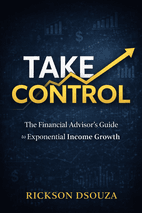
Take Control by Rickson Dsouza Book Cover

5 Main Takeaways from Take Control

Success is a designed outcome, not a product of luck or chance.

The book emphasizes that achievement requires intentional hard work and strategic sacrifice, guided by the structured C.O.N.T.R.O.L. framework. This shifts the focus from waiting for opportunities to actively creating them through clear goals and systems.

Take full ownership of your mindset, actions, and results to empower growth.

By accepting 100% responsibility, you transform from a passive victim of circumstances to an active architect of your success. This involves cultivating a growth mindset, building consistent habits, and using all feedback as learning data.

Leverage data and systematic strategies over intuition for exponential growth.

Adopting an entrepreneurial mindset means tracking key metrics like profitability and client lifetime value to make objective decisions. Implementing focused tactics and time-management systems turns effort into compounded, sustainable results.

Prioritize right-fit clients over volume to build a fulfilling, profitable practice.

Defining your ideal client profile based on past successes and failures allows targeted business development. This alignment reduces stress, increases satisfaction, and ensures that your work supports your broader life goals.

Integrate professional ambitions with personal wellbeing for true fulfillment.

Using tools like the Wheel of Life, set SMART goals across all domains—health, relationships, career—to create synergy. This holistic approach prevents burnout and fuels sustained energy for long-term achievement.

Executive Analysis

The five key takeaways collectively form the book's core thesis: that sustainable success and fulfillment are achievable through a deliberate, systematic approach to both business and life. By combining intentional design with full ownership, data-driven strategy, client selectivity, and holistic balance, the C.O.N.T.R.O.L. framework provides a comprehensive blueprint for transformation. This argument moves beyond simple motivation to offer a structured path from mindset shift to actionable practice.

'Take Control' matters because it translates abstract self-help concepts into a practical, repeatable system specifically tailored for financial advisors and commission-based professionals. It stands out in the business genre by seamlessly integrating personal development with professional growth, addressing the common pitfall of sacrificing life for career. The book's impact lies in empowering readers to build a business that not only thrives financially but also enriches their overall quality of life.

Chapter-by-Chapter Key Takeaways

Foreword by Dan Sullivan (Foreword)

  • Progress is an active creation, not a passive event. It begins with the decisive choice to take ownership of your future, long before any visible success appears.

  • Sustainable momentum comes from a system, not just willpower. The C.O.N.T.R.O.L. framework provides a structured blueprint for turning philosophy into daily practice.

  • Every element of a successful life and business can be designed. From clients to passions, intentionality in all areas creates a self-reinforcing cycle of growth.

  • The central shift is from "Why not me?" to "What's next for me?" This moves you from a mindset of envy or excuse-making into a mindset of agency and forward-focused action.

Try this: Shift your internal narrative from 'Why not me?' to 'What's next for me?' and commit to one systematic action from the C.O.N.T.R.O.L. framework today.

1 Taking Control—Your Future Is In Your Hands (Chapter 1)

  • Success is Intentional: It is a designed outcome, not luck, built on unseen hard work and strategic sacrifice.

  • You Are in Charge: The first step is accepting 100% responsibility for your results—your mindset, actions, and responses are your locus of control.

  • The C.O.N.T.R.O.L. Framework is Your Blueprint: The seven pillars (Clear Goals, Ownership, Know Your Numbers, Tactics, Right-Fit Clients, Obsession, Life) provide a complete structure for setting and achieving transformative goals.

  • Mindset Dictates Results: High performers create their own internal environment of excellence, using intentional, smart work to thrive in any external condition.

  • This is an Active Journey: The book is a call to action. Real change requires you to move from reading to doing, embracing the discipline required for mastery.

Try this: Write down one transformative goal and declare your 100% responsibility for achieving it, embracing the C.O.N.T.R.O.L. blueprint as your guide.

2 Clear, Meaningful Goals—The Foundation of Success (Chapter 2)

  • Goals are your GPS: They provide essential direction and prevent reactive drifting, especially vital for commission-based earners (Income Clarity Law).

  • Tie goals to your "why": Goals must be personally meaningful and aligned with core values to provide lasting motivation through obstacles.

  • Specificity is crucial: Use a framework like SMART to transform vague desires into clear, measurable targets.

  • Break it down: All big achievements are the result of small, consistent actions. Focus on the controllable daily inputs that build momentum.

  • Commit first, then build: Don’t wait until you see the whole path. Make the commitment (e.g., signing up, announcing the goal), then systematically build the plan and habits to achieve it.

Try this: Define a SMART goal tied to your core values and immediately break it into the first small, consistent action you can take.

3 Ownership—Your Actions, Your Results (Chapter 3)

  • Ownership is Foundational: It is the essential mindset that separates proactive architects of success from reactive victims of circumstance in a commission-based career.

  • It’s an Inside-Out Process: Ownership starts with mastering your thoughts (adopting a growth mindset), translates into consistent action (building powerful habits), and finally manifests in your results.

  • Autonomy is Your Leverage: Your career offers significant control over your time and strategy; taking ownership fully activates this autonomy for empowerment.

  • Embrace All Feedback: Own both successes and failures. Celebrate wins to build confidence, and analyze setbacks as critical data for learning and future improvement.

  • Action is Required: Ownership is not passive. It demands deliberate, daily habits and honest tracking of your performance metrics to drive consistent growth.

Try this: Identify one area where you've made excuses, reframe it with a growth mindset, and schedule one habit-building action for tomorrow.

4 Know Your Numbers—The Key to Growth and Financial Mastery (Chapter 4)

  • Adopt an Entrepreneurial Mindset: You are running a business. Start managing it by measuring its internal metrics as rigorously as you manage client portfolios.

  • Data Over Intuition: Numbers provide objective clarity, eliminating guesswork and emotional decision-making. They act as a GPS for your business.

  • Profitability is More Than Revenue: You must understand the true cost of acquiring and serving a client, measured against their lifetime value and your hourly rate, to determine real profitability.

  • Specificity is Non-Negotiable: Broad metrics are ineffective. Success comes from obsessive attention to granular financial and time-tracking details.

  • Tools Enable Mastery: Utilize CRM, accounting, and analytics software to automate tracking and free you to focus on analysis and strategy.

Try this: Open your accounting software or a spreadsheet and start tracking one key profitability metric, such as your effective hourly rate per client.

5 Tactics and Strategy—The Blueprint for Exponential Growth (Chapter 5)

  • Strategy Precedes Effort: Exponential growth requires a clear, evolving strategy. Hard work without strategic direction leads to burnout, not breakthrough.

  • Tactics Are Experimentation: Treat tactics as a series of hypotheses to test. Consistently execute, measure results, and retain only what works for your specific practice and goals.

  • Failure is Data: Unsuccessful tactics are not failures but valuable data points that guide you toward your effective formula. Adopt an Edison-like mindset of iterative learning.

  • Focus Creates Leverage: Two of the most powerful tactical focuses are identifying your "Right-Fit Client" and implementing a deliberate time-management system (like Focus/Buffer Days) to protect your energy for high-value activities.

  • Growth Compounds: Small, smart tactical choices, consistently executed in line with a strategy, compound over time to produce extraordinary, exponential results.

Try this: Design a one-week tactical experiment for client acquisition, set clear measurement criteria, and calendar a review session to analyze the results.

6 Right-Fit Clients (Chapter 6)

  • Prioritize Fit Over Volume: Long-term growth and personal fulfillment come from a disciplined focus on quality clients, not the sheer quantity of cases.

  • Your Best Clients Are Your Blueprint: The traits of your most profitable and enjoyable existing clients provide the exact criteria for your future Right-Fit Client profile.

  • Your Worst Clients Are Your Guide: Understanding what makes a client draining is just as important as knowing what makes them great; this clarity helps you avoid future misalignments.

  • Work Backwards from Your Goals: A specific income goal, divided by your ideal case size, defines your required client volume, transforming your business development from a scramble into a targeted plan.

  • Attract Through Strategic Presence: Finding Right-Fit Clients is about authentically positioning yourself in their world and providing value, not about generic advertising or cold pitching.

Try this: List three positive attributes of your favorite client and one draining trait from a past client to create a preliminary right-fit client profile.

7 Obsession—Fueling Your Success (Chapter 7)

  • Obsession is a Prerequisite, Not a Flaw: Extraordinary success in competitive fields like financial advising requires an all-in, consuming drive that goes far beyond casual interest.

  • Healthy Obsession Creates Balance: When properly directed, obsession brings structure, improves health, strengthens key relationships, and provides profound fulfilment—it simplifies life rather than complicating it.

  • Purpose Prevents Burnout: The core difference between burnout and obsession is alignment. Burnout stems from working hard on misaligned tasks; obsession energizes you through work that serves a deeply personal vision.

  • It Must Be Your Goal: An obsession cannot be sustainably borrowed. The goal must be authentically yours to generate the necessary internal fire.

  • Action Fuels Obsession: A clear vision, a supportive environment, commitment to the process, sustainable pacing, and progress tracking are all actionable steps to harness obsession effectively.

Try this: Articulate the deeper personal purpose behind your biggest professional goal and plan one activity that directly serves that purpose this week.

8 Life—Achieving True Fulfilment Beyond Financial Success (Chapter 8)

  • Financial success is merely one component of a fulfilling life; neglecting health, relationships, or personal growth can make professional achievements feel hollow.

  • Tools like the Wheel of Life and philosophies like MDRT's Whole Person concept provide valuable frameworks for assessing and creating balance across all life domains.

  • Setting SMART goals in each area of your life, from career to contribution, is a proven method for increasing overall life satisfaction and well-being.

  • Personal fulfilment and professional success are not mutually exclusive; they are synergistic. A balanced life fuels greater energy, focus, and resilience in your career.

  • Regular review and celebration of your progress are essential for maintaining momentum and adapting your goals as your life evolves.

Try this: Score each segment of your Wheel of Life and set one specific, measurable improvement for the area with the lowest score.

9 Take Control—The Power to Shape Your Life (Chapter 9)

  • Control is an internal choice, not an external condition. Your power lies in your decisions, standards, and actions.

  • Start with radical clarity. Write down specific, time-bound goals for both your professional and personal life to create a actionable roadmap.

  • Own your starting point. Honestly assess your current reality without judgment as the essential foundation for change.

  • Measure what matters. Identify and track key metrics to gain objective feedback on your progress.

  • Prioritize ruthlessly. Focus your energy on right-fit clients and life areas, using the power of "no" to protect your "yes."

  • Adopt a test-and-refine mindset. Expect to adjust your tactics; success is iterative, not a straight line.

  • Pursue goals with committed focus. Engage wholeheartedly with the process to build the resilience needed for long-term achievement.

  • Aim for holistic success. Integrate goals for health, relationships, and personal growth alongside your financial and professional ambitions.

Try this: Conduct a honest assessment of your current professional and personal reality, then choose one priority action to advance each based on your goals.

Recommended Resources (Chapter 10)

  • Sustainable success in advisory fields is built on a triad of experiential learning, dedicated reading, and engaged community participation.

  • Developing a resilient mindset and robust operational systems forms the critical foundation upon which technical financial expertise is applied.

  • Mastering client relationships requires intentional skill development in areas like storytelling, negotiation, and trust-based communication.

  • Leveraging curated digital content from industry experts ensures continuous adaptation and keeps professional knowledge fresh and relevant.

Try this: Block 30 minutes in your calendar this week to consume one piece of curated content from an industry expert on mindset or systems.

Continue Exploring