Steve Jobs in Exile Quotes
by Geoffrey Cain
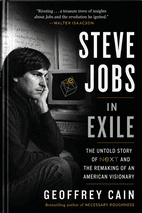
These quotes capture Steve Jobs during a messy, humbling period when he was out of Apple and building NeXT. You will find raw emotion, sharp honesty, and the kind of unfiltered thinking that made him legendary. What makes this book quotable is that it shows the man behind the myth, cracking under pressure one moment and redefining ambition the next. Every line feels like a lesson or a confession, whether he is dealing with failure, stubborn optimism, or the ache of lost time. It is a collection of moments that are as human as they are iconic.
The lines here are not polished speeches. They are real conversations, angry outbursts, and quiet admissions. That is why they stick with you. They reveal how creativity and ego collide, and how a visionary survives exile.
Top Quotes from Steve Jobs in Exile
“Steve's famed “reality distortion field’—his ability to convince anyone (including himself) that almost anything was possible—made him unafraid to express his emotions to anyone, even the assistant of his nemesis.””
Narrator describes Steve's emotional breakdown after being removed from his role.
It encapsulates Steve's unique psychological power and vulnerability, showing how his charisma made him both unstoppable and deeply human.
“It is hard to think that a $2 billion company with 4,300-plus people couldn't compete with six people in blue jeans.”
Steve Jobs responding to Apple's lawsuit in a Newsweek interview.
The quote captures the brazen David-versus-Goliath spirit of Jobs and his tiny team, making it a memorable underdog statement. It resonates because it challenges conventional assumptions about resources and innovation.
“Between now and when you have a product, you are the product, my friend, and so you better be nice to people.”
Paul Rand to Steve Jobs after Jobs ranted about graphic design, advising him on the importance of reputation.
It offers a timeless lesson for entrepreneurs: before a product exists, the founder's behavior defines the brand, combining wisdom with a sharp rebuke.
“But Steve had a different instinct: When in trouble, think bigger.”
Narration describing Steve Jobs' mindset as NeXT struggled.
This line captures Jobs' audacious and contrarian approach to crisis, inspiring readers to think beyond immediate problems.
“The hero-shithead rollercoaster had finally rattled its way to the top of the track.”
The narrator describing the team's emotional state after the successful launch.
This vivid metaphor encapsulates the exhausting, high-stakes dynamic of working for Steve Jobs.
“So you mean you sent your troops into the trenches, but you forgot to give them ammo?”
Ross Perot responds to Steve Jobs after Steve describes selling the NeXT Cube with unfinished software.
This vivid military metaphor perfectly captures the absurdity of Steve's strategy—sending a sales team into battle without the necessary tools—and highlights Ross’s frustration with Steve’s reckless optimism.
“If this was the last day of my life, would I rather have dinner with the important customers or her?”
Steve Jobs asked himself this question after meeting Laurene Powell, deciding to skip a business dinner to have dinner with her.
It encapsulates Jobs' famous life philosophy of prioritizing what truly matters, marking a pivotal personal decision that led to his marriage.
Themes Behind the Quotes
A major theme is resilience in the face of public failure and personal embarrassment. Jobs was pushed out of his own company and watched it struggle, yet he refused to shrink. Instead, he used that low point to double down on his vision, often turning weakness into a kind of defiant strength. Another theme is the tension between perfectionism and practicality. He demanded impossible things from small teams and himself, and the quotes show both the brilliance and the strain of that approach.
Freedom also runs through these selections, both the freedom he gained from leaving Apple and the freedom he felt to think bigger when others panicked. There is a recurring sense of building something meaningful against the clock, with all the drama and cost that entails. Finally, the quotes reveal a deep conflict between personal identity and business. Jobs saw himself as a creator first, not a CEO, and that struggle between artistry and commerce shapes every memorable line.
Quotes by Chapter
Chapter 1: Siberia
“Suddenly, he was gone,” Jay remembered. “Nobody knew where the hell he was. And they didn't know when he would come back.”
Jay Elliot, Apple's HR chief, recalls Steve's disappearance after his exile.
This perfectly captures the mystery and uncertainty surrounding Jobs after his fall from power, hinting at his resilience and eventual return.
Chapter 2: Into the Wilderness
“If you relax you'll start breathing again. That's how I felt all summer long.”
Steve Jobs describing his emotional state after being ousted from Apple in a 1985 Newsweek interview.
This visceral metaphor for shock and recovery captures Steve's resilience and the need to let go after a devastating blow.
Chapter 3: Jumping Ship
“These are very low-level people that you won't miss, and they will be leaving anyway.”
Steve reassures the board about the employees he plans to take.
The statement is ironic and deceptive, as the employees were actually key personnel. It highlights Steve's manipulative side and the tension between him and the board.
“I bought a few Eames chairs, so I have a place to sit down and read a book other than the floor.”
Steve tells Newsweek about his improved living conditions.
This humorous line shows Steve's personal growth from a spartan lifestyle to a more comfortable one. It adds a humanizing touch to his intense personality.
“They said they're going to have me arrested!”
Steve relays a threat from Apple's lawyers to his confidante Susan.
The line captures Steve's vulnerability and the high stakes of the legal battle. It reveals that even a visionary can feel fear in the face of adversity.
Chapter 4: The Crucible of Dreams and Depositions
“Steve came away with an unexpected gift: freedom.”
The narrator describes Steve's realization after Al's remark.
This line captures a moment of triumph and liberation, turning a legal defeat into an opportunity for creative rebirth.
“Apple's attempt to shackle him to a ruthless legal fight had failed, and now he was free to build the computer he had envisioned all along.”
The narrator explains the outcome of the legal battle.
It emphasizes the theme of creative freedom overcoming corporate oppression, inspiring readers who value innovation against all odds.
Chapter 5: The Hero-Shithead Rollercoaster
“I will solve your problem, and you will pay me.”
Paul Rand to Steve Jobs when Jobs asked for multiple logo options.
It perfectly captures Rand's uncompromising confidence and the high-stakes value of great design, a core theme of the chapter.
“This makes for more interesting reading than this shit I'm hearing from you guys.”
Steve Jobs to an ad agency during a pitch meeting, after asking for a phone book and leafing through it.
This brutal putdown epitomizes Jobs's impatience with mediocrity and his legendary directness, making it a memorable illustration of his personality.
“What the world cares about is what we produce...and how timely we bring it to market.”
Steve Jobs at the NeXT retreat, telling the team the honeymoon is over and they must focus on delivery.
This quote distills Jobs's intense focus on execution and results, motivating readers to prioritize output over excuses.
Chapter 6: The Magical Monitor Stand
“My self-identity does not revolve around being a businessman, though I recognize that is what I do. I think of myself more as a person who builds neat things.”
Steve Jobs responded to Joe Nocera's question about being a businessman versus a creative person.
This line reveals Jobs's core self-image as a creator rather than a corporate figure, highlighting the tension between his role and his inner drive.
“He spent two hours on the stand,” Morton said, still dumbfounded. “What the hell's he talking about? What about the machine?”
Morton Meyerson, Ross Perot's adviser, recalled Steve Jobs's pitch that focused entirely on the design of the Cube's monitor stand instead of the product.
It perfectly illustrates Jobs's obsessive attention to design detail and his willingness to prioritize aesthetics over conventional business pitches, a hallmark of his legacy.
Chapter 7: Deep Shit List
“It was the kind of Washington power pageant that Steve both desperately wanted to be a part of and scorned—six hundred luminaries gathered to pay homage to the woman who had helped bring down a president.”
Description of the party where Steve met IBM's CEO John Akers.
Reveals Steve's complex relationship with elite society and his hunger for influence despite his disdain for establishment rituals.
“But whether consciously or not, Steve had perfected the art of projecting strength from weakness.”
Author's analysis of Steve's behavior during IBM negotiations.
A sharp insight into Jobs' leadership paradox, illustrating how he leveraged his weak position to appear formidable.
“NeXTSTEP could have been what Windows eventually became.”
Reflection on the potential of the IBM-NeXT deal.
A poignant alternate-history statement that underscores the immense stakes and the tragic what-if of the technology industry.
Chapter 8: “You Should Know Everything’s Broken”
“My computer crashes once every hour or two. With the current state of our software, the industry will laugh us into bankruptcy. We are running out of time. It’s all up to you.”
Steve Jobs in a memo to his senior team after using the NeXT workstation himself.
It reveals Steve's rare moment of vulnerability and desperation, acknowledging the catastrophic state of the product he had been dismissing.
“This is the reason Jobs is being so low key. He is embarrassed.”
Anonymous industry source quoted in Time magazine about Steve Jobs.
This quote destroys Steve's carefully cultivated image of confidence, showing how the press and insiders perceived his struggles.
Chapter 9: When Reality Distorts Back
“I haven't done this in a few years, so I'ma little nervous today.”
Steve Jobs speaking to the audience at the NeXT launch event after three years in exile.
This line humanizes Steve Jobs, showing vulnerability, and underscores the dramatic return narrative.
“I think together, we're going to experience one of those times that occurs once or twice in a decade of computing.”
Steve Jobs describing the significance of the NeXT Cube's launch at the event.
It captures Jobs' grand vision and his ability to frame product launches as historic moments.
“I just looked at my counterpart and I said, ‘I know nothing.”
Burt Cummings, NeXT's sales director, reflecting on the audience's applause for the high prices.
It highlights the absurdity of Jobs' reality distortion field, where even exorbitant prices are celebrated.
Chapter 10: Steve on a Stick
“I spent 10 years trying to build something,” Steve said, “and most of what I built has been dismantled.”
Steve Jobs, speaking to Newsweek after John Sculley called to congratulate him before NeXT's launch event.
This raw admission of loss and bitterness humanizes Steve, revealing the deep personal cost of his ouster from Apple and his struggle to rebuild his legacy.
“I'm not going to authorize that,” Dan'I said. “You want it, you own it.”
Dan'l pushing back against Steve's demand to order 25,000 units despite unfinished software and hardware issues.
It epitomizes a rare moment of defiance against Steve's impulsive demands, highlighting the tension between vision and reality.
“Picture Steve Jobs, personnel director, interviewing Steve Jobs, job applicant, for a position assisting Steve Jobs.”
A San Francisco Examiner columnist mocking Steve's decision to appoint himself as head of marketing.
This humorous yet devastating critique perfectly encapsulates Steve's micromanagement and ego, making it instantly memorable.