Spare Quotes
by Prince Harry The Duke of Sussex
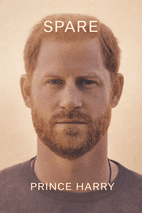
Looking for the best quotes from Spare by Prince Harry The Duke of Sussex? Below are the lines that stand out most across the book.
The quotes are organized by chapter, each with a short note on where it appears and why it stands out.
Top Quotes from Spare
“The past is never dead. It's not even past.”
Opening epigraph attributed to William Faulkner.
This famous line sets the thematic tone for the entire memoir, foreshadowing how unresolved history weighs on the narrator's present.
“How beautiful it all is, I thought. And also how sad.”
The narrator reflects on the Frogmore gardens after his grandfather's funeral.
The juxtaposition of beauty and sorrow captures the painful duality of returning to a place that was once home but now feels lost.
“Once upon a time, this was going to be my forever home. Instead it had proved to be just another brief stop.”
The narrator thinks about his former plans to live permanently at Frogmore Cottage.
This line poignantly contrasts childhood fairy-tale expectations with the harsh reality of exile and displacement.
“And if they didn’t know why I'd left, maybe they just didn't know me. At all. And maybe they never really did. And to be fair, maybe I didn't either.”
The narrator realizes his father and brother claim not to understand why he fled the UK.
This raw admission of mutual misunderstanding underscores the deep estrangement within the royal family and resonates with anyone who has felt unseen by loved ones.
“To me Balmoral was always simply Paradise. A cross between Disney World and some sacred Druid grove.”
Prince Harry describes his childhood impression of Balmoral Castle.
This line captures the idyllic, almost magical view he had as a child, contrasting sharply with the darker stories he later heard.
“I was happy there. In fact, it’s possible that I was never happier than that one golden summer day at Balmoral: August 30, 1997.”
Harry reflects on his happiness at Balmoral just before his mother's death.
The specific date and the poignant irony of calling it the happiest day create a powerful moment of foreshadowing and loss.
Quotes by Chapter
Chapter 1
“Such a horrid, tantalizing feeling, to know they're over there, just on the other side, mere inches away—but the wall is always too high, too thick. Unscalable. Not unlike the turrets of Balmoral.”
Harry laments his inability to access blocked memories of his mother.
The visceral metaphor of an unscalable wall within his mind vividly conveys grief, frustration, and the haunting nature of lost recollections.
“She'd either bolted or been thrown out, depending on whom you asked, though I never asked anyone.”
Harry reflects on his mother Diana's departure from the royal family.
This line reveals his childhood confusion and pain, avoiding the question while showing how family narratives diverge around a traumatic event.
2
“I was the shadow, the support, the Plan B.”
Prince Harry describes his perceived role as the 'spare' in the royal family.
It starkly encapsulates the dehumanizing label of 'the spare' that Harry felt from childhood. The brevity and bluntness make it unforgettable.
“Wonderful! Now you've given me an Heir and a Spare —my work is done.”
Prince Harry recalls a story of what his father allegedly said upon his birth.
This quote reveals the cold, transactional view of Harry's birth as merely completing a duty. It underscores the emotional neglect underlying the royal family's dynamics.
“Being a Windsor meant working out which truths were timeless, and then banishing them from your mind.”
Prince Harry reflects on the mindset required to be a Windsor.
This line captures the psychological survival mechanism of accepting unchangeable truths and then suppressing them. It offers profound insight into the emotional cost of royal identity.
“But ask me about any space I've occupied—castle, cockpit, classroom, stateroom, bedroom, palace, garden, pub—and I'll re-create it down to the carpet tacks.”
Prince Harry explains his unique memory for physical spaces.
This quote highlights Harry's distinct way of remembering his life through physical details rather than chronology. It shows how his mind processes trauma and displacement.
3
“Darling boy, Mummy's been in a car crash.”
Pa wakes Harry in the middle of the night to deliver the news.
This simple, declarative sentence marks the moment Harry's childhood ends, and its stark brevity mirrors the shock of sudden tragedy.
“These phrases remain in my mind like darts in a board. He did say it that way, I know that much for sure. She didn’t make it.”
Pa tells Harry that Diana has died after the car crash.
The metaphor of darts in a board vividly captures how traumatic words become permanently lodged in memory, and the repetition reinforces the brutal finality.
“Pa didn’t hug me. He wasn't great at showing emotions under normal circumstances, how could he be expected to show them in such a crisis? But his hand did fall once more on my knee and he said: It’s going to be OK. That was quite a lot for him. Fatherly, hopeful, kind. And so very untrue.”
After delivering the news, Pa's attempt at comfort falls short.
This passage poignantly illustrates the emotional distance in the family and the painful inadequacy of even the kindest words in the face of devastating loss.
6
“If you're twelve years old and don’t know you're in grief, maybe especially if you don’t know, bagpipes can drive you mad.”
Harry reflects on the funeral procession and the overwhelming sensory experience of bagpipes as a grieving child.
This line captures the disorienting, unprocessed nature of childhood grief, where the emotion is felt physically before it is understood mentally.
“At this very moment she’s undoubtedly renting an apartment in Paris, or arranging fresh flowers in her secretly purchased log cabin somewhere way up high in the Swiss Alps. Soon, soon, she'll send for me and Willy.”
Harry describes his desperate belief that his mother faked her death in order to escape her unhappy life.
This passage starkly illustrates a child's psychological denial and the impossible hope that a loved one is still alive, making it heartbreakingly relatable.
“I recall one headline, addressed pointedly at Granny: Show Us You Care. How rich, coming from the same fiends who “cared” so much about Mummy that they chased her into a tunnel from which she never emerged.”
Harry recalls the public and media pressure on the royal family to display mourning, while blaming the press for his mother's death.
This quote powerfully condemns the hypocrisy of the media and public, highlighting the tension between performative grief and the real tragedy that was caused.
7
“For all eternity we'd be smiling at her in the darkness, and maybe it was this image, as the flag came off and the coffin descended to the bottom of the hole, that finally broke me.”
Harry describes the moment at his mother's funeral when he saw the photo of him and William placed in her hands as the coffin was lowered.
It captures the culmination of grief and the breaking of the royal stoicism, making it profoundly relatable and poignant.
“I felt ashamed of violating the family ethos, but I couldn't hold it in any longer.”
Harry reflects on his emotional breakdown at his mother's funeral.
It highlights the conflict between personal grief and the expectation of royal composure, a theme that resonates throughout his memoir.
“It would just be so unbearably tragic, I thought, if it was actually true.”
After crying, Harry tells himself he is not crying because he believes his mother is in the coffin, but at the mere idea of it being true.
This line encapsulates the denial and surreal quality of grief, making it a hauntingly honest admission.
“I liked people, I was gregarious by nature, but just then I didn’t want anyone too close.”
Harry describes his state of mind upon returning to school after his mother's death.
It expresses the universal need for solitude during mourning, contrasting with his natural sociability, and underscores his isolation.
8
“Pa said Mummy hurt her head, but perhaps I was the one with brain damage?”
Prince Harry reflects on a memory about receiving an Xbox and his mother's head injury.
This line captures Harry's struggle with fragmented memories and self-doubt about his own trauma. It hints at the psychological impact of losing his mother at a young age.
“The matrons hugged us, kissed us, bandaged our injuries, wiped our tears. (All except mine, that is. After that one graveside outburst I'd not cried again.)”
Describing the matrons at Ludgrove school and his own emotional suppression after his mother's funeral.
It reveals Harry's deep emotional wound and his inability to cry since his mother's funeral. The contrast between the matrons' care for others and his own isolation is poignant.
“Pat was small, mousy, frazzled, and her hair fell greasily into her always tired eyes.”
Describing the matron Pat, who was unkind and unappealing.
Vivid and unflattering description that paints a stark picture of a minor figure in his boarding school life. It shows the harshness of the environment and Harry's keen observational skills.
“She wasn't a sadist, she just seemed “empathy-challenged.” Odd, because she knew about suffering.”
About the same matron Pat, noting her lack of empathy despite her own suffering.
A sharp, ironic observation that highlights the paradox of someone who suffers yet lacks empathy. It resonates with readers as a commentary on human nature and the effects of trauma.
9
“It felt so good to make others laugh, especially when I hadn’t laughed for months.”
The narrator reflects on the joy of making his friends laugh while mocking Pat.
This line reveals the narrator's deep emotional need for connection and relief from his own sadness, making his mischief relatable and poignant.
“I loved cracking up my mates, but nothing quite did it for me like making the otherwise miserable Pat bust a gut.”
The narrator describes the unique satisfaction of making the usually unhappy Pat laugh.
It shows unexpected empathy and complexity, as the narrator finds deeper joy in bringing happiness to someone who suffers.
“I took great offense when Opal Fruits changed their name to Starburst. Pure heresy. Like Britain changing its name.”
The narrator recalls his childhood treat during grub days and his outrage at a candy rebranding.
The hyperbolic comparison to renaming a country adds humor and nostalgia, capturing childhood fixations and loyalty to small things.
“I could barely remember when Pa and Mummy weren't divorced, so writing to them without touching on their mutual grievances, their messy breakup, required the finesse of a career diplomat.”
The narrator describes the struggle of composing letters to his divorced parents on letter-writing day.
This line poignantly illustrates the emotional burden placed on a child navigating a fractured family, blending sadness with dark wit.