Scale Solo Quotes
by Pia Silva
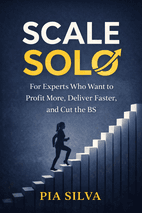
The quotes in this collection come straight from the heart of Scale Solo. They are the kind of lines that make you stop scrolling and think, the ones you want to text to a friend or pin above your desk. Pia Silva has a knack for calling out the uncomfortable truths we all feel but rarely say out loud, like the way hustle culture sneaks into your business and steals your time.
What makes this book so quotable is its raw honesty. It doesn't sugarcoat the struggle of running a service business. Instead, it hands you a mirror and a permission slip to build something that actually fits your life. Every line cuts through the noise with clarity and a bit of tough love, making it impossible to ignore.
Top Quotes from Scale Solo
“This clutter isn’t harmless; it's actively robbing you of the very freedom you started this business to create.”
Author Pia Silva describing the chaos of endless 'should-dos' in a solo business.
It crystallizes the core problem the book addresses—that mental and operational clutter directly undermines the freedom entrepreneurs sought. This line reframes busyness as a theft rather than a virtue.
“Use this business model as the backbone of a business that serves your life, not the other way around.”
The author summarizing the purpose of the business model presented in the book.
It flips the typical entrepreneur narrative by putting life first and business as a tool. This mantra is both empowering and actionable for readers tired of work dominating their existence.
“The Default Model guarantees you'll stay overworked and underpaid if you are selling your services directly to clients.”
The author explains the consequences of copying common industry practices.
It delivers a blunt wake-up call that the status quo is designed to trap experts in a cycle of low profit and high stress.
“Remember The Wizard of Oz? Dorothy had the power to go home all along—she just had to click her heels. That's how I think about business owners and their marketing. The real power lives inside you, in your willingness to commit and stick with something long enough for it to work.”
The author uses a familiar analogy to illustrate that business owners already have the power to succeed through commitment.
The Wizard of Oz reference makes the abstract idea of inner power tangible and memorable, empowering readers to trust their own persistence.
“One of the core principles of a No BS Business is simple: Charge more while working less and getting your clients better results.”
The author introduces a core principle of her business philosophy.
It succinctly captures the aspirational yet achievable goal of working smarter, not harder, which resonates with overworked business owners.
“Imagine if I could just make a client their brand and website and just hand it to them. No revisions. No meetings. I make it, they buy it. Can we make a business like that? Wouldn't that be the dream?”
Steve, a frustrated creative, shares his ideal vision for client work with the author.
This line captures the universal longing of creatives to do their best work without endless back-and-forth, making it instantly relatable and aspirational.
“The hardest part of building a business is not the marketing, or even the work itself. The hardest part is the work you do on yourself: building the confidence to charge what you're worth, to stand in your expertise, and to trust your judgment and skills enough to tell a client they should listen to you.”
The author explains why confidence is the biggest challenge for entrepreneurs.
This resonates deeply because it names the invisible internal struggle that many business owners face but rarely articulate.
Themes Behind the Quotes
One major theme is the idea that the traditional growth obsessed business model often traps owners in a cycle of overwork and underpayment. The quotes push back against the pressure to scale at all costs, arguing that a business should serve your life, not the other way around. Another theme is the importance of shifting from being an order taker to a trusted expert who charges premium prices for real value.
A third thread runs through the quotes about internal work. The hardest part of building a business isn't marketing or delivery, but developing the confidence to stand in your expertise and make tough decisions. Financial security is portrayed as a mindset, not a number. Ultimately, these themes point to building a sustainable business that gives you leverage, freedom, and the ability to help others from a place of strength, not exhaustion.
Quotes by Chapter
INTRODUCTION
“Think of this book—and the stories of real people who have done this that you'll encounter throughout—as your permission slip to stop trying to grow just because you think you're supposed to, or because that’s what a “real” business looks like.”
The author inviting readers to reject external pressure to scale.
It gives permission to define success on one's own terms, countering the prevailing 'grow or die' mindset. This line validates the reader's desire for a smaller, more intentional business without shame.
“I get the sentiment, and I've even said some of those things, too. But I think they do real harm, and fill our heads with unnecessary “shoulds.””
The author critiquing common rhetoric that solo business owners must hire a team to be 'real' entrepreneurs.
It acknowledges the prevalence of harmful advice while taking a stand against it. This line resonates because it names the guilt and confusion that many solo owners feel and offers relief.
PART ONE: THE DEFAULT MODEL
“I now know that what happened with those early clients wasn’t their fault. Every client became a challenge because my process was messy.”
The author reflects on her early struggles with client projects.
This line reframes client conflicts as a symptom of a broken process rather than blaming the client, offering a liberating perspective for service business owners.
“You never get ahead because you're too busy serving clients to build a sustainable business foundation that would solve the problem long term.”
Describing the hamster wheel of the Default Model.
This captures the painful irony of working hard yet never escaping the feast-or-famine cycle, motivating a shift in strategy.
“A business is only profitable and sustainable if you are also being paid fairly and consistently for your work.”
Discussing why hiring too early can undermine financial health.
It redefines success: revenue is meaningless if the owner isn't taking home enough, putting the entrepreneur's well-being at the center.
PART TWO: NO BS MARKETING
“The true “secret” of marketing isn’t the tactic—it's the mindset, expectations, and commitment of the marketer.”
The author reveals what she believes is the real key to marketing success.
This line cuts through the noise of tactics and tricks, reminding readers that their internal state and perseverance matter more than any strategy.
“You can only attract the kinds of clients you are positioned and prepared to receive.”
The author explains why clarity and positioning matter more than visibility in client attraction.
This concise truth challenges the common belief that visibility is the main problem, forcing readers to examine their own readiness and positioning.
PART THREE: NO BS SALES
“You operated like an order taker, not an expert advisor, and you will get paid like one too.”
The author contrasts the mindset of an order taker versus an expert advisor when pitching services.
This line cuts through the noise, directly confronting the discomfort many service providers feel about low pricing and commoditization. It’s a wake-up call that forces readers to examine whether they are selling expertise or just fulfilling tasks.
“There is nothing wrong with being an order taker, but order takers deliver limited value and therefore can’t charge premium prices.”
The author acknowledges the legitimacy of order-taking while explaining why it caps earning potential.
It validates current behavior without shame, then reframes the conversation around value creation—making the path to higher prices feel achievable rather than guilt-inducing.
“The final number no longer feels like a cost; it feels like a small price to pay to put the problem in the hands of a trusted advisor who understands it better than anyone—including them.”
The author describes how the Lead Product Method transforms a client's perception of the investment.
This captures the ultimate emotional shift from price resistance to eager commitment, which is the holy grail of premium sales. It gives readers a vivid, aspirational target for their own sales conversations.
“When someone pays me thousands of dollars for advice, they almost always take action on it (and therefore get results.)”
The author shares a personal observation about how payment influences client follow-through.
It taps into the universal truth that people value what they pay for, giving readers a compelling reason to charge for initial steps rather than giving away free advice that gets ignored.
PART FOUR: NO BS DELIVERY
“We were playing hot potato, except the client had oven mitts on, and we did not.”
The author describes the imbalance in traditional client-project dynamics where clients have little incentive to respond quickly.
The vivid metaphor perfectly illustrates the frustrating power imbalance in client relationships, making readers nod in recognition of a common struggle.
“The purpose of the Intensive is not to do it faster; it’s to do it more intensively to shorten the timeline.”
The author explains the core philosophy behind the Intensive model for client projects.
This distinction reframes speed as a byproduct of focus and intensity, offering a clear mindset shift that eliminates the chaos of traditional project management.
“Everything in your process right now that isn’t directly adding value to your client's desired outcome is BS to eliminate.”
The author directly addresses the reader, defining what constitutes bullshit in delivery processes.
This blunt, actionable line cuts through complexity, giving readers a powerful lens to audit and streamline their own workflows.
PART FIVE: NO BS MONEY MINDSET
“If you don’t feel financially secure now, you won't feel financially secure with $X dollars in the bank, either.”
The author reflects on the realization that financial security is not about a specific amount of money.
This line directly challenges the common belief that more money will solve financial anxiety, urging readers to address their mindset instead.
“When you have a business (one able to sustainably support you and generate a profit), delivering the goods for your clients is only half your job. The other half is servicing your most important client: your business.”
The author distinguishes between owning a business and having a job, using the 50/25/25 formula as a framework.
This memorable distinction reframes entrepreneurship as a dual responsibility, motivating business owners to prioritize marketing and growth.
“Annual thinking shifts your focus from what's happening in the next two weeks to the bigger picture: how many clients you actually need over the course of a year to hit your goals.”
The author introduces the concept of annual thinking to reduce short-term stress.
It offers a practical mindset shift that helps entrepreneurs escape the monthly panic and focus on sustainable, long-term success.
“A Capital Cushion gives you leverage. And here's something that's incredibly annoying: the people who build sustainable freedom-driven businesses aren't necessarily the most talented. They're the ones who buy themselves enough time to let their model work.”
The author explains how a capital cushion creates strategic leverage in business.
This line challenges the myth that success is purely about talent, highlighting the critical role of timing and financial breathing room in building a sustainable business.
CONCLUSION
“But I did it... because it was scary. I did it because I know that doing hard things makes me stronger and more confident.”
The author describes performing on stage as a singer despite intense fear.
This line captures the book's central mantra—embracing fear for growth—and is instantly memorable and actionable.
“This philosophy—doing the uncomfortable thing on purpose because of who you become in the process— has shaped my entire life.”
The author reflects on the theme that emerged when preparing her TEDx talk.
It succinctly defines the core idea of the book, making it a powerful takeaway for readers seeking transformation.
“I was only able to help her—first personally, and then professionally—because my business was healthy enough for me to do so, because I didn’t need anything back.”
The author tells the story of hiring Christine from the Philippines after learning her family's monthly expenses.
It shows how financial stability enables genuine generosity, inspiring readers to see their business as a tool for meaningful impact.