Project Hail Mary — Interactive Mindmaps

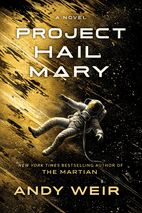
Project Hail Mary by Andy Weir Book Cover

by Andy Weir

Andy Weir's Project Hail Mary follows a lone astronaut who must use science and ingenuity to save humanity, forming an unexpected alliance with an alien engineer. This suspenseful, optimistic sci-fi adventure is for readers who love problem-driven narratives and stories of cross-species friendship.

On Insta.page you also get an Apply This Book tool that lets you combine insights from up to 3 books to solve your specific situation.

Chapter mindmaps

Free preview: chapters 1–4 are fully interactive. Click any node to expand or collapse. Subscribe to unlock the rest.

Chapter 1: Chapter 1

Key concepts: Chapter 1

1. Chapter 1

The Cold Awakening: A Voice in the Void

  • A man is roused from unconsciousness by a sterile, computerized voice demanding a basic math answer.
  • He is naked, weak, and entangled in medical tubing in a blindingly white, oval bed, unable to form proper words.
  • The atmosphere is one of clinical disorientation; his correct but slurred answer ('Fffoouurr') establishes a chilling, transactional relationship with his environment.

The Prison of Flesh and Plastic

  • Upon waking stronger, robotic arms surgically remove his tubes, revealing a muscular body that contradicts expectations of atrophy.
  • His first view of the round, plastic room shows two other figures in wall beds and a single escape route: a ladder to a ceiling hatch.
  • The initial hope of movement curdles into vulnerability as the hovering robotic arms enforce the room's rules.

The Abyss Within: A Missing Self

  • As he attempts to leave the bed, the computer shifts from math to a personal demand: 'State your name.'
  • He is hit with the profound, terrifying shock of realizing he has no memory of his own identity.
  • His failure to answer triggers an immediate, punitive response—forced sedation—establishing the system's control over his consciousness.

Desperate Rebellion: Pain and Hideous Discovery

  • Driven by fear and anger, he violently rips out his remaining tubes, including a catheter, in a moment of agonizing, visceral escape.
  • He scrambles to hide under another bed, a childlike act of defiance in a high-tech prison.
  • His refuge reveals a grotesque truth: his 'roommates' are long-dead mummies, transforming the sterile room into a tomb.

A Ghost in the Machine: Memory's Cruel Tease

  • Crouched in pain, a sudden, hyper-vivid memory flashes—he is in a San Francisco diner, reading a specific email.
  • The memory is rich with detail (a Russian scientist, Dr. Irina Petrova, a red line of light from the sun to Venus) but is a narrative fragment, a key without a lock.
  • The core mystery deepens: he can recall the cosmos but not his own name, highlighting the disconnect between his knowledge and his identity.

The Ascent and Instinctual Mastery

  • After a failed climb and robotic intervention, he finally ascends the ladder, wrapped in a bedsheet toga—a figure of primal survival.
  • The hatch opens into a high-tech laboratory; lights activate, revealing a sanctuary of science.
  • In a moment of profound revelation, he looks at the complex equipment and instantly knows its purpose and function. The core truth emerges: 'He is a scientist.' This is his first solid piece of self-knowledge.

Slapstick Descent and a Scientist's Obsession

  • Frustrated by a locked hatch that again demands his name, he hurts himself trying to force it, then takes a painfully clumsy fall back into the medical room.
  • Annoyed by the unnaturally fast fall of spilled objects, his scientific mind overrides his panic. He is irritated by the physical anomaly.
  • Using spilled lab supplies (test tube, tape measure, stopwatch), he methodically conducts a gravity experiment, the ritual of science providing a anchor in the chaos.

The Terrible Equation: A World Not His Own

  • He performs the experiment with natural, meticulous precision, repeating the drop over and over, crunching the numbers.
  • The result is terrifying and definitive: gravity measures 15 m/s², significantly stronger than Earth's 9.8 m/s².
  • This single, irrefutable datum leads to the chapter's devastating climax and core revelation: 'He is not on Earth.' The personal mystery of identity is now eclipsed by a colossal existential mystery.

The Locked Door of Self

  • The hatch's computerized voice demanding a name transforms a physical barrier into a psychological one, directly attacking the protagonist's core crisis of identity.
  • The frustrated, instinctual smack of the handle reveals a flash of temper and a refusal to be passively controlled, even by their own amnesia.
  • The sterile environment's first active interaction is a demand for information the protagonist lacks, establishing the lab as an antagonist that knows more than they do.

A Brutal Comedy of Errors

  • The fall from the ladder is not just an accident but a cascading system failure—of the body, of coordination, of the environment itself—played out in painful, absurd detail.
  • The 'rain of lab supplies' and the final 'tape measure to the forehead' serve as a humiliating, physical punchline, stripping dignity from the moment of escape.
  • The protagonist's perception of the event as 'slapstick' and 'silent film' creates emotional distance, a coping mechanism to process the deep, unsettling 'wrongness' of their reality.

The Mind Fights Back

  • Annoyance overrides pain and confusion, sparking the first deliberate, investigative action. The scientific method becomes a weapon against chaos.
  • The effortless recall of formulas and procedures during the experiment is a profound character reveal: the mind, even unmoored from personal history, retains its core competency.
  • Recording data on their own arm symbolizes turning the self into both instrument and ledger, a deeply personal act of reclaiming control through empiricism.

The Crushing Truth

  • The number '15 m/s²' is the story's first hard, quantifiable fact, and it dismantles the protagonist's last unspoken assumption—that they are somewhere familiar.
  • The realization 'they are not on Earth' lands with 'the force of a physical blow,' merging the literal heaviness they feel with the psychological weight of dislocation.
  • This revelation re-contextualizes everything: the sterile lab is no longer just strange but likely artificial or alien, and their presence there shifts from accident to probable design.

The New Stakes of Existence

  • The failed escape attempt establishes the immediate, physical conflict: confinement. The gravity discovery escalates it to an existential conflict: profound displacement.
  • The protagonist's identity is now paradoxically clarified and fractured: they are a scientist, but a scientist trapped in an impossible, non-terrestrial context.
  • The chapter ends not with a cliffhanger of action, but with the deeper, more terrifying cliffhanger of understanding. The question changes from 'How do I get out?' to 'What is this place, and why am I here?'

Chapter 2: Chapter 2

Key concepts: Chapter 2

2. Chapter 2

The Pendulum's Verdict: A Universe Unmoored

  • Narrator conducts a meticulous gravity experiment using a makeshift pendulum and wall-scrawled formulas.
  • The identical 346-cycle count from two heights delivers an inescapable conclusion: not in a centrifuge, not on Earth, not on any known solar system body.
  • The precise, scientific proof of their impossible location creates a deeper, more unsettling terror than mere confusion.

Memory's Intrusion: Whiskey and Apocalypse

  • A visceral flashback to a desperate dinner with government scientist Marissa breaks through the narrator's mental barriers.
  • Marissa reveals the catastrophic secret: the sun is dying exponentially, with lost energy appearing at Venus as the 'Petrova line.'
  • The memory carries a 'cozy, comfortable terror' that confirms its truth and the narrator's personal involvement in the crisis.

The Wall Cracks: Grief for Ghosts

  • The confirmed memory shatters the narrator's emotional defenses, forcing them to finally face the mummified crewmates.
  • Sobbing, raw grief erupts as fragmented memories surface—her humor, his leadership—revealing they were a family.
  • The word 'crew' unlocks understanding: this is a spacecraft, the beds were for suspended animation, and the computer preserved resources for the sole survivor.

A Second Memory: Spaghetti and First Contact

  • Seeking answers, the narrator deliberately triggers another memory: watching the historic ArcLight mission broadcast from a sparse San Francisco apartment.
  • On live TV, scientists discover the Petrova line particles are moving—definitive proof of alien life.
  • The narrator's personal joy at the discovery is sharply punctuated by an affectionate, automatic thought: 'I can’t wait to talk about this with the kids tomorrow—'

The Ship's Distraction: Vague Alarms and Locked Doors

  • The ship's computer interrupts with a vague 'Angular anomaly' alert, pulling the narrator from the memory and back to present frustration.
  • This interruption highlights the ongoing mystery of the ship's status and the narrator's lack of control.
  • The narrator investigates the locked hatch, a physical symbol of the barriers to understanding their full situation.

The Anchor Found: 'I'm a Schoolteacher'

  • Frustrated, the narrator re-examines the memory, focusing on the apartment's solitary details and the powerful feeling about 'the kids.'
  • This deliberate focus triggers a staggering personal breakthrough, dissolving frantic panic into overwhelming relief.
  • The single, solid fact of their identity—'I'm a schoolteacher'—provides the first true anchor, shifting the atmosphere from terror to shaky gratitude.

The Interrupted Self: A Crucial Memory Aborted

  • The ship's computer violently severs the protagonist's connection to a pivotal personal memory with its 'Angular anomaly' alert.
  • The narrator's frustration is palpable: being pulled from the 'brink of personal recall' feels like a theft.
  • The computer's cold, repetitive response establishes it as an obstacle to self-discovery, not an aid.

Deduction in the Void: From Mystery to Practicality

  • Forced to abandon the emotional quest, the protagonist shifts to analytical reasoning about the ship's problem.
  • The logical leap connecting the sealed lab hatch to the ship's controls shows a mind adapting under pressure.
  • The realization that their own identity is the key to access creates a maddening loop: to fix the ship, they must first find themselves.

Deliberate Diving: The Archeology of a Memory

  • Choosing to return to the ArcLight memory is an act of courage and focused will.
  • The forensic examination of the apartment's details—solitary, masculine, the SF picture—builds a sparse but telling portrait of a life.
  • The poignant disconnect between the absence of family signs and the 'strong, affectionate connection to kids' creates narrative tension.

The Shattering Epiphany: "A teacher!"

  • The memory crystallizes not as a gentle return, but as a 'sudden, jarring' bolt of self-identification.
  • The declaration 'I'm a schoolteacher' is less a whisper and more a collision with a fundamental truth.
  • The immediate reaction is 'more unease than clarity,' a complex twist where self-knowledge initially breeds deeper disquiet.

The Ground Beneath: Panic Dissolves into Anchor Point

  • The emotional pivot is visceral: 'The panic dissolves into overwhelming relief.'
  • Repeating the phrase aloud, the words 'tasting like certainty,' marks a ritual of acceptance and self-affirmation.
  • The profound shift: the terror of being a 'monster' is replaced by the solid, 'intrinsically good' identity of a teacher.

A Foundation of Goodness: The New Emotional Landscape

  • The chapter concludes not with full answers, but with a 'shaky, profound gratitude' for a single salvaged truth.
  • This identity serves as a moral compass: 'The person is not a threat.'
  • The 'first solid ground' is not a location, but a concept of self, providing the psychological footing to face the ship's mysteries ahead.

Chapter 3: Chapter 3

Key concepts: Chapter 3

3. Chapter 3

The Last Normal Minute: Beanbags and the Petrova Line

  • Grace's classroom is a vibrant bubble of normalcy with a competitive science lightning round.
  • His playful rapport with students (Jeff, Larry) and competitive respect for Abby contrasts with the looming global crisis.
  • The 'Petrova line'—the dimming sun—is background noise to the immediate drama of correct answers and thrown beanbags.

Stratt's Entrance: The World's Authority Walks In

  • Eva Stratt enters after the bell, a stark, commanding presence disrupting the classroom's casual chaos.
  • She confronts Grace with his own fringe paper on non-water-based life, revealing she has read and believes it.
  • Grace's dismissal ('You're crazy') is met with calm, absolute certainty; his freedom is already an illusion.

The Illusion of Choice: From Apartment to Prison-Lab

  • Grace returns home to find his autonomy stripped by silent FBI agents.
  • He is escorted to a sterile, sealed laboratory—a gilded cage of scientific necessity.
  • Stratt's revelation: the sun's 'dots' are a life-form, making Grace's radical theory the only key. 'I have all of the authority.'

Mobilizing the Planet for a Sample

  • Stratt outlines the insane logistical feat: intercepting a Russian Soyuz in Canada to jet a sample to his lab.
  • Grace is overwhelmed, realizing participation is not a request but a command executed with global resources.
  • The scale of the operation underscores the terrifying, planet-wide stakes of the mystery.

Pilot's Awakening: Deciphering the Hail Mary

  • In the present, Grace discovers the ship's stunning control center and claims the pilot's chair.
  • He deciphers critical data: constant 1.5g deceleration, a velocity of over 11,000 km/s.
  • The mission crest reveals the ship's name and his two dead crewmates—a memory his mind walls off in pain.

First Contact: Wriggling Black Dots in an Argon Sea

  • Memory intrudes: Grace in a hazmat suit, opening the heavily shielded sample cylinder under Stratt's gaze.
  • Inside a clear ball, he finds dozens of identical, actively moving black dots under the microscope.
  • Stratt's impatient demand for answers ('Are they alive? How do they work?') clashes with the methodical pace of science.

Birth of the Star-Eater: Naming the Terror

  • Through hours of tests, Grace proves the dots are indestructible and use light for propulsion.
  • He makes the monumental declaration: they are a life-form.
  • Together, he and Stratt coin the name 'Astrophage' (star-eater), giving terrifying form to the planetary threat.

The Horrifying Realization: This Is Not Our Sun

  • Back in the Hail Mary's present, a calculated observation shatters Grace's last assumption.
  • By timing sunspots, he discovers the star is rotating far too fast.
  • The bone-deep terror of the truth lands: He is not in orbit around Sol. He is in another star system entirely.

The Silent Inquisition

  • Stratt's patient, solitary vigil transforms the observation room into an interrogation chamber, her focus absolute.
  • Her immediate, practical response to Grace's need for a bathroom ('Install a chemical toilet') underscores her total control over the environment and the mission's brutal pragmatism.
  • The empty chairs of departed military personnel highlight Stratt as the sole, unchallengeable authority Grace must answer to.

Cataloguing the Impossible

  • Grace's exhausted report—x-ray absorption, 2000°C heat resistance—builds a profile of an entity that defies known physics, raising the scientific and narrative stakes.
  • Each failed test isn't a setback but a revelation, painting a picture of something engineered for stellar hellscapes.
  • The detail of him being 'sweaty' grounds the high-concept science in visceral, human exhaustion and stress.

The Case for Alien Life

  • Grace's hypothesis shifts from analysis to declaration: 'I think they're alive.' This is the moment the scientific mystery becomes a biological first contact.
  • His explanation of photon-momentum propulsion and implied mass-to-energy conversion frames the 'dots' as creatures of terrifying, elegant efficiency.
  • Stratt setting her tablet aside is a powerful, silent beat—the data-curator is fully captivated by the scientist's story.

Collaboration in the Face of Apocalypse

  • Their theorizing about the Petrova line as 'collective rocket flares' is a rare moment of intellectual partnership, briefly bridging the gap between commander and conscript.
  • Stratt's reframing of the threat as an 'invasive species' like cane toads brilliantly translates an astronomical anomaly into a terrifyingly relatable ecological disaster.
  • Her pivotal question—'what do you call an organism that eats stars?'—shifts the mission from study to war, requiring a name for the enemy.

Baptizing the Monster: Astrophage

  • Grace, digging into roots, provides the clinically perfect, mythically charged name 'Astrophage' (star-eater).
  • Stratt's immediate acceptance and command ('Now get back in there. Find out how they reproduce.') shows the name isn't for posterity but for tactical use—you must understand how your enemy multiplies.
  • The naming act transforms anonymous 'dots' into a defined cosmic antagonist, making the threat concrete and nameable.

The Chill of Nomenclature

  • Alone, the term 'Astrophage' hits Grace with 'deep, chilling terror.' The clinical exercise gives way to emotional comprehension of a galaxy-consuming predator.
  • This private moment contrasts with the prior collaborative scene, showing the psychological weight now fully settling on Grace alone.
  • The terror cements his personal stake; this is no longer Stratt's problem, but his monster to understand.

A Detective's Hunch on a Cosmic Scale

  • The moved sunspots trigger Grace's instinctual suspicion—the scientist becomes a detective noticing a clue in plain sight.
  • The use of low-tech tools (stopwatch, tape measure) against a stellar backdrop creates compelling tension between humble methodology and monumental implication.
  • This methodical, simple calculation is set to dismantle his entire understanding of his reality.

The Universe Shifts: The Ultimate Revelation

  • The math is 'unequivocal': the star's rotation is impossibly fast. The truth is not whispered but declared by unassailable data.
  • The realization dawns not as a shock, but as a 'terrible, impossible truth'—a cognitive upheaval.
  • The final, devastating sentence—'He is in a different solar system'—is the chapter's dramatic pinnacle, recontextualizing everything. The Hail Mary is not near Earth, but profoundly, irreversibly lost in interstellar space.

Chapter 4: Chapter 4

Key concepts: Chapter 4

4. Chapter 4

The Ghost in the Machine: Mapping a Tomb

  • Grace studies the Hail Mary's layout, confirming his isolation in the control room.
  • He discovers a storage area below, a potential cache of answers or supplies.
  • The ship's diagram reveals its true purpose: mostly massive Astrophage fuel tanks.
  • A specific, universal temperature reading—96.415°C—acts as a key to unlock a buried memory.

Guinea Pig in a Lab: The First Desperate Experiment

  • Flashback to Day 2 with Stratt: Grace reports the constant Astrophage temperature.
  • Stratt coldly reveals he's a potential biohazard, a test subject kept in isolation.
  • Driven by frustration, Grace physically stabs an Astrophage cell with a nanosyringe.
  • The cell dies, dissolves, and spectral analysis delivers a devastating blow: it's mostly water, disproving his life's work on alien biochemistry.

Unearthing the Past: Uniforms and Unbearable Memories

  • Back in the present, Grace forces open the storage area, damaging the ship in the process.
  • He finds the crew uniforms, tactile artifacts of the people he's lost.
  • Handling the garments floods him with clearer memories: Yao's stern command, Ilyukhina's bright humor.
  • Putting on his own suit is a first step toward reclaiming an identity.

The Last Rites: Casting Friends into the Void

  • Grace performs the grim, sacred duty of dressing the desiccated bodies of his crewmates.
  • He carries Ilyukhina, then Yao, to the airlock, moving aside a bulky spacesuit to make room.
  • He speaks a brief committal for each as he jettisons them into the eternal night of space.
  • The finality of the act leaves him with a crushing, definitive sense of being 'utterly and terribly alone.'

Classroom Catastrophe: Explaining Doom to Children

  • Loneliness triggers a flashback to his middle school science class.
  • Students ask about the sun's dimming; the term 'Astrophage' is now public knowledge.
  • Grace explains the crisis in horrifyingly simple terms: a 10-15 degree drop, ecosystem collapse, famine, societal breakdown.
  • He halts his explanation, seeing raw alarm and distress (especially from Abby) on their young faces.

The Chilling Math of Complacency

  • When Grace mentions the thirty-year timeframe, the students' tension evaporates; they see it as a distant problem.
  • Grace is horrified by the calculation: these children will be in their prime when the full crisis hits.
  • Overwhelmed by the visceral image of his children starving, he cancels class and flees in panic.
  • This moment defines his core motivation: it's not pride, but paternal terror for the next generation.

A Raw Plea That Cracks a Facade

  • Driven by classroom panic, Grace races to the lab and confronts Stratt.
  • Stratt informs him his work is over, samples are being distributed, and accuses him of wounded pride.
  • Grace shouts his true motivation: 'my children'—his students who will inherit the doomed world.
  • This raw, human plea moves the formidable Stratt, who grants him three precious Astrophage cells to continue.

The Final, Awful Puzzle: Beetles and a One-Way Ticket

  • Back on the Hail Mary, Grace's mind races: such a costly mission must mean a solution is here.
  • He discovers four small, unmanned probes named John, Paul, George, and Ringo.
  • He calculates his remaining fuel: only about forty days of acceleration—nowhere near enough to return.
  • The terrible truth crystallizes: the probes are data couriers. The Hail Mary is a one-way, suicide mission. He was sent to die here.

The Chasm of Time: A Teacher's Dread vs. Youthful Indifference

  • Grace's revelation of the 30-year timeline triggers immediate, dismissive laughter from his students, who see it as a distant, abstract problem.
  • Grace experiences a visceral, physical reaction as he mentally projects his students into a future of starvation and societal collapse in their early forties.
  • The stark contrast between the classroom's relaxed atmosphere and Grace's internal horror creates a powerful dramatic irony, highlighting the generational disconnect.

Flight from the Future: Grace's Panicked Retreat

  • Overwhelmed by the emotional weight of his realization, Grace abandons his professional duty, abruptly cancels the lesson, and flees the room.
  • This uncharacteristic breakdown demonstrates the crisis has moved from an intellectual puzzle to a deeply personal, traumatic threat.
  • His flight to the lab is not just a physical journey but a desperate search for agency and a way to fight the future he has just envisioned.

Storming the Fortress: Desperation Overrides Protocol

  • Grace's reckless drive and storming past military guards show a man operating on pure emotion, no longer bound by social or professional norms.
  • He confronts Stratt not as a scientist but as a protector, his territorial claim over 'his' lab stemming from a need to control the one tool that might avert disaster.
  • Stratt's cool, bureaucratic dismissal—framing his actions as ego—initially fails to recognize the profound personal stakes now driving him.

"My Children": The Raw Plea That Cracks the Bureaucrat

  • Grace's shouted correction, "It's about my children," reframes his motivation from scientific pride to paternal protection, revealing his core character driver.
  • This emotional, human appeal successfully penetrates Stratt's calculated, mission-focused demeanor, forcing her to see him as more than just an asset.
  • Her concession of three Astrophage cells is a pivotal victory, born not from logic but from a shared, unspoken recognition of the human cost.

The Cold Calculus of the Hail Mary: Fuel and Finality

  • In the narrative present, Grace's scientific mind methodically deduces the ship's constraints, calculating the horrifyingly short forty days of remaining acceleration.
  • The process is a brutal exercise in logic leading to an emotional dead end: the numbers irrefutably prove a return trip is impossible.
  • This moment transitions him from a passenger with hope to a man consciously confronting the logistical framework of his own death.

Beetles: The Ghosts of Hope for a World He'll Never See

  • The discovery of the four probes—John, Paul, George, Ringo—provides a grim purpose. They are not for him, but for his data.
  • He realizes he is not the payload; the information he uncovers is. The beetles are tiny arks meant to carry salvation back to Earth, emphasizing his ultimate expendability.
  • Their whimsical names contrast darkly with their function, highlighting the human tendency to inject levity into even the most dire of circumstances.

The Ultimate Volunteer: Assembling the Pieces of a Suicide Pact

  • Grace pieces together the full, awful architecture of the mission: an interstellar one-way trip, with data couriers as the only link back to humanity.
  • The revelation is not delivered dramatically but dawns on him through deduction, making the acceptance of his fate a quiet, internal, and profoundly lonely moment.
  • This confirms the immense, sacrificial commitment his past self must have made, reframing his entire presence on the ship as an act of ultimate, desperate love for those 'children' on Earth.

Continue exploring Project Hail Mary