Project Hail Mary Key Takeaways

by Andy Weir
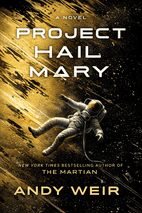
Project Hail Mary by Andy Weir Book Cover

5 Main Takeaways from Project Hail Mary

Collaboration across differences unlocks solutions impossible alone.

Ryland Grace and Rocky, an alien from Erid, overcome language and biological barriers to work together. Their combined skills lead to discovering Taumoeba, a predator for Astrophage, saving both their worlds, showing that diverse perspectives foster innovation.

Scientific curiosity and adaptability are keys to survival.

Grace uses his knowledge as a scientist to understand Astrophage, navigate first contact, and breed Taumoeba. For example, he decodes Rocky's base-six system and develops a translation program, emphasizing that continuous learning and flexibility are crucial in crisis.

True leadership involves sacrifice and putting others first.

Both Grace and Rocky offer to sacrifice themselves for each other's missions. Rocky gives fuel to Grace, and Grace considers dying to ensure Rocky's success, highlighting that effective leaders prioritize the greater good over personal safety.

Isolation can be overcome by forging deep, meaningful connections.

Grace, the sole survivor, finds purpose and companionship in Rocky, another sole survivor. Their bond helps them cope with loneliness and drives them to succeed, teaching that even in isolation, building relationships is essential for resilience.

Hope and perseverance turn catastrophic failures into successes.

Despite multiple setbacks like fuel loss and Taumoeba breaches, Grace and Rocky persist. They evolve Taumoeba to resist nitrogen and fix fuel issues, demonstrating that maintaining hope and iterating on solutions can overcome seemingly insurmountable obstacles.

Executive Analysis

The five takeaways collectively form a narrative that human ingenuity, when coupled with cross-cultural cooperation, can address global crises. Grace and Rocky's journey from strangers to partners exemplifies how shared goals bridge divides, while their scientific method turns failures into stepping stones. The book posits that survival hinges not on individual heroism but on collaborative problem-solving and ethical sacrifice.

"Project Hail Mary" matters as a modern science fiction tale that grounds interstellar adventure in realistic science and human emotion. It offers readers a blueprint for resilience, showing how curiosity and empathy can navigate unknown challenges. In the genre, it stands out for its optimistic view of first contact and its celebration of scientific literacy as a tool for salvation.

Chapter-by-Chapter Key Takeaways

Chapter 2 (Chapter 2)

  • The pendulum experiment proves they are not on Earth or anywhere known in the solar system.

  • A recovered memory reveals the catastrophic secret that the sun is dying, with lost energy appearing at Venus as the alien Petrova line.

  • They are the sole survivor of a spacecraft crew, preserved in suspended animation while the others perished.

  • Another memory confirms the discovery of alien life within the Petrova line particles.

  • They remember their own identity: they are a schoolteacher, which provides a critical anchor of relief and self-knowledge.

Try this: Anchor yourself in your core identity when faced with overwhelming uncertainty.

Chapter 4 (Chapter 4)

  • Grace discovers Astrophage is mostly water, invalidating his life's work on alien biochemistry.

  • A classroom moment makes him viscerally understand his students will suffer the full Astrophage crisis, defining his motivation.

  • He convinces Stratt to let him continue his research by appealing to his duty to protect his students.

  • Aboard the Hail Mary, he calculates his fuel is only sufficient for about forty days of travel.

  • He deduces the four "beetle" probes are for sending data home, revealing the mission is a one-way, suicidal journey.

Try this: Connect your work to a deeper purpose to find resilience when resources are scarce.

Chapter 5 (Chapter 5)

  • Grace discovers Astrophage navigation is based on the infrared signature of carbon dioxide and accidentally triggers their reproduction.

  • He deduces the complete life-cycle: energy collection on the sun, migration to Venus to breed, and return.

  • His discovery prompts an extreme response; he is rushed to a Chinese aircraft carrier to brief a global coalition.

  • The briefing confirms mass breeding is possible, shifting the mood to hope.

  • New data reveals Astrophage is infecting nearby stars, but Tau Ceti remains untouched, defining the mission's target.

  • Dimitri reveals Astrophage perfectly converts energy to mass, providing the physics for interstellar travel.

  • Ryland learns he must stay on the carrier to design the fuel breeder, passing a point of no return.

Try this: Stay open to serendipitous findings and be ready to adapt your plans fundamentally.

Chapter 6 (Chapter 6)

  • Zero-Gravity Ordeal: Grace suffers a violent panic attack when gravity cuts off but regains control through willpower.

  • Critical Discovery: Using the Petrovascope, Grace confirms a Petrova line at Tau Ceti, proving Astrophage is present and validating the mission.

  • First Contact: After observing mysterious light flashes, Grace discovers an alien spacecraft parked near the Hail Mary, changing his mission and human history forever.

Try this: Master your immediate reactions to access hidden possibilities in crisis.

Chapter 8 (Chapter 7)

  • Message Decoded: The alien device is a star map showing the aliens are from the 40 Eridani system, which also has an Astrophage Petrova line.

  • First Contact Thesis: Ryland concludes the "Eridians" are likely allies on a parallel mission to save their star.

  • Human Ingenuity: Ryland modifies the star map with solder and wax to show Earth’s sun and its Petrova line, communicating humanity’s plight.

  • Successful Exchange: After returning the device, the aliens respond with a precise delivery.

  • The Invitation: The aliens’ final message is a model of the two ships connected by a passageway, proposing a direct, physical meeting.

Try this: Employ universal symbols and creativity to establish common ground with others.

Chapter 9 (Chapter 8)

  • Ryland decides he must risk first contact with the Eridians, hoping their knowledge of Astrophage can save Earth.

  • He initiates contact by giving them a sample of his hull, and the aliens respond by building a physical tunnel between the two ships.

  • A memory of testing the spin drive underscores the incredible and dangerous power contained within the Hail Mary.

  • Ryland's first direct encounter with the aliens is a warm, hexagonal wall blocking the tunnel, which he studies until three knocks announce a presence on the other side.

Try this: Demonstrate goodwill through small, tangible actions to foster collaboration.

Chapter 10 (Chapter 9)

  • Scientific Breakthrough: Ryland deciphers Rocky's clock, deducing that Eridians use a base-six numerical system and read from left to right.

  • Shared Constant: By timing the clock, Ryland establishes that one Eridian second equals 2.366 Earth seconds.

  • Character Dynamics: Rocky exhibits patience and curiosity, choosing to stay nearby even while bored.

  • Strategic Realization: Ryland understands that directly asking about Astrophage is impossible without a shared scientific vocabulary.

  • Emotional State: A cycle of intense excitement and crushing fatigue underscores Ryland's experience of first contact.

Try this: Start with basic, measurable truths to decode complex systems or cultures.

Chapter 11 (Chapter 10)

  • Rocky builds a square airlock, allowing the first safe exchange of objects between the two ships.

  • Grace discovers Eridians "see" using advanced sonar, not eyesight, a fundamental shift in understanding.

  • A flashback shows Eva Stratt using legal immunity and military power to crush a lawsuit against her project.

  • Grace begins a systematic effort to decode Rocky's language using sound analysis software.

  • He leaves a physical, sonar-readable message for Rocky before finally getting some much-needed sleep.

Try this: Utilize available tools to translate and integrate diverse modes of perception.

Chapter 12 (Chapter 11)

  • Grace and Rocky achieve a major breakthrough by developing a computer-assisted, real-time translation system.

  • They confirm their shared mission: both are trying to stop the Astrophage from destroying their home stars.

  • Rocky reveals he is the sole survivor of his crew, and Grace shares that he is as well.

  • This shared tragedy of being the only ones left forges a deep, essential bond between them.

  • The chapter establishes key facts about Eridian biology and culture, including perfect memory and the custom of observed sleep.

Try this: Acknowledge common hardships to build deep, trusting relationships.

Chapter 14 (Chapter 13)

  • Stratt learns Earth has only 19 years before catastrophic famine and forces a desperate, destructive plan to buy time.

  • Grace and Rocky discover Astrophage can shield against radiation and theorize their species may share a common ancestor via panspermia.

  • On Earth, Stratt and Leclerc execute the Antarctic Gambit, using nuclear bombs to trigger a greenhouse effect, a morally heavy choice to save humanity.

  • Grace learns Eridians have a completely inorganic, steam-powered biology, and they bond over their different primary senses: sight and sound.

  • Rocky builds a life-support sphere, allowing him to visit Grace's ship, marking a huge step forward in their partnership.

Try this: Don't shy from extreme measures when they are the only way to preserve future options.

Chapter 15 (Chapter 14)

  • Rocky and Grace are now fully integrated partners, moving Rocky's equipment onto the Hail Mary to work together.

  • Rocky is not a scientist but a repairer, and he failed to collect an Astrophage sample, which is why he needs Grace's help.

  • Rocky has been alone at Tau Ceti for 46 Earth years and is 291 years old, revealing Eridians have extremely long lifespans.

  • The flashback shows the intense selection process for the Hail Mary mission, based on a rare genetic resistance to coma technology.

  • Their new plan involves detaching the tunnel and spinning the Hail Mary to restore its gravity-based lab functionality.

Try this: Co-locate and share resources to enhance collaborative problem-solving.

Chapter 16 (Chapter 15)

  • Rocky learns Earth is dying even faster than Erid and makes an incredible offer: he will give Grace the fuel needed to get home.

  • In a flashback, Grace discovers Stratt hid the truth—he was chosen for the mission because of a genetic resistance to coma, not just his scientific expertise.

  • Rocky’s biology forces him into a deep, involuntary sleep after eating, giving Grace a private window to study him.

  • Grace secretly begins documenting Rocky’s alien physiology, starting with a frank note about the bizarre eating process.

  • The chapter shows the deepening bond and sacrifice between Grace and Rocky, while also highlighting Grace’s lingering sense of betrayal by Stratt.

Try this: Record observations objectively to navigate ethical dilemmas and personal feelings.

Chapter 17 (Chapter 16)

  • Adrian is the homeworld of Astrophage, and it hosts a complete ecosystem of space-faring microscopic life.

  • This ecosystem includes natural predators that consume Astrophage, creating a balanced population and explaining the anomalous methane in the atmosphere.

  • Grace and Rocky now have a viable solution: capture one of these predators and introduce it to infected stars, where it could breed and control the Astrophage threat.

  • The mission shifts from investigation to an active quest for a biological solution, filling both characters with renewed hope.

Try this: Seek inspiration from nature's existing checks and balances when designing interventions.

Chapter 18 (Chapter 17)

  • Grace and Rocky discover Astrophage breeds in dense clouds at 91.2 km on Adrian, but their ship can't orbit that low, forcing them to devise a risky chain-and-hover plan.

  • Rocky reveals his mission succeeded by accident; his people used only Newtonian physics, overestimated fuel needs, and didn't understand relativity at all.

  • Stratt views Astrophage as a gift of limitless future energy, while Grace sees only the immediate extinction crisis it's causing.

  • Stratt exhibits an extreme, unshakable optimism about human survival, dismissing Grace's dire predictions of global famine.

Try this: Re-examine foundational beliefs to identify overlooked efficiencies.

Chapter 19 (Chapter 18)

  • A hull breach, caused by their own engine heat, lets Astrophage fuel escape and creates uncontrolled thrust.

  • To stop the thrust, Grace jettisons fuel bays, which sends the ship into a deadly, crushing spin.

  • Rocky risks everything by entering the human atmosphere to cut Grace free from his failed seat.

  • Rocky collapses from the heat and exposure, seemingly dead after telling Grace to save their worlds.

  • Grace survives, but is left alone with a broken ship and the possible loss of his only ally.

Try this: Anticipate chain reactions and secure key components to prevent total collapse.

Chapter 20 (Chapter 19)

  • Ryland manually reduces the ship's gravity and drags Rocky to safety, suffering severe chemical burns in the process.

  • He builds and operates a remote drill to breach Rocky's carapace, believing soot is clogging his friend's radiator organ.

  • When the internal camera fails, he successfully clears the soot by operating the cleaning jet blind, using only clues from the airlock window.

  • His desperate, painful efforts are driven entirely by the need to save Rocky, prioritizing action over perfect safety.

Try this: Act decisively in emergencies, even with incomplete information, to save others.

Chapter 21 (Chapter 20)

  • Grace conducts a deeply unsettling death-planning meeting with the Hail Mary astronauts, revealing their chosen methods.

  • An explosion at Baikonur, caused by an Astrophage accident, kills specialists DuBois and Shapiro, forcing a last-minute replacement search.

  • Grace isolates and names Taumoeba, a microbe that preys on and kills Astrophage.

  • Rocky and Grace successfully breed a massive, hardy population of Taumoeba for their plan.

  • The chapter ends on a critical cliffhanger: the ship's total power failure halts their first major experiment to test Taumoeba on other planets.

Try this: Conduct frank conversations about failure to build resilience and clarity.

Chapter 22 (Chapter 21)

  • The Hail Mary’s fuel is completely destroyed by a Taumoeba infestation, stranding the ship.

  • Their only hope is the untouched

Try this: Quickly quarantine new variables to protect essential assets from unintended consequences.

Chapter 23 (Chapter 22)

  • The research center explosion was caused by a simple but catastrophic measurement error with Astrophage.

  • Grace was Stratt's secret backup plan all along, chosen for his scientific knowledge and unique biology.

  • When Grace refuses to volunteer for the mission, Stratt has him kidnapped and drugged to force his compliance.

  • In the present timeline, Grace and Rocky suffer a major failure when Taumoeba proves useless for saving Venus or Threeworld.

Try this: Weigh ethical compromises carefully when forced to make unilateral decisions for collective survival.

Chapter 24 (Chapter 23)

  • Grace's true, panicked memory of the launch shatters his heroic self-image and binds him to the mission.

  • Nitrogen, harmless to Earth and Eridian life, is discovered to be the poison killing Taumoeba on Venus and Threeworld.

  • Grace proposes using selective breeding, like antibiotic resistance, to evolve a nitrogen-resistant Taumoeba strain.

  • A dangerous, improvised ship spin provides immediate gravity, allowing Grace to conduct his crucial experiments.

  • The early breeding program shows promising results, and the pair successfully locate Rocky's ship for a final approach.

Try this: Apply evolutionary principles like selective breeding to adapt tools to unique constraints.

Chapter 25 (Chapter 24)

  • The breakthrough strain, Taumoeba-82.5, can survive in high nitrogen, saving both Rocky's world and Earth.

  • Grace's fuel crisis is solved by Rocky, who builds and delivers three new fuel tanks from scrap metal.

  • Grace and Rocky formally celebrate their success and openly acknowledge their deep friendship.

  • They exchange critical gifts: a laptop of human knowledge for Grace, and the promise of xenonite samples for Earth.

  • The chapter ends with their emotional, permanent farewell as they begin their separate journeys home.

Try this: Formalize successes and share core learnings to multiply impact beyond immediate collaboration.

Chapter 26 (Chapter 25)

  • Stratt believes the true Astrophage disaster will cause global war, famine, and collapse, far worse than initial estimates.

  • Grace's solo voyage home is defined by loneliness, routine, and clinging to the distant sight of Rocky's ship.

  • He creates backup "beetle" probes to carry Taumoeba to Earth if his ship fails.

  • The chapter's climax reveals a second, catastrophic Taumoeba breach, threatening the entire mission.

Try this: Build multiple layers of backup to ensure critical outcomes survive unexpected disasters.

Chapter 27 (Chapter 26)

  • A single-point failure, like a microscopic leak, can threaten an entire mission and requires immediate, decisive action.

  • Crisis management sometimes means separating immediate engineering solutions from long-term scientific questions.

  • Total sterilization of a complex environment may require extreme, dangerous measures like a complete atmospheric purge.

  • After a major breach, every potential source of contamination must be physically isolated and tested.

  • Protecting the mission's core assets, like the main fuel supply, can require sacrificing other resources.

Try this: Implement thorough, albeit drastic, cleansing protocols after a breach to ensure safety.

Chapter 28 (Chapter 27)

  • Taumoeba-82.5 evolved an unintended ability to move through microscopic gaps in xenonite.

  • This evolution was a direct result of the breeding program's nitrogen exposure, which pressured the microbes to find shelter inside the xenonite walls.

  • Grace's own fuel farm crisis can be fixed by switching to metal containers.

  • Rocky's entire ship, made of xenonite, is now at catastrophic risk from the same permeable Taumoeba he is carrying.

Try this: Continuously test for emergent properties in modified systems to avoid new vulnerabilities.

Chapter 29 (Chapter 28)

  • Successful Reunion: Grace finds and docks with the derelict Blip-A, reuniting with a joyful but injured Rocky.

  • The Sacrifice Revealed: Grace discloses her plan to die after delivering Rocky to Erid, having accepted starvation as the mission's cost.

  • Rocky's Devotion: Rocky is heartbroken and refuses her fate, first offering to send her home, then proposing to sacrifice his own rescue.

  • A Lifeline Discovered: Rocky proposes Grace eat the non-toxic, protein-rich Taumoeba from his fuel tanks as a food source.

  • Renewed Hope: The possibility of a viable food source reignites Grace's hope for survival, transforming a tragic sacrifice into a potential joint homecoming.

  • Deepened Friendship: The emotional confrontation underscores their profound bond, culminating in a celebratory, corrected fist-bump.

Try this: Seek out collaborative partners when isolated; shared burdens are lighter.

Chapter 30 (Chapter 29)

  • Earth's sun is back to normal brightness, confirming the Hail Mary mission saved humanity.

  • Grace chooses to stay on Erid rather than attempt the long, lonely journey back to Earth.

  • His friendship with Rocky remains a central pillar of his life.

  • Grace finds his purpose as a teacher, educating young Eridians.

Try this: Embrace unexpected homes and roles to create meaningful impact where you are.

Continue Exploring