Ordinary Wife Key Takeaways
by Gregg Olsen
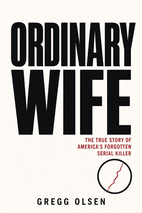
5 Main Takeaways from Ordinary Wife
Pattern Is Not Proof, Though Repetition Demands Scrutiny
Repetition can expose a hidden design, but repetition by itself never proves one. Lyda’s three husbands, a child, and several insured men create a pattern, yet the book keeps returning to autopsies, arsenic distribution, and dates because suspicion is not the same as evidence.
Reputation and Spectacle Often Outrun the Actual Evidence
The trial and the newspapers often did more with Lyda’s appearance, silence, and nickname than with the record. The case shows how public certainty about a woman’s guilt can crystallize before the legal facts are settled.
Ordinary Domestic Access Makes Poisoning Hard to See
Lyda’s alleged methods lived inside ordinary domestic life: sickroom control, flypaper soaked in water, apple pie, and insurance paperwork. The book’s warning is that harm can hide in routine access and familiar objects rather than in dramatic violence.
Institutions Fail Through Personal Exceptions and Weak Rules
Personal trust and small exceptions—chauffeur duty, outings, work details, visitor access—created the conditions for Lyda’s escape and scandal. Reform and security both depend on rules, documentation, and limits on individual favor, not only good intentions.
The Retold Legend Often Outlasts the Courtroom Record
After the verdict, the Bluebeard story and the glamorous poisoner image kept circulating with their own momentum. Olsen stresses that unresolved threads and marketable legends can outlive the courtroom record, so readers should ask which version was built for retelling.
Executive Analysis
Olsen’s central argument is that Lyda Southard’s case became a legend because ordinary facts—domestic control of sickrooms, arsenic-laced flypaper, insurance paperwork, repeated marriages, and small institutional exceptions—were easier to package as a Bluebeard story than to prove as a coherent legal case. The five takeaways connect as a chain: repetition creates suspicion, but suspicion needs physical and documentary corroboration; reputation and spectacle then fill the gaps, while domestic familiarity hides means and institutions fail through personal trust. The book therefore reads the case less as a simple whodunit than as a study in how evidence, narrative, and public appetite interact.
This matters because it teaches readers to separate pattern, proof, and story before judging a person or a claim. In the true-crime genre, Ordinary Wife is a corrective to sensational Bluebeard narratives: it respects the unresolved record, shows how arsenic and insurance can be made ordinary, and warns that the most retold version of a case is often not the one established in court.
Chapter-by-Chapter Key Takeaways
Prologue (Prologue)
The paperwork after a death is full of guesses: a doctor guessing at a husband, an address standing in for a home, a stone choosing a name.
Silence in public doesn't mean a quiet life; an unnoticed death can still spark poison rumors and a nickname.
How a body looks can start rumors as easily as it can explain an illness, turning baldness and penciled eyebrows into a verdict.
The name on a grave is the one the survivors chose, which is how Anna rather than Lyda ends up in the cemetery record.
Try this: Question official records for guesswork, silence, and survivor-chosen names, because paperwork can create a false sense of certainty. Treat rumors sparked by appearance or quiet as leads to verify, not conclusions.
Chapter 1 (Chapter 1)
Perrine's dam turned dry sagebrush into a farm valley so rich it looked like paradise.
Lyda took charge of Edward's money right away and set up life insurance with premiums she said she'd pay herself.
She ordered a Cadillac before the wedding but couldn't cover the $500 deposit, so Haight advanced the cash against a mortgage.
Sixteen days into the marriage, Edward was vomiting and doubled over with belly pain, while his bride was setting out saucers of water-soaked flypaper the cook knew was pesticide.
Lyda told Carrie Howe she didn't love Edward the way she should and wasn't sure she could settle down. Howe carried that remark with her for years.
Try this: Track sudden changes in money control, insurance, and household authority alongside unexplained illness, since Lyda’s early marriage bundled all three. Separate a caregiver’s stated concern from actual access to care.
Chapter 2 (Chapter 2)
Treat Ed's failure at routine repairs as the first reliable signal of illness, more telling than the temperature Lyda reported.
Lyda's changing explanations for the sickness, combined with her concern about how the household would appear, made the response a matter of reputation as much as care.
The claim that hospitalization was unaffordable collapses against what Granville knew of Ed's wages and the pending land sale, leaving Lyda's refusal as an exercise of household authority.
The harm lay in the interval between the first doctor's visit and the third, when Ed was finally admitted; access to medical advice was never the obstacle.
Try this: Measure illness by lost function and changed explanations, not only reported symptoms, because Ed’s failed repairs were a clearer warning than temperature claims. Document the interval between advice and treatment to see whether access or authority blocked care.
Chapter 3 (Chapter 3)
Lyda's account of what Martha Garrett said is disputed, not a settled fact.
Dr. Alexander suspected poison while Ed was still alive, and no toxicology tests were ever run.
The bedside signs, the blood tests, and two autopsies never added up to typhoid, so Ed's death is still unexplained.
After the funeral, Lyda avoided the question of the insurance, asked Dr. Coughlin to publish a denial, and talked about leaving if investigators found anything.
Try this: Preserve specimens and challenge convenient diagnoses early, since suspected poison went untested and typhoid never fit the bedside signs. After a suspicious death, flag avoidance of insurance questions and attempts to control publicity.
Chapter 4 (Chapter 4)
The 1915 deaths carry more weight taken together than as three separate diagnoses: whatever killed Edward, Robert and Lorraine, the one constant was that Lyda came through while the people around her did not.
Typhoid was a serious rival explanation rather than a convenient one, since a disease spread by contaminated water or contact could account for multiple deaths in a single household without requiring anyone to have caused them.
Arsenic in the soil at Blue Lakes Ranch shows how far a suggestive finding sits from proof, because ordinary industrial and environmental sources leave the same trace.
The case reopened only once someone with laboratory training asked a question the earlier inquiry had never put, after doctors and the prosecutor had already settled the matter.
Try this: Compare connected deaths as a cluster while still testing rival explanations like typhoid or soil arsenic, because a pattern alone is not proof. Bring in lab-trained questions before closing an inquiry on reputation or diagnosis.
Chapter 5 (Chapter 5)
Three husbands and a child died one after another in a short span, and each death had its own circumstances.
People in Twin Falls and in the newspapers treated the story as proven fact long before anyone tested it.
The deputy's patience and willingness to hear people out without judgment moved the case further than the untested organs ever did.
The flypaper purchases, the insurance application, and the pattern of recovery followed by collapse around Lyda's visits all fit together, even without a toxicology report.
An election and a big-city paper brought resources to an unsolved death, but they also hardened public opinion against Lyda before the facts were in.
Try this: Withhold certainty until circumstantial pieces are tested, because a town and newspapers treated suspicion as fact before toxicology. Listen patiently to ordinary witnesses and map purchases, insurance, and recovery-collapse timing.
Chapter 6 (Chapter 6)
Lyda decided early that she would not live her mother's exhausted, impoverished life, and she held to that.
The family kept picking up and starting over, and Lyda later did the same with people as easily as with places.
Her stubbornness and charm worked together: she pushed back openly when she could count on spoiling, and she persuaded when she could not.
She named no plan and trusted no one, so people around her sensed her resolve but could not check it or steer it.
The first romantic prospect to appear after she committed to independence was something to weigh as a way out, not a destiny to accept.
Try this: Trace how early scarcity, charm, and stubbornness shape decisions about relationships and escape routes. Ask whether a new prospect is being weighed as a way out rather than a genuine commitment.
Chapter 7 (Chapter 7)
Bud turned to Lyda only after Blanche married another man, and Lyda’s stated hatred of Edward was already on record before either brother sickened.
The joint policy paid Lyda after Edward died, and she stood to collect again after Bud.
The matching stomach illnesses six weeks apart look like one pattern, not four separate accidents blamed on typhoid, sardines, sweet milk, and poisoned greens.
Ormsby had to dig into motive and background because charm and ready explanations could tear down even solid arsenic evidence.
Lyda packed mourning clothes while Edward was hospitalized and kept changing her story afterward, which looks like planning, not simple grief.
Try this: Cross-check motive, timing, and repeated symptoms across households instead of accepting separate excuses like sardines or typhoid. Notice preparations for mourning or property liquidation that precede an expected death.
Chapter 8 (Chapter 8)
Treat the same symptom cluster recurring across separate households as the chapter's central finding: flu, food poisoning and arsenic can each account for one death, but none of them accounts for the same death three times over.
Because arsenic survives in tissue, bone, hair and nails, the older Montana graves remained usable evidence long after burial, which is what made the earlier husbands investigable at all.
Read the card of thanks and the auction notice together as the earliest clear view of Lyda's rhythm: grief and the liquidation of property handled inside a single fortnight.
Weigh the nurse's and neighbor's testimony as a category of proof no exhumation can supply, since conduct in a sickroom leaves no residue in bone.
Treat Ormsby's trip east as groundwork rather than detour, because the Twin Falls case required a picture of Lyda's life before Idaho, and the object she abandoned in Montana is what physically ties the dead men to one another.
Try this: Collect physical evidence that outlasts burial and pair it with neighbor and nurse observations of sickroom conduct. Link cases across jurisdictions through abandoned objects, documents, and the same symptom cluster.
Chapter 9 (Chapter 9)
The same interest in insured men, the same disputed policy status, and the same payout follow Lyda from household to household.
The poisoned flypaper found hidden in the Billings cellar, together with the stock kept in the McHaffie kitchen, put the means of killing within her reach in more than one home and make innocent storage hard to explain.
Her own admissions about Bud and Gordon, and her threat against Gordon after he struck her, show intent that the physical evidence cannot establish on its own.
Harlan Lewis's policy payout and an illness resembling the earlier cases widen the scope beyond the McHaffie household, so coincidence becomes a weaker explanation than a repeated design.
Her boast that her father talked his way out of the Dooley inquiry shows she knew suspicious deaths could be deflected, which makes the later deaths look like a learned method rather than a naive accident.
Try this: Map means, motive, and admissions together, including hidden poison stores, policy payouts, and threats after conflict. Treat bragging about deflecting an old inquiry as a warning about learned concealment.
Chapter 10 (Chapter 10)
The case against Lyda was built piece by piece from ordinary evidence, not one big reveal: insurance policies, a neighbor-by-neighbor canvass, and her behavior after Ed Meyer's funeral all pointed the same way.
She was terrified of exhumation. She didn't want anyone reading what the bodies could tell, and her fear made a private suspicion public.
Charles King denied her proposal, but people in Twin Falls believed it anyway. They judged her by her reputation, not by real evidence.
Lyda's departure meant no one needed her permission, and her remark to Louise gave them their reason. Her attempt to control the story only helped justify the digging.
Try this: Build a case from mundane records and repeated behavior, not one dramatic reveal, as neighbors and policies did. Read fear of exhumation and attempts to control the story as signals that the body may contradict the narrative.
Chapter 11 (Chapter 11)
The exhumations gave investigators physical proof: organs from the Idaho and Missouri bodies contained arsenic, and the poison also showed up in Meyer's remains.
The three tests could detect arsenic in decomposed tissue, but on their own they could not show how much was given or when.
The insurance record made Ed and Bud the profitable deaths and Lorraine the exception, with $4,500 paid for the brothers and nothing for the child.
William Trueblood tried to block the Missouri exhumations, showing that resistance to the inquiry came from inside the family and was aimed at keeping the dead buried.
Try this: Corroborate suspicion with physical tests but state their limits about dose and timing. Follow insurance payouts and family resistance to exhumation, since money and obstruction can clarify motive.
Chapter 12 (Chapter 12)
The Hardin death is best understood as a cumulative case: the beneficiary controlled the sickroom, the victim’s gastrointestinal collapse did not fit the surrounding flu cases, and the death certificate split the difference between poisoning and disease.
The documentary trail is not incidental. A secret marriage, a signature used after it was no longer valid, General Delivery addresses, and a fabricated job on company letterhead show concealment built into the ordinary mechanics of fraud.
When a deadly illness is already circulating, a poisoning that mimics it can pass through the medical system, especially if the person providing care decides what the doctor sees and hears.
The recurring pattern across the chapter is financial: insurance payouts, invented employment, and a monument paid for with someone else’s money tie the death, the remarriage, and the paperwork into one scheme.
Try this: Verify paperwork for secret marriages, expired signatures, invented jobs, and delivery addresses, because concealment often hides in ordinary documents. Compare clinical signs and financial motives when a poisoning mimics a circulating disease.
Chapter 13 (Chapter 13)
The exhumations turn scattered suspicion into a multi-state pattern: arsenic in every tested set of remains makes separate accidental explanations for each death implausible.
Lorraine's arsenic-free body is the decisive counter to the leaching defense; contaminated soil or water would not have spared only her.
The method was domestic and repeatable: poisoned flypaper soaked in water, the liquid stirred into food, and apple pie as the dependable vehicle.
Lyda's flight after Ed Meyer's burial, together with her parents' convenient California search, makes the family's protection part of the case rather than a neutral detail.
The murder complaint and Ormsby's pursuit follow from chemistry and flight together; the case no longer depends on eyewitnesses to the poisonings.
Try this: Use an arsenic-free control case like Lorraine to test contamination claims, then trace the domestic method through flypaper and food. Read flight and family protection as part of the pattern, not neutral noise.
Chapter 14 (Chapter 14)
Treat Lyda’s arrival in Los Angeles as a continuation of her past rather than an escape from it: she carried the last of Harlan Lewis’s insurance money, a widow’s status, and unresolved questions about earlier husbands into a city built for transient anonymity.
Read the New Rosslyn and the Monterey Room as a single system: Prohibition made secrecy architectural, and the hotel’s tunnel and hidden bar rewarded people who could move easily between respectable public life and spaces known only to insiders.
Recognize a consistent method in the false name and trimmed age she gave Paul Southard: when scrutiny closes in, she replaces the record rather than defending it.
See the rushed marriage and Paul’s pending transfer to Pearl Harbor as a logistical opening as much as a romantic one; a new husband and a distant posting supplied both cover and a route out of Los Angeles.
Try this: Compare a reinvention with the past it continues, especially false names, trimmed ages, and rushed marriages tied to transfers. Treat secret spaces and aliases as methods of moving between respectability and access.
Chapter 16 (Chapter 16)
Lyda’s hospital stay in Honolulu bought her more time while officials waited to bring her back.
Sheriff Sherman told the papers how she spent money and bought a car, making her look guilty before any courtroom could weigh the evidence.
The Truebloods would not pay for her defense, and that refusal showed exactly what the family thought of her.
The Ormsbys turned a criminal transport into a comfortable cruise, with Nellie enjoying the voyage and Val attended by a steward.
After the interview reached Honolulu, the fight was no longer just about evidence. It was about her health, her reputation, and whether they could get her back at all.
Try this: Separate medical delay and pretrial publicity from the evidence, because hospital stays and press leaks shaped Lyda’s image. Notice when family refusal to fund a defense reveals their private judgment.
Chapter 18 (Chapter 18)
The first reports of Lyda as a silent mystery were already incomplete: her single retort that poisoning had to be proved shows she would contest the charge when it suited her, even after saying nothing on the crossing.
Her preference for a jail cell over a hotel room reveals that confinement looked safer to her than the Ormsbys' chaperoned sightseeing, because a cell narrowed who could shape her public image.
The San Francisco tour worked as pretrial custody dressed as hospitality: it kept her occupied and visible while preparing her for Twin Falls, and her cooperation supplied the required appearance without yielding any account of herself.
The vaudeville sketch about extracting a murderer's confession left her unshaken, while Lorraine's name alone drew tears, marking the daughter as the point where her controlled public surface gave way.
Try this: Read silence as tactical when a single retort reveals readiness to contest proof. Treat chaperoned tours and jail preferences as custody arrangements that manage public image.
Chapter 19 (Chapter 19)
The crowds around the case showed a town defending its image of women as frail helpers—not simply judging one accused poisoner.
Prosecutors built the charged poisoning out of other deaths. The trial became a test of how far evidence of past deaths could go before it punished crimes she wasn't charged with.
The Michigan and Connecticut rulings drew the line: earlier arsenic deaths could show motive and intent only after the charged killing was proven murder.
The typhoid-versus-arsenic fight left the verdict resting on whether repeated deaths in connected families looked like a plan or a coincidence.
Try this: Separate admissible pattern evidence from community prejudice, since earlier deaths could show intent only after the charged murder was proven. Watch how gendered expectations of frail womanhood shape courtroom crowds.
Chapter 20 (Chapter 20)
Treat the prosecution's single count as a deliberate calculation: a charge the state could win mattered more than a full accounting of the other deaths.
Read the crowds, the telegraph traffic and the endless commentary on her looks as proof that the trial ran as public spectacle, with the defendant's appearance doing work that argument was supposed to do.
Weigh the Montana prosecutor's warning as a sign that the proceeding answered to several jurisdictions at once, each waiting to see whether Idaho would act first.
Count the Salvation Army captain's refusal to hold her secret as a measure of how little room the machinery left for confession outside the legal channel.
See the all-male jury and her confinement to lawyers, husband and parents as boundaries drawn around who was permitted to speak and who was permitted to judge.
Try this: Analyze charging decisions as strategy: one winnable count often matters more than a full accounting. Track who is allowed to speak, judge, and generate publicity around the trial.
Chapter 21 (Chapter 21)
Timing was everything for the prosecution. A will signed the day after the wedding, and an insurance policy Lyda first denied, tied the money directly to the poisoning charge.
The ranch witnesses gave the strongest circumstantial case. Hidden flypaper, an earlier foreman's death, Ed's violent symptoms, and Lyda's reluctance to call a doctor all pointed one way.
The orchard-spray defense failed on dates. The arsenate was applied well before Ed got sick, and it could not explain the poison kept inside the house.
The family testimony showed Lyda controlling the story as well as the money. She floated ptomaine poisoning, hid the policy then produced it, asked for the premium receipt back, and proposed splitting the payout.
The earlier husbands were never charged. Their deaths added suspicion but proved nothing about Ed.
Try this: Build circumstantial cases from dated purchases, hidden means, and inconsistent family testimony rather than later rationalizations. Test alibi defenses like orchard spray against the timing of illness and indoor poison access.
Chapter 22 (Chapter 22)
The medical evidence points to arsenic poisoning, not typhoid. The late pulse and blood pressure failure, the intestinal bleeding, and the clear mind all fit poisoning. The autopsy found no typhoid, and the defense conceded the Widal test was generally accurate.
Lyda had free access to Meyer's room, and she said death was already in his face. Together, that shows she had the chance to poison him and seemed to know what was coming.
The flypaper sale matters because the amount was abnormal and the date came before Meyer got sick. It ties a source of arsenic to the household ahead of the poisoning.
The packed galleries and locked doors made the trial a public event. But the case rested on symptoms at the bedside and a druggist's record, not on the crowd.
Try this: Weigh bedside clinical signs, autopsy findings, and purchase records over crowd spectacle and reputation. Establish access and foreknowledge together when evaluating opportunity to poison.
Chapter 23 (Chapter 23)
The Widal test can't stand alone, but it can support a typhoid diagnosis when paired with the temperature record and other clinical findings.
The way arsenic spread through Meyer's organs shows it entered while he was alive, not from soil, spray or the coffin after death.
The amount in his body was far beyond what accident or ordinary exposure could explain.
The evidence points to two doses: a smaller one before the hospital and a deadly one when recovery began.
Whether to charge the other men was still an open question, not something the medical testimony forced.
Try this: Read tests in context: Widal can support typhoid only with clinical records, while arsenic distribution can distinguish live exposure. Separate accidental exposure from deliberate dosing by amount and timing.
Chapter 24 (Chapter 24)
If the jury hears about Lyda's other marriages, they can weigh a pattern of insured deaths. If not, the verdict rests on Meyer's body alone.
The arsenic testing held up and found only arsenic, no lead or mercury, which left deliberate poisoning as the explanation for Meyer's death.
Meyer was warned and ignored it, which makes his death look less like a private household tragedy and more like a risk he was told about and kept taking.
Lyda packed suitcases and made flight plans, and she sat indifferent in court, which reads as a guilty woman's behavior.
The Cheesman story is still unproven, but the unclaimed trunks and paycheck give the prosecution a concrete image of a man disappearing after crossing Lyda's path.
Try this: Limit prior-act evidence to what the law allows, but compare pattern, opportunity, and flight when assessing the whole case. Corroborate dramatic disappearance stories with concrete objects and records.
Chapter 25 (Chapter 25)
The real issue was the pattern of deaths, not any single poisoning. Once Judge Babcock admitted the Dooley, McHaffie and Lewis deaths, Lyda's account of Meyer had to explain three other corpses as well.
Lyda's defenses worked one death at a time. Flypaper, potato salad, influenza and bad drinking water each answered a separate charge, and none of them held up for a household where four insured men died.
The medical testimony linking the victims mattered most. Dr. Wernham compared Harlan Lewis's delirium and stomach agony to Meyer's, and he was willing to say the symptoms fit arsenic poisoning. That made separate accidents hard to maintain.
Judge Babcock's one exclusion, the Bud Dooley chemical analysis, shows how little he gave up. The undertaker's inability to rule out arsenic in embalming fluid was a small gap, not a hole in the state's case.
Guthrie turned the insurers into the defense's theory. By promising to prove natural causes and to expose Idaho State Life's reluctance to pay $10,000, he turned a corporate dispute over policies into another explanation for the deaths.
Try this: Test each defense against the whole pattern, because explanations that fit one death often collapse across four insured men. Use medical comparisons and admitted evidence to show where separate accidents stop explaining.
Chapter 26 (Chapter 26)
The defense wanted the deaths to look like a health problem, not a poisoning. It wanted Lyda to look dangerous, not like a killer.
Trueblood's testimony helped and hurt. It gave the jury another explanation besides deliberate poisoning. But it also showed a family already splitting property and insurance money before anyone knew what killed Meyer.
The insurance fight came down to timing. The policy had an earlier date but was issued just before Meyer died. That made the contract look legitimate and suspicious at the same time.
By keeping out the letters about the policy, the court left the jury with a timeline that pointed toward guilt and no full explanation for it.
Try this: Timeline insurance issuance, family property moves, and medical testimony before the cause of death was known. Watch how excluded documents can leave a jury with a guilty-looking gap.
Chapter 27 (Chapter 27)
Treat Lyda's five weeks of silence as a tactical decision rather than passivity: she held back her account until the state had exhausted its witnesses, then made her own recollection the defense's central exhibit.
Her denials were piecemeal by design. She disputed how much flypaper was purchased rather than whether it was used, and supplied a separate explanation for each death, which left the prosecution's larger pattern standing even as she contested individual details.
The cross-examination did more damage than any expert: the aliases on the marriage license and land records, together with the reported talk of an eight-to-ten-thousand-dollar insurance payout, gave the jury a motive her quiet answers never addressed.
Medical opinion canceled itself out, with one physician declaring the cause of Meyer's death unknowable and another naming typhoid; the jury was therefore deciding less about what killed the men than about whether Lyda could be believed.
A defense built on the defendant's own credibility has no second line of retreat, so once her account of the flypaper and the aliases came under question, the argument for doubt had nowhere else to rest.
Try this: Treat a defendant’s long silence and piecemeal denials as a credibility strategy, then test aliases and motive on cross-examination. Build no defense that rests entirely on the defendant’s own story.
Chapter 28 (Chapter 28)
The prosecution's closing did not rest on a single damning fact; it wove motive, method, and repetition into a story where arsenic taken from flypaper connected Southard to one death after another.
The defense sought acquittal by making the state's indirect case look like a blade forged from misfortune and press hostility, with arsenic in embalmed bodies explaining away the most damaging chemistry.
The second-degree verdict was a compromise over punishment, driven by a holdout juror who did not want a woman hanged, and it broke the law.
Southard received ten years to life while maintaining her denials, leaving open whether she truly believed in her innocence or was keeping up a performance, even as Twin Falls residents wished the jury had gone further.
Try this: Distinguish a compromise verdict from proof, since second-degree punishment reflected a holdout’s reluctance to hang a woman. Separate motive-method-repetition storytelling from the hard facts each side can support.
Chapter 29 (Chapter 29)
Lyda refused to blame anyone for her arrest and prosecution, and she presented herself as the one who had been wronged rather than as a defendant who was sorry.
The press complained that her looks had spared her, which showed how much her appearance, not the evidence, drove public doubt about the verdict.
Her prison interview worked like a second trial: she sought public vindication and denied needing mercy.
The women's ward held too few women to give her the female support she said she expected, so she got onlookers instead of allies.
Her late talk of love for her husbands could not outweigh the pattern that had already convinced a jury.
Try this: Separate self-presentation as the wronged party from accountability, especially when press coverage focuses on looks and mercy. Read prison interviews as attempts at public retrial and vindication.
Chapter 30 (Chapter 30)
Lyda's prison routine and decorated cell show a life reduced to chores, cut off from the world she had already lost.
Paul swore in public that he believed her, then filed for divorce almost at once. His loyalty was something he could announce but not keep.
The press said she lacked intelligence because she got caught. That says more about how the era needed to sort female criminals into types than about how clever she was.
The "Bluebeard" label turned a money-driven series of killings into a legend. It made the case about ordinary greed instead of grand passion.
A decade behind bars was effectively permanent for a woman whose life had depended on movement and reinvention.
Try this: Compare public declarations of loyalty with private actions like divorce filings, and treat labels like Bluebeard as distortions of motive. Recognize how a decade in prison can become permanent for someone built on movement.
Chapter 31 (Chapter 31)
Lyda's sewing circle and rose planting were not proof that prison had reformed her. They were preparation for escape.
Warden Thomas believed in second chances, but he also relied on a prisoner as his chauffeur and let a trusted inmate build the trellis. His kindness and his weak security came from the same setup.
The escape came down to everyday access: spare blankets, a hose, cut bars, and work done by a trusted prisoner. Safety depended on personal trust, not on fixed security.
Dave Minton went from pardon to chauffeur to crashing the getaway car. Trusted inmate and accomplice turned out to be the same job.
Try this: Audit security through everyday access and personal trust, because spare blankets, hoses, cut bars, and trusted inmates enabled escape. Do not let kindness replace controls around vehicles, tools, and work details.
Chapter 34 (Chapter 34)
Lyda’s escape became a public test of Warden Thomas’s reach. Mass searches and her photograph sent across the country brought ridicule instead of capture.
The Whitlock household shows her method more clearly than any confession. She came in as a servant, turned his dependence into marriage, and quickly pushed for a survivorship policy. The earlier refusal was the one thing that kept a husband alive.
Minton’s confession gave investigators a route more than a full account. Aliases, the travel corridor, and workplaces led them to Denver. His sister’s warning shows the same network that exposed him also carried word to Lyda.
Even after Whitlock identified her, Lyda turned exposure into cash and another disappearance. Her advantage was timing and motion, not staying hidden.
The Topeka post office lead moved the pursuit toward surveillance. Authorities now counted on her need to communicate rather than on another wide physical search.
Try this: Trace aliases, travel corridors, and communication nodes rather than relying on mass searches, as the post office lead eventually showed. Watch for servants who convert dependence into marriage and survivorship policies.
Chapter 35 (Chapter 35)
A quiet watch on a single post office counter did what a long nationwide search could not.
The arrest closed a case and restored the standing of a prison whose head had been embarrassed within weeks of taking command.
Lyda had run out of reasons to hide, and she seemed relieved to be caught.
Taking the prisoner settled only the pursuit; the investigation then moved outward, toward a Denver grave set to be tested and toward the man accused of helping her vanish.
Try this: Focus surveillance on communication points like a single post office counter, then expand the investigation outward after arrest. Treat a relieved capture as the end of pursuit, not the end of the case.
Chapter 36 (Chapter 36)
The crowd at Boise Depot expected a glamorous killer and got a woman in a turban and glasses.
Her hour-long talk outside the penitentiary was a performance of cooperation that let her shape the record. She thanked reporters, defended Whitlock, and showed real grief only for her daughter.
The escape changed the prison. Iron was replaced with bars resistant to tools, climbing aids were removed, inspections increased, and the women's population dropped to one other prisoner.
A year after her return, the press was still counting suspicious husband deaths. The story had grown bigger than the court case and outlasted the sentence itself.
Try this: Treat post-arrest interviews as image-control performances, then use breaches to reform physical security and supervision. Track how press narratives outlast court outcomes by counting deaths beyond the charge.
Chapter 37 (Chapter 37)
Humane reform in a prison is only as strong as its rules; Rudd's personalized trust in Lyda turned ordinary privileges into evidence of favoritism and cost him his job.
The scandal grew from small lapses in custody, not from a single act of cruelty: a family trip, an unsupervised stop, and a movie outing gave staff and reporters enough to recast leniency as danger.
Lyda's celebrity was an administrative force in its own right, allowing her to move beyond the walls and making every exception around her politically explosive.
Nora Dickard's complaint mattered because it converted staff grievances into a public record, showing how internal prison conflicts can destroy a reformist warden.
Rudd's dismissal and Lyda's demonization reveal that penal scandals are shaped less by the original infraction than by reputation, press attention, and who gets to narrate the breach.
Try this: Institutionalize humane rules instead of personal exceptions, because favors and outings can become scandals under publicity. Convert staff complaints into transparent records before reputation narrates the breach.
Chapter 38 (Chapter 38)
Lyda lost her fight for release because officials remembered the escape and the Idaho Statesman believed she was guilty of more than one killing.
Each time she retold how she left the prison, the story changed. That made reviewers doubt her claims of prejudice and good conduct.
Her mother's illness and her promise of a quiet life never outweighed the political price officials paid for releasing her.
Her release came in the end from an emptied women's ward and a warden's personal belief in her reform. It did not come from anyone admitting the original case was flawed.
Try this: Keep a consistent account when seeking release, because changing escape stories undermines claims of prejudice and reform. Separate political calculations from whether the original case was actually flawed.
Chapter 39 (Chapter 39)
Lyda's release turned on family sponsorship and visible domestic order as much as on elapsed time; her sister's farm gave authorities a setting in which reform could be observed.
The escape that kept her imprisoned for two decades also shaped the terms of her freedom, leaving officials split over whether notoriety alone justified continued confinement.
Her full pardon functioned as a test of obscurity: quiet conduct, local indifference, and avoidance of reporters counted more than any public accounting for the past.
The ban on profiting from her story made her case an early attempt to strip a notorious woman of the commercial value of her own reputation.
Wartime Nyssa supplied the anonymity that prison could not, as defense work, embroidery, animals, and ordinary neighborliness wore down the local appetite for poisoner stories.
Try this: Build reintegration around ordinary routine, family sponsorship, and local anonymity rather than monetizing notoriety. Treat obscurity and quiet conduct as stronger evidence of reform than public vindication.
Epilogue (Epilogue)
A good story can replace the facts. Glamorous nicknames and familiar characters filled in what the record could not.
Suspicion can be reasonable without proving anything. When a poison has ordinary household uses, unexplained deaths alone do not settle whether it was murder.
Repeated marriages and dug-up graves kept the story alive by making coincidence feel like a pattern. But a pattern is not proof.
Lyda’s life as Anna Shaw, and the unresolved Hal Shaw thread, show that a legend can outlast the person and ignore ordinary timelines or closure.
True-crime publishing turns unresolved cases into products that keep selling. The version that survives is often the one built for retelling, not the one established in court.
Try this: Distinguish a compelling narrative from tested fact, especially when nicknames, repeated marriages, and exhumations make coincidence feel like design. Label unresolved threads as unresolved instead of letting a retold legend become the product.