Nobody's Girl Quotes
by Virginia Roberts Giuffre
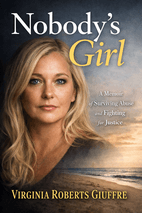
This collection brings together some of the most striking lines from Virginia Roberts Giuffre's memoir. You will find raw confessions, quiet moments of defiance, and questions that echo long after you read them. These are not polished statements. They come from a place of deep pain and hard won clarity. What makes the book so quotable is how it turns private suffering into something universally understood. Each line feels like a small act of reclaiming. Some are sharp and bitter, others tender and searching. Together they trace a journey from silence to voice, from invisibility to mattering.
Top Quotes from Nobody's Girl
“Life is not a private affair. A story and its lessons are only made useful if shared.”
Opening epigraph attributed to Dan Minuman.
It establishes the book's purpose—that sharing personal stories can help others and create change.
“When I was a sex slave, I had no say. I have promised myself that I will never have “no say” again.”
The author reflects on her past powerlessness and her commitment to speaking out.
The stark contrast between victimhood and reclaimed voice resonates deeply with survivors and advocates.
“Once I was silent, but now I have found my voice. This book is a result of that metamorphosis.”
Near the end of the introduction, summarizing her transformation.
It beautifully captures the journey from silence to empowerment, making it a memorable closing statement.
“What would it be like, she wonders, to matter?”
The girl is sitting on a curb after being raped, contemplating her worth.
This line encapsulates her profound longing for recognition and value, making it universally relatable for anyone who has felt invisible.
“When you grow up female, danger is everywhere.”
The narrator reflects on the constant threat women face after her assault.
A stark, universal truth that resonates with many women, highlighting the pervasive danger in everyday life.
“I just wish you'd asked me why.”
The author reflects on her mother declaring her 'out of control' and acknowledges she was a rebellious teen.
This line captures the deep longing for empathy and communication that many troubled teens feel, highlighting the failure of adults to understand underlying issues.
“But I was a prisoner trapped in an invisible cage.”
The final line of the chapter, summarizing her two-year ordeal in Epstein and Maxwell's orbit.
This metaphor powerfully conveys how coercion and manipulation can imprison a person without any physical restraints.
Themes Behind the Quotes
A central theme is the struggle for autonomy after years of having none. The quotes repeatedly show someone fighting to reclaim choice, to be heard, and to matter. Another strong thread is the betrayal by those who should have offered safety. Family members, institutions, and systems all failed. The result is a deep loneliness and a desperate wish for someone to simply ask why. Yet the memoir also carries a theme of survival through memory and small kindnesses. Remembering a time before the damage kept hope alive. And finally, there is the theme of complicity forced upon the vulnerable. The most painful wound was being made to participate in one's own destruction. These themes weave together to show how abuse steals identity, and how telling the story can begin to give it back.
Quotes by Chapter
Introduction
“I’m here to stand up to those who have hurt me. I am here to reclaim my life.”
The author describes her reason for traveling to Paris.
This declaration of agency and defiance against her abusers is empowering and encapsulates her mission.
Chapter One: “Baby”
“I imagined myself dead, dumped in a ditch.”
During the rape, she pictures her own death.
A harrowing thought that captures her extreme vulnerability and the brink of death, showing the reader the depth of her trauma.
“I don’t need a daddy, old or new. I just want a break from fending for myself.”
Ron Eppinger offers to be her new daddy, and she internally rejects the idea but admits her need for respite.
It reveals her awareness of manipulation yet her overwhelming desire for safety, capturing the complexity of her situation.
Chapter Two: Growing Together
“At Growing Together, my pain was nothing more than a sick form of currency, valuable only if used to climb the program's supposed ladder of “achievement.””
The author realizes the true purpose of journaling at the facility after reporting her rape and getting no justice.
It powerfully critiques how institutions can exploit trauma for control, a chilling revelation that resonates with anyone who has felt commodified or betrayed by systems meant to help.
“But even if I were all those things, I hadn’t always been. Once, I’d been a daughter, a sister, a beloved little girl.”
The author reflects on her identity after years of abuse and being forced to call herself names at Growing Together.
This evokes a universal sense of lost innocence and the struggle to hold onto one's true self amidst dehumanization, reminding readers that no one is born broken.
“Remembering a better time, a time when I had value, may have been the only thing that kept me from giving up.”
The author concludes her reflection on her past, recognizing the importance of holding onto memories of worth.
It underscores the power of hope and memory as survival mechanisms in the face of despair, offering a poignant lesson about resilience.
Chapter Three: Virginia Lee
“On the nights when my parents were drunk and I put myself and Skydy to bed, I practiced reading it aloud, especially the end, when Charlotte tells Wilbur about the wonderful life he will lead—"this lovely world, these precious days."”
The narrator recalls reading Charlotte's Web aloud to herself and her little brother on nights her parents were drunk.
This line starkly contrasts the comfort of a beloved story with the painful reality of her parents' drinking, showing how literature provided solace during difficult times.
“Alice was my ally, my protector—like Charlotte-the-spider was for Wilbur-the-pig. With her I felt completely safe. I didn’t yet know there were reasons to be afraid.”
The narrator describes her deep bond with her horse Alice.
It beautifully captures the trust and safety she felt with her horse, while the final line foreshadows future hardships and the loss of innocence.
“I'd already decided I wanted to be a veterinarian—ever since I'd heard that taking care of animals was a job some people got paid to do.”
The narrator explains her early career aspiration after encountering a snapping turtle.
This line reveals her childhood passion and determination, a defining moment that shapes her life's path and highlights her connection to animals.
Chapter Five: Vinceremos
“I call them dumb animals, and so they are, for they cannot tell us how they feel, but they do not suffer less because they have no words.”
The author recalls Anna Sewell's description of horses from Black Beauty.
This line sets the theme of silent suffering, connecting the animal's inability to articulate pain to the author's own hidden anguish.
“Every night, as I lay in my bed, dreading the now-familiar creak of the door, I tried to remember a time when I'd been more than nothing. I longed to be worth something again.”
The author describes her nightly fear of her father's abuse and her loss of self-worth.
It powerfully captures the terror of anticipation and the deep yearning to reclaim a sense of value and identity.
“Why was Mom willing to fight for an abused animal, but not for me?”
After rescuing a neglected horse with her mother, the author questions her mother's failure to protect her from ongoing abuse.
This rhetorical question highlights the painful irony and betrayal a child feels when a parent intervenes for a stranger but ignores her own suffering.
“I have had to be silent for so long,” she wrote in an email. “This is me and I'm not afraid to be me. I didn’t do anything wrong to be ashamed of. I don’t want to hide from the truth.”
Sheila, another abuse survivor, writes to the author about using her real name in the book.
It is a defiant declaration of self-acceptance and courage, breaking the silence and shame that often surrounds sexual abuse.
Chapter Six: If Wishes Were Horses
“I closed my eyes and began to count —one, two, three—hoping the numbers would keep my brain from focusing on what was happening.”
During a rape by Ron Eppinger, she dissociates by counting.
This line vividly illustrates a survivor's desperate mental escape mechanism, making the horror tangible and relatable.
“I knew what hate tasted like. It was bile in my mouth, bitter, and I had an appetite for it.”
After Forrest forces her to ask for forgiveness for the abuse he and her father inflicted.
The visceral metaphor captures the moment hatred becomes a consuming, physical presence, summing up years of betrayal.
“Pathetically, I was trading on the only part of me that anyone seemed to care about—my body—while my soul remained on the sidelines, ignored.”
Reflecting on her relationship with Ian, where she used sex as currency.
This self-aware insight exposes the tragic cycle of valuing only her body while her inner self is neglected, resonating with anyone who has felt used.
“This guy has been fucking me for years, since I was a little kid,” I yelled in their direction, “and no one’s done shit about it.”
She finally calls out her father's abuse in front of extended family at a reunion.
The raw, public accusation shatters the silence around abuse and highlights the devastating inaction of those who heard but did nothing.
Chapter Seven: A Ghost Come Back
“I was unwanted, so I acted like a girl no one would want.”
The author reflects on her behavior after being rejected by her parents and others.
This line encapsulates the tragic self-fulfilling prophecy of neglect, showing how a child internalizes abandonment and perpetuates it.
“Someone loved me, truly. That didn’t fix everything, but it would have to be enough.”
After returning home, the author is embraced by her dog Skydy.
It highlights the profound comfort of unconditional love from a pet, and the bittersweet acceptance that even that love cannot heal all wounds.
“For the first time in my life, I allowed a flicker of hope to build inside me.”
While working at Mar-a-Lago spa, the author begins to envision a better future.
This marks a pivotal moment of resilience, showing that despite immense trauma, she dares to hope again.
“One girl told me I looked like “a ghost come back” from the other side. That felt about right.”
After being rescued from her abductor, the author returns to the juvenile detention center.
The metaphor powerfully conveys her feeling of being a hollow, traumatized shadow of her former self.
Chapter Eight: The Pink House
“How many times had I put my faith in someone, only to be hurt and humiliated?”
Jenna's internal thought during the assault, as she realizes she has been betrayed again.
It captures the heartbreaking cycle of misplaced trust and the deep pain of repeated exploitation.
“From the start, I was groomed to be complicit in my own devastation. Of all the terrible wounds they inflicted, that forced complicity was the most destructive.”
Jenna's reflection on the psychological manipulation she endured at the hands of Epstein and Maxwell.
It highlights that the most damaging aspect of abuse is not the physical acts but the forced complicity that destroys a victim's sense of self.