NeuroWisdom Quotes
by Mark Robert Waldman
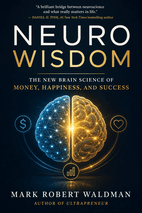
Welcome to a collection of insights from NeuroWisdom, where neuroscience meets everyday life. Here you will find statements that challenge common beliefs and offer surprising facts about how your brain works. Some lines are direct and provocative, others are gentle reminders. Each one is designed to make you pause and think.
What makes this book so quotable is its ability to turn complex brain science into simple, memorable truths. The quotes stick with you because they are both counterintuitive and practical. They offer quick takeaways that you can apply immediately to your work, relationships, and personal growth.
Top Quotes from NeuroWisdom
“Yawning appears to be the fastest way to lower mental stress and anxiety.”
From the section discussing the benefits of yawning.
This simple, science-backed statement challenges social stigma around yawning and offers a quick, free tool for stress relief.
“The intention to meditate is itself a meditation.”
Attributed to Chade-Meng Tan, creator of Google's mindfulness training program.
It reframes meditation as an accessible, moment-to-moment practice, removing the pressure of long sessions and encouraging beginners.
“Unfortunately, the human brain has an odd quirk: it barely registers pleasant experiences, but it overemphasizes every tiny displeasure and disappointment.”
Discussing why negative experiences overshadow positive ones in the brain.
It explains a common frustration—why we dwell on negatives—and offers a neurological reason, making it relatable and insightful.
“Positive fantasies predict poor achievement... because they do not generate energy to pursue the desired future.”
The author cites Gabrielle Oettingen's research on the downsides of wishful thinking.
It challenges the popular advice to 'dream big' by revealing that passive fantasizing can actually sabotage motivation, urging readers to pair vision with realistic planning.
“Perfectionism, instead of being a beacon of excellence, becomes a form of self-sabotage leading to burnout at work, at school, and in sports.”
This is part of the discussion on perfectionism as a destructive form of inner speech.
It reframes a commonly admired trait as a potential hindrance, challenging readers to reevaluate their standards and avoid self-defeating behavior.
“Spending five minutes a day imagining your very best self will increase your optimism, confidence, and self-esteem.”
This appears in the chapter summary as a key takeaway from the research on positive imagery.
It offers a simple, actionable practice with evidence-based benefits, empowering readers to take immediate steps toward personal growth.
“Writing down your “crap” actually turns off the negative emotional circuits that shut down the decision-making processes in your frontal lobe.”
This describes the mechanism behind the C.R.A.P. Board exercise, where writing down negative thoughts helps the brain disengage from them.
The vivid metaphor and direct cause-effect statement make the psychological benefit of externalizing negativity instantly relatable and memorable.
Themes Behind the Quotes
The quotes explore the neuroscience of happiness and success. They challenge conventional wisdom by suggesting that wealth does correlate with happiness, yet warn that pleasure seeking can backfire. The brain is wired to notice disappointments more than joys, and desires are endless. This tension between pursuit and satisfaction is a central theme.
Practical strategies emerge throughout. The book emphasizes the importance of balancing concentrated work with mindful breaks, using daydreaming for memory and creativity. It also highlights the power of intention and mental contrasting over mere positive thinking. Writing down troubles can quiet negative emotions, and brief visualization exercises build confidence. Overall, these insights offer a roadmap to harness your brain's natural tendencies for greater well-being and achievement.
Quotes by Chapter
CHAPTER 1. Happiness or Wealth: What Do You Really Want?
“Wealth predicts happiness, and the more you make, the happier you actually become.”
The author presents this as the conclusion of the initial survey about happiness versus wealth.
It directly challenges the popular belief that money doesn't buy happiness, making it a memorable and thought-provoking statement.
“Contrary to popular belief, wealth is the secret to happiness and well-being.”
This appears after participants changed their preference to wealth upon mindful reflection.
This bold claim encapsulates the chapter's central thesis and sticks with readers due to its counterintuitive nature.
“The more money you make, the more happiness you'll experience.”
This line summarizes research findings from the Wharton School of Business and other studies.
It is a simple, data-backed assertion that reinforces the chapter's message and is easy to remember.
“In other words, the pleasure you get by engaging in the activity of making and spending money through work and social activities is the secret to neurological satisfaction and worldly success.”
The author explains how happiness is not just about pleasure but about the process of earning and using money.
It offers an actionable insight that reframes the pursuit of wealth as a path to fulfillment, resonating with readers seeking purpose.
CHAPTER 2. How to Manage Your Busy Brain: Superlearning and the Four Pillars of Wealth
“The more you understand how these neural processes shape your actions and your future, the more you can harness them to achieve the goals you truly desire.”
From the introduction to the Four Pillars of Wealth.
This line empowers readers by framing self-knowledge as a tool for agency, making the science feel immediately actionable and hopeful.
“Too much pleasure can lead to risky behavior that undermines your brain's ability to make wise decisions in work, relationships, and recreational activities.”
From the section on Motivation and dopamine.
It delivers a counterintuitive warning about excess pleasure, resonating with anyone who has experienced the downside of chasing rewards.
“Eaming and mind-wandering are necessary for neurocognitive development in childhood, [44] and in adulthood, they give you direct access to creative talents that are unique to human beings.”
From the section on Creativity.
This sentence validates a common experience—mind-wandering—as essential and creative, freeing readers from guilt about their wandering minds.
“Mindfulness brings you into the present moment so you can fully experience this astonishing world and the amazing people you share it with.”
From the conclusion of the Awareness section.
It captures the essence of mindfulness in an uplifting, accessible way, inspiring readers to value presence over distraction.
CHAPTER 3. Preparing to Succeed: 60-Second Strategies for Warming Up Your Brain
“The more pleasure you can generate, the more your brain will want to take action in the world.”
From the advice to pay attention to pleasurable sensations during the morning ritual.
It succinctly links personal enjoyment to a neurological drive for action, making motivation feel both natural and rewarding.
“They cite excessive stress as public enemy number one, and the long-term effects of stress can permanently damage your heart and brain.”
The chapter discusses the World Health Organization's stance on workplace health.
It succinctly highlights the severe, lasting damage stress can cause, making a powerful case for the warm-up exercises.
CHAPTER 4. Motivation—The First Pillar of Wealth: Money, Pleasure, and the Desire to Acquire More
“Desires fuel the basic engine of the brain, and the bigger the brain, the greater the number of desires.”
Opening paragraph explaining the role of desires in survival and motivation.
It captures the fundamental link between brain size and desire, highlighting the endless human pursuit of more.
“This statistic tells an intriguing tale: when it comes to filling our heart's desire, we never feel we have enough.”
After explaining survey results showing everyone wants more happiness and wealth.
It reveals the universal human tendency of never being satisfied, a key insight for understanding motivation.
“Pleasure drives motivation, and the motivation drives you to acquire more.”
Describing what successful people have in common.
It succinctly summarizes the motivation cycle, making it easy to remember and apply.
CHAPTER 5. Turning On the M-Drive: Nine Strategies to Stimulate Motivation and Desire
“Successful people don't just hope to succeed; they expect to succeed, no matter what, and they will take as much time as is needed to create a plan to achieve their desired goals.”
The author contrasts hope with expectation in describing the mindset of successful individuals.
This line shifts motivation from passive wishing to active planning and perseverance, making it a powerful reframe for anyone pursuing ambitious goals.
“Mental contrasting actually energizes your frontal lobe in a way that motivates your brain to take action.”
Explaining the WOOP strategy for goal achievement.
This concise statement gives readers a neuroscientific reason to adopt mental contrasting, turning a simple visualization technique into a proven motivator.
“The achievement of difficult goals entails not only talent but also the sustained and focused application of talent over time.”
This is reported by psychologist Andrea Duckworth, at the University of Pennsylvania, within a discussion on discipline and perseverance.
It powerfully encapsulates the necessity of sustained effort beyond innate ability, reminding readers that dedication is the true driver of success.
CHAPTER 6. Decision Making—The Second Pillar of Wealth: Turning Desires into Conscious Goals
“Your frontal lobe is the CEO of your life, shaping nearly every behavior that constitutes your personality.”
This line appears in the section 'The Chief Executive In Your Brain' as an introduction to the frontal lobe's role.
It offers a powerful metaphor that makes the abstract concept of brain function relatable and memorable, emphasizing personal agency.
“Optimism is essential for happiness and success, and it will even increase your life span by several years.”
This is stated after discussing research on optimists versus pessimists in the chapter.
It delivers a concise, compelling conclusion that links a positive mindset directly to tangible benefits, inspiring readers to cultivate optimism.
CHAPTER 7. Sharpening Your Decision-Making Skills: Six Strategies to Increase Optimism and Performance
“The neurological secret to success is to consciously alternate between brief periods of concentrated work—20-60 minutes maximum—and brief periods of relaxation and mindfulness.”
This appears in the section on the C.R.A.P. Board, explaining how to optimize brain function by alternating work and relaxation.
It delivers a clear, actionable formula for productivity that is easy to remember and apply, combining neuroscience with practical time management.
“If you habitually express fewer than three positive thoughts or behaviors for each negative one, you can damage your relationships at home and at work.”
This is part of the discussion on the positivity ratio, citing research by Fredrickson, Losada, and Gottman.
It provides a startling, quantified benchmark that challenges readers to monitor their interactions, making the abstract concept of emotional balance concrete and urgent.
“Intuition is your inner voice of wisdom and you can directly ask it for advice.”
From the section on mindfulness and intuition.
It empowers readers to trust their inner voice and seek guidance from within, making intuition a practical tool.
CHAPTER 9. Thinking Outside the Box: Nine Strategies to Increase Creativity at Work
“Tapping into creativity is one of the easiest things to do, because the brain does it all the time!”
Opening line of Chapter 9.
It immediately demystifies creativity, making it feel accessible and natural.
“We now know that the brain needs these brief daydreaming breaks to turn new information into long-term memories.”
Discussing the negative impact of school environments that discourage daydreaming.
This validates the importance of taking breaks and daydreaming for learning, countering common assumptions.