Miss Wolcott's Ghost Themes
by Louise Penny
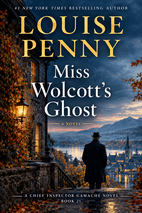
Under the murder plot, the novel is really wrestling with how the past gets buried and who pays for it. It keeps asking whether old records, old crimes, and old names can stay hidden, and what happens when memory resurfaces through flowers, graves, tapes, and borrowed identities.
This page traces those questions through six themes, from the Empress of Ireland and lost records to false names, Daisy Wolcott's dismissed work, Gamache's moral burden, and curiosity tangled with money and obsession. It also follows recurring symbols: Miss Wolcott's Ghost, rosemary, Lost Nation and its cemetery, and the two ledgers that separate official history from buried truth.
Major Themes in Miss Wolcott's Ghost
Buried history and resurfacing secrets
The investigation repeatedly turns up old crimes and records that were meant to stay hidden, linking the present murder to the Empress of Ireland, Lost Nation, Thomas Morrow's dealings, and Daisy Wolcott's lost research. What is buried does not stay buried: a grave is dug up, a concrete tombstone is opened, and an old tape finally tells what happened.
- The Lost Nation grave is excavated and found empty, and the concrete tombstone later proves to contain a canvas bag tagged 'Empress of Ireland, Property of Professor Abraham Russell, Macdonald College.'
- Flossy Fuller's repaired tape describes Thomas Morrow stealing goods and documents from the Empress and burying them at Lost Nation with the ledger.
- Thomas Morrow's ledger contains the partially erased word 'Ghost' in his entries on the Empress.
Hidden identity and deception
Names, identities, and records are repeatedly false or borrowed, making it hard for the investigators to know who anyone really is. The novel ties this to both the murder and the historical cover-up, from the anonymous caller using Clara's name to the fake founder photo at Réunion.
- The 3 a.m. caller uses a phone registered to Clara Morrow, and later someone requests the Lost Nation file under Clara's name.
- The visiting Brian Fillmore is not the same man as the Réunion CEO, and the Réunion website uses a photo of James Clybourne as founder Brian Fillmore.
- Jeanette Bouchard visits Clara pretending to be an artist writing about Peter Morrow, while Aimée Lagacé conceals the ledger and buries it with the plant.
Memory, remembrance, and legacy
Remembrance runs through the case in flowers, graves, tapes, and names: rosemary means remembrance, Miss Wolcott's Ghost is named Eryngium mnemosyne for memory, and old recordings preserve voices that would otherwise be lost. The book treats memory as both a comfort and a clue, something people fight to keep or try to erase.
- Lacoste finds a recent dead rosemary posy on a tiny unmarked grave, and Ruth says rosemary means remembrance.
- Monsieur Péladeau keeps the crushed cassette from the crash because it held his daughter Solange's voice.
- Professor Lamontagne reveals that Miss Wolcott's Ghost is Eryngium mnemosyne, named for the goddess of memory, and the plant may treat dementia.
Erasure and misjudged value
Daisy Wolcott's work is dismissed, burned, scattered, and misattributed while she is alive, and only after her death do investigators learn that her research could be worth millions or billions. The novel repeatedly asks who gets believed and whose knowledge is preserved, especially when the discoverer is a woman dismissed as a kook.
- Daisy's papers and seeds are burned or scattered after her death, some donated papers are auctioned as 'The Collection of William Wolcott,' and neighbors burn every vestige of her plant except the name Miss Wolcott's Ghost.
- Professor Lamontagne and Professor Agrawal say Miss Wolcott's findings would have been worth millions or billions, giving the investigation a motive.
- Isabelle says that a man presenting Daisy Wolcott's research would have been believed.
Justice, moral burden, and second chances
Gamache feels the weight of arrests and acknowledges that he can sympathize with suspects even as evidence mounts, while the novel also tests whether people can be trusted with second chances. Comeau is repeatedly suspected and distrusted, yet he ultimately stays with Janice Bouchard to the end, and Gamache shakes his hand.
- In the Crown Prosecutor's office, Gamache reflects that he is about to change a life forever and that he can sympathize with suspects.
- Gamache gives Comeau another chance despite Isabelle calling Comeau a coward and warning that his past failure put lives at risk.
- At Janice Bouchard's graveside, Comeau is praised for staying with her to the end, and Gamache shakes his hand.
Curiosity versus money and obsession
The novel contrasts Brian Fillmore's desire to solve a century-old mystery with the money, power, and career motives that others attach to the same research. Gamache says Miss Wolcott's Ghost could be valuable as a bioweapon, while Brian is remembered as a man who 'just wanted to know.'
- Gamache explains that Miss Wolcott's Ghost could be worth a fortune as a bioweapon, while the notes describe Brian as valuing intellectual and historical worth over money or power.
- Aimée Lagacé is suspected of killing Fillmore to steal the research and later says she stayed silent to protect Jeanette and her sick mother.
- Charles Fillmore's Upper Westmount home is described as a trophy, while Brian's kitchen is full of food and sour milk that show he expected to return.
Symbols and Motifs
Miss Wolcott's Ghost / Eryngium mnemosyne
Represents buried memory, overlooked legacy, and the hidden value in what others dismiss as a weed or nuisance; it is also the physical link between Daisy Wolcott's lost research and Brian Fillmore's murder.
- A plant grows through the corpse in Lost Nation and Dr. Harris says it appears deliberately planted around the body.
- Dr. Lagacé identifies the plant as Miss Wolcott's Ghost, thought extinct, and later the botanists reveal its name Eryngium mnemosyne is linked to memory.
- At the end, Miss Wolcott's Ghost has been planted in village gardens.
Rosemary
Represents remembrance and mourning, and it recurs as a sign that someone is deliberately memorializing the dead or trying to restore a lost memory.
- Lacoste finds a recent dead rosemary posy on a tiny unmarked grave, and Ruth says rosemary means remembrance.
- The cleaned gravestone shows a sprig of rosemary rather than Miss Wolcott's Ghost.
- Gamache finds dried rosemary florets in Brian Fillmore's desk drawer, and Dr. Lagacé says rosemary means remembrance.
Lost Nation and its cemetery
Represents abandoned history and hidden crimes: a place that was cursed, forgotten, and emptied of its community, yet still holds the evidence people have killed for.
- The body is found in the Lost Nation cemetery near a 1914 tombstone, and the burial dates skip from 1898 to 1914.
- The exhumed Lost Nation grave is empty and its concrete marker faces north unlike the other stones.
- The concrete tombstone from Lost Nation is broken open and found to contain the canvas bag of Empress documents.
The two ledgers
Represent the difference between official history and buried truth: one ledger is the respectable record, while the second records illegal sales and blackmail and becomes the object everyone kills or lies for.
- Lacoste explains there were two ledgers: Thomas Morrow's official record and a second ledger of illegal sales and blackmail found under the plant.
- Gamache swaps the second ledger for Morrow's official one before calling Lagacé, and she buries the hidden ledger rather than handing it over.
- Thomas Morrow's ledger contains the partially erased word 'Ghost' in his entries on the Empress.