Meet Me in the Garden Themes
by Nina LaCour
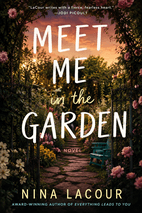
Underneath its plot, this novel is really wrestling with what it means to live a hidden life. It asks how grief, desire, and even mental illness get pushed into silence, and what it costs when love and memory have nowhere safe to land. The characters keep reaching for art, secret objects, and small domestic refuges that might let them be truly seen.
On this page you will find each major theme tied to concrete moments from the book, plus recurring symbols. Think of Papa's chair, the unmarked cross, The Price of Salt, and the roller pigeons. Together they show how the novel tracks visibility, forbidden love, racial hierarchies, and the fragile act of building your own home.
Major Themes in Meet Me in the Garden
Art, vision, and being seen
Drawing and painting recur as ways for Odette to process grief and to recover an identity buried under family duty and marriage. The notes connect this theme to Delphine's self-discovery through a photograph and to Odette's later return to art after years away.
- Odette and Delphine draw each other's portraits in the garden without looking down at the paper, and Delphine says Bill's portrait made her see herself as spectacular.
- After years away, Odette fills a sketchbook, says drawing came back like an old friend, attends a figure-drawing class, and eventually draws in the Listening booth with a Sheaffer pen.
Secret lives and forbidden desire
The book repeatedly shows love that cannot be publicly acknowledged or legally protected. Odette and Hattie hide in a basement sewing room, Delphine elopes with a white man, and Odette later suppresses an attraction to Ginny, often because family survival depends on silence.
- Odette wonders how many girls in New Orleans lead secret lives like she and Hattie do, and Hattie eventually says she loves Odette but there is no future for them.
- When Ginny winks at Odette, Odette feels a flush and vibration in her chest and tells herself there is no room for that feeling in her life.
Racial hierarchy, colorism, and respectability
The notes show a world where whiteness is enforced through signs, hiring practices, and violence, and where even within families darker skin is treated as a problem. Characters respond by passing, hiding pregnancies, or performing respectability in Los Angeles.
- Maman tells Adele to put a hat on Baby Rudy so he will not get darker, and Auntie Bertha wants to send pregnant unmarried Delphine away to avoid disgrace.
- Bill tells Delphine the Whites Only sign was not meant for Creole girls like her, yet her portrait appears in the window beside that sign; Delphine later writes that they plan to pass as white.
- In a Los Angeles neighborhood Odette recalls Al being refused a record-store job and remembers that a cross was burned on a colored grandmother's lawn in Compton.
Grief and the duty to remember
Odette refuses to let her father disappear into the family's silences. The novel sets Maman's desire to forget against Odette's insistence on visiting Papa's grave, mourning aloud, and later installing a tombstone.
- Odette insists on visiting Papa's grave; there she lies by the white cross in the Rugged Cross Sanctuary and then screams with Lionel in the car on the way home.
- At the final family dinner Odette confronts Maman for not claiming Papa or giving him a headstone, and Maman tells her she sees hate in Odette's face.
Mental illness, institutions, and disappearance
The hospital in the book is a place where people vanish: Papa dies in an unmarked grave after being committed, and Delphine is diagnosed with schizophrenia and placed in Camarillo. The diagnosis leads Delphine to ask Odette to erase her from Nathalie's life by telling her she is dead.
- Papa is taken to East Louisiana Hospital for the Insane and dies there of tuberculosis; Maman later fails to claim his body.
- Delphine, diagnosed with schizophrenia, appears dulled at Camarillo and asks Odette to tell Nathalie she is dead, saying it is the only way she can survive.
Home, independence, and chosen family
Odette longs for a domestic life of her own choosing even as she is expected to marry and rely on relatives. The book expands the idea of family when she takes in Delphine's daughter and later makes a home with Felix, Nathalie, Clément, and her art.
- Odette saves her pay in a shoebox, dreaming of an apartment of her own with just her and Clément, and later tells Felix she wants to pick out her own plates, flatware, and glasses.
- Odette finds Nathalie at a laundromat and brings her home, and Claire eventually says she sometimes wonders whether Odette should be Nathalie's mother.
Symbols and Motifs
Papa's easy chair
A reminder of the man the family tried to erase; painted by Odette and dragged to the curb by Maman's new husband, it holds Papa's absence.
- Odette tries to paint Papa's easy chair while remembering Maman sending Papa to the hospital and then beginning a new life with Jean Pierre.
- Maman has Jean Pierre take Papa's chair out to the street, discarding the chair along with Papa's place in the household.
The unmarked white cross at Rugged Cross Sanctuary
It represents erased lives and hidden grief: Papa is buried among unclaimed patients under a nameless cross despite Maman's claim that she took care of everything.
- Terry shows Odette the unmarked grave for unclaimed patients, and Odette lies by the white cross above Papa's body.
- Papa's body lies in an unclaimed patient's grave under an unnamed white cross in a cedar box, even though Maman told Odette she took care of everything.
The Price of Salt
A concrete artifact of desire that cannot be spoken aloud. Odette reads it in secret, and its declaration of love becomes a point of identification as she suppresses her feelings for Ginny.
- Odette buys The Price of Salt after a figure-drawing class, hides it under her arm, and later reads it desperately, wanting Carol and Therese to reach a declaration of love.
- When the declaration comes, she marks the page with Elise Eriksen's cream calling card, tying the novel's love story to a real possibility in her life.
Birmingham Roller pigeons
They stand for freedom's ambiguity, the thrill and danger of falling. Watching the birds tumble makes Odette wonder whether a changed life would be freedom or affliction.
- Odette watches J.J. Baker's Birmingham Roller pigeons spin and fall in the sky and wonders if it is freedom or an affliction.
- Pigeons again connect Odette to possibility when Lionel's ordered pigeon arrives by train, leading to her reunion with Felix.