Maximizing LinkedIn for Business Growth, Updated and Expanded Quotes
by Neal Schaffer
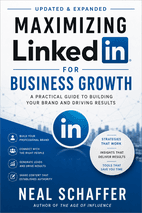
This collection brings together the sharpest insights from Neal Schaffer's updated guide to LinkedIn for business. You'll find straightforward advice, powerful statistics, and practical strategies that cut through the noise. What makes this book so quotable is its focus on what actually works today, not outdated tips. The quotes here cover everything from optimizing your profile to building real connections without being pushy. They remind you that LinkedIn is more than a job board; it's a platform for meaningful professional growth.
Each quote distills a key idea you can apply immediately. Whether you're a seasoned user or just starting, these lines will change how you think about your presence on the platform.
Top Quotes from Maximizing LinkedIn for Business Growth, Updated and Expanded
“Four out of five LinkedIn members drive business decisions.”
The author presents statistics about LinkedIn's user base of decision makers.
This statistic powerfully demonstrates the high concentration of influential professionals on LinkedIn, making it a must-use platform for B2B marketing and sales.
“80% of B2B leads generated through social media come from LinkedIn.”
The author cites a key statistic about lead generation effectiveness.
This number quantifies LinkedIn's dominance in social media lead generation, motivating businesses to prioritize content and networking on the platform.
“Personal profiles consistently outperform company pages in terms of reach, engagement, and relationship-building.”
In the discussion comparing Company Pages versus personal profiles.
This succinct statement provides a clear strategic directive, convincing readers to prioritize their personal LinkedIn presence over corporate pages for better results.
“Your LinkedIn profile is not your resume. It is an inbound marketing tool you can use to create your future and tell your story to attract those you want to engage with.”
Neal Schaffer introduces a fundamental mindset shift for optimizing LinkedIn profiles.
This reframes the profile from a static document into an active tool for attracting opportunities, empowering users to take control of their professional narrative.
“Your photo is your digital handshake. It’s the first thing people notice, so make it count.”
Schaffer explains the importance of a professional profile photo.
The vivid metaphor of a 'digital handshake' makes the advice memorable and underscores the immediate impact of a photo on first impressions.
“You do not need to pay to win on LinkedIn.”
The author states this after noting that over 85% of LinkedIn users are on the free plan.
It directly counters the fear of missing out that many professionals feel about paid plans, empowering readers to focus on strategy rather than spending.
“Your strategy matters more than your subscription. And the best investment you can make in Linkedin isn’t on Premium—it's showing up.”
The author closes the chapter with this takeaway.
It summarizes the chapter's core message with memorable parallelism, urging consistency and effort over spending.
Themes Behind the Quotes
A central theme is the shift from viewing LinkedIn as a passive resume to an active inbound marketing tool. Your profile becomes a story you tell to attract the right people, not just a list of past jobs. Another theme is the primacy of personal connections over company pages. Trust and relationships come from individuals, not brands. Several quotes emphasize the importance of engaging meaningfully over time, not just broadcasting messages. A third theme is the balance between organic effort and paid tools. Strategy and consistency matter more than any subscription. Finally, the quotes warn against hard selling. LinkedIn works best when you focus on adding value and building rapport, not pitching.
Quotes by Chapter
Introduction
“Today, it's a powerful engine for building your professional brand, generating leads, creating content, and even attracting new career opportunities.”
The author describes how LinkedIn has evolved from a digital resume into a multi-purpose business tool.
This line succinctly captures the modern versatility of LinkedIn, making a compelling case for why professionals should invest time on the platform.
“My goal in this book is simple: to give you a clear, proven playbook that works right now, not just what worked five or 10 years ago.”
The author states his objective for the book.
It emphasizes timeliness and practical relevance, appealing to readers who are tired of outdated advice and want actionable strategies for today.
“By the time you finish, you'll have a complete system for turning LinkedIn into a business growth engine, tailored to your goals, your industry, and your personal style.”
The author summarizes the outcome readers can expect from the book.
This line inspires confidence and promises a personalized result, motivating readers to engage fully with the material for tangible business growth.
1. LinkedIn Statistics: Understanding the Platform’s Impact
“LinkedIn is the only platform that continues to be focused on business and professional networking.”
The author explains what makes LinkedIn unique among social networks.
This line clearly defines LinkedIn's core value proposition, reminding readers why the platform is essential for professional growth rather than social distraction.
“LinkedIn's algorithm gives a post a window of reach for about a week.”
The author references a former LinkedIn employee's statement about content longevity.
This insight reveals a major advantage for content creators—posts have far longer visibility than on other platforms, encouraging consistent publishing.
2. How LinkedIn Is Used Today for Business
“Regardless of what department you're in, it's becoming more likely that you can use LinkedIn as part of your job. Understanding the holistic value that LinkedIn offers businesses is really the first LinkedIn skill that every professional should possess.”
From the author's narrative about the evolution of LinkedIn usage beyond sales and marketing.
This line reframes LinkedIn as a universal professional tool, empowering employees in any role to see its relevance and making it a foundational concept for the entire book.
“After all, the Edelman’s Trust Barometer reminds us that employees rank higher in public trust than a firm’s PR department, CEO, or founder.”
In the section on employee advocacy, explaining why employee voices are more credible.
This statistic is a powerful, data-backed reminder that authentic employee voices outperform corporate messaging, which is a key insight for businesses seeking to build trust.
“Your personal profile is where you build relationships, establish trust, and create opportunities. Everything else is the supporting cast.”
At the end of the section on Company Pages, summarizing the emphasis on personal branding.
This memorable and actionable conclusion reinforces the core message of the chapter, motivating readers to invest their time and effort into their personal profile.
3. Optimizing Your LinkedIn Profile for Maximum Impact
“Think of it as your personal billboard. The wrong headline blends in. The right one stops people mid- scroll.”
Schaffer describes how to approach the professional headline on LinkedIn.
The billboard analogy highlights the power of a headline to cut through noise, motivating readers to invest time in crafting their own.
“Remember, your LinkedIn profile is not about finding a job but about the inbound marketing of the professional asset that is YOU!”
Schaffer concludes his advice on filling out the experience section.
This line reinforces the core message of the chapter—that the profile is a marketing tool for one’s professional brand, not just a job-search tool.
4. Build Your Network
“In short, the more first-degree connections you have, the easier it is to reach out to others.”
This appears in the section explaining how LinkedIn connections exponentially expand networking opportunities.
It succinctly captures the core benefit of building a large network—increased accessibility to others.
“If you're connected to someone who won't respond to your messages, that connection has no value.”
This is from the discussion on the quality of connections and how many to have.
It reminds readers that quantity doesn't matter if the connection is inactive, emphasizing the importance of meaningful engagement.
“Some of the most important assets of your professional life are the people you work with.”
This is stated while discussing the upper limit of connections and the value of professional relationships.
It reframes colleagues as critical assets, encouraging readers to value and nurture work relationships.
“If you were to connect with 50 people who all had 50 first-degree Linkedin connections, you would be one email or phone call away from being introduced to 2,500 other people through a trusted relationship, assuming no overlaps.”
This is part of the explanation of the exponential power of LinkedIn network growth.
It vividly illustrates the multiplicative potential of a small network, making the math of networking tangible and motivating.
5. Establish Credibility Through Recommendations
“LinkedIn recommendations are the ultimate form of social proof on that platform.”
The author asserts the value of recommendations in establishing credibility.
This line succinctly captures the core thesis of the chapter, making it a memorable takeaway for readers seeking to boost their profile's trustworthiness.
“The quality of recommendations you receive will always be more important than the quantity.”
Advice given in the section on how many recommendations are needed.
It reinforces a crucial principle that prioritizes substance over numbers, guiding readers to focus on meaningful endorsements.
“Vague recommendations offer little to no value.”
A warning within the discussion on sourcing effective recommendations.
This blunt statement is highly actionable, reminding readers to seek specific, detailed testimonials rather than generic praise.
“Remember, these endorsements are more than just words. They are a testament to your impact and capabilities.”
The concluding thought of the chapter, summarizing the lasting significance of recommendations.
It elevates recommendations from mere profile features to powerful evidence of professional contributions, inspiring readers to actively cultivate them.
6. Engaging on LinkedIn: Building Relationships Through Interaction
“While we don't always check our home feeds, we often check our notifications, so any engagement is almost like a digital tap on the shoulder to ensure your connections keep you top of mind.”
The author explains the value of engaging with your network in the section 'Engage With Your Network'.
This metaphor makes the abstract concept of engagement tangible and memorable, showing how a simple action keeps you visible in a crowded feed.
“As you continue to engage with more people on Linkedin, remember that meaningful engagement is not a one-time task but a continuous journey.”
The author concludes the chapter with this reminder about the ongoing nature of relationship-building.
It reinforces that LinkedIn success requires consistent effort over time, not a single burst of activity, which is a crucial mindset for users.
“Developing deep rapport with someone takes as long, if not longer, online as it does in real life.”
The final paragraph of the chapter reflects on the time needed to build strong professional relationships.
This line draws a powerful parallel between digital and real-world connections, validating the patience and persistence needed for genuine rapport.
7. LinkedIn for Business: Free vs. Paid
“The biggest benefit of Linkedin’s paid tools isn’t access. It’s efficiency.”
The author explains the value proposition of LinkedIn's premium features.
It reframes the reason to upgrade from a feature mindset to a time-savings mindset, helping readers evaluate ROI realistically.
8. Prospecting on LinkedIn: Finding and Connecting with Potential Clients
“While those who engage in cold calling swear by it, most people I know did not join LinkedIn only to be sold to.”
The author advises against immediately pitching prospects after finding them on LinkedIn.
It succinctly captures the common user sentiment against salesy behavior on LinkedIn, making readers rethink aggressive tactics.