Kin Themes
by Tayari Jones
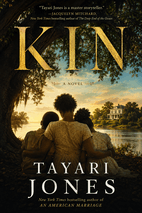
Underneath the plot, the novel wrestles with what it means to lose a mother and still need one, and how Black women in Jim Crow America build families out of friendship when blood ties break or betray. It also digs into the quiet costs of secrets and the way grief hides in plain sight, lodged in bodies and landscapes.
On this page you'll find each major theme tied to concrete moments: Annie's search for Hattie Lee, Vernice's lifelong loyalty, the rules that shape every bus ride and movie theater. And you'll see the symbols: Ruby Falls for buried pain, the rose garden as a living memorial, the green grosgrain ribbon for mourning an absent body, suitcases and dirt for the pull of home.
Major Themes in Kin
Mother-loss and the search for mothers
Many characters are defined by dead or absent mothers. Annie spends much of the novel trying to find Hattie Lee; Vernice grows up knowing her mother was murdered; Lulabelle and Babydoll have mothers who failed or sold them. The novel keeps returning to what it means to be a motherless child and to the substitute mothers who step in.
- Annie asks Granny for photos of Hattie Lee, and Granny gives her Hattie's Memphis address, setting off Annie's search.
- Aunt Irene raises Vernice after Arletha was murdered, and the narrator says Vernice was 'tended to' but never 'mothered.'
- Babydoll tells Annie, 'Mothers are not all they are cracked up to be,' and explains her own mother sold her for a felt hat and a pair of gloves.
Chosen family and friendship as kinship
The deepest loyalties in the book are between unrelated women and friends. Annie and Vernice are cradle friends who keep writing and saving each other; Annie and Babydoll form a package-deal partnership; Lulabelle gives Annie something like mother-love. Kinship becomes an act of choice, not blood.
- At the doctor's office, Annie refuses Hattie Lee as next of kin and names Mrs. Vernice Irene Davis McHenry, asking that she be written as 'Niecy.'
- Niecy tells Annie, 'Come on down here. I will take care of you,' when Annie is pregnant and desperate.
- Babydoll insists that she and Annie be hired together at the Elektra as a package deal.
Race, segregation, and respectability
Jim Crow circumscribes every journey, from bus rides to movie theaters, while class and color codes within Black communities create another set of barriers. Spelman, the McHenrys, and 'Uplift' values demand a performance of respectability that can exclude and silence.
- Vernice is thrown off a bus for sitting one seat ahead of the colored section; later the bus driver uses racial slurs and strands her in Kinder.
- At the Fabulous Fox Theatre, Black patrons watch from the segregated crow's nest while whites sit downstairs.
- At Spelman, chapel days require white dresses, flesh-colored hosiery, and closed-toe shoes, and alumnae inspect girls' legs.
Secrets, lies, and the cost of truth
Characters hide their romantic lives, pregnancies, and full identities to avoid scandal or expulsion. Secrecy can protect, but it also alienates; the novel repeatedly shows that truth, though painful, is the only route to being known.
- Joette's first college girlfriend was exposed when someone read her diary, and Joette warns Vernice, 'You never know who can hurt you once they know how you are.'
- Annie tells Vernice, 'Getting married on top of secrets is like spraying perfume without washing first.'
- Vernice confesses her secrets to Franklin because she cannot bear being unknown, and Franklin says, 'I can't know you if you won't let me see you.'
Hidden grief and women's bodies
Grief and physical danger often stay invisible, buried beneath a calm surface. Mrs. Ola Mae frames unwept tears as a bodily threat, and the Ruby Falls image links hidden feeling to hidden violence. The novel shows how women's bodies can be neglected, commodified, or fatally injured without any outward sign.
- Mrs. Ola Mae tells Vernice she has a 'whole river running off a cliff inside you' and that tears must flow outward.
- The narrator remembers Ruby Falls, an underground waterfall where a river crashes from a cliff beneath a placid surface, and later describes her sadness as an underground waterfall.
- Mrs. Ola Mae talks about women's emotional composition but never mentions that someone could bleed to death from the inside without shedding a drop of blood.
Symbols and Motifs
Ruby Falls / the underground waterfall
It represents hidden emotional and physical violence beneath a tranquil exterior, especially unexpressed grief in women.
- Miss Jemison took Mrs. Ola Mae to Ruby Falls, an underground waterfall in Tennessee where a river crashes from a cliff beneath a placid surface.
- The narrator says Mrs. Ola Mae told her that story because she had never mourned her mother; later Vernice thinks her sadness is an underground waterfall she could drown in.
The rose garden
It is a living memorial to a lost mother and a physical space for tending grief.
- Lulabelle and Lurelia prune the rosebushes and clean the gazebo in tribute to their mother Hortense.
- Lulabelle tells Annie that her mother died giving birth to twin boys and that the garden is their mother's birthday tribute, though she says her mother's spirit still prefers the old lean-to.
Green grosgrain ribbon
It stands for death ritual and the presence of absence, mourning prepared for a body that is not there.
- When Niecy believes Annie has died, she undoes her hair and prepares to loop a ribbon around Annie's jaw.
- Finding the bed empty, she leaves the length of green grosgrain on the pillowcase as a remnant of the ritual.
Suitcases and hometown dirt
Luggage represents the dream of leaving home, while dirt in a suitcase represents the gravitational pull of origins.
- Annie secretly packs an Oshkosh suitcase to run away to Memphis, while Vernice has pistachio-green suitcases on layaway for Spelman.
- After Vernice is stranded, Carmen asks whether her mama put dirt in her suitcase, saying hometown dirt will keep pulling her back.