In the Killer's Sight Themes
by Mike Omer
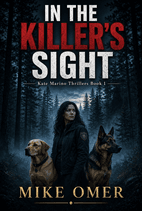
Underneath its hunt and rescue plot, the novel wrestles with the quiet ways violence gets excused. The men who hold women captive see themselves as caretakers, and the people in power let them. Kate's childhood at Frank's hands shows abuse hiding in discipline, and Alice's fake happiness after rescue shows trauma still owns her.
Here you'll find each major theme tied to concrete moments, from Gibson burying Aden's complaint to Alice's suppressed terror. The symbols are examined too: the woods as refuge and hunting ground, window bars as resistance, rabbit snares for control, and recorded messages as false hope.
Major Themes in In the Killer's Sight
Hunting as predation
The novel treats the killer's violence not just as murder but as a hunt. Kate reads the victims' injuries as evidence of a wolf trap and crossbow bolts and concludes that the killer was hunting them, while scenes from the predator's perspective show him stalking women and girls as prey.
- Kate examines the victims' injuries and says 'He was hunting them' after seeing wolf trap and crossbow bolt patterns.
- The killer takes Riley to the woods on a supposed walk and tracks her as prey before shooting her.
- Jaxon takes a hunting trail to ambush Kate and Alice in a clearing, thinking no one has ever gotten away from him.
Self-justifying abusers and violence disguised as help
The men who hold women captive consistently imagine themselves as caretakers. They expect gratitude for their control, reframe violence as discipline or necessity, and blame victims when they resist or die.
- The captor insists he is 'just trying to help' Riley and Alice after imprisoning them and cooking them hamburgers.
- After shooting Riley, the killer blames her: 'the slut had forced his hand' and says 'It was all her fault.'
- Jaxon expects Kate to see that he was 'just trying to help' Alice, even while holding her prisoner.
Cycles of abuse and childhood trauma
Kate's search for Alice is shadowed by her own childhood abuse at Frank's hands. Returning to Cooperton forces buried memories to the surface, reveals the adults who failed to protect her, and eventually leads Kate to confront her father directly.
- Kate flashes back to crawling through a fence as a child while her father's drunken voice hollered after her.
- Ruth apologizes to Kate saying she knew Frank hit her and waited too long to intervene.
- Kate confronts Frank about her abuse and tells him he will never see Ivy.
Institutional protection and small-town complicity
People in power shield predators rather than victims. Chief Gibson protects his son Aden and has Aden's assault complaint buried, while Kate is removed from the case because of family ties. The pattern culminates in Jaxon, a police officer, hiding his crimes behind official protocols.
- Roy remembers that Chief Gibson spoke privately with Kelly before she withdrew her assault complaint against Aden.
- Aden uses his father and lawyer to escape consequences and gives an alibi with the mayor as witness; Gibson gets him released and removes Kate from the case.
- Kate notices the repeated phrase 'After discounting' in forensic reports and realizes the killer may be a police officer, leading her to Jaxon Hill.
Maternal love, guilt, and complicated family bonds
The book sets ordinary family rituals against crisis, showing mothers and grandmothers trying to hold their worlds together. Kate struggles to protect Ivy while investigating, Noelle grieves Alice through mechanical routines, and family gestures become quiet forms of acceptance and repair.
- Kate's carefully planned pancake breakfast collapses when Ivy refuses school, and Kate thinks a real good mother would have managed to split herself in two.
- Noelle mechanically recites OREO instructions and dinner plans while being told human remains were found in the forest.
- Ruth asks Kate to bring drinks for Saturday's party, and Kate understands it as her being accepted back into family life.
Trauma and performing normalcy
After the rescue, Alice hides in her bedroom and acts happy for her family, while her suppressed terror bursts out without warning. Kate recognizes that the ordeal has left a lasting mark and lets Alice begin to name it instead of forcing cheerfulness.
- After being freed, Alice stays in her room and performs happiness and normalcy for Mom, Dad, and Jamie.
- During a walk, a slamming door triggers Alice into a flashback, and Kate tells her the trauma was bound to leave a mark.
- Alice half-jokes about needing a support goldendoodle because of her PTSD, and Kate agrees to back her up.
Symbols and Motifs
The woods
The forest is a dual place: a childhood refuge for Kate and a hunting ground where predators target women. It is where bodies are buried, where evidence is found, and where Jaxon finally ambushes Kate.
- Kate returns to the hidden woodland spot she calls her shelter, where she used to flee from her violent father.
- The killer drives Riley to the woods and hunts her down there.
- Jaxon ambushes Kate in a thorny valley after she follows Nero's scent trail.
Window bars
The bars represent captivity and the fragile possibility of escape. They are physical proof that the captives have not surrendered, and they must be hidden whenever the captor returns.
- Riley shows Alice the loose window bars that she and Mabel worked on as a grounded form of hope.
- When the captor returns, Riley and Alice force the loosened bar back into place and pretend nothing happened.
- Kate frees the loose bars and smashes the window, using them to provoke Jaxon and make their escape.
Rabbit snares and hunting traps
Snares and traps symbolize the predators' method of catching and controlling people as if they were game animals. The vocabulary of hunting is turned from animals onto women.
- The captor demonstrates a rabbit snare by putting a wire noose around Alice's neck and tightening it as a lesson.
- An unnamed man on a date imagines snare and trap designs in his head while Pepper talks, then chases and attacks her when she runs.
Recorded voice messages
The recorded messages are false hope used as a weapon. The killer makes victims sound alive and cared for, tormenting their families while maintaining his fantasy of control.
- Mabel's friend and Jasmine's sister receive audio messages saying the women are fine, which Agent Caldwell calls mental torture.
- The captor forces Riley to record a scripted message to her mother saying she is fine and being taken care of.
- Noelle plays Alice's recorded message as proof she is alive, but Kate feels 'a dark pit of dread' instead of relief.