I Will Teach You to Be Rich Quotes
by Ramit Sethi
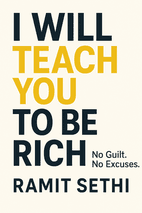
These quotes from Ramit Sethi cut through the noise of personal finance. You will find lines that challenge old habits, like ditching traditional budgets for a conscious spending plan. Others celebrate the power of automation, making your money work while you sleep. Even a Komodo dragon gets a mention.
What makes this book so quotable is its blend of directness and humor. Sethi doesn't preach deprivation. He pushes you to say a big yes to what you love. The advice sticks because it feels like a conversation with a smart friend who just wants you to stop overcomplicating things.
Top Quotes from I Will Teach You to Be Rich
“There is power in saying no to the things we don’t care about. But there is even more power in saying a big YES to the things we love.”
The author explains his philosophy of conscious spending versus restrictive budgeting.
It reframes frugality as empowerment, encouraging readers to prioritize spending on what truly matters rather than guilt-ridden deprivation.
“Forget budgeting. Instead, let's create a Conscious Spending Plan.”
The author introduces his alternative to traditional budgeting in the chapter on spending.
It's a bold, memorable call to action that challenges conventional personal finance advice and offers a more practical approach.
“Whether you choose a robo-advisor or Vanguard or another low-fee brokerage is a minor detail. Pick one and move on.”
The author wraps up his critique of robo-advisors and emphasizes action over perfection.
It relieves the anxiety of making the 'perfect' investment choice and reinforces the most important step: starting to invest with low costs.
“Other people sigh and say, “I need to buckle down and save more” (though they almost never do). That's playing defense. Instead, we're going to play offense by building a system that acknowledges our normal human behavior— we get bored, distracted, and unmotivated—and uses technology to ensure we're still growing our money.”
The author contrasts typical hands-on saving with an automated, offensive strategy.
This reframes saving from a guilt-ridden chore into a smart, system-driven advantage, motivating readers to embrace automation.
“Once it's set up, this system is so hands-off that if you got eaten alive by a Komodo dragon, your money system would continue transferring money from account to account by default, a ghostlike reminder of your financial prescience.”
The author illustrates the extreme reliability of the automated system.
The vivid, humorous imagery makes the point unforgettable and emphasizes the system's ultimate dependability.
“You no longer have to constantly worry about how much money you're spending. Phrases like “Can I afford this?” and “I know I'm going to worry about this later, but for now .. .” will be erased from your vocabulary.”
The author reassures readers after they create a Conscious Spending Plan.
It captures the relief and mental freedom that comes from a clear, automated financial plan, which resonates with anyone tired of money anxiety.
Themes Behind the Quotes
One central theme is the shift from defensive to offensive money management. Instead of constantly worrying and cutting back, you build systems that automate savings and investments. This approach acknowledges human nature, our tendency to get bored or distracted, and uses technology to guard against it. The goal is to make financial growth a hands off process that runs on autopilot.
Another theme is purposeful spending. Rather than tracking every dollar, you identify what truly matters and spend generously on those areas. Everything else you cut without guilt. This philosophy rejects the idea that saving is about sacrifice. It is about designing a life where your money aligns with your values, freeing you from the anxiety of constant financial decision making.
Quotes by Chapter
An Open Letter to New Readers
“The truth is that an HSA can be an incredibly powerful investment account because you can contribute tax-free money, take a tax deduction, and then grow it tax-free—it's a triple whammy.”
The author explains the advantages of Health Savings Accounts for investing.
It simplifies a complex tax advantage into a clear, compelling soundbite that makes the HSA seem like a no-brainer for eligible investors.
Would You Rather Be Sexy or Rich?
“I see beauty in systems, like the one I lovingly built to apply to sixty-five scholarships and pay my way through undergrad and grad school at Stanford.”
The author describes his personal passion for systems.
It humanizes the author and makes the concept of systems feel inspiring and accessible, not dry or technical.