Hollow Bones Themes
by Jodi Picoult
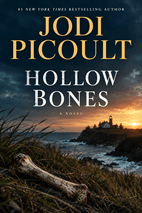
Under the plot, Hollow Bones is really about how motherhood, grief, identity, truth, art, and chosen family collide. It asks whether love can coexist with inherited fear, whether secrets protect or harm, and whether broken people can make something whole.
On this page you'll find theme breakdowns with concrete moments: Molly's pregnancy and Eloise/Georgia's postpartum psychosis, 9/11 losses and reinvention, polygraph work and self-deception, mosaics and O'Keeffe-inspired art, and forgiveness through chosen family. You'll also see symbols like hollow bones and birds, mosaics and the spirit line, the red ribbon, and the Survivor Tree.
Major Themes in Hollow Bones
Motherhood, postpartum psychosis, and inherited fear
The novel ties Molly's pregnancy to Eloise/Georgia's history of postpartum psychosis, showing maternal love entangled with the terror of harming one's child and the dread of passing mental illness to a daughter. It uses voices, medication, therapy, Andrea Yates, and Molly's public disclosure to connect private maternal fear to public awareness.
- Eloise hears a voice like her father's sermons telling her to send Molly to Jesus and nearly harms Molly before calling Evie for help.
- Dr. Mantillard tells Molly that heredity can play a part in postpartum psychosis and that they can be hypervigilant about signs.
- After seeing Molly's pregnancy post, Georgia reads that postpartum psychosis has increased incidence if a woman's mother had it and says she is not taking any chances that her daughter will suffer what she did.
- Molly appears on 60 Minutes with Adelaide McCann to reveal that Georgia had undiagnosed postpartum psychosis and left to protect her, and returned for the same reason.
- Eloise asks Molly if she wants to hurt Adie or hears anyone telling her she will hurt her, reflecting that the voices came to her at the end of the first week.
Grief, trauma, and memorialization
9/11 and its aftermath shape the novel's losses: Eloise survives and disappears, Molly grows up believing her mother is dead, and Evie and Adam carry guilt and grief for years. The memorial becomes a place of reckoning, survivor guilt, annual ritual, and belonging.
- Molly reflects that when someone dies we say we lost them, but after learning her mother is alive she thinks: My mother, I lost her. In the truest sense of the word.
- Eloise watches her own memorial from behind an elm, sees Evie care for Molly, Adam cry in Evie's arms, Molly giggle, and Adam kiss Evie's head, then leaves without revealing herself.
- Molly points to the name ELOISE AMBROSE on the South Pool and says she used to come there with Tabs on the anniversary, later wedging a ribbon into the grooves.
- Georgia confesses at the 9/11 Memorial that part of her died that day and that she feels dirty for having started over; Molly leads her to the Survivor Tree and tells her she belongs there too.
- Jesse tells Molly she will not lose her mother even though he knows it is a lie because the odds are not good.
Identity, secrecy, and reinvention
Characters live under assumed names and hidden pasts: Eloise becomes Eloise Mills and then Georgia Gilligan, while Georgia withholds the truth from Kai, Edward, Ximena, and others. Public exposure threatens to collapse the selves they have carefully built.
- Dr. Gruner asks who Georgia was before she became a mother, and the narrator lists being Eloise Ambrose, Eloise Mills, and Eloise Owens before becoming Georgia Gilligan.
- Georgia thinks Kai cannot marry Georgia Gilligan because her real name is Eloise Ambrose and she is married to another man.
- Mercedes discovers that Georgia Gilligan does not exist online; Georgia admits it is not her real name and says she ran away from someone.
- Chad Beekman recognizes Georgia as Eloise, gives a local ABC interview, and networks speculate about her, leading Adam to hold a press conference saying Eloise has returned.
- Edward tells Georgia that you cannot love someone and keep secrets from them after revealing he investigated her past.
Truth, lies, and self-deception
The novel repeatedly asks whether lies can protect people and whether a story repeated often enough becomes believed truth. Polygraph work, family secrets, Evie's exaggeration, and hidden identities make honesty and self-deception central.
- Jesse opens Chapter 11 reflecting that everyone lies and explains how he detects deception in polygraphy; Ravi Banneker lies about the fire until Jesse confronts him.
- Evie admits she exaggerated the story about Eloise trying to drown Molly to push Adam to get Eloise psychiatric help.
- Jesse says that when liars tell a story, the new version becomes clearer and more real until they believe it, and he realizes he could be talking about Evie or Georgia.
- Evie asks whether it is a lie if you so easily believed it was true, and Eloise reflects that there is no such thing as the truth, only a narrative a majority agree upon.
- Dad says he and Evie hid Eloise's postpartum psychosis and attempt to drown Molly to protect her, and Molly replies that how she thought of her mother was her decision to make, not his.
Art as expression, transformation, and healing
Art is refuge and a way to transform brokenness into meaning. Mosaics, phoenix imagery, invented color names, and an O'Keeffe-inspired mural mark identity, memory, survival, and the making of a self from fragments.
- Eloise describes mosaics as taking broken things and making them beautiful, and she hides personal mementos in tesserae.
- Eloise's father destroys her painting, Ms. Robichaud praises her raw talent, and as a teenager she steals money for watercolors because art feels like being reborn.
- Eloise works on the final mosaic wall, a phoenix mother leaning over a baby bird, removes a worm from the design, and titles it Hollow Bones.
- Dean Gelwort emails Molly a photo of Eloise's senior project Know Thyself, a heart-shaped mirror made of glass shards.
- Georgia paints a Georgia O'Keeffe-inspired mural, and Kai recognizes it as the Black Place; later Florence shows Georgia the spirit line in her weaving, an intentional mistake so the artist's spirit is not trapped.
Chosen family, love, and forgiveness
Families are made and remade through care, betrayal, and reconciliation. Evie raises Molly, Ximena takes Georgia in, Kai loves her, and Molly eventually reconnects with Georgia, while love persists across loss and damage.
- Evie tells Molly that nothing about how their family came together makes Molly any less hers, and Evie says she had one child, Molly.
- Georgia says of Mercedes and Milagros: These girls were borrowed, but I claimed them all the same.
- Ximena finds Georgia after the assault, bathes her, takes her home, and gives her a housekeeping job; later Ximena tells Georgia that the only way to honor loss is with joy.
- Eloise and Evie reconcile in the hospital hallway, where Evie apologizes for calling Adam and Eloise says she is sorry.
- In the Epilogue the narrator thinks love cannot be destroyed, only come back when you least expect it, and plans to name her unborn daughter Eloise.
Symbols and Motifs
Hollow bones, birds, and flight
Hollow bones represent fragility and the capacity to fly, linking brokenness to transcendence, falling to hope, and grief to survival. Bird imagery carries the novel's questions about whether something beautiful can come from disaster.
- The title Hollow Bones is also the title Eloise gives her phoenix mosaic after removing a worm from the design.
- In childhood memory, Eloise's mother explains that birds have hollow bones, which makes them fragile but able to fly.
- During 9/11, Eloise first thinks the falling people are birds and prays for wings to spread.
- Eloise sketches a mosaic for Adie with a tree, a nest, a baby phoenix, a mother bird, and a third bird flying away or coming home.
- In the Epilogue the narrator reflects that something surprisingly beautiful might be born from the bones of a disaster and that the rip cord to tragedy is hope.
Mosaics, broken shards, and the spirit line
Mosaics and broken shards represent the transformation of broken pieces into beauty, the construction of identity from fragments, and the value of intentional imperfection. The spirit line extends this by showing that a deliberate flaw keeps the artist's spirit free.
- Eloise describes mosaics as taking broken things and making them beautiful and hides personal mementos in tesserae.
- Eloise's senior project Know Thyself is a heart-shaped mirror made of glass shards.
- Eloise's final mosaic wall shows a phoenix mother leaning over a baby bird and is titled Hollow Bones.
- The narrator's mosaic contains seated figures hidden in black and white; after Evie asks which one is her and which is the narrator, the narrator swaps two shards at the seam, leaving black where white should be.
- Florence points to the red spirit line in her weaving, a white dotted break made on purpose so the artist's spirit is not trapped, and says nothing is meant to be perfect.
The red ribbon
The red ribbon carries memory, mourning, childhood, and continuing connection across time. It appears in religious memory, in Molly's childhood photographs, and in the annual ritual of leaving ribbons at Eloise's name.
- Eloise recalls reciting Isaiah 1:18 while braiding a red ribbon.
- Evie's Facebook profile photo shows Molly with a red ribbon in her French braid.
- After returning from New York, Eloise cuts off her hair, throws away her red ribbon, and sleeps.
- Molly leaves a ribbon at Georgia's engraved name every year and wedges a ribbon into the grooves at the South Pool.
- In the Epilogue Adie and the narrator unravel their braids; Jesse lifts Adie to push her ribbon into the grooves of Eloise's name, and the narrator tacks her ribbon with dimes.
The Survivor Tree
The Survivor Tree symbolizes resilience, survival, and hope after catastrophe, as well as the right to belong at a memorial even after profound loss and guilt. It connects personal healing to public remembrance.
- Molly leads Georgia to the Survivor Tree, explains that it was burned, buried, and revived, and says its seedlings are sent to places hit by tragedy.
- Molly tells Georgia at the Survivor Tree that she belongs there too.
- Molly says that you have to see hope to have hope.
- In the Epilogue Eloise has been at the Survivor Tree, where she lays flowers annually.
- The Epilogue narrator reflects that something surprisingly beautiful might be born from the bones of a disaster, citing a crocus after a blizzard, a rainbow in the eye of the hurricane, and a vaccine in the throes of a pandemic.