Heal Your Hurting Mind Quotes
by Craig Groeschel
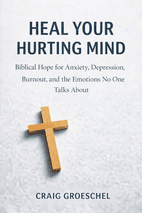
This collection brings together some of the most honest lines from Craig Groeschel’s book on mental health. You will find quotes that cut through the noise, offering real talk about anxiety, depression, and faith. What makes this book so quotable is its refusal to sugarcoat. Groeschel speaks from personal experience, admitting his own breakdown and the shame that came with it.
These lines do not offer easy answers. Instead, they give you permission to be honest about your struggles and remind you that you are not alone. They challenge the idea that strong faith means never struggling, and they encourage you to reach out for help. The quotes here are both raw and hopeful, perfect for sharing with someone who needs to hear that it is okay to not be okay.
Top Quotes from Heal Your Hurting Mind
“Because you are only as strong as you are honest.”
The author emphasizes the importance of radical honesty for healing.
This memorable aphorism reframes vulnerability as a source of strength, challenging the common impulse to hide pain and encouraging authentic self-reflection.
“Asking for help isn’t a sign of weakness but a sign of wisdom.”
The author counters the stigma around seeking help for mental health.
It directly confronts a cultural barrier to healing, offering a simple yet profound reframe that empowers readers to reach out without shame.
“Struggling with mental health issues doesn’t mean you don't have enough faith or that your faith is broken. It just means you are human.”
The author directly counters the myth that Christians should not struggle with mental health.
This line offers relief and validation to believers who feel guilt or shame about their mental health struggles, affirming that suffering is part of the human condition, not a failure of faith.
“If you break a bone, you don't need someone to tell you to have more faith and throw a Bible verse at you.”
The author uses a physical injury analogy to argue against a faith-only approach to mental health.
This analogy makes the argument concrete and universally understandable, highlighting the absurdity of relying solely on faith for serious conditions.
“Mental health problems are not about weakness. Rather they are conditions, much like diabetes, heart arrhythmias, high blood pressure, and broken bones, which without proper care and attention can become disabling and life threatening.”
Dr. C. explains the nature of mental health struggles in his reflection.
It reframes mental illness as a legitimate health condition, removing shame and encouraging readers to seek help without guilt.
“When someone quotes a Bible verse at you, it feels like it's meant to slap you.”
The narrator distinguishes between quoting a verse to encourage versus using it as a weapon, after being hit with Philippians.
This sharp observation articulates a common but unspoken feeling, validating those who have been hurt by well-intentioned but harsh uses of scripture.
“If It's Big Enough for You to Worry About, It's Big Enough to Pray About.”
The author sums up the chapter's main exhortation.
This succinct, memorable phrase empowers readers to bring every concern to God, validating the importance of all worries.
Themes Behind the Quotes
A central theme is the courage to be honest about your inner battles, especially when outward appearances suggest everything is fine. The quotes repeatedly emphasize that vulnerability is not weakness but wisdom, and that hiding struggles only deepens them. Another theme is the difference between faith and mental health. The book pushes back against the harmful idea that anxiety or depression means a lack of trust in God. Instead, it normalizes these conditions as part of being human, even for people who love Jesus and serve faithfully.
Another strong thread is the need for community and compassion. Many quotes highlight how easy it is to alienate someone with a cliché Bible verse or judgmental comment, and how much more helpful it is to simply listen and care. Finally, the quotes point to prayer as a practical, even scientifically supported, way to reframe anxiety. They do not promise instant fixes, but they invite you to bring your worries to a God who understands and wants to help carry them.
Quotes by Chapter
Introduction
“I was almost three decades into being a happily married, respected pastor with a bunch of well-adjusted kids, but I realized, aside from all those blessings, I was trapped in a dark place.”
The author describes his hidden despair despite outwardly successful life.
This line powerfully exposes the disconnect between external success and internal suffering, making it deeply relatable for anyone who has felt isolated by their struggles.
“I had lost hope that things could ever get better.”
The author expresses the depth of his depression during his breakdown.
Its stark simplicity captures the essence of hopelessness, validating a feeling many readers may have experienced and drawing them into the author's journey.
1.1 Introduction
“I never expected it would happen to me. But it did. I was the one having the breakdown.”
The author describes his own unexpected mental breakdown.
It immediately captures the shock and vulnerability of experiencing a mental health crisis, challenging the reader's assumption that it could never happen to them.
“On the outside, everything looked the same. On the inside, sheer panic.”
He contrasts his public appearance with his internal panic.
This stark juxtaposition vividly portrays the hidden nature of mental suffering, making it deeply relatable for anyone who has felt unseen in their pain.
“We should be the most honest and safe place in the world.”
He criticizes the church's silence on mental health.
It sets a high standard for what faith communities ought to offer, calling them to be a refuge of openness rather than a source of shame.
“If you've had any thoughts of /’m the only one who's ever dealt with this, I sincerely hope this book helps you know you are not alone and gives you the courage to talk about your struggles.”
He offers hope to readers who feel alone in their mental health battles.
This direct, compassionate reassurance breaks the isolation many feel and invites them into vulnerability and healing.
1.3 Myth 1: Christians Shouldn’t Struggle with Mental Health Issues
“And because you're human, you can sincerely love Jesus and have the longest reading streak in the YouVersion Bible App and attend church faithfully and lift your hands in worship and tithe consistently, and still struggle with mental health.”
The author lists outward signs of piety to illustrate that even devoted Christians can experience mental health difficulties.
This vivid, relatable list dismantles the false cause-and-effect between spiritual discipline and emotional well-being, making the point unforgettable through everyday examples.
“We Need to Stop Assuming Mental Health and Start Pursuing It.”
The author sums up the chapter's call to action after debunking the myth.
This concise, imperative sentence reframes the Christian approach from passive expectation to active, intentional care, making it a powerful takeaway for readers.
1.4 Myth 2: Faith Alone Should Fix Mental Health Issues
“But just because Jesus saves you does not mean he fixes every area of your life instantly.”
The author explains that faith saves from sin but does not instantly fix all life problems.
This challenges the unrealistic expectation that Christian conversion should magically resolve every difficulty, offering a compassionate and realistic perspective.
“We are complicated. We've experienced a lot of things. We've sinned and been sinned against. We've lied and been lied to. Hurt others and been hurt.”
The author reflects on human complexity after quoting Jesus' command to love God with heart, soul, mind, and strength.
This succinct list validates the multifaceted nature of human experience, emphasizing that mental health care must address more than just spiritual needs.
“He said we should “love the Lord your God with all your heart and with all your soul and with all your mind and with all your strength.””
The author quotes Jesus' answer about the greatest commandment from Mark 12:30.
This scripture shows that Jesus himself acknowledged the importance of mind and body alongside faith, directly countering the myth that only faith matters.
1.5 Myth 3: God Doesn’t Care About Mental Health Issues
“Psalm 88 has been called “an embarrassment to conventional faith,”! likely because it challenges the neat, tidy narratives that suggest everything will be okay if one just trusts God.”
The author introduces Psalm 88 as a rarely highlighted, brutally honest prayer.
This line exposes how religious culture often avoids messy emotions, validating readers who feel their own pain doesn't fit a tidy faith narrative.
“God understands your pain and he's inviting you to come close.”
The author concludes a section on Jesus' empathy and the invitation in Hebrews.
This simple, direct statement offers profound comfort, assuring that the divine is neither distant nor indifferent to suffering.
“There is also no psychological or spiritual vaccine that would prevent Craig (or you) from experiencing some form of mental illness (whether brief or chronic) at some point in life.”
Dr. C. emphasizes the universality of mental health challenges.
It dismantles the myth of spiritual immunity and normalizes struggle, reducing isolation and self-blame among believers.
2.1 Introduction
“With a hint of disappointment, he said, “Craig, Christians shouldn't have anxiety. Especially pastors.””
The narrator's older spiritual leader responds to his confession of anxiety with this dismissive statement.
This quote captures the toxic idea that faith and anxiety are mutually exclusive, causing immense shame and isolation for those who struggle.
“In my darkest desperation, I needed someone to understand and care. Instead, I felt like he'd taken a baseball bat to my soul.”
The narrator reflects on the devastating impact of the leader's response to his plea for help.
The visceral baseball-bat metaphor powerfully conveys how spiritual invalidation can compound suffering, making readers feel seen in their own painful experiences.
“Don’t be anxious about anything? God, is that even possible?”
The narrator's internal cry after being repeatedly told not to be anxious by the spiritual leader.
This raw rhetorical question gives voice to the desperate doubt many believers feel when confronted with simplistic commands, inviting honesty about mental health struggles.
2.2 Don’t Be Anxious?
“If you feel like there's an avalanche of things to be anxious about, you are not alone.”
The author addresses readers overwhelmed by multiple sources of anxiety.
This line validates the reader's experience of being overwhelmed and offers solidarity, reducing the isolation that often accompanies anxiety.
“The average child today exhibits the same level of anxiety as the average psychiatric patient in the 1950s.”
The author cites psychologist Robert Leahy's research on rising anxiety levels.
This shocking statistic highlights how normalized severe anxiety has become, prompting readers to recognize the magnitude of the mental health crisis.
“Jesus falls to the ground in emotional distress with his face in the dirt (Matt. 26:39) and cries out, “Father, if you are willing, please take this cup of suffering away from me” (Luke 22:42 NLT).”
The author describes Jesus' response in the Garden of Gethsemane before his crucifixion.
This vivid depiction of Jesus' anguish destigmatizes anxiety for believers, showing that even the sinless Son of God experienced deep emotional distress.
“God Cares About What You Care About, and He Wants to Help Carry What You Are Carrying.”
The author reassures readers of God's compassion amidst their struggles.
This simple, direct promise offers comfort and hope, reminding readers that their concerns matter to God and that they don't have to bear their burdens alone.
2.3 It’s Time to Pray
“Anxiety, from a spiritual perspective, is a signal alerting us that it's time to pray, to take our burdens to the God whom we know cares for us, especially when things are not going our way.”
The author explains the spiritual perspective on anxiety after describing King Jehoshaphat's response.
This reframes anxiety as a constructive signal rather than a weakness, offering a clear, actionable response for Christians.
“It has been found that twelve minutes of daily focused prayer over an eight-week period can change the brain to such an extent that it can be measured on a brain scan.”
The author cites Dr. Caroline Leaf's research on the neurological effects of prayer.
It provides scientific evidence that prayer has tangible, measurable benefits, encouraging readers to pray even when it feels ineffective.