Greenlights Quotes
by Matthew McConaughey
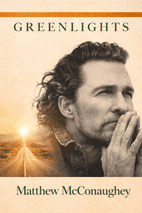
On this page you will find a collection of lines from Matthew McConaughey's Greenlights. These are not just quotes but fragments of a life lived with intention, humor, and a stubborn refusal to play the victim. You will find bumper sticker wisdom, hard won lessons from the desert, and the kind of advice that sounds like it came from a cool uncle who has seen it all.
What makes this book so quotable is McConaughey's ability to turn his own stories into universal truths. He writes like he talks, with a Texas drawl and a playful grin, but beneath the surface is real philosophy about navigating chaos, finding joy in the mess, and catching the greenlights that appear when you least expect them. Every line feels earned.
Top Quotes from Greenlights
“We all step in shit from time to time. We hit roadblocks, we fuck up, we get fucked, we get sick, we don’t get what we want, we cross thousands of “could have done better’s and “wish that wouldn't have happened’s in life. Stepping in shit is inevitable, so let's either see it as good luck, or figure out how to do it less often.”
McConaughey offers a blunt, humorous take on life's inevitable difficulties.
The raw, unvarnished language and practical advice resonate because it acknowledges universal struggles while offering a choice in mindset—embrace the mess or learn to avoid it.
“I never wrote things down to remember; I always wrote things down so I could forget.”
The author explains his purpose for keeping a diary over thirty-five years.
This line challenges the conventional reason for journaling and highlights a counterintuitive, liberating approach to recording life.
“I've never felt like a victim. I have a lot of proof that the world is conspiring to make me happy.”
After recounting a series of difficult, painful, and wild life experiences, the author asserts his mindset.
This line powerfully reframes adversity as evidence of a benevolent universe, inspiring readers to adopt a resilient, optimistic perspective on their own struggles.
“Catching greenlights is about skill: intent, context, consideration, endurance, anticipation, resilience, speed, and discipline.”
The author explains that catching greenlights is not just luck but a set of actionable skills.
It provides a clear framework for readers to actively pursue success through intentional effort and self-awareness.
“The problems we face today eventually turn into blessings in the rearview mirror of life.”
The author reflects on how challenges become valuable lessons over time.
This offers a hopeful, retrospective view on adversity, fostering resilience and patience.
“Knowing who we are is hard. Eliminate who we're not first, and we'll find ourselves where we need to be.”
McConaughey shares a life lesson about identity through the process of elimination.
Offers a practical, actionable approach to self-discovery that resonates with anyone struggling to define themselves.
“Cool stands the test of time. because cool never tries. cool just is.”
McConaughey reflects on the nature of cool after describing his brother's effortless style.
This aphorism distills an elusive quality into a memorable, almost Zen-like truth that resonates with anyone seeking authenticity over performance.
Themes Behind the Quotes
A central theme is the idea of greenlights themselves, the moments when life gives us the go ahead. McConaughey argues that these are not just lucky breaks but things we can actively pursue through skill, patience, and a willingness to see obstacles as red lights that will eventually turn green. He emphasizes that our struggles and failures are not dead ends but necessary parts of a larger process that leads to growth and understanding.
Another major theme is self knowledge. McConaughey repeatedly stresses that knowing who you are begins with eliminating who you are not. Authenticity matters more than image, and the pursuit of cool or external validation often backfires. He also writes about the importance of presence, of being less impressed and more involved with your life, and of preparing for freedom by doing the work in the moment. Humor and optimism are not just personality traits but survival tools that allow us to laugh through the tears and keep moving forward.
Quotes by Chapter
Introduction
“THIS IS NOT A TRADITIONAL Memoir. Yes, I tell stories from the past, but I have no interest in nostalgia, sentimentality, or the retirement most memoirs require.”
McConaughey introduces his book by stating what it is not.
It immediately sets a rebellious, non-conformist tone, rejecting typical memoir conventions and signaling a fresh, forward-looking perspective.
“I’m an optimist by nature, and humor has been one of my great teachers. It has helped me deal with pain, loss, and lack of trust.”
McConaughey shares his personal philosophy on optimism and humor.
It highlights the transformative power of humor and optimism in overcoming adversity, which is universally relatable and inspiring.
To Life
“Hopefully, it's medicine that tastes good, a couple of aspirin instead of the infirmary, a spaceship to Mars without needing your pilot's license, going to church without having to be born again, and laughing through the tears.”
The author describes what he hopes his book will be for the reader.
The vivid, playful metaphors capture the book's ambition to be both healing and joyful, offering escape and comfort without requiring belief or expertise.
“I found stories I witnessed and experienced, lessons I learned and forgot, poems, prayers, prescriptions, answers to questions I had, reminders of questions I still have, affirmations for certain doubts, beliefs about what matters, theories on relativity, and a whole bunch of bumperstickers.”
The author recounts what he discovered when he revisited his old diaries.
This expansive, rhythmic list encapsulates the messy, eclectic richness of a lived life and the surprising treasures hidden in one's own memory.
“So, I packed up those journals and took a one-way ticket to solitary confinement in the desert, where I began writing what you hold now: an album, a record, a story of my life so far.”
The author describes the dramatic decision to retreat and write this book.
The image of solitary confinement in the desert evokes both discipline and romance, emphasizing the deliberate isolation needed to craft a meaningful narrative.
How Did I Get Here?
“I learned how to navigate highs and lows, hugs and blows, assets and deficits, love songs and epithets.”
The author summarizes the skills he acquired from his unconventional upbringing and life experiences.
The rhythmic, contrasting pairs create a poetic cadence that captures the essence of a balanced, adaptable approach to life's inevitable extremes.
“I was raised on existential outlaw logic, a carnation of malaprops, full of fictitious physics, because if it wasn't true, it ought to be.”
The author describes the quirky, rule-bending philosophy instilled in him by his family.
This memorable, self-consciously clever phrase encapsulates a creative, defiant worldview that values possibility over literal truth, resonating with anyone who rejects conventional limits.
“I've had many people give me poems that I did not know I wrote.”
Reflecting on how others have reflected his own unspoken thoughts or creations back to him.
This beautiful metaphor speaks to the mysterious connections between people and the way we often discover ourselves through others' perceptions, leaving a haunting, poetic impression.
What’s a Greenlight?
“They say yes and give us what we want. Greenlights can also be disguised as yellow and red lights.”
The author describes how greenlights are affirmations, then notes they can appear as warnings.
This line captures the central theme that obstacles may actually be opportunities in disguise, encouraging a shift in perspective.
“All destruction eventually leads to construction, all death eventually leads to birth, all pain eventually leads to pleasure.”
The author asserts a cyclical nature of life's highs and lows.
It is a powerful reminder of inevitable renewal and growth after hardship, giving comfort and perspective.
Part One: Outlaw Logic
“A red light turned green. This is how my parents communicated.”
After a violent fight between his parents ends in them making love on the kitchen floor.
This line captures the book's central metaphor of turning obstacles into opportunities, and it poignantly illustrates the raw, unconventional love that defined his family.
“I come from a loving family. We may not have always liked each other, but we always loved each other.”
McConaughey reflects on his family's dynamic after describing their physical and emotional conflicts.
It distills a universal truth about family bonds—that love persists even when like does not—making it deeply relatable and memorable.
“Hope’s got a higher return on happiness and less debit on denial, it's just not as measurable.”
McConaughey contrasts the emotional consequences of expectations versus hopes taught by his parents.
The line offers a wise, almost financial metaphor for emotional investment, encouraging readers to favor hope over rigid expectations for greater fulfillment.
“Don’t walk into a place like you wanna buy it, walk in like you own it.”
McConaughey recalls his mother's advice about confidence and presence.
This memorable piece of advice is empowering and actionable, resonating with anyone who needs a boost of self-assurance in new situations.
Part Two: Find Your Frequency
“I'd outfoxed myself when I'd traded in my truck for that red sports car, and I lost my mojo when I did.”
McConaughey reflects on why his popularity faded after he swapped his truck for a flashy car.
It captures the counterintuitive truth that relying on external symbols can drain the authentic effort that actually attracts people.
“This is the art of livin—of self-satisfaction—in a thread of lineage with our past, looking forward to our future, we need to deal with our present, and choose.”
From the chapter's philosophical section on boundaries and freedom.
Elegantly sums up the balance between past, future, and present choice that defines a fulfilling life.
“Marjorie, don't ever do that to me again. It is not fair. It's not fair to me, it's not fair to Meredith, it's not fair to your son Michael.”
McConaughey stands up to his host mother after she pressures him to kiss Meredith.
Shows moral clarity and integrity in an awkward situation, reminding readers to defend fairness even when it's uncomfortable.
Part Three: Dirt Roads and Autobahns
“Of all the things my dad could have said, of all the reactions he could have had, Don’t half-ass it were the last words I expected to hear and the best words he could have ever said to me.”
Matthew McConaughey recalls his father's response when he told him he wanted to go to film school instead of law school.
This line captures the profound impact of a parent's unconditional support and the power of a simple, unexpected phrase that grants permission and validation.
“I didn’t want to miss my twenties preparing for the rest of my life.”
McConaughey explains his doubt about pursuing law school, realizing he'd be nearly thirty before starting his career.
This sentiment echoes the anxiety of many young people torn between practical plans and the desire to live fully in the present.
“The sooner we become less impressed with our life, our accomplishments, our career, our relationships, the prospects in front of us—the sooner we become less impressed and more involved with these things—the sooner we get better at them.”
After his father's death, McConaughey carves "less impressed, more involved" into a tree and reflects on this idea.
This line distills a powerful principle for growth: shift from passive admiration to active engagement. It resonates because it reframes success as a process of immersion rather than mere recognition.
Part Five: Turn the Page
“That's great, Matthew, if you want your jeans pressed.”
Beth, a friend, says this after Matthew enthusiastically shows off his jeans pressed by his new maid.
A reminder that just because we can have something doesn't mean we truly want it; encourages self-questioning about our choices.
“We have to prepare to have freedom. We have to do the work to then do the job. We have to prepare for the job so we can be free to do the work.”
Matthew reflects after fumbling a Spanish monologue on the set of Scorpion Spring due to lack of preparation.
Emphasizes that true freedom and spontaneity come from thorough preparation, not from winging it.
“Made for the moment we are all made for every moment we encounter. whether the moment makes us or we make the moment. whether we are helpless in it or on top of it, the predator or the prey. we are made for that moment.”
Matthew's internal reflection before a high-stakes screen test for A Time to Kill on Mother's Day.
A profound acceptance that we are inherently equipped for every situation, inspiring confidence and surrender to the present.